

No Power, No Warehouse Project

The electricity grid is becoming a critical constraint for warehouse development, writes George Day (pictured below), senior project manager at Pulse Consult.

Complex regulations, lengthy approval timelines and environmental impacts have long made planning a major hurdle for warehousing developers. Yet a new, critical constraint is taking centre stage: power.

Set against a background of increasing competition for grid capacity, Ofgem has launched a consultation as part of a wider programme of reforms to ensure network capacity is used for the projects that need it most, sending a clear message that grid capacity and connection delays are emerging as a critical and increasingly decisive risk to viable delivery.

In 2026, over 80% of UK logistics occupiers expect that their power requirements will increase over the next 12 months as more is needed to support large-scale, power-hungry sites. As a result, power availability is moving from a tick-box exercise to an integral requirement for modern warehouse development.

To stay ahead of the power challenge, developers must move from reacting to grid constraints to anticipating them, making power availability a fundamental consideration from the outset. This means undertaking early due diligence, engaging with key stakeholders and working collaboratively to identify constraints.

Preparing for a tech-intensive future

It isn’t surprising that the issue of power is being pushed to the top of the agenda. The warehouse of tomorrow is becoming increasingly more tech-intensive, from automated systems and substantial refrigeration demands to the electrification of fleets. As these requirements and advancements evolve, the technology required to support them can increase over the lifetime of a facility, causing unanticipated costs.

Developers need to look beyond the power required to get a project operational on day one and, rather, consider its ultimate power capacity from the outset. Failing to consider this growth can leave projects constrained by original grid connections, requiring costly upgrades later down the line. To future-proof power capacity, grid considerations need to be treated as two-fold. Not only do project teams need to ensure there is sufficient capacity to meet immediate operational requirements, but they must also anticipate the future needs of the building and its occupiers.

Power is no longer a simple utility. It is becoming a core determinant of the viability of a project. Answering early on the important questions of where, how and at what cost will bolster project resilience and give greater certainty and control over both project costs and the delivery path.

Act now for long-term project resilience

The complex planning process and the challenge of grid capacity are intrinsically linked, with site selection now requiring developers to consider not only whether land is suitable for development, but whether it can also secure the power needed to support it.

Those that fail to recognise this are forced to engage unexpectedly with Distribution Network Operators (DNOs) to install the relevant grid connections. This engagement can introduce significant delays and unexpected costs, with connection assessments, timelines and deliverability all placing constraints on initial project plans.

Data from Ofgem gathered as part of a feedback initiative reflects a clear message: grid connection delays are occurring too often, and delivery milestones are therefore being missed. For developers, the consequence of this is a domino effect, creating knock-on delays and increasing costs that place project viability at risk.

To mitigate this issue of squeezed DNOs and power-heavy projects, early due diligence is critical and should be integrated into the planning process, long before spades hit the ground. By introducing stringent due diligence teams to identify appropriate land that can support the power requirements needed, teams can uncover grid constraints early, reducing costly delays and increasing confidence in project deliverability.

Powering progress across every workstream

Early due diligence must be matched by early engagement and collaboration between key project partners, ensuring power constraints are understood and addressed before they become a barrier to delivery.

Project management teams should bring together key stakeholders from the outset to identify the key considerations that must be addressed early on, ensuring project viability later down the line. With this comes an integral reordering of priorities: power cannot sit at the end of the tick list. Instead, it must be mapped into the critical path from the outset, ensuring that key project stakeholders have the right discussions at the right time to determine where grid constraints sit within the wider delivery programme.

However, although project management teams can be the driver of these discussions, power supply considerations need to be embedded across entire development teams, rather than considered in a single workstream. From planning and commercial services to design and project controls teams, all functions need visibility of power requirements and potential constraints, ensuring that decisions are aligned.

The objective of early engagement is not simply to start conversations sooner, but to bring forward decisions that could otherwise become barriers to delivery.

Staying ahead of the power curve

The warehousing and logistics sector is becoming more technologically advanced, with greater reliance on sophisticated power-intensive systems. With this comes the certainty that power requirements and the reliance on sufficient grid connections are likely to continue evolving.

But with power becoming an increasingly constrained resource, project teams need to stay ahead of the curve and anticipate where grid capacity issues may arise, understanding how this may affect grid availability and project viability later down the line. Those that anticipate rising power demand and plan for it early will be better positioned to control costs, protect delivery timelines and ultimately turn power availability into a project advantage.
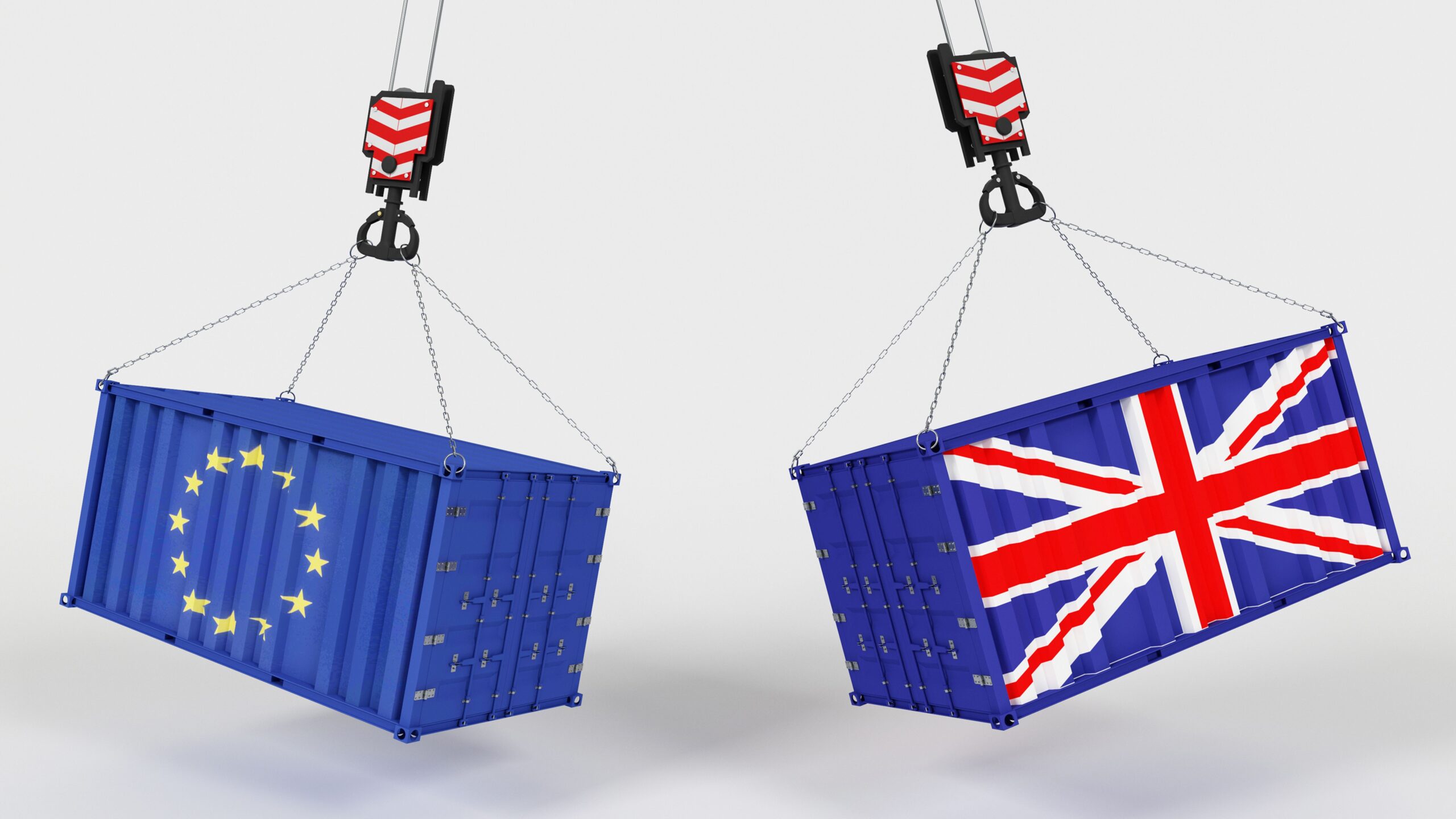

Removing Barriers to UK–EU Trade

The ongoing UK–EU reset in trade relations must prioritise economic growth, writes Richard Smith, MD of the Road Haulage Association (RHA).

Europe faces an estimated half-a-million unfilled truck driver positions, according to the International Road Transport Union (IRU). The UK continues to face its own challenges in recruiting and retaining professional drivers. Yet, at a time when skilled drivers are already a scarce resource, restrictions on their international mobility are making it harder for businesses to deploy the workforce they have.

As the UK and European Union prepare for their forthcoming summit on 20th November, surely this is one of the practical barriers we should be seeking to remove? We believe it should be a priority, but the issue also highlights a much wider challenge.

If we’re serious about improving economic growth, increasing productivity and encouraging investment, we must address the barriers that make it harder for businesses to operate.

Professional driver mobility – an economic issue

The Schengen 90 days in any 180-day period rule presents a particular challenge for businesses operating internationally. Drivers of trucks, coaches and vans are not travelling for tourism, they are undertaking legitimate commercial activities that support trade and economic activity on both sides of the Channel.

The IRU’s research also indicates that around two-thirds of European road transport operators have turned down new contracts because they could not recruit enough drivers. Against that background, restricting the ability of existing, qualified drivers to undertake international work makes little economic sense.

The European Commission in its Visa Strategy earlier this year said that it would “work closely with Member States to identify pragmatic solutions to accommodate extended short stays for selected categories of third-country nationals”. This suggests there’s an appetite to relieve some of the issues supply chains are facing.

We are calling on the UK Government and the European Commission to make professional driver mobility an explicit negotiating priority at forthcoming summits. We want a practical, reciprocal arrangement that recognises the circumstances of professional drivers, including an appropriate exemption from the 90/180-day restriction.

This would not solve the wider driver shortage, but it would allow operators to make better use of their existing workforce, improve operational flexibility and support more reliable international supply chains. If the UK–EU reset is to be successful, it must deliver practical improvements that give businesses the confidence to invest, grow and create jobs.

We stand ready to work constructively with government and our European partners to make that happen.

The wider opportunity for British business

The Government has made clear its ambition to strengthen the UK’s relationship with the EU and stimulate economic growth and we share those ambitions. But the success of any reset should be measured by the practical improvements it delivers, not simply by agreements between governments.

For businesses, particularly SMEs, the costs and complexity associated with international trade remain significant challenges. To ease burdens, we strongly welcome the work undertaken by the UK Government and European Commission to introduce a new Sanitary and Phytosanitary (SPS) Agreement from 2027.

However, additional measures are needed to reduce unnecessary administration and unpredictable border delays. This all affects competitiveness and investment decisions, and these pressures don’t stop with transport operators. Every unnecessary delay, additional cost or lost commercial opportunity has a wider economic consequence. Making trade easier is about creating the conditions for businesses across the economy to succeed.

Borders, customs and international connectivity

The introduction of the EU Entry/Exit System is another area where practical cooperation is essential. Secure borders matter, but the systems used to manage them must also be efficient, proportionate and workable.

Commercial transport depends upon reliability and predictability, so delays at borders affect delivery schedules, vehicle utilisation, operating costs and customers. We also need continued progress on simplifying customs procedures, improving digital systems and reducing unnecessary bureaucracy.

For smaller businesses in particular, these changes could make international trade more accessible and commercially viable. The international coach sector must also be part of the discussion.

Coaches support tourism, education, cultural exchange and economic connectivity, yet operators continue to face challenges associated with border arrangements and driver mobility. A successful reset must recognise the different needs of trucks, coaches and vans and the contribution each makes to the wider economy.

Business confidence and investment

In recent conversations with operators across the country, one message has been particularly consistent. Businesses need confidence and certainty. They need to understand the environment in which they will be operating over the next six, twelve and eighteen months, and beyond.

The issue is not simply the cost of doing business today. It is the uncertainty about tomorrow. That uncertainty influences decisions about fleet replacement, recruitment, technology, decarbonisation and expansion. Businesses can often plan for known costs. What they find much harder to manage is uncertainty about future operating conditions. This is particularly relevant following the Autumn Budget, where the Government has rightly emphasised the importance of growth, investment and productivity.

But these ambitions will only be achieved if businesses have the confidence and capacity to invest. A successful UK–EU reset could make a meaningful contribution by reducing uncertainty, improving trading conditions and removing unnecessary barriers.

From political ambition to practical outcomes

We welcome the Government’s commitment to improving relations with the European Union and we want that relationship to succeed. But success must be measured through practical outcomes. Alongside the professional drivers’ exemption, we want improvements to border processes, simpler trading arrangements, greater regulatory cooperation and better recognition of international coach operations.

These are practical opportunities to support trade, improve productivity and strengthen economic growth across all four nations of the United Kingdom. We believe trade associations have an important role to play in helping policymakers understand how decisions affect businesses in the real world.

A successful UK–EU reset should not simply improve relationships between governments. It should make a measurable difference to the businesses and people who depend on those relationships every day. If we are serious about growing the British economy, we must make it easier for businesses to trade, easier for essential workers to operate internationally and easier for companies to invest with confidence.

Growth cannot simply be announced or expected. It must be enabled. The forthcoming summit is an opportunity to demonstrate exactly what that means.

New Firm Aims to end Route Optimisation Lock-ins

Three logistics software veterans have launched Propr Group Limited, a UK company taking aim at the high implementation fees and 36-month contracts common in route optimisation software.

ProprGroup’s core product, ProprTMS, combines four modules: ProprPlan (route planning and optimisation), ProprDispatch (dispatch and live route management), ProprExecute (driver app with proof of delivery) and ProprInsights (AI-powered operational reporting). It is aimed at UK operators running 10 or more vehicles, particularly in medical and pharmaceutical distribution, food and beverage, B2B distribution and big & bulky home delivery (think furniture and appliances).

The founders, James Holt, Gary Rosier-Taylor and John Hayes, estimate that around 70% of UK logistics operations either have no optimisation tool or do not use the optimisation engine in their existing system. They argue that long contract options and costly implementations make switching feel riskier than standing still if they haven’t proved their first system can really pay itself back to the business.

ProprGroup’s model reverses that. Customers prove the value of ProprTMS in their own operation first, and move to a longer-term agreement only once they are confident in the results, unless they choose to commit from the outset.

The company is now recruiting 10 to 15 UK operators to join a beta programme as founding customers, working directly with the founders to shape the product, on commercial terms designed to reflect that partnership.

James Holt, Co-founder, said:

Route optimisation has been around for decades, yet most UK fleets still aren’t getting the benefit. That isn’t a technology problem, it’s a trust problem. We’re developing ProprTMS so customers can see the value in their own operation before they’re asked to commit.

Gary Rosier-Taylor, Co-founder, said:

Every mile you don’t need to drive is fuel saved, emissions avoided and a driver home sooner, likely avoiding an infringement. We want to make that achievable for the thousands of UK fleets who, as of today, view 36 months plus a huge implementation fee as a massive leap of faith that isn’t validated inside their operation.

John Hayes, Co-founder, said:

I spend my days inside UK operations, and the pattern is the same: good teams, working hard, with tools that don’t properly support the way they need to operate. We believe the Propr way is to deploy software that supports the way business works, not one that asks you to change it to fit the software.

Subscribe

Get notified about New Episodes of our Podcast, New Magazine Issues and stay updated with our Weekly Newsletter.