Grangemouth-based Scottish green chemical producer Celtic Renewables has partnered with LogChain, a digital supply chain and logistics software developer, to make international shipping more sustainable with the first digitalised shipment of green chemicals.
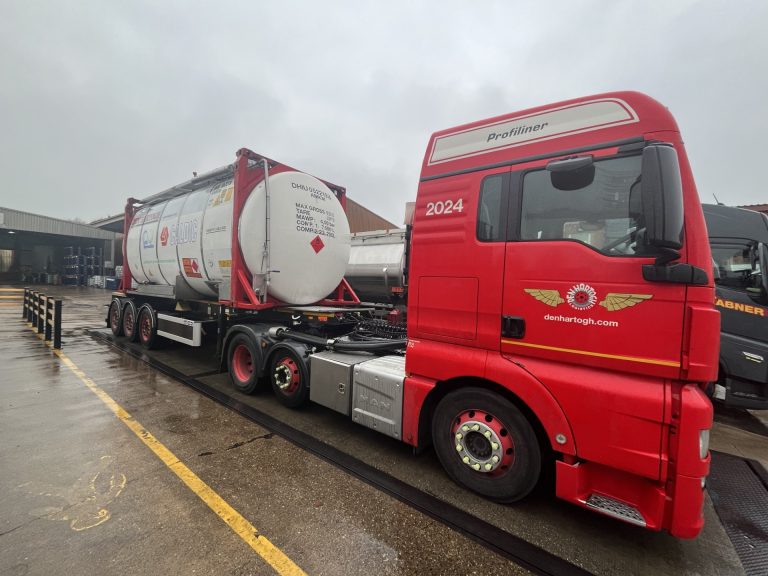
Celtic used LogChain’s private blockchain-based software solution to manage a sample shipment of bio-butanol made using locally sourced by-products and waste from the food, drink and agricultural industries at its biorefinery at Grangemouth in Scotland, as it was transported round the world to the island city state of Singapore in southeast Asia.
The bio-butanol shipment left Grangemouth on Wednesday 24 September, travelled 8340 nautical miles from London Gateway port, and arrived in Singapore 32 days and eight hours later, on Sunday 26 October at just before 9pm local time.
LogChain’s report noted that the digitalised system cut administrative handling and documentation time for the shipment by 50 percent. Platform alerts reduced email traffic, and automated task assignment and real-time dashboards reduced delays in coordination.
Transparency and compliance improved through continual visibility of the shipment from origin to destination, together with instant access to essential paperwork including Dangerous Goods (DG) certificates, Bills of Lading, and other customs documents.
The LogChain solution is designed to make the transport of goods more sustainable by digitalising the entire shipment workflow. It saves paper and consumes less energy by replacing paper documentation and repetitive two-way email exchanges with a single dedicated live digital corridor that connects the sender and the recipient.
All shipping documents and data including production certificates, commercial invoices, packing lists, bills of lading, and bills of origin are transferred electronically via this digital corridor. The system is completely secure and provides a fully searchable digital provenance for the product being shipped, which is essential for the highly regulated chemical sector.
Commenting on the news, Bettina Brierley, Chief Commercial Officer of Celtic Renewables, said,
If we want to achieve net zero, companies in every industry and sector need to introduce low-waste, energy-saving practices across their operations and supply chains. For import and export businesses, this means examining how they ship and receive goods and products – whether at a local, national or international level.
Brierley explained, “Our commitment at Celtic to sustainability goes beyond producing green chemicals that replace fossil fuel-based chemicals. It also extends to the transportation of our bio-based alternatives in the most sustainable way possible. Our partnership with LogChain is a real-world example of how UK companies of every size – from global enterprises to SMEs and micro-businesses – can use a fully digitalised system to improve the efficiency and sustainability of their export operations and help them compete internationally.”
LogChain CEO Andie McKeown added his thoughts. “We’re delighted to support an innovative company like Celtic Renewables in demonstrating how digital trade can directly enable sustainable growth. Our two companies’ work together proves that sustainability and commercial success can go hand in hand. This project shows how technology and partnership can deliver real-world results, driving progress for trade, the environment, and the wider economy.”
McKeown continued, “Digital trade systems reduce paperwork and make the export process faster and cheaper. Cutting back on needless and repetitive documentation and electronic communication makes the entire process less wasteful and more sustainable. LogChain’s project with Celtic Renewables showcases the practical benefits of trade digitalisation in action. It demonstrates our platform’s ability to handle complex, high-value, highly regulated shipments like chemicals in a way that is seamless, secure and fully compliant.”
The collaboration between Celtic Renewables and LogChain was supported by the International Tank Container Organisation (ITCO) and the UK Government. It is another example of the close commercial relationship between Singapore and the UK, including Scotland.
In February 2022, both countries signed the UK-Singapore Digital Economy Agreement (DEA), which established a framework for digital cooperation between the two countries.
Just over a year later, in March 2023, the countries signed the UK-Singapore Green Economy Framework to help each country achieve its national decarbonisation targets across three key areas: green transport, low carbon energy technologies, and sustainable finance and carbon markets.
More recently, at the beginning of September, the UK’s High Commissioner to Singapore Nik Mehta visited Edinburgh as part of a wider UK Government initiative to boost economic ties between the two countries.
Brierley concluded by saying, “Companies and manufacturers worldwide are looking for ways to reduce their dependence on fossil fuel-based chemical ingredients in favour of sustainable alternatives. East and southeast Asia represent huge export potential for Celtic Renewables as we look to scale up our operations and take our green chemicals into new markets.”