
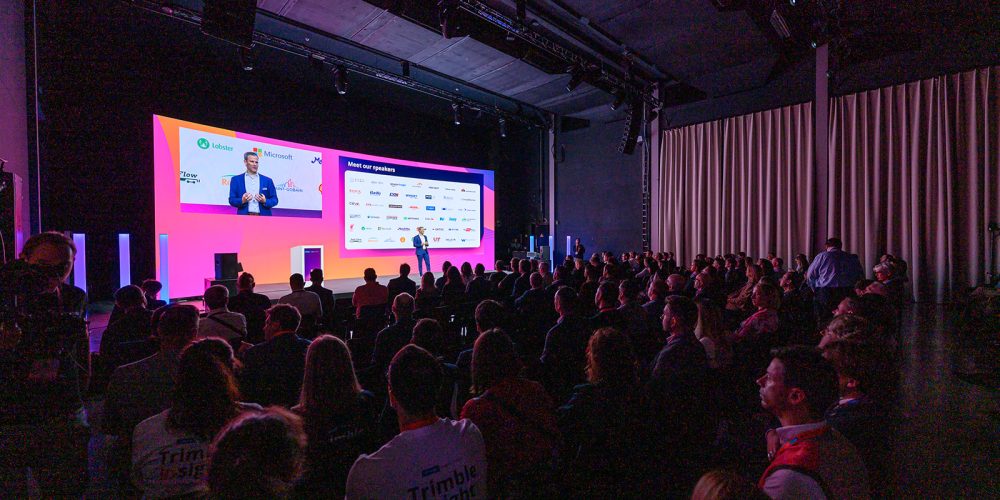
At the recent Trimble Insight event, Peter MacLeod heard that as AI advances, human oversight and trusted networks remain essential.
AI featured prominently in discussions about the future of freight transport at this year’s Trimble Insight event, formerly the Transporeon Summit, in Brussels. In an exclusive conversation with Logistics Business, Philipp Pfister, Sector Vice President at Transporeon, said the familiar challenges such as driver shortages, decarbonisation, and fragmented connectivity remain, alongside increasingly volatile markets. AI offers new ways to address them, he believes, but must deliver practical value rather than simply generate enthusiasm.
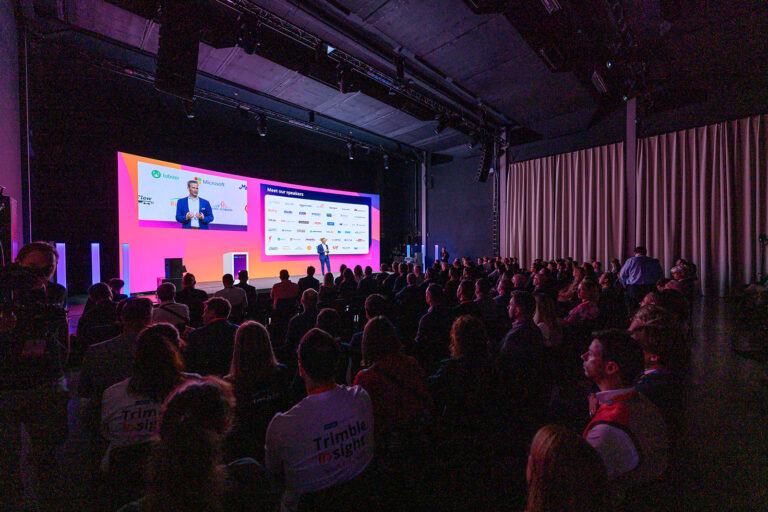
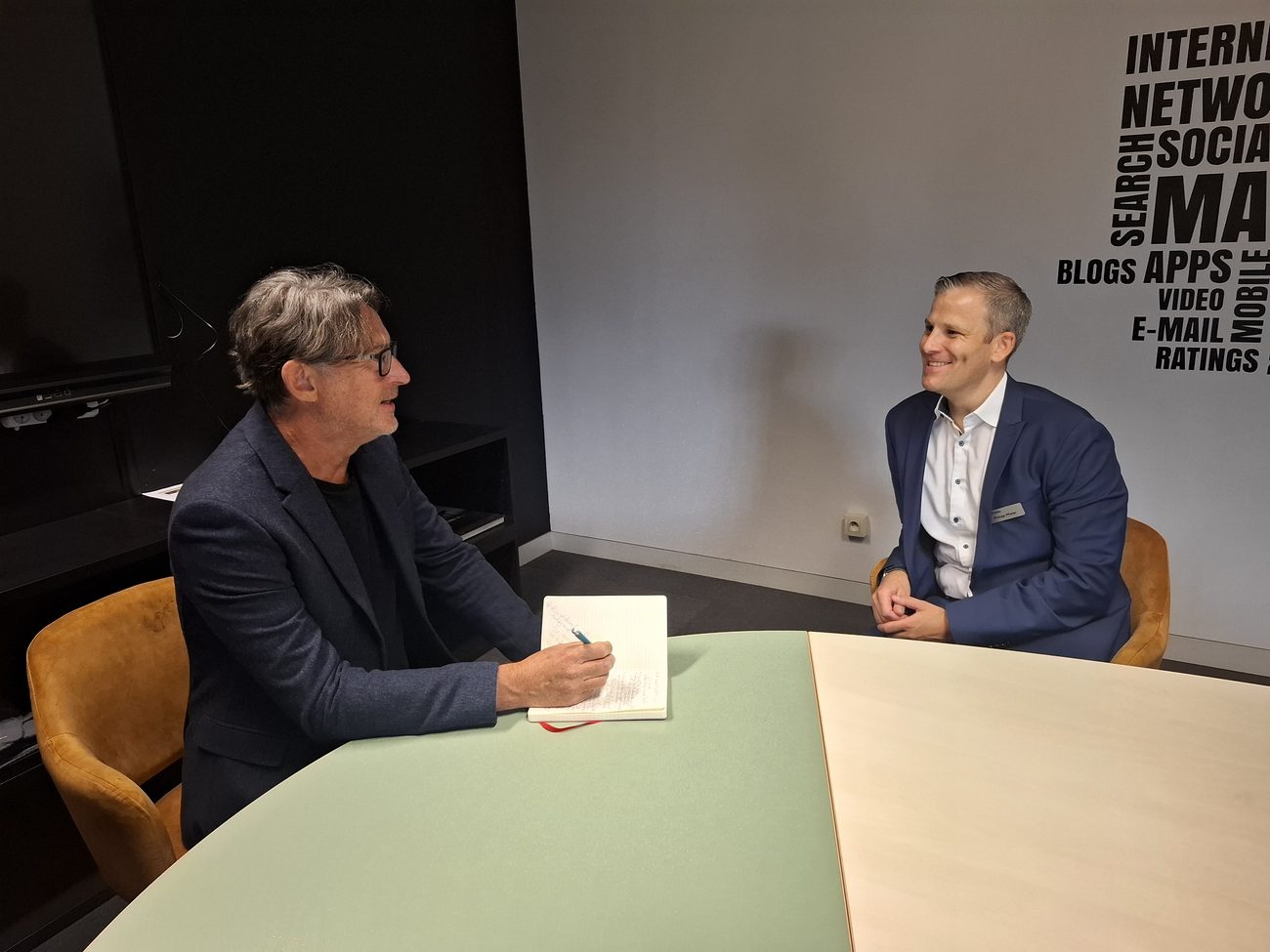
“We need to find the right angle to produce value through AI and also have the right boundaries around it,” Pfister told me in a quiet side-room away from the bustle of the main conference floor (see pic, below) at The Egg, which was once a goods warehouse in the centre of the city.
Practical Application
One of the key technologies discussed in Brussels was Trimble Arc, an AI solution designed to work with Transporeon’s existing products and help users carry out operational tasks. Rather than acting as a generic chatbot, it connects AI capabilities with the systems and information used in logistics. To me, this signals that agentic AI is has now become established a co-worker within existing operational frameworks.
Pfister describes Arc as a vertical AI solution that can interact with Transporeon’s software while retaining human oversight. Users can delegate tasks, with confirmation required before certain actions are taken – an important safeguard when an automated decision could commit a business to a freight rate or transport arrangement. I’m always banging on about keeping humans in the loop, and this technology puts them front and centre when needed, allowing intervention before AI executes a decision that looks right in the data but may not account for human factors.
“Safety is the biggest thing in our AI solution,” Pfister said, explaining that solutions undergo internal safety checks before reaching customers. Applications range from analysing freight markets to recommending procurement decisions and improving vehicle utilisation. He highlighted autonomous quotation, which enables carriers to respond to available loads, as one way AI can uncover opportunities that might otherwise be missed.
For smaller operators, the potential is significant. A carrier with a small office team may struggle to monitor spot markets while managing daily operations. An AI-powered digital colleague could take on some of this work, helping smaller businesses compete with the Big Boys. Autonomous procurement also allows buyers to set upper and lower pricing limits, helping avoid overpaying while reducing the risk of pushing carrier rates below sustainable levels. With margins under constant pressure, that balance matters.
Network Advantage
Bernhard Schmaldienst (pictured, below), Associate Vice President of Transporeon Products, said the next phase of AI will be less about isolated agents and more about connecting systems and coordinating work across them. He pointed to the administrative effort involved in transferring information between applications, updating systems from emails and reconciling data. AI agents could reduce this burden by working across connected platforms, rather than automating individual functions in isolation.
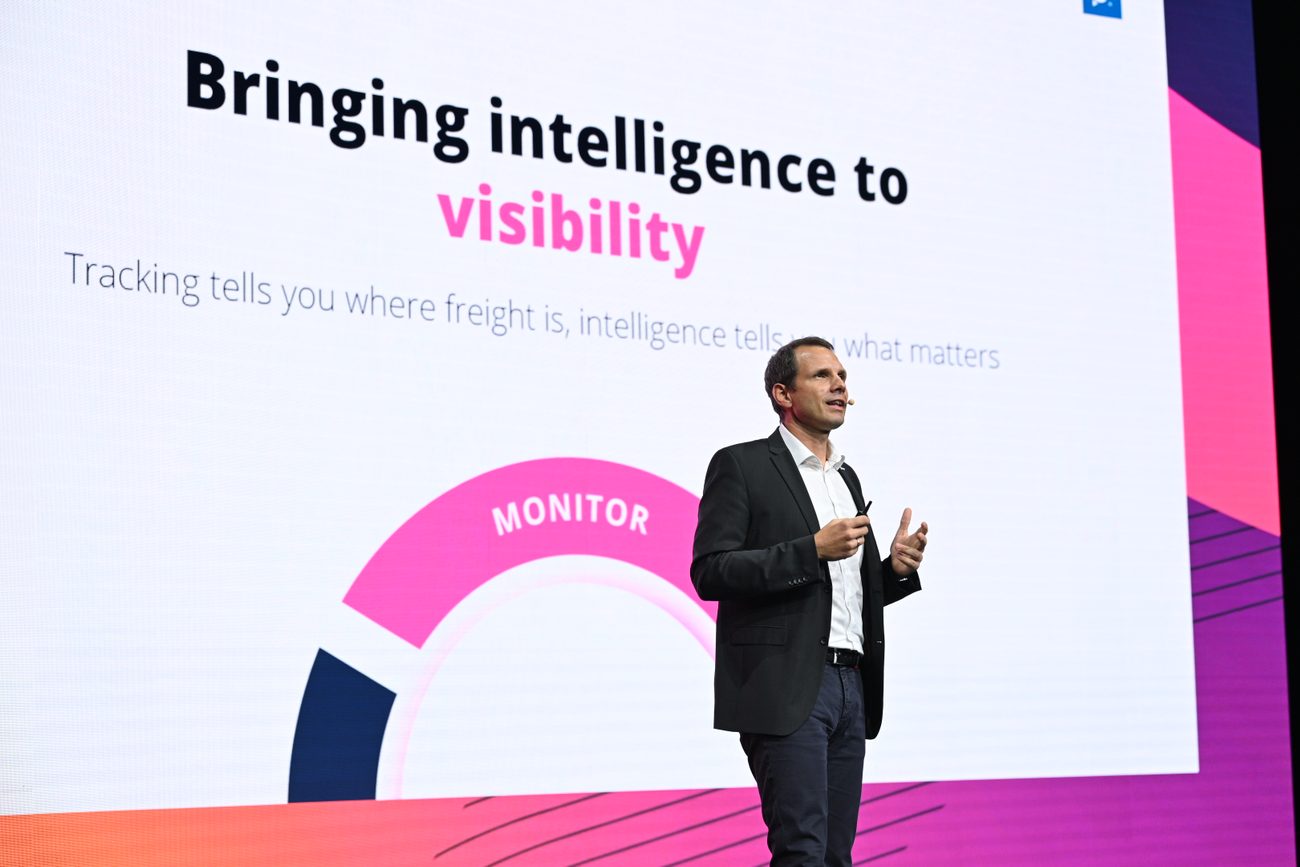
Disconnected AI tools risk recreating the silos that have long hindered logistics. The greater opportunity is to enable agents to work across an ecosystem of applications, data and business relationships.
Transporeon’s network provides a foundation, but digital maturity varies widely among its customers. Some are ready to introduce AI into core operations; others still need to connect systems and establish the digital foundations for more advanced applications. It is sometimes hard to believe that some operators still rely on Excel or pen and paper and have yet to embrace digitalisation. For Pfister, the AI journey therefore starts with digitisation for some businesses, while those further along can move towards greater automation.
Human Challenge
Trimble President and CEO Rob Painter offered a historical analogy in his keynote that I had not heard before in the context of AI. When electric motors replaced steam engines in factories, productivity did not immediately surge. Many businesses simply replaced the power source while keeping the same machinery, layouts and processes. The gains came when manufacturers redesigned their operations around the new technology.
Painter believes logistics faces a similar moment: adding AI to existing workflows may deliver limited improvements; greater benefits will come when businesses rethink how work is organised.
That is also a human challenge. Organisations must be prepared to change, experiment and learn while AI’s capabilities and limitations remain uncertain. This does not mean removing people from the equation. Pfister argues that automating repetitive tasks should allow logistics professionals to focus on work where judgement, relationships and problem-solving matter most.
Unexpected delays and changing commercial circumstances will still demand human intervention. Strong relationships between shippers and carriers remain valuable because not every problem can be resolved through software alone.
Sustainability Dividend
AI can also contribute to decarbonisation. Better planning and load optimisation can consolidate part-load consignments, improve vehicle utilisation and reduce unnecessary journeys. Pfister described combining loads that would otherwise require separate trucks as a straightforward way to cut costs and emissions. Such gains do not require every operation to adopt the latest AI agent; existing tools and established transport networks can also improve resource use.
The Summit’s message was pragmatic. Successful implementation depends on choosing the right applications, establishing safeguards and delivering measurable operational benefits – not simply pursuing ‘AI for AI’s sake’. For logistics, the reward is a more connected, responsive industry where automation handles routine work while people retain control of consequential decisions, helping businesses make better use of the capacity and information already available.