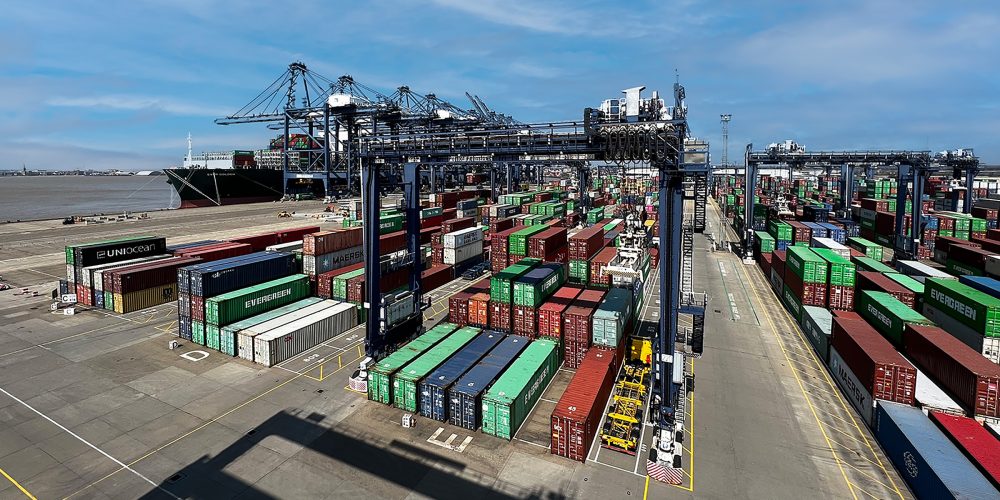
Paul Vahle GmbH & Co. KG will be presenting solutions for the electrification of container terminals at TOC Europe 2026 in Hamburg from 19 to 21st May. The focus is on integrated energy systems for highly dynamic port operations — from electrified crane applications and automated charging through to intelligent energy management in terminal operations.
“Rising diesel prices and volatile energy costs are increasing the economic pressure on port operators. At the same time, regulatory requirements are intensifying the need for low-emission terminal processes. As a result, electrification is increasingly becoming not just a question of efficiency, but a key prerequisite for future-proof terminal structures,” says Jaroslaw Warzecha, Director Business Unit Ports at Vahle. “At TOC Europe, we will show how power supply, motion systems and automation can be combined into a seamless, end-to-end solution.”
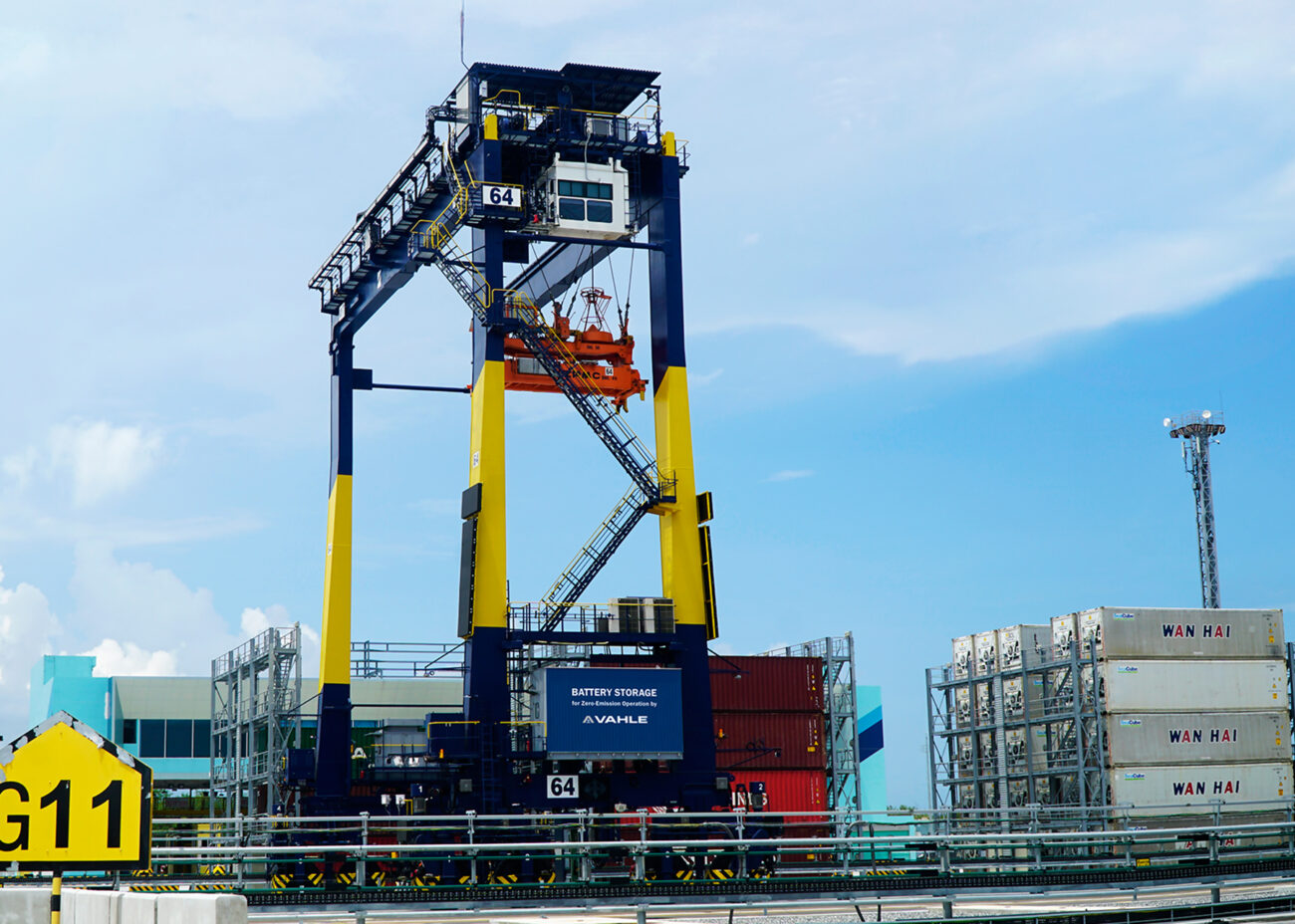
A key focus is the electrification of Rubber Tyred Gantry (RTG) cranes — an area in which VAHLE has supported port applications for many years. This segment is being consistently advanced with the modular TriMotion Compact system solution. In addition, battery-based storage solutions such as the Battery Storage System are used as dynamic energy buffers in terminal operations.
By supplying energy based on demand, peak loads on the grid are specifically reduced and power flows within the terminal are stabilized. Thanks to modular and immersion-cooled battery concepts, capacity and output can be flexibly adapted to different operating profiles — for example for aisle change, hybrid operation or peak shaving. Immersion cooling ensures a constant temperature window for the battery cells — an essential factor for service life, performance and operational safety in port use. This enables crane movements in battery mode to be carried out temporarily independent of the grid and locally emission-free.
The practical impact of this approach can be seen in electrified RTG applications with TriMotion Compact. “By replacing diesel-based units, up to around 300 tonnes of CO2 can be saved per year and conversion— depending on the operating profile. This makes the decarbonization of terminal processes not only technically possible, but also economically scalable and operationally integrable,” Warzecha emphasizes.
VAHLE’s PowerDock charging infrastructure builds on this foundation. The solution enables automated charging of electric terminal vehicles during operational standstill times. The charging process is integrated directly into terminal operations and follows the principle of opportunity charging — energy is taken on precisely when vehicles are not in active use anyway.
“With PowerDock, we standardize charging processes in the terminal while simultaneously increasing the availability of electric fleets in continuous operation,” says Warzecha. “This makes the energy supply an integrated part of the process chain.”
In addition, VAHLE is further advancing its developments in shore power supply. In the Port of Hamburg, the system provider implemented a movable installation for “HADAG Seetouristik und Fährdienst AG” that reliably supplies vessels with electrical energy while alongside. The system replaces diesel-powered onboard generators and significantly reduces emissions as well as noise. It also compensates for tidal movements and is already designed for future generations of electric ferries.
At TOC Europe, VAHLE will be presenting its solutions for electrified and automated port logistics at booth E92. Visitors will gain insights into current systems for RTG electrification, automated charging, energy management and shore power applications—and can discuss specific deployment scenarios with the company’s experts.