End-of-line Solutions at Interpack

When the doors open at Interpack from 7th to 13th of May in Düsseldorf, Mosca GmbH will be presenting groundbreaking innovations in load securing under the theme of ‘connected efficiency’. The focus will be on integrated solutions that combine sustainability with Industry 4.0.

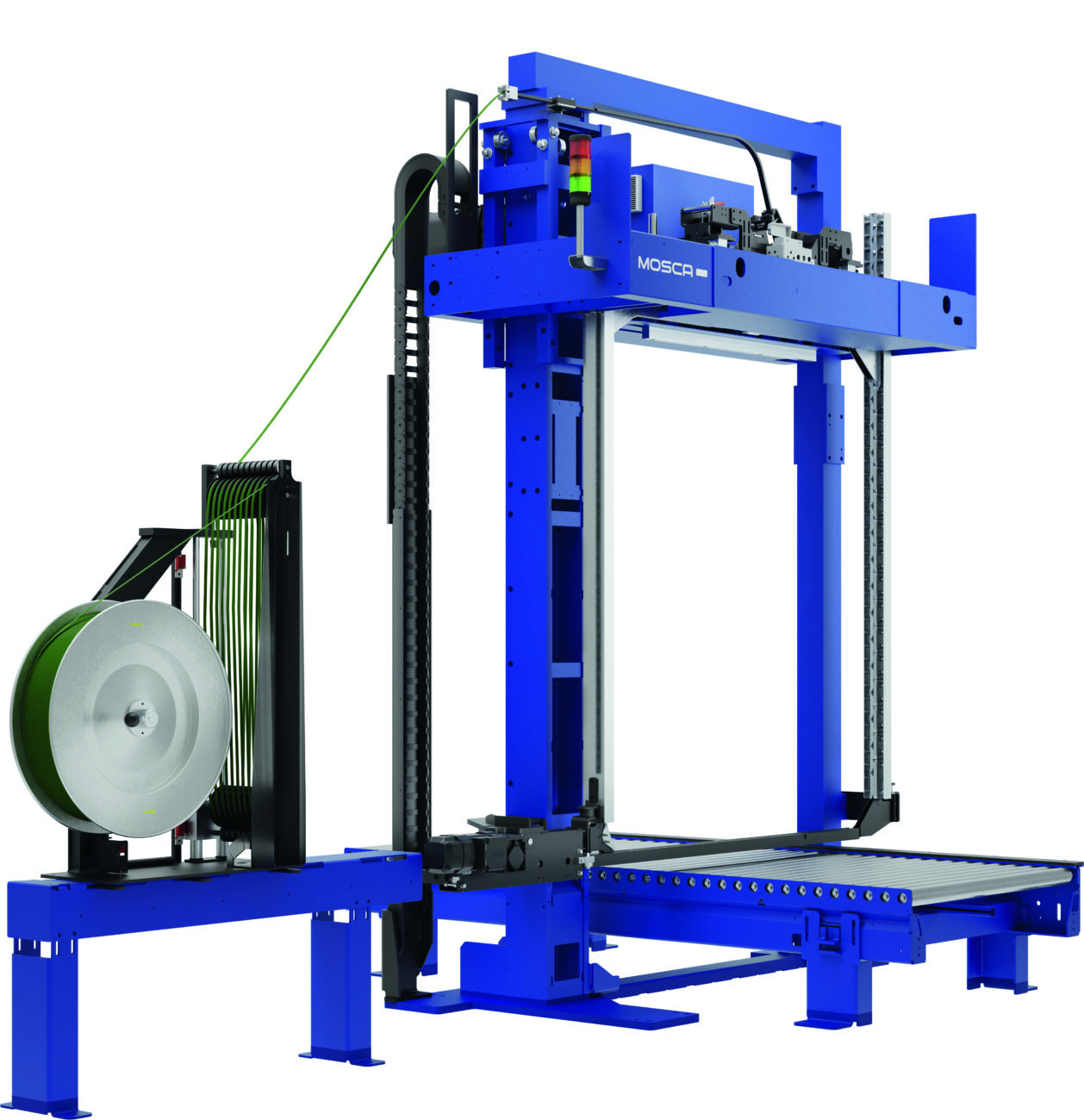
A highlight of this year’s exhibition in Hall 11, booth D56, is the highly efficient combination of the KZV-111 pallet strapping machine (below) and the Luna A3 rotary arm stretch wrapper. This combination demonstrates how seamless process transitions optimise throughput times. The KZV-111 provides the foundation for maximum stability, whilst the Luna A3 wrapper ensures final protection against external influences. Thanks to the intelligent control system, both machines communicate directly with one another, which minimises the need for manual intervention and enhances operational reliability. “The combination of strapping and wrapping reduces material consumption whilst ensuring maximum transport security,” explains Alex Jesser, Technical Product Marketing Specialist.
Automation for fresh produce

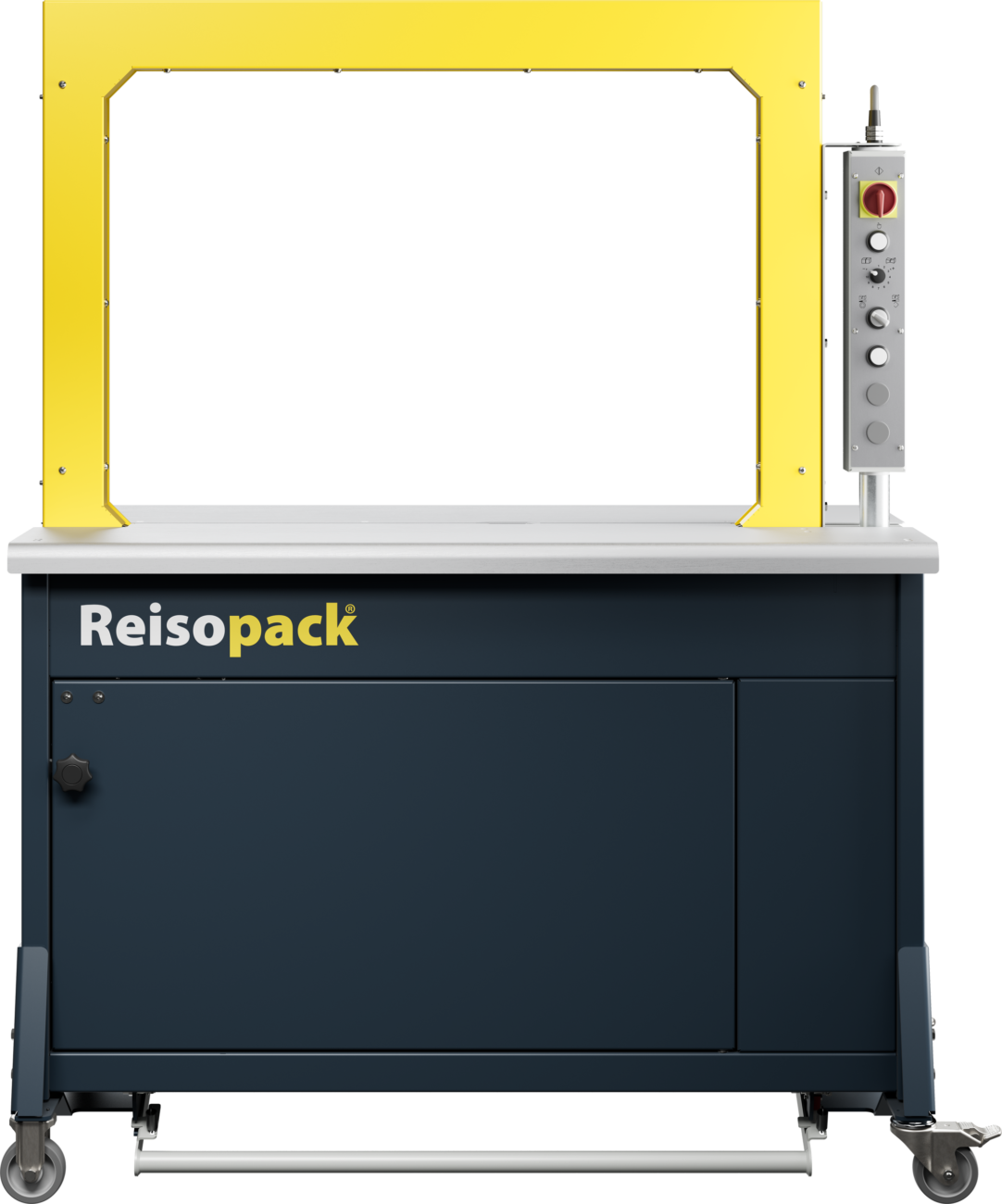
Through its strategic partnership with Reisopack, Mosca is expanding its portfolio for specialist sectors: the Reisopack 2905 horizontal strapping machine is specifically designed for the fruit and vegetable sector. With an integrated vertical edge protection feeder, it stabilises and protects sensitive goods during transport. These solutions are the result of close technical coordination to meet the high throughput rates in logistics centres for perishable goods. “Our aim is to find the right automated solution for every specific industry requirement,” says Jesser.
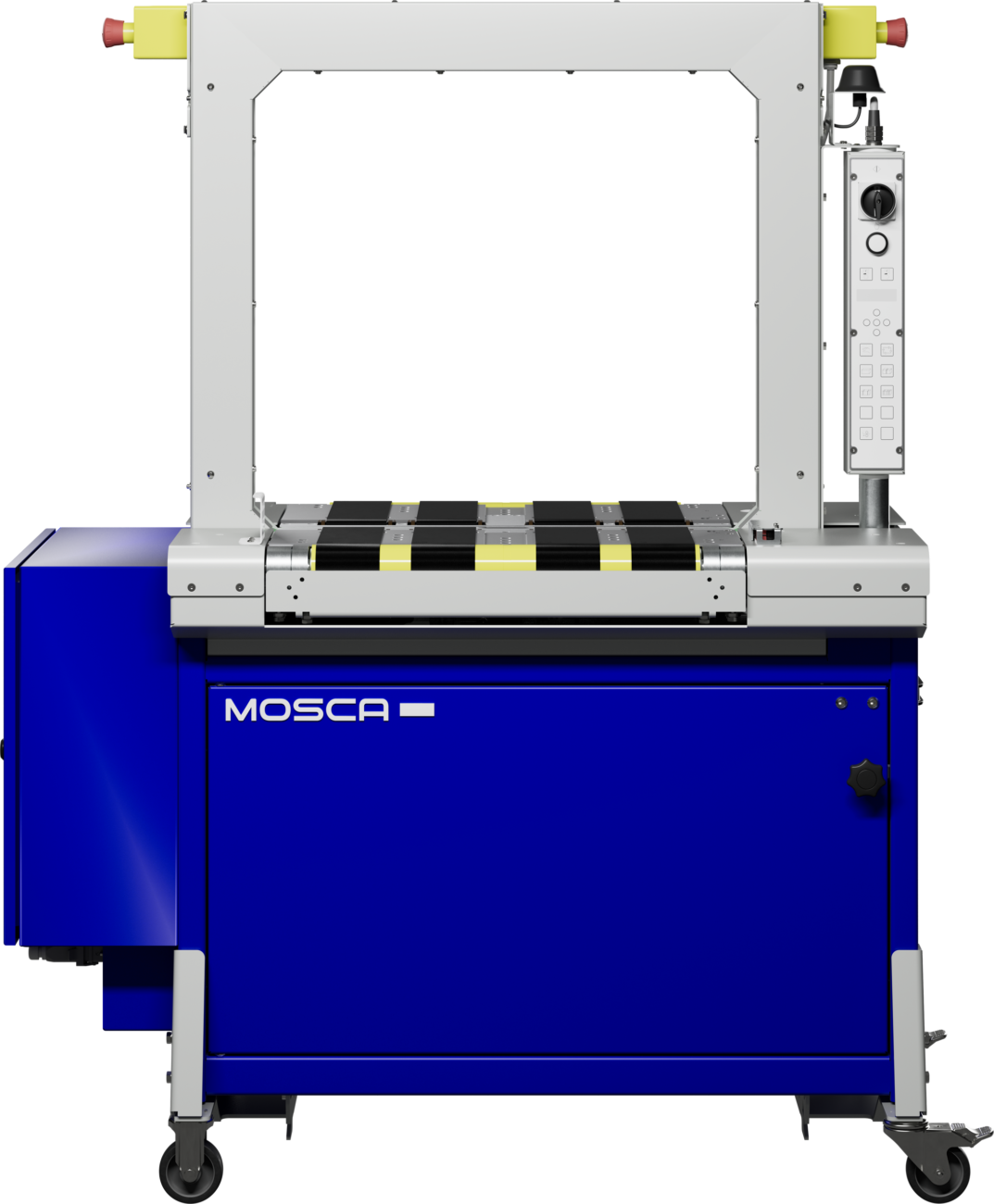
Mosca is premiering the new Reisopack Fusion series. With optimised colour schemes and four frame sizes, it expands the range of applications and enables optimal handling of various belt widths and pack dimensions. “The Reisopack Fusion offers our customers the flexibility they need to respond to changing packaging trends and different container sizes,” confirms Jesser.

Innovation in series production

Visitors to the exhibition can also experience the SoniXs P7-Connect B in action. It marks the next step in fully digitalised applications. As the successor to the MP-6, it offers full connectivity thanks to the WebHMI interface. Performance data can be analysed in real time via the digital interface, forming the basis for optimised predictive maintenance. The integrated SoniXs ultrasonic sealing system enables the reliable processing of PP and paper straps. The proven ultrasonic sealing process operates without a heating phase and is therefore not only energy-efficient but also emission-free.
Sustainability with HUG and recyclable strapping

For manual tasks, Mosca presents the HUG hand strapping tool and the more powerful HUG+ version. Together with a shredder on display at the stand, the strapping experts will demonstrate how customers can immediately prepare strapping for the next recycling cycle – fully in line with the circular economy.

Speaking of strapping: At Interpack, Mosca is exclusively showcasing the prototype of a new grey PP strap, which will be ready for market launch this autumn. Designed for bundling and sealing, the strapping consists of at least 35% post-consumer recycled material (PCR-PP) – a proportion that is deliberately highlighted by the grey colour. The fully recyclable strap is free from critical substances and combines regulatory compliance with maximum functionality for shipping and industry.

With this recycled content, the strap is already future-proof today: on the one hand, it meets the future EU requirements for transport packaging under the PPWR (effective from August 2026). On the other hand, it exceeds the 30 per cent threshold required by the UK’s Plastic Packaging Tax (effective from April 2027). “The new grey PP strap is compatible with all Mosca strapping machines,” emphasises Jesser. “The grey colour scheme is deliberately used to provide a clear visual distinction from straps without a recycled content.”

Asda’s Dual-temp Moving Double Decks

Asda has begun introducing to its fleet an additional 55 temperature-controlled step-frame moving-deck double deck trailers manufactured by Tiger, following successful trials last year. The order is Tiger’s first for the dual-temperature variant of its refrigerated lifting deck trailer and will provide versatility for transporting chilled and frozen goods across the retailer’s network.

These new trailers deliver safer load stability, cargo capacity of up to 43 pallets or 72 cages, and reduced running costs and environmental impact through fewer journeys and streamlined maintenance.

Chris Hall, VP Asda Logistics Services, comments:

We’re very pleased with these new dual-temperature moving double deck trailers from Tiger. This is Asda’s third year collaborating with the manufacturer and from our team having regularly visited Tiger’s factory it’s always been clear to see their ongoing innovation, flexibility, and attention to detail, along with impressive support.

Asda’s trailers have been designed with a lower deck height of 1940mm and an upper deck height of 1860mm, giving the supermarket optimal clearances and air flow for its operations. The three-quarter-length 10-tonne-rated lifting deck is powered by Tiger’s in-house four-ram hydraulic system. The deck is operated by buttons that are accessible from both ground level and bay height, as part of Tiger’s ‘operator first’ approach to safety. Carrier HE19 fridge units with MHS2200 single-discharge evaporators take care of the dual-temperature capabilities.

The bespoke specification delivered for these trailers includes deep-insulated floor slabs, alloy flooring to suit MHE use, a temperature-retaining shutter at the rear and a heavy-duty gate at the front of the moving deck, multi-purpose load securing, an LED fuel gauge, and reinforced rear bay protection buffers.

Darren Holland, Tiger Trailers’ Sales Director, says:

Asda is an integral part of Tiger’s customer base and it’s exciting to have worked closely with them on their latest refrigerated double deck trailers, which are the pinnacle of what we currently offer as a manufacturer. We’re proud that each generation of trailers we supply Asda with incrementally raise the bar when it comes to design, engineering, safety and sustainability.

Axscend TrailerMaster tyre pressure monitoring and electronic brake performance monitoring systems are fitted to the trailers, along with the Haldex TEM Safe Parking Valve, Nexus’ ground-level sliding coupling, and extra protection to safeguard the fridge and trailer against tree damage.

Tiger has been building refrigerated trailers and rigid bodywork since 2020 in partnership with Spanish manufacturer LeciTrailer. The innovative moving-deck double deck model was launched in 2024 and Tiger offers competitive lead times.

Asda’s latest trailers from Tiger are finished in the retailer’s bold ‘Delivery from a to brie’ cheese and ‘Packs a crunch’ carrot liveries, with ‘Not all jams are bad jams’ rear doors. They join the 485 existing trailers the Cheshire manufacturer has supplied to the supermarket to date which include ambient double decks and short-length ‘urban’ single-deck fridge trailers.

Co-Packing is Supply Chain’s Safety Valve

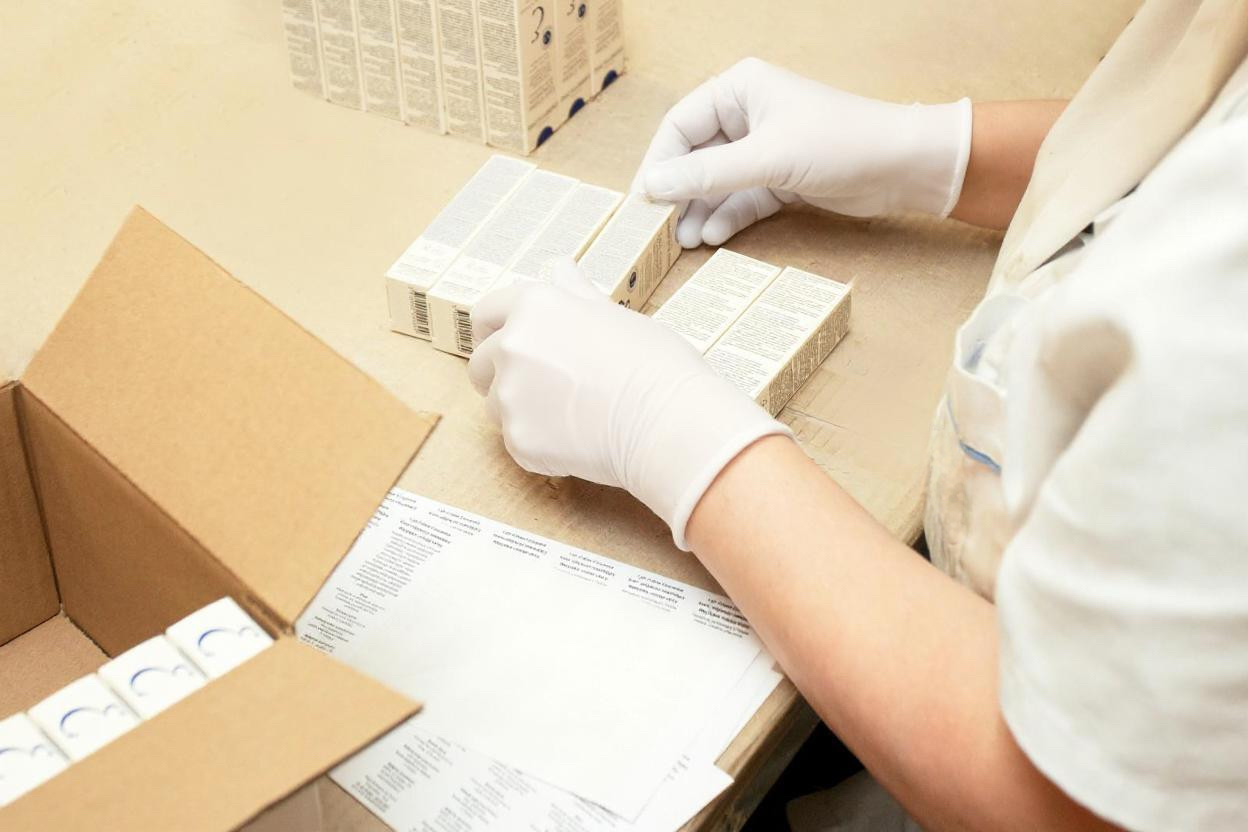
Co-packing and repacking are shifting from a last-resort cost into a strategic buffer for brands facing late-stage packaging disruption, writes Bartosz Grajewski (pictured, below), Sales Director at Transpak Copacking.

In an ideal supply chain, packaging decisions are locked months in advance, aligned with regulatory requirements, retailer expectations and production plans. In practice, manufacturers regularly face late regulatory changes, transport damage and last-minute promotional ideas that collide with the rigid realities of high-volume lines. When that happens, co-packing and repacking providers can act as a safety valve – absorbing packaging work outside the factory so core operations keep running. Three recent scenarios illustrate the pattern.

Local language, global line

A large personal care brand was preparing to enter the Baltic markets with an existing range. Retailer and regulatory requirements meant packs needed compliant local-language labelling before reaching shelf. But the volumes for three new markets were modest compared to the brand’s global runs. Stopping a high-speed filling and labelling line for a small, market-specific batch would have meant lost capacity and an unattractive cost per unit.

Instead, the company shipped a standard version of the product and outsourced relabelling to a specialist co-packer in Central Europe. Finished goods arrived, compliant labels were applied in the required languages, and products were prepared for local distribution. Decoupling production from market-specific packaging turned a regulatory bottleneck into a manageable adaptation step.

Marketing outpaces manufacturing

Another FMCG brand was preparing an in-store promotion for the peak holiday season – gift sets combining standard products with a limited-time bonus item in an unusual pack size. The concept resonated with retail partners, but the promotion had not been aligned early with manufacturing. By the time volumes and dates were confirmed, the production plan for the core range was locked.

Outsourcing the kitting turned out to be the fastest, least disruptive solution. The co-packer handled physical assembly, bonus-item placement, promotional labelling and shelf-ready preparation. The brand kept its core schedule intact while delivering the seasonal campaign on time. For the retailer, the only thing that mattered was that packs arrived ready to merchandise.

Damage in transit

A third scenario involved a North American metalworking-tools manufacturer shipping a mixed pallet load into Europe. The tools themselves were robust, but the journey was not kind to the outer packaging: a significant share of retail cartons arrived crushed or torn. Product quality met specification, but visibly damaged packaging risked returns and brand damage at point of sale. Sending stock back across the Atlantic would have been prohibitively expensive.

A local repacking partner received the shipment, separated intact packs from those needing attention, sourced new packaging, checked labelling and prepared the goods again as saleable stock. What could have been a costly write-off became a manageable recovery project that preserved both revenue and customer relationships.

A flexible buffer

None of these situations were part of the original plan, yet all are increasingly common in complex, international supply chains. Late regulatory changes, ambitious marketing ideas and transport incidents are difficult to eliminate – the real question is how quickly and efficiently manufacturers can respond.

Treating co-packing and repacking as a strategic buffer, rather than a last-resort fire-fighting cost, gives brands more options when reality diverges from the plan. The ability to adapt packaging after production, closer to the point of sale, can be the difference between delaying a launch and keeping products flowing to customers.

Subscribe

Get notified about New Episodes of our Podcast, New Magazine Issues and stay updated with our Weekly Newsletter.