UK/France row could sink British Christmas

The spat over French fishing boat licences is set to create long delays on Christmas goods to and from the EU. Expect November customs chaos, warns ParcelHero.

The international delivery expert ParcelHero says France is preparing to step up checks on goods being transported to and from the UK through French ports. It warns the move will create long tailbacks and delay UK imports and exports in the vital pre-Christmas period.

ParcelHero’s Head of Consumer Research, David Jinks M.I.L.T, says: “France and the UK are beating their chests at each other over the issue of fishing boat licences. The consequence of all this posturing could be the final straw for Brit’s Christmas this year.

“The French Government believes the UK has not honoured the terms of the Brexit deal over fishing boat licences. It is set to take unilateral action that will not only impact on Britain’s fishermen, but also dramatically slow customs clearance for Christmas goods at ports such as Calais.

“This is bad news for the UK’s hard-pressed retailers, manufacturers, logistics operators, and ultimately, shoppers.

“France’s Europe Minister, Clement Beaune, claims the only language Prime Minister Boris Johnson understands is ‘the language of force’. From 2nd November, the French Government says it will adopt ‘targeted measures’ including ‘the reinforcement of controls on lorries to and from the United Kingdom’.

“That means increased, more thorough, checks on goods bound to and from the UK. The French call the tactic ‘grieve de zele’ – effectively they will make their checks ‘overzealous’ in what amounts as a work-to-rule.

“Britain’s Environment Secretary, George Eustice, has responded by saying ‘two can play at that game’. He told the BBC this week that ‘we’ll reserve our right to do more things if France continue to press ahead with these threats’.

ParcelHero is concerned any game of cross Channel tit-for-tat will further disrupt supplies of gifts and foods from Europe in the run-up to Christmas, as well as delay British exports during this vital period. Fishing boat licences are an important factor in the Brexit deal, but, proportionately, does the Government really want to threaten Christmas supplies still further and slow vital exports over the issue?”

ParcelHero’s in-depth analysis of the ongoing UK-EU trade problems and, in particular, the Northern Ireland Protocol agreement – currently the focus of new talks – can be seen HERE.

Dachser switches to 100% green electricity

As of 1st January, 2022, Dachser will be purchasing only electricity generated from renewable resources. This means that the logistics provider, which operates 387 of its own locations in 42 countries, is increasing its proportion of green power from around 60% to 100%.

In Germany and the Netherlands, the family-owned company had already switched to green power beforehand. In addition, Dachser will significantly step-up its in-house generation of renewable energy and, as a first step, is installing and expanding photovoltaic systems on the roofs of its European logistics facilities and office buildings. By 2025, its current capacity will more than quadruple, to over 20,000 kWp of installed capacity.

“We’re implementing two basic building blocks of our climate protection strategy by switching to purchasing electricity solely from wind, solar, and hydropower worldwide, while also expanding our own production of green electricity,” explains Stefan Hohm (pictured), Chief Development Officer (CDO) at Dachser.

“These actions are reducing our carbon footprint. At the same time, our demand strengthens the production of green power and contributes to the expansion of capacity in Europe for generating electricity from renewable sources.”

Efficiency, innovation, and inclusive responsibility: these are the cornerstones of Dachser’s long-term climate protection strategy. The family-owned company’s initiatives aim at efficient logistics processes, energy savings, and technological innovation. Dachser believes this is the best way to limit GHG in line with the 2°C target set by the Paris Agreement as well as the climate protection targets of the European Union and many other countries.

To this end, the company works together with customers and partners who are also keen to actively shape how logistics moves to adopt low- and zero-emission technologies. Employees too are closely involved in climate protection activities, with a commitment to society and social issues that goes beyond Dachser’s own direct business interests.


Hoppecke launches new heavy-duty battery

In highly intensive operations, handling equipment and its traction batteries are often pushed to the limit during daily use. To tackle this, industrial battery specialist Hoppecke has launched a new range, purpose-designed for heavy-duty applications.

Featuring a unique ‘Connect Four’ structure, the trak | uplift quadro offers four essential advantages: running times are longer, as the technology delivers up to 75% more usable capacity compared to a classic PzS cell under load; meanwhile, a fast-charging capability ensures better battery availability; opportunity charging is possible without intensive equalisation charging; and a Protective Shell Separator prevents short circuits due to mossing.

The trak | uplift quadro’s higher efficiency translates into energy savings of up to 8%. There are fewer cable temperature issues too, as the battery runs cooler for longer, effectively extending its service life.

A new design incorporates an optimised pole and electrode concept. A reduced cell height, special copper inserts, four poles instead of two and optimised connection of the electrodes all add up to enhanced conductivity. The trak |uplift quadro also has a significantly reduced internal resistance compared to the standard lead-acid battery. Consequently, the voltage level during discharge is stabilised, resulting in excellent high-current capability.

Hoppecke’s UK General Manager, Stuart Browne, said: “We’re really excited about the new trak | uplift quadro, which is purpose-designed to cope with high-tonnage trucks and intensive operations where equipment typically runs all day.

“Thanks to extended running times, high efficiency and a long lifecycle, the range is inherently flexible, making it ideally suited to demanding applications such as construction, engineering and agriculture.”

Compatible with standard PzS chargers, the trak | uplift quadro is available in three variants.

The standard 48-120v lead-acid battery comes with an electrolyte level indicator. Another battery incorporates electrolyte circulation to eliminate acid stratification. The system switches on automatically and is practically maintenance-free. Finally, the trak | uplift quadro iQ comprises a high-current battery with smart charging and intelligent control. It offers increased flexibility, as charging times are improved by up to three hours. This variant also enjoys the lowest maintenance costs, and energy consumption is reduced by up to 19%.

The new trak | uplift quadro range is available from Hoppecke and all reputable MHE suppliers.

Yodel invests £1m+ in own sortation system

Independent UK parcel carrier Yodel has invested over £1m in a state-of-the-art new sortation system that is specially designed to handle delicate and irregular shaped parcels. The investment follows a record year of growth for the business, with it scaling up capability to handle a broad range of specialist items.

The new system, called Merlin2, will be located at Yodel’s Shaw sorting centre and is the business’ second automated out-of-gauge sortation facility, following the success of the original Merlin which was introduced in Wednesbury (West Midlands) in 2019.

The system, created by Yodel’s engineers in response to needs of the booming online retail sector, is capable of processing up to 2,900 one-metre-long items per hour and will work alongside the larger fully automated sort at its Shaw (Greater Manchester) depot. Merlin2 is capable of handling items up to 1.8m long and 0.9m wide and will significantly increase the speed and efficiency of the out-of-gauge parcel sorting process.

Merlin2’s automation will also ensure that clients and customers benefit from greater visibility and traceability of their parcels throughout the network. By linking directly with Yodel’s billing systems, the system also provides greater speed and accuracy for invoice processing. Items that previously had to be manually sorted will now be automatically scanned, weighed, volumised and photographed.

With more consumers switching to online shopping, parcel carriers are having to handle increasing volumes of irregular shaped items. By implementing the system in a second sort centre, Yodel can support the sorting of a larger volume of parcels every day, facilitating further growth and supporting the trend that saw Yodel move into profit for the first time in 2021.

Carl Moore, COO, Yodel, explained: “Increasing visibility across our sorting process reduces opportunities for parcels to be misplaced and means packages can travel from our clients and to consumers much faster, meeting the greater demand for a more seamless service. The system’s design also makes for a safer work environment for our colleagues by reducing the physical demands of the work at our sort centres and reducing the risk of strain and injury.”

Mike Hancox, CEO, Yodel, commented: “Yodel has seen dramatic growth alongside much of the sector in the last year and a half. Expanding the Merlin system to more sort centres allows us to continue responding to the demands of the growing online retail market. By increasing visibility across our sorting process, we can strengthen Yodel’s position as the parcel carrier of choice.”

Shaw is one of Yodel’s three central sort centres. Packages are sorted at Shaw before being sent on to one of Yodel’s depots around the UK, where they are passed on to final-mile drivers for delivery to customers.

Magazino extends robot fleet at Zalando

Magazino has extended the robot fleet at one of Europe’s leading fashion platforms, Zalando, representing the largest delivery in the young robotics company’s history. The existing fleet of eight robots at the Zalando logistics site in Lahr (Germany) will be expanded by 20 additional robots. Some of the additional robots will already support the picking of shoes ordered online during Cyber Week 2021.

The first 10 additional robots were delivered by Magazino in September 2021. These will support Zalando employees and the existing robot fleet in the upcoming Cyber Week at the end of November. The remaining robots will be delivered to Lahr by the end of the year and put into operation next year. The working area of the robots in the Zalando logistics centre will also increase from 4,000 to 16,000 sq m.

Carl-Friedrich zu Knyphausen, Director Logistics Development at Zalando, said: “We see the mobile picking robots from Magazino as an important support for our logistics processes. Often, automation technologies are difficult to implement in confined areas such as a picking warehouse. But the TORU robots have proven that they can relieve our colleagues of non-ergonomic tasks. They actively and reliably cooperate – and not only in daily business, but also at peak times like Cyber Week.”

Frederik Brantner, CEO and founder of Magazino, said: “The scaling of the robot fleet clearly shows the added value of TORU. Zalando’s decision to roll out our technology on a large scale is proof that mobile robots like TORU have long since left the testing and prototype phase behind and are now an integral part of modern, high-performance intralogistics.”

Zalando launched an initial project with two TORU robots from Magazino at its logistics site in Erfurt back in 2018. This was later followed by the relocation of the robots to the Lahr site and the expansion of the fleet to a total of eight robots in 2019. When all additional robots are in live operation around April 2022, Zalando will be operating the largest fleet of TORU robots.

GEFCO transports crane from Kazakhstan to Belgium

GEFCO, a global multimodal supply-chain expert, has completed an industrial project cargo solution to deliver one of the world’s largest cranes by ocean freight charter for a leading provider of crane rental services, heavy lifting equipment and engineered transport.

The project, delivered by GEFCO Air & Sea, saw the team transport the 4,000t, 8,000cbm disassembled crane by ocean freight from Kazakhstan to Belgium.

GEFCO chartered a newly-built tween-deck, innovative vessel, the MV Ella, which enabled the crane to be transported in one single shipment across both river and sea. GEFCO worked closely with the customer on planning to meet the complex stowage and lashing requirements, as well as the customs process. The delivery was completed in Antwerp in September, after 32 days of travel.

Vincent Habryn, Global Head of Industrial Project Cargo, GEFCO Air & Sea, said: “This project was an excellent showcase of our ability to provide a seamless and efficient Industrial Project Cargo service, despite a number of challenges we guaranteed the safe delivery across both river and sea, for our valued customer.

“We are grateful as ever for the commitment of our local teams and the trust and support of our partners.”

Paris multi-storey urban logistics asset acquired

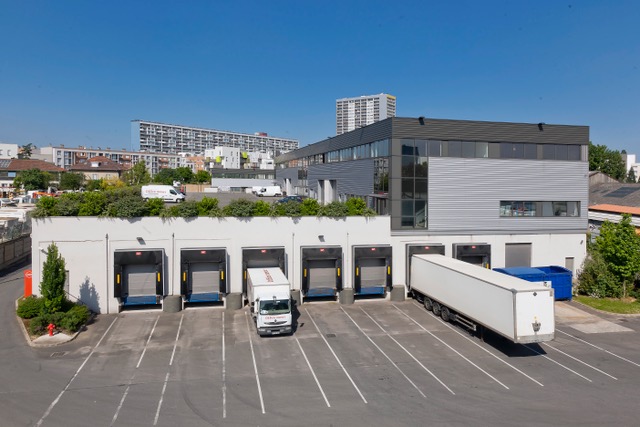
Crossbay, the first pan-European urban logistics platform to target single-user distribution centres, has acquired a multi-storey urban logistics asset in Saint Denis for an undisclosed sum in an off-market transaction. The vendor is a private family office.

The 7,500 sq m asset, located a few kilometres from Paris, features 3,500 sq m of ground floor space, with platforms for heavy goods vehicles and light vehicles, as well as single-level doors on three sides. The rest of the site is divided into cells of approximately 500 sq m on the upper floors, with access to the quays.

The property, which is currently unoccupied, is being marketed to firms in the last-mile logistics sector.

The acquisition of the Saint Denis site builds on Crossbay’s growing footprint in France, with its 20 assets at an overall value of around €180m.

The platform has invested more than €100m in France this year, with the aim to target €500m in assets under management within the next two years.

Louis Radiguet, managing director of Crossbay France, said: “This acquisition, along with the secure pipeline, will allow us to exceed our objective of €100m in acquisitions for the year 2021. The site presents all the fundamentals of urban logistics, in terms of its location and its technical characteristics. It also has a strong potential for short-term value creation for the Crossbay fund, perfectly matching the type of asset we are looking for.”

Launched in May 2020 by leading private equity real estate investment manager MARK, Crossbay was designed to enable institutional investors such as pension funds and insurers to grow their exposure to the fast-growing last-mile logistics sector.

Crossbay focuses specifically on single-user distribution centres in locations no more than a 90-minute journey to the centre of the nearest city. Single-tenant assets require less intensive asset management than multi-let industrial units and are less exposed to the performance of the wider economy than larger ‘big box’ warehouses.

The platform’s 600,000 sq m portfolio hosts a high-profile tenant base, counting leading 3PLs such as FedEx and DHL, as well as major e-commerce brands like Amazon, as occupiers.

In December 2020, MARK announced a successful capital raise for Crossbay, securing €550m in equity commitments from a global range of investors. Investors included the Townsend Group, CBRE GI, Credit Suisse, Nuveen and QInvest LLC. The fundraise was then followed by a €400m debt facility from investment bank Citi in January 2021 to help further fund Crossbay’s growth and European expansion.

HAI unveils new products at CeMAT Asia

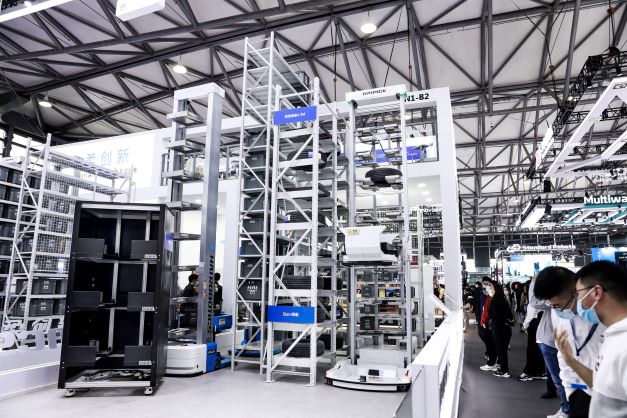
HAI Robotics, a global leader in Autonomous Case-handling Robotic (ACR) system for warehouse logistics, said it is pushing forward the frontier of automated warehousing technology as it unveiled three new products during the CeMAT Asia Expo in Shanghai on 26th October. The new products will help unblock the bottleneck in the intralogistics sector in the yearning for higher storage density and flexibility.

The company showcased at CeMAT Asia, the region’s biggest intralogistics fair, a whole product family of the HAIPICK ACR robots, including two new members: the HAIPICK A3 fork-lifting ACR, A42-FW flexible-width ACR; and the new-look A42T telescopic ACR, which refreshes storage height record in the industry at 10m.

The HAIPICK A3 robot, adopting a fork-lifting picking design, is created for wider storage scenarios in which goods are not necessarily placed inside a box. The design, a major difference from previous generations of HAIPICK robots that use clamping picking, granted larger storage possibilities and better rack space utilisation. Goods that don’t require a container, such as tyres, trays and boards that can be lifted by a fork from the bottom, would be easily handled at higher picking efficiency.

The A3 robot adopts SLAM navigation technology, enabling more man-machine mixed field operations. It is also a good match with environment that has strict control for dust, static and pollution.

The second new product of HAIPICK A42-FW robot targets higher storage density. With a fork that can flexibly adjust according to the size of goods, this robot allows picking and handling of different sizes of totes or cartons.

Warehouse space utilisation can never be too much emphasised, and HAI claims the A42-FW robot is an absolute champion in this regard. On the one hand, with its chassis measuring 900mm in width, narrower than standard aisles of 1000mm, the storage density can be boosted by 5%. On the other hand, its pick height of 190mm to the lowest means that the storage density can be elevated by another 6%. What’s more, the robot can dynamically adjust storage locations according to the size it perceives with the fork and in this way, the storage locations can be increased by 20%.

Along with the new HAIPICK robots, HAI Robotics also launched a new version of HAIQ – the intelligent brain that commands HAIPICK ACR’s operation. HAIQ nova allows seamless interaction with all kinds of equipment such as Kiva robot, slam robot, conveyor belts, etc. The latest HAIQ nova, armed with copious user data from successful projects in different industries, can ensure smooth and optimised warehouse operation.

“Since we initiated the world’s first ACR system in 2015, we have been constantly updating our product as well as solutions, centring on elevated picking height, flexible picking arms, slender robot body and better software system (HAIQ) – addressing the demands for higher storage density, mixed picking of totes and cartons, and more storage locations against the backdrop of surging e-commerce order-fulfilment strain,” Says Richie Chen, the founder and CEO of HAI Robotics.

With over 300 projects running across the globe, HAI Robotics has been constantly learning from successful deployment and is keen to update its ACR technology for better user experience. The birth of the three new products arises from its sharp market perception and from thinking out of the box.


DeliveryApp poised to disrupt logistics industry

DeliveryApp, the Manchester based tech start-up, has been on a supercharged growth strategy in 2021 following significant investment in January.

The technology-based logistics platform connects independent couriers with end users for fast deliveries through its Apps (available on Google and Apple stores) and website.

DeliveryApp says the platform is unlike other operators within the logistics industry due to its unique, agile structure. It has no slow and expensive hubs across different cities generating service costs. Instead, it’s formed a network of over 500 independent couriers across the country who will collect and deliver the parcel personally. That ever-expanding driver network is in-part thanks to its ethical approach to its drivers.

Drivers can earn a higher price per mile, take control of their own jobs without difficult-to-achieve targets and will be paid thanks to its fast, full automated payment system. It is a framework which has been developed through driver focus groups in order to create a platform which understands its audiences.

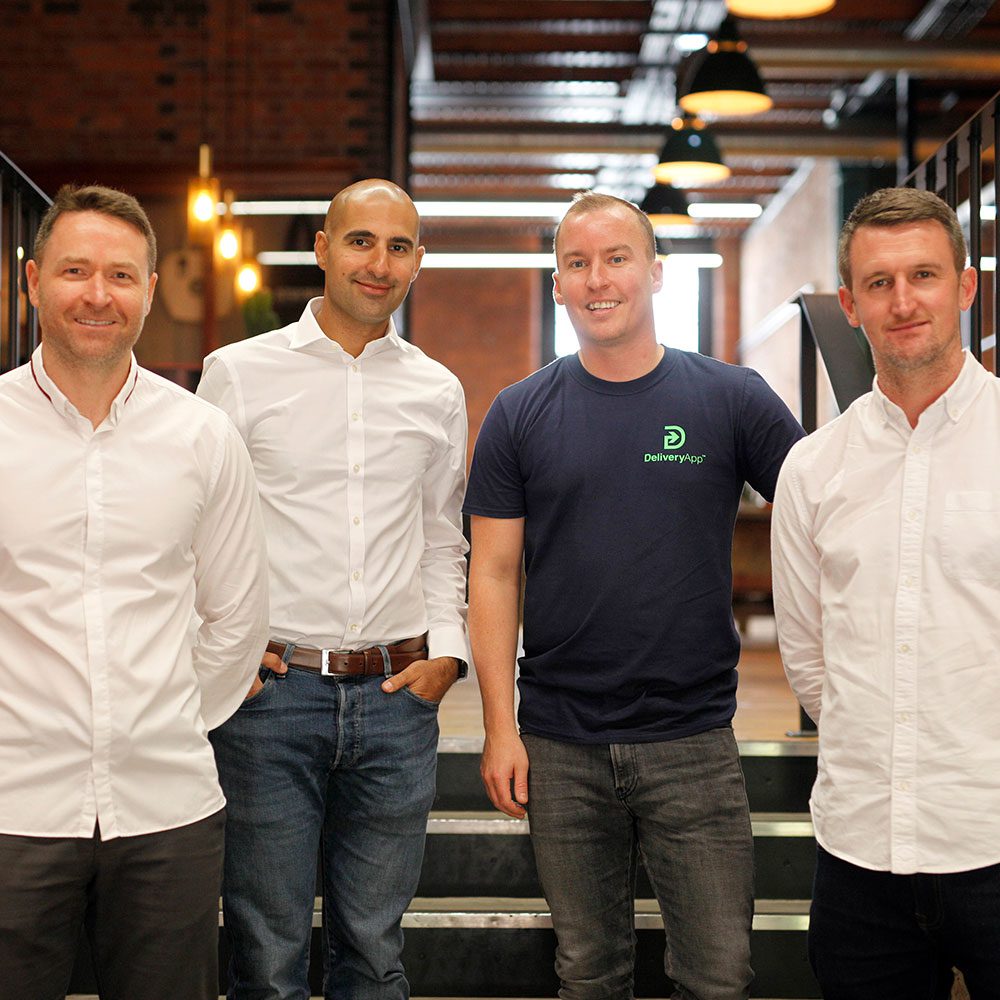
As DeliveryApp co-founder and Silicon Valley magnate Ioannis Verdelis explains: “Our platform lives and breathes through our drivers, if they’re not happy, we’re not happy. So, during our development phase we channelled just as much energy into creating an eco-system which works as well for them, as it does our end users booking deliveries. Faster payments, fair pricing and being in-control of their own deliveries were all important objectives for us to get right from the outset.”

The App, which is in BETA phase 3.1 and went live across App stores in May, has been experiencing rapid growth as its reputation and network starts to build organically.

Its customer proposition is defined, too, as Vedelis continues: “Our customers are on the whole driven by two things – price and trust. They want to get the best-possible price for their delivery, and they want to be confident it’s going to make the journey unscathed. Our transparent pricing through the platform means they can very quickly calculate the cost of their delivery, and thanks to our technology-based infrastructure, we cost around one-third less than the competition.

“Our customers are also given ownership of their delivery. They can see and control the whole process from prescribing collection and delivery times, to tracking the parcel as it travels to its destination with evidence provided on completion.”

By the end of June, DeliveryApp had signed up over 200 businesses, no mean feat for a platform which had only been live for two months and is still its BETA phase. It echoes the businesses’ last eight months which has seen DeliveryApp really scale its operations.

Lance Jones, Founder and CEO, describes DeliveryApp’s rapid growth: “The last eight months really articulate DeliveryApp’s clear vision and the size of the opportunity the platform represents. In January we unlocked our potential, we generated a multi-million-pound investment in order to turbo charge development and take the concept to market.

“Since then, it’s been a process of getting the right infrastructure in-place in order to achieve this – people like Ioannis Verdelis who has a proven track record of bringing disruptive apps to market and digital expert Justin Blackhurst whose outstanding reputation in digital marketing, SEO and web development through his consultancy DigitalNext makes him the perfect fit.”

“The business now has a 15 strong team of specialists in user experience, development, sales and driver operations based at our Manchester head office.”

To accommodate the new team and the businesses’ rapid growth strategy, DeliveryApp has taken an office at Department Bonded Warehouse in Manchester’s Tech and Enterprise City. Painted a vibrant green in-line with the brand’s fresh colour palette, it creates a sense of place for those news starters to collaborate and thrive as a team. Empowering quotes adorn the walls, and a table tennis table creates a space for the team to bounce ideas off one and other.

Jones continues: “For me, our people are just as important as our platform. Our culture and identity are driven by our people. We’re exciting, fun and innovative. We have good values, purpose and ethics, our people need to embody all of these things.”

DeliveryApp’s strong sense of purpose can be seen through its TechForFutures initiative. The business is re-investing a percentage of its profits and company resource to help inspire the 4.1m children living in poverty to learn digital and tech skills through funding for courses and local community work.

Justin Blackhurst, Co-founder, said: “DeliveryApp is an incredibly exciting business to be a part of. We’ve built the foundations for success and now it’s all about taking the business to the next level, whilst the platform maybe in its infancy, the scale of opportunity is huge.

“The logistics industry has on the whole been sluggish and a little reluctant to adopt new technologies. DeliveryApp brings these new intuitive consumer technologies and capitalises on the demand at people’s fingertips. Whether you’re an individual selling something on Facebook market place and want to provide a price for getting a bed or sofa from one side of the city to the other, or you’re a business using 50 couriers a week, DeliveryApp provides a slicker, cost effective solution.”

 

Hydrogen fuel HGV trials to start

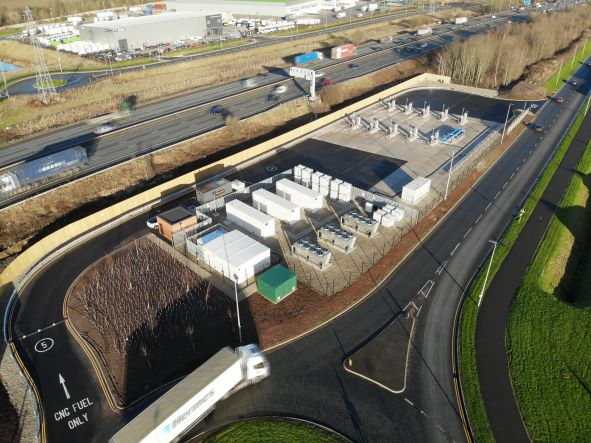
CNG Fuels, the UK’s largest supplier of alternative low-carbon fuels for HGVs, is planning to host hydrogen fuel trials across its rapidly expanding UK network of public access biomethane refuelling stations to support the future decarbonisation of HGVs.

A new branch of the company, HyFuels, has been established to identify the best hydrogen production pathways and infrastructure solutions for HGVs so it can support customers in adopting hydrogen quickly and easily when it becomes commercially viable. The first trials are due to begin in mid-2022, with the company currently in discussions with international partners and undertaking feasibility studies across its upcoming development sites. By 2025, the company plans to allocate 100 acres of its land to public access hydrogen refuelling.

Philip Fjeld, CEO of CNG Fuels, said: “HGVs alone account for 5% of all UK emissions, making their decarbonisation one of the single most important things the UK can do to meet our net zero ambitions.

“Renewable biomethane is and will continue to be the most effective decarbonisation solution for heavy transport for many years. However, we have launched HyFuels to ensure we are ready to support our customers’ journey to a multi-fuel future as new technologies become commercially viable and the fuel readily available.”

HGV fleet operators face a significant challenge to rapidly switch to more sustainable fuel sources to meet climate targets. HGVs account for 16% of UK transport emissions, despite representing just 5% of total road miles on UK roads. For high-mileage HGVs, renewable biomethane is the lowest carbon, most cost-effective alternative fuel today, cutting emissions by more than 85% and lifetime costs by 30-40% compared to diesel.

Mid-weight trucks (<26 tonnes) will be among the first to be commercially viable for new technologies such as hydrogen. The trials carried out by HyFuels will be particularly important for hauliers that operate <26 tonne trucks, helping them to navigate challenging decarbonisation targets proposed by government, including a potential ban on diesel engines by 2035.

CNG Fuels already supports major fleets with 100% renewable biomethane sourced from food waste and manure across its UK-wide network of public access refuelling stations. Major brands already on board include the John Lewis Partnership, Waitrose, Hermes, Warburtons, and Royal Mail.

Demand for the fuel has been doubling every year for the last five years. CNG Fuels expects that with the rapid expansion of its UK wide network, this will continue to accelerate with around 10% of the UK’s high-mileage HGV fleet running on Bio-CNG by 2025.

However, in future, other low carbon technologies will start to become more prevalent as technology develops and costs fall. The Committee on Climate Change expects hydrogen-powered HGVs to play a major role in decarbonising freight transport from 2030 onwards and the government’s Net Zero Strategy, released earlier this month, includes a policy to expand trials for zero emissions HGV technologies.

HyFuels is already in advanced discussions with major international providers of both hydrogen infrastructure and the fuel to deploy their first trials. Among the first initiatives will be a number of hydrogen-ready mobile refuelling units that are able to quickly deliver hydrogen to refuelling sites on demand.

Findings from the trials will be used to inform government, industry, and existing customers on the effectiveness of different hydrogen solutions and outline key infrastructure considerations for a hydrogen refuelling network. The company is also planning to incorporate the findings into a wider business strategy, with a complete roadmap for companies to switch fleets from diesel to net zero fuels.

CNG Fuels currently operates seven public access bio-CNG refueling stations and plans to open at least 12 more every year from 2022. The company plans to have 60 stations in operation by 2026, supporting the mass adoption of renewable biomethane fuel by fleets across the UK.

Baden Gowrie-Smith, CFO of CNG Fuels and head of hydrogen development for HyFuels added: “We build our sites with our customers’ future needs in mind, acquiring additional space so we can expand as demand grows. This means up to 30% of our future land will be perfectly placed to deploy multi-fuel trials on some of the busiest haulage routes in the UK.

“As soon as these technologies are viable, we will be ready to support our customers in adopting the latest and greatest in low carbon technology. With increasingly aspirational decarbonisation targets set by government, our role is to support fleets in their journey to net zero, making it as simple and affordable as possible.”

Subscribe

Get notified about New Episodes of our Podcast, New Magazine Issues and stay updated with our Weekly Newsletter.