Hyster maintains strong environmental impetus

Hyster Company has set ambitious environmental goals to achieve by 2026. Now at the halfway point, Hyster reveals the progress so far of its green manufacturing initiatives and innovative products and solutions designed to help customers achieve their sustainability goals.

“Part of the overall goal is to significantly reduce our global carbon footprint,” explains Conal McNally, Environmental Engineer for Hyster Europe. “Moreover, environmental targets have been set to reduce carbon emissions, VOC emissions from painting operations, and hazardous waste all by 30%, and water consumption by 20%. We also aim to achieve zero waste landfill at all sites and to offer a greater range of alternative products that enable customers to cut emissions cost-effectively.”

Most manufacturing processes tend to create waste. As a global manufacturer of industrial products, Hyster recognises the importance of responsible material use and is pushing to mitigate its waste footprint across all aspects of the value chain. The majority of waste created in the manufacturing of Hyster lift trucks is now being recycled.

For instance, in Nijmegen, the Netherlands, where Hyster Big Trucks are produced, any non-recyclable waste is incinerated in the Netherlands’ cleanest burning facility, and any excess heat is used for heating in the factory building and nearby homes. Solar panels have also been fitted to provide some of the power to the site.

“We have already achieved our goal of zero landfill waste at our manufacturing site in Nijmegen,” adds McNally. “And the plant producing Hyster trucks in Craigavon, UK, has also been extended with similar green initiatives at the centre of its design and build.”

The new building design includes a smarter approach to heating, a more effective use of natural light, the creation of areas for biodiversity, and a Sustainable Urban Drainage System (SUDS) amongst other important initiatives. 97% of waste from the site is now recycled, and waste to landfill has reduced by almost 45%.  A specialist at the site is working to use materials responsibly in the packaging of Hyster products, and to increasingly make packaging recyclable and sustainable.

To further support the reduction in its carbon footprint, Hyster also employs low-emission methods to deliver finished trucks to customers, wherever possible. Hyster ReachStackers, for instance, can be transported by barge from the Nijmegen facility to the main port of Zeebrugge in the Netherlands. Transport on the water reduces the number of trucks on the road, helping save on fuel consumption.

“As well as implementing sustainable manufacturing processes, we are also evolving the complete range of Hyster products towards low or zero emissions with key advances in technology and truck design.,” says McNally. “From Big Trucks used in ports and terminals, right down to low-capacity lift trucks in busy logistics operations, Hyster products increasingly incorporate a range of clean energy solutions.”

For example, innovative applications of lithium-ion batteries and hydrogen fuel cells are enabling Hyster to develop zero-emission Container Handlers and ReachStackers for the first time.

Plus, Stage V engines that comply with EU emission regulations are introduced for Hyster Big Trucks, with capacities of 8t or more, helping businesses comply with emissions legislation, while also heightening productivity, and reducing the cost of ownership for the customer.

In 2021 the Hyster J10-18XD lift trucks (pictured) were also launched, featuring lithium-ion battery packs and up to 18t lift capacity, for comparable performance to ICE trucks, but with zero emissions.  This follows the recent launch of the 7-9t lift capacity, J7.0-9.0XNL series of electric lift trucks, with fully integrated lithium-ion batteries and rapid opportunity charging.

“A big part of our green approach is supporting customers across multiple industry sectors in their own sustainability objectives with the right products, and the right aftermarket solutions, such as carbon-neutral lubricants,” says McNally.

Some Hyster Big Trucks for the European market are prefilled with Shell’s carbon-neutral engine oil, and it is also in use at the factory producing Hyster lift trucks in Craigavon, Northern Ireland.

“The demand for sustainability is growing across all areas of the materials handling industry, to comply with legislation, company environmental targets, and CSR policies,” says McNally.  “Like many of our customers, we are closely monitoring our performance and progress against our own environmental goals and continue to strive for ambitious targets in EMEA. Similar progress is also being made by Hyster in JAPIC and the Americas.”


Moving a space test chamber from Italy to UK

Specialist Logistics Services does exactly as its name suggests – it specialises in the movement of out-of-gauge and abnormal project cargo.

During the first Covid lockdown in April 2020, it undertook a particularly challenging venture to move a satellite space test chamber from its manufacturing facility in Italy to Harwell in Oxfordshire. It was by far the biggest challenge the company had undertaken.

The vast spherical chamber was moved in 53 parts, six of which were the main chamber walls comprising 8m-wide sections. Specialist Logistics Services started the journey by chartering a vessel from Italy to the UK. It then organised with Portsmouth docks to use specialist cranes to unload the vessel and move every part on appropriate vehicles that would manage the size and weight of the pieces. Then very early on a Sunday morning as to not disrupt regular traffic, the convoy departed for its destination. Taking up a minimum of two lanes of traffic at any one time, the convoy was over half a mile long in total.

Upon arrival in Harwell, a highly skilled team was brought in to move the pieces into place and weld it together so the rest of the facility could be constructed around the chamber.

The operation took two years of planning and involved literally hundreds of personnel.

EP forklift importer gets finance boost

DF Capital has partnered with Handling Equipment UK Ltd to help support its dealers in the UK electric forklift market.

Handling Equipment UK is the UK importer of EP Equipment material handling machines. Based in Stourbridge in the West Midlands, it is a family-run business that employs 20 people. It currently works with over 40 material handling dealers in the UK.

DF Capital was initially approached by EP Equipment, a leading global manufacturer specialising in lithium-powered warehouse equipment. There is growing interest in EP Equipment’s Li battery-powered forklifts because these particular vehicles can now do everything a diesel or gas machine can do – including working outside – and they don’t produce any emissions when they are being used.

EP Equipment is continually expanding its footprint in the UK via distributor partners and introduced DF Capital to Handling Equipment UK. Handling Equipment UK was importing increasing numbers of EP material handling machines into the UK for supply to dealers and therefore was looking for a bespoke facility to support this activity.

A tailored £1m floorplan facility was created for qualifying dealers which provided Handling Equipment UK with the peace of mind to take orders, knowing they would be paid immediately. This also eased cashflow and managed any financial risk. A unique 60-day cost-free floorplan facility is offered to a number of qualifying dealers, allowing them to hold additional stock to meet the growing demand for the lithium-powered units, as they know that funding is guaranteed to them.

Handling Equipment UK has sold in excess of 200 EP electric forklifts in the last year.  Due to the considerable demand for the units, the company estimates that double this amount will be sold in 2022 and then twice as many again in 2023.  The inventory finance facility from DF Capital will aid this growth.

Andy Williams, managing director at Handling Equipment UK Ltd, commented: “The clock is ticking for companies across Britain, aiming to do their part to cut carbon emissions and meet stringent government targets. As part of this, electric forklifts are vital as part of the way forward and we have seen massive demand for them over the last couple of years.

“EP Equipment in particular has developed a first-rate machine that is both well-priced and ticks the ‘environmentally green’ box. The only thing missing – until now – was a sensible and flexible way to finance them, particularly when customers wanted to try before they bought them.

“We are delighted to be working with DF Capital because of its vast expertise in running floorplan facilities and the fact that it is providing us with the holy grail with its rental scheme.”

Brian Warbrick, head of vendor origination at DF Capital, said: “We’d been talking to EP Equipment for a while and it’s a pleasure to partner with one of its key distributors. Boosting environmental sustainability is always at the top of our agenda at DF Capital – we work with a number of innovative and ‘green’ companies and the electric materials handing market is a very exciting one and key to helping lower CO2 emissions.

“Handling Equipment UK is a rapidly growing player in this space and we are glad that we were able to help it support its dealers in a way that no other funder could.”


Simple solution for loading bay bottlenecks

There is a Europe-wide HGV driver shortage, which is very acutely felt in the UK. Part of this is caused by the pandemic. Essential goods continued to move during the lockdown, but as non-essential goods were out of circulation, many hauliers went bust and the drivers sought employment elsewhere.

As the economy is reopening, demand is skyrocketing, and with hauliers struggling to cope they are forced to turn down work owing to lack of capacity. If the loading or unloading time is several hours, it is better to opt for shorter runs so in the same time more jobs can be completed.

Of course, turning down jobs means turning down money and risking the future of some client relationships, with these contracts going to other operators in the future.

ConFoot, a Finnish manufacturer of legs for shipping containers, believes it has the solution to solve these loading bay bottlenecks. Using ConFoot container legs the container can be left on the legs at the loading bay for loading and unloading, freeing the truck and the driver to continue with other jobs in the meantime.

The hauliers will have a bigger time window for collecting the containers in most cases, making it easier to manage. This allows for the hauliers to plan more effective routes, maximising revenue and client satisfaction.

Retaining drivers is also easier, as many drivers are paid by the mile, not by the hour, so delays means loss of income for them.

ConFoot says its container legs require no maintenance, and have a lifespan of up to 20 years, providing a very ample return on the investment. The air suspension chassis and dump valve of the trucks trailer is used to lift and lower the container, and only one person is required to attach the legs, which means the driver can do it alone with no help required from the personnel at the site.

The loading bay model has the maximum capacity of 30 tonnes (container + content).

Combilift wins family business award

Combilift has been recognised as the overall winner of the Energia Family Business of the Year 2021.

Energia, the largest supplier of 100% Green Energy in Ireland, recently hosted its bi-annual awards ceremony virtually, with 19 awards being presented to Irish family businesses. The awards celebrate generations of families who work together and this year’s ceremony focussed on honouring businesses who have demonstrated outstanding leadership and resilience throughout the Covid-19 pandemic while continuing to thrive and grow.

Around 200 family business entries were submitted for consideration by the judging panel. Criteria for success was a business which has drawn on its family values to build a successful company, one which acts as a great ambassador for the sector and makes a significant contribution to society and the wider economy.

Combilift was nominated for two categories, Innovative Family Business Award and Manufacturing & Engineering Family Business of the Year. As the company claimed gold in both of these, it was  therefore eligible for the top award, the Energia Family Business of the Year 2021.

Combilift’s CEO and co-founder Martin McVicar commented: “Combilift are thrilled to receive both category awards and of course the overall Family Business award. We’d like to thank the sponsors of our awards, Energia and also NSIA, and the jury for recognising our company and its achievements with these prestigious accolades. This means so much to our team here in Combilift and their families, we are all very proud, and will celebrate accordingly!”


AGV performance: a deep-dive into neural networks

Machine Learning, Neural Networks – big terms in modern logistics, but what do they actually mean? What we need is an expert to tell us. Paul Hamblin, editor of Logistics Business magazine, meets one.

AGV and mobile robotics specialist Kollmorgen measures the performance and behaviour of AGV systems, both on a system level and on board individual AGVs. It collects information on motor drives, laser scanners, localisation, traffic, and obstacle interference, thus finding trends and patterns which help it to improve products and system configurations.

Highs and lows in productivity or daily utilisation trends might be measured, and the data used to optimise routes, increase throughput and calculate smarter resource utilisation. To the end-user, this translates into lower costs and higher revenue. The collected data can also give important clues to external processes that might disturb AGV performance. For example, pedestrians getting in the way of the AGVs, or manual forklifts driving in areas originally planned primarily for the AGVs.

How does it do all this, though? Samuel Alexandersson, Manager Product Management AGVs at Kollmorgen is our patient guide.

“An artificial neural network is a computational model that is loosely based on the structure of the human brain,” he begins. “Our brain cells, or neurons, are connected by an intricate network of nerves along which electrochemical signals travel. Simplified, we can say that if the weighted of input signals are strong enough, the neuron will fire, and the signal will continue on to the next set of cells the neuron is connected to.

“In this manner, the structure of the connections between all the different neurons in our brain will determine how a signal is propagated, and when we learn new things, what is really happening inside our brain, is that the connections are restructured.

“In an artificial neural network, the signals are digital instead of electrochemical, and the strengths of the connections are stored in weights. Initially, these weights will have random value, meaning when we feed an input to the network, it will just output random nonsense. But in the same way we humans learn from experience, we can let the model learn from experience in the form of data.

“Each datapoint will be an input and an expected output, so these pairs are examples to learn from. Using these so called Machine Learning algorithms to gradually adjust the weights, will bring the output from the model closer and closer to the expected output, so that it can learn to make predictions.

“For example, if we are to teach a machine to see the difference between a cat and a dog, we need to construct a dataset with images (inputs), where each image has a label indicating if it is a cat or a dog (the correct outputs). After training the neural network on the dataset, we may feed it with a new image, and even though this image has never been seen by the network before, it will tell us if it is a cat or a dog.”


Can he offer examples of how insights can be generated from data in a logistics context?

“Designing an AGV system can be a complex task that requires a lot of skill and experience,” he replies. “When designing the road network for example, there can be tens of thousands of individual road stretches that need to be configured correctly. Of course, it is easy to make a mistake and often such mistakes are not discovered until you run the system in a simulation.

“Therefore, we are currently developing tools that can analyze the road network directly, so that the user gets more immediate feedback. In internal AB-tests, we saw a 5x improvement in time it took users to find the root cause in a faulty configuration.

“A more anecdotal indication of the impact we can have with a data-driven approach, is a support case where something that an engineer had been debugging for several hours with conventional methods were resolved within 10 minutes using a prototype that automatically analyses the configuration data.”

So there we have it – as always, it’s all about cats and dogs.

The human side of digitalisation

By now, most people are familiar with the basic concept of digitalisation. Robots clean windows and floors, and there are apps and fitness trackers to help monitor their users’ health. And while technology has already become an everyday part of practically everyone’s life, there are still concerns that machines will replace people when it comes to solving business problems. According to Marina Syroezhkina (pictured), Director of the AsstrA Information Technology Department, people should not fear technological progress and increasingly digitalised supply chain processes.

In recent years, digitalisation has become a top priority the transport and logistics sector. The pandemic-triggered crisis has demonstrated that businesses embracing technological advances can more easily survive and thrive in rapidly evolving circumstances. Digital business solutions exist to track processes, collect data from various sources, help humans complete mundane tasks, and generally ensure that operations run smoother and more transparently.

With better access to information, a business can more easily assess its current situation and develop an optimal action plan. Businesses often use Enterprise Resource Planning (ERP) solutions and other specialised applications to manage business processes and information. Business Intelligence (BI) solutions are used to track process flows.

In addition to the company’s proprietary Supplier Cabinet tool, AsstrA uses Oracle E-Business Suite, and Lotus to integrate transportation systems, automate associated processes, and free team members from the burden of routine operations and manual data processing. Enterprise Content Management (ECM) as Electronic Data Interchange (EDI) are also used in this respect.

But the story does not end there. Markets continue to evolve, as does the pace of digitalisation. The rise of Robotic Process Automation (RPA) technologies is a recent example. RPA solutions are used to handle routine, monotonous operations that do not require decision making. Such operations might include receiving a file, reconciling two documents, or copying information from one system to another.

For operations involving decision making based on accumulated experience or analysis of data from several sources, machine learning (ML) technology can be leveraged. Using ML, prediction algorithms can be designed to support decisions using data accumulated across a company in the form of spreadsheets, financial reports, images, or even scanned copies of documents. ML solutions help humans add an analytical component to their thinking and make faster, more accurate decisions.

As the pace of innovation quickens, the necessity of responding and adapting to changing market conditions is growing. Many companies, including AsstrA-Associated Traffic AG, are restructuring their project flows around Agile methodology to achieve better results. Roadmaps include short sprints that reflect current realities with a constant focus on strategic objectives. In a changing environment, monolithic planning no longer works.

A year and a half of the “new reality” has confirmed that it is not the fittest who survive, but rather the most adaptable. Digital solutions offer dependable support mechanisms in these uncertain times.

Open Logistics Foundation established

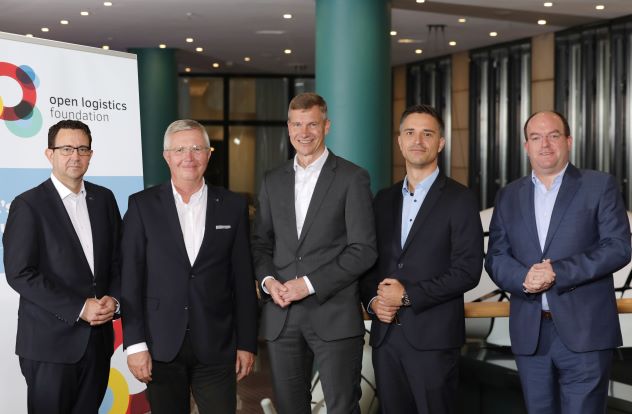
Dachser, DB Schenker, duisport and Rhenus have established the Open Logistics Foundation. The purpose of the non-profit foundation is to build a European open-source community aiming to promote digitalisation in logistics and supply chain management based on open source and standardise logistics processes through de facto standards. Not only is a technology initiative like this unique in logistics to date, the founding members are also taking on a pioneering role as to the future topic of open source.

“We want to drive the digitalisation of logistics forward together. That is why open source is an important success factor for the entire logistics industry and, at the same time, a driver for harmonised processes in digital supply chains. We consider the Open Logistics Foundation to be the first step towards a platform economy based on European legal standards and values. It is both a beginning and an appeal to the logistics sector to think of technology and processes together and actively participate in the open-source community,” the founding members declared in a joint statement. Now it is about anchoring open source in the logistics sector and implementing the internal structures to work with the corresponding hardware and software.

The foundation addresses all logistics-related companies and their IT developers. Through Open Logistics e.V., the funding association, which was also founded in Berlin, it is open to new members from all areas of logistics, ranging from industry, retail and services to freight forwarders and political organisations. Numerous companies already announced their participation in the funding association, including AEB, BLG Logistics Group, GS1 Germany, Lobster Logistics Cloud and the Bochum-based Setlog Holding, but also associations such as the Fraunhofer Gesellschaft zur Förderung der angewandten Forschung.

The core of the foundation’s work is the operation of the so-called Open Logistics Repository, a technical platform on which software and hardware interfaces reference implementations and components available as open-source under a free license (permissive license). All tools and components will be free of charge without restriction for commercial applications to promote broad acceptance within the logistics sector. Companies may use them, for example, to expand their platforms or to set up new products and business models faster.

The open-source approach guarantees an open standard for digitalising logistics processes while offering a significant degree of flexibility for individual customisation. Companies that use open source are usually more productive, reduce costs and prevent being tied to proprietary software. Another advantage is that the software solutions are not isolated, but all components are compatible, facilitating digital networking beyond company boundaries.

The main tasks of the foundation also include identifying collaborative projects to be included in the repository. It monitors the quality of the open-source software and guarantees neutrality in its development. Furthermore, it offers training for companies on how to work with the platform.

The set-up phase of the platform will take place in the coming year. In Berlin, some open-source projects have already been named, for example the first open-source digital consignment note (eCMR) as well as implementations for the digital load carrier exchange or the AGV interface VDA 5050. Further developments from the community will be added in the future.

On the foundation’s establishment, the board members were appointed. Jochen Thewes (Chairman), CEO of DB Schenker, Dr. Stephan Peters (Vice Chairman), Member of the Board of Rhenus, and Stefan Hohm (Vice Chairman), CDO of Dachser, were elected to the Executive Board. The Advisory Board is made up of Prof. Dr. Dr. h. c. Michael ten Hompel (Chairman), Managing Director of the Fraunhofer IML, and Markus Bangen, CEO of duisport, as well as Jakub Piotrowski CIO/CDO of BLG Logistics Group.

The Open Logistics Foundation was initiated by the Fraunhofer Institute for Material Flow and Logistics IML as part of its Silicon Economy research project, which is funded by the German Federal Ministry of Transport and Digital Infrastructure (BMVI) with €25m. More than 150 researchers are working on an open-source software and hardware infrastructure that enables companies to process their business operations in an automated way and to offer and use services and data securely across different platforms beyond company boundaries. The software and hardware created during the project duration until 2023 and the developments from the community Open Logistics Foundation will form the basis of the Open Logistics Foundation’s repository.

Statements

“If we want to digitise logistics successfully, we have to overcome silo structures. Hardware and software from open source can and will make a significant contribution to achieving this. The benefits are impressively simple: Everyone uses the same freight documents, for example, and everyone plans routes or offers tracking and tracing. In this respect, we want to jointly develop IT standards in logistics beyond company boundaries and make the results accessible to everyone. This open-source approach is intended to replace individual investments in the digitalisation of commodities. Every company will benefit from this.” Jochen Thewes, CEO of DB Schenker, Chairman of the Board of the Open Logistics Foundation

“Digitalisation is not an end in itself. It overcomes interfaces and pays off higher-level goals such as transparency, efficiency, and sustainability. Above all, however, it must also be economically feasible and successful on the market. 100 percent digital is not a dream, but our common future in more and more use cases. The open-source concept guarantees an open standard for digitalising logistics processes while offering a high degree of flexibility for individual adaptations. By founding the Open Logistics Foundation, we have laid the basis for the era of open source in logistics.” Dr. Stephan Peters, Member of the Board of Rhenus SE & Co. KG, Vice Chairman of the Open Logistics Foundation

“Intelligent logistics is based on high-performance IT systems. This principle has applied at Dachser for many decades and will certainly remain so. However, it hardly makes sense to program every line of code in a standard application yourself. This is neither economical nor does it provide a competitive advantage. On the contrary, quite often, it even prevents the pragmatic networking of partners and customers. Therefore, it is advantageous for all supply chain parties, if in the future, that selected software components are available to everyone free of charge as open-source elements and continuously updated via a neutral authority. Open source thus becomes another important competitive factor, and that is why we have supported the idea of the Open Logistics Foundation since the very beginning.” Stefan Hohm, Chief Development Officer (CDO), Dachser SE, Vice Chairman of the Open Logistics Foundation

“The logistics sector must become more software-driven to play a role in the forthcoming platform economy and to self-determine its future based on European legal standards and values. Digitisation is the goal, and open source is the key to taking all companies along this journey, regardless of size and sector. Dachser, DB Schenker, duisport and Rhenus have laid the basis with their donation of the non-profit Open Logistics Foundation. Now it’s a matter of what the logistics sector turns it into.” Prof. Dr. Dr. h. c. Michael ten Hompel, Managing Director of the Fraunhofer Institute for Material Flow and Logistics (IML), Chairman of the Advisory Board of the Open Logistics Foundation.

“After the presentation of the Open Logistics Foundation, it was clear to the Port of Duisburg very quickly that we would like to get involved. The primary goals of our commitment are an industry-wide dialogue, the identification of overarching challenges, and the creation of urgently needed standards to make cross-location collaboration technologically easier. The bundling of resources and topics offers us the unique opportunity to set de facto standards instead of creating further monoliths. The digitalisation of logistics can only be advanced by working together. The early involvement of all stakeholders creates important internal structures and also promotes the mutual exploration of existing needs and necessities as well as the identification of available resources.” Markus Bangen, Chairman of the Executive Board of Duisburger Hafen AG (duisport), Member of the Advisory Board of the Open Logistics Foundation

About the Foundation

The Open Logistics Foundation is a non-profit and operationally working foundation based in Dortmund that fosters open-source applications in logistics. The foundation’s primary purpose is to build a European open-source community to promote digitalisation in logistics and supply chain management based on open source and standardise logistics processes utilising de facto standards. The foundation operates the repository, a technical platform for open-source software (OSS) and hardware (OSH).

It makes interfaces, reference implementations and components available via open-source under a free license (permissive license). It monitors the quality and security of the open-source tools and guarantees neutrality in its development. The Open Logistics Foundation works based on European legal standards and values, it is independent and addresses IT developers and users from all areas of logistics.

The Open Logistics Foundation was initiated by the Fraunhofer Institute for Material Flow and Logistics (IML) as part of the “Silicon Economy” project. The founding members are Dachser, DB Schenker, duisport and Rhenus; other companies support the organisation. The foundation is open to further members through its funding association, Open Logistics e.V.

Five ways to upskill your HGV drivers

Upskilling your drivers is important for numerous reasons. Road transport is a heavily regulated industry so there are naturally several mandatory training requirements, depending on the work being carried out. But more generally, it also promotes safe driving, reduces road collisions, and can help keep your workforce feel supported in their job. HGV training and recruitment expert, Driver Hire Training, has revealed some top tips for keeping your drivers’ skills fresh.

Training and upskilling your drivers is ultimately an investment in your people, and one of the best ways to motivate and get the best performance from your workforce is by helping them understand that their employer values them and wants them to improve. And although there is an aspect of compliance, through the mandatory Driver CPC training and various other qualifications, this should always be seen as an opportunity for growth rather than a burden, alongside other development opportunities.

Ultimately a skillset is vital, with HGV drivers in demand more than ever, employers should be focusing on ways to keep their staff happy and motivation high, as well as looking to attract the best talent in the area. Recent surveys have shown that companies that score highly on their employee development opportunities see 93% less attrition and this also tends to be a contributing factor within the businesses that rank highly in studies such as the Sunday Times Best Places to Work.

There’s a substantial amount that managers can do to upskill drivers, in driving and lots of other related things too, for example encouraging healthy lifestyles to training in first aid. Employers should think about the direct benefit to the business that such upskilling can provide, but also how the wider investment in people can aid each individual.

These are five ways to look to upskill your drivers:

1: Driver CPC

There is a legal requirement to meet the 35 hours of training every five years and if uncompleted, this can result in £1,000 fine. That said, such training should always be viewed as genuinely useful and a chance to gain new skills. With this in mind it’s important to make sure you’re willing to get the most out of your Driver CPC training courses, as if not you’re missing out on vital upskilling opportunities.

Some of the most popular CPC courses are around Drivers Hours, Digital Tachograph and Road Traffic Laws. There’s also a lot of interest in additional training such as Safe Urban Driving, City Driving and Vulnerable Road Users showing that people do want socially responsible training but also that these situations are often required standards for many operations.

2: Upgrade Licences

Upgrading licences so your drivers have the options to drive a variety of vehicles can be beneficial for a number of reasons, for example upgrading licences from just van work to larger vehicles such as artic lorries.

3: Specialist licences

It may be worth considering upskilling your workforce to drive specialist vehicles such as forklifts or ADR training for transporting dangerous good. This means your workforce has the versatility to handle a variety of transport issues and in turn, build greater flexibility into your operations.

4: First Aid Training

Training your staff in first aid can be extremely helpful for your staff, the company and for wider society. For instance, if your driver is the first at the site of an accident they can respond immediately and appropriately to any injuries and maybe even save a life.

5: Healthy Living Tips and Tricks

Keeping your workforce motivated to live a healthy lifestyle can be very worthwhile. It can be easy to fall into unhealthy habits when living between truck and service stations, but it also helps in understanding nourishing ways to live outside of work.

Employers can also consider looking for ways to upskill themselves in order to better support their drivers, such as engaging in accreditations like Investors in People. Organisations like the CIPD (Chartered institute of Personnel and Development) should be a go-to body for any HR professional or employer wanting to improve what they do in this area.

John Keelan-Edwards, Managing Director at Driver Hire Training, said: “Training and upskilling your employees to help them both in and out of work should be of the utmost importance for all employers. Investing in your people is one of the most vital things you can do, it helps both your brand as well as the people in your company as a business that wants to see their people succeed.

“There are so many ways to help upskill your drivers, from specialist licences to helping them lead healthy lifestyles. It’s also important to remember about your own development and constantly learning how as an employer you can be the best boss you can be, especially in an industry with high demand.”

Bottle label applicator added to AM range

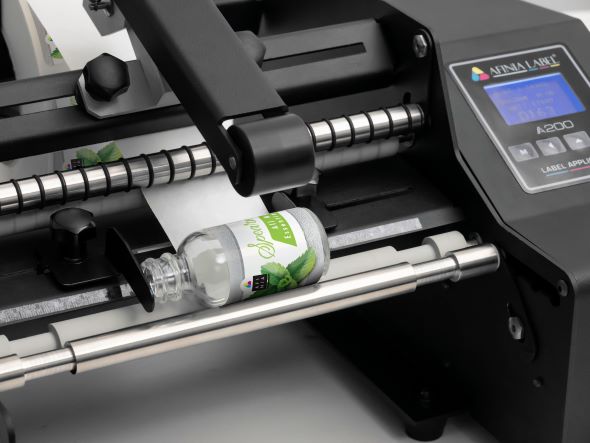
AM Labels Limited, an award-winning colour label printing machine specialist, label manufacturer, barcoding and software solution expert based in Northamptonshire (UK), has added the Afinia A200 Bottle Label Applicator to its portfolio.

The Afinia A200 is an innovative, semi-automatic bottle label applicator that is simple and easy to operate, enabling users to effortlessly apply labels to bottles, cans, jars and a range of other cylindrical containers. Thanks to its ultrasonic gap detector, the A200 benefits from a highly accurate, efficient and consistent performance, even when clear materials are used. What’s more, the gap detector on the A200 is more far reliable than mechanical flag sensors, which are common in other bottle label applicators.

The compact label applicator can accommodate a variety of bottle, can and jar sizes, from 25mm to 160mm in diameter and from 80mm to 240mm in height. Facilitating the application of smooth, straight and perfectly spaced labels without bubbles or creases, the durable and low-cost A200 increases productivity, as well as saving time and money, while offering consistent and reliable results. The applicator is compatible with both single and front-and-back labels and, for additional ease of use, labels can be applied with a simple push of a button or via the included foot pedal.

With the ability to apply labels on up to 600 bottles or containers per hour, AM Labels says the A200 is ideal for use in a variety of industries and applications, including for businesses operating in retail, food and beverage and health and beauty sectors. Designed to enable users to apply labels to their chosen container accurately, the applicator is highly flexible, easy to adjust, and extremely competitively priced compared to other similar models on the market.

The improved mechanical design of the A200 is user friendly and the product guide can be easily customised, enabling label application onto bottles with both small and large heights. The applicator can also accommodate printing onto a limited range of tapered bottles. The A200 further benefits from an intuitive colour display which displays status information in a clear and concise manner, while enabling users to programme up to 29 formats, including the gap between front and back labels.

Brendon Bass, Sales and Marketing Manager, AM Labels Limited, commented: “We are delighted to expand our portfolio with this new and innovative product. The Afinia A200 Bottle Label Applicator allows businesses, operating in a range of industries, to effortlessly, efficiently and evenly apply labels to their chosen bottle or cylindrical container, delivering professional and consistent results, each and every time.

“The A200 was developed to provide a solution to common issues that can occur when operating label applicators with mechanical gap detectors, such as the metal flag being prone to damage or adhesive build up. The ultrasonic media sensor on the A200 can detect gaps in a wider range of media types, offering increased levels of accuracy and ease of use, while eliminating any inconsistencies that applying labels by hand can often create.”

AM Labels Limited says it has first-class technical and software expertise and customer service excellence, in addition to its own label production facility. The company offers vast and in-depth label printer, scanning and barcoding expertise to support a wide range of industries and applications.

Subscribe

Get notified about New Episodes of our Podcast, New Magazine Issues and stay updated with our Weekly Newsletter.