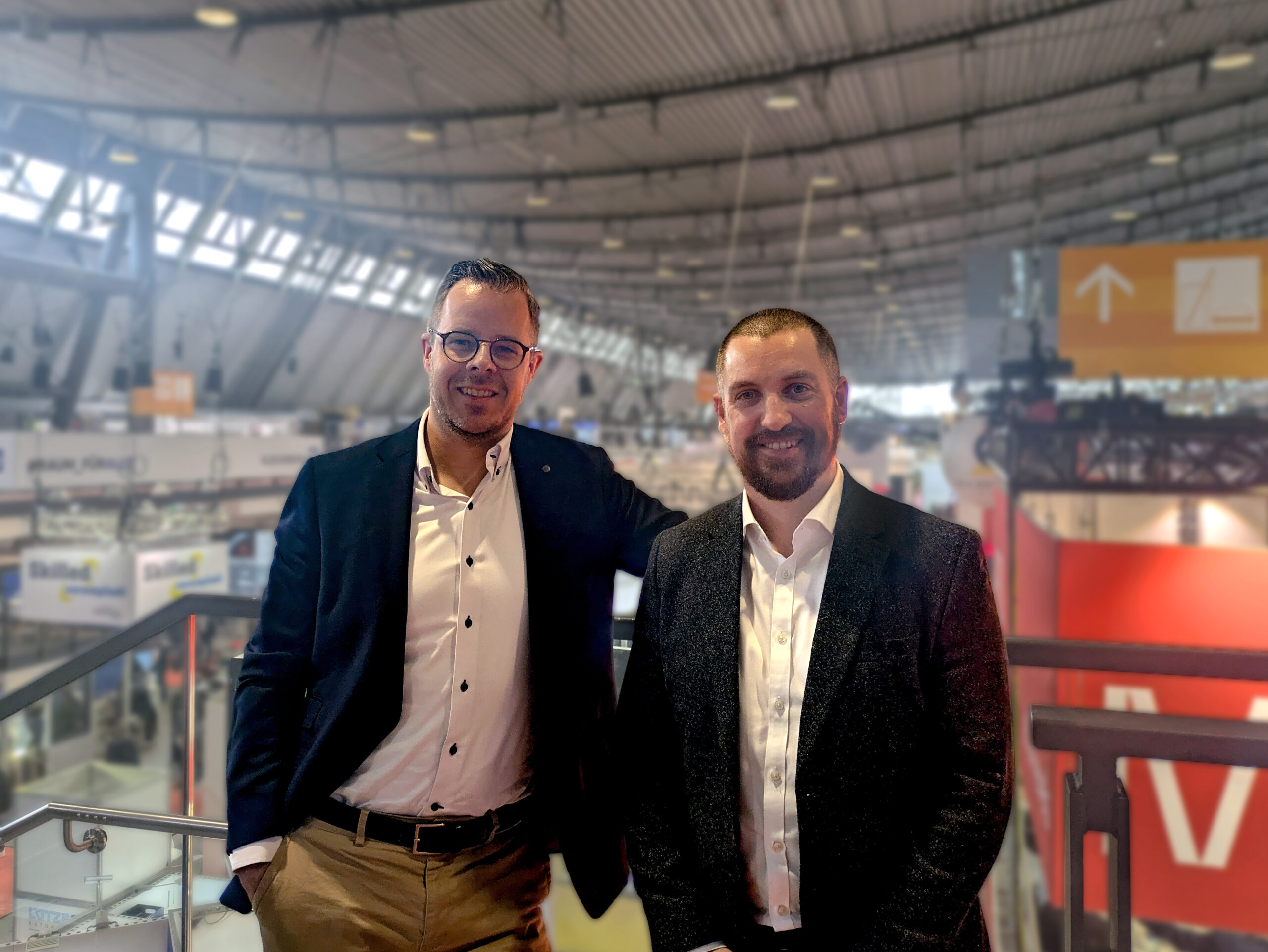
There are many system integrators of warehouse automation equipment, so how does a potential customer choose the right one? During LogiMAT Stuttgart, where there were 1600 exhibitors, David Priestman interviewed Thomas Van Workum, President International, and Ric Nuttall, VP of International Sales at Fortna about the choices and opportunities involved.
Logistics Business: What are you showcasing and how do you differentiate your business?
Van Workum: “We as a company are not bound to our own technology. We focus on understanding the problems and challenges of our customers, then finding the best solution on the market and integrating that with our software capabilities. We’re focused on showcasing the premium partnerships that we have established, whom we do projects together with.”
Nuttall: “We’re designers, integrators and problem solvers. We make and deliver on strategic decisions and are focused on what drives a customers’ business goal, rather than being equipment-focused. We solve complex supply chain challenges, such as abstract boardroom issues that get raised. We frame our entire approach around packaging and delivering on that question, not what the technology does. The technology must exist but why its there and what it’s there to achieve is wrapped around that promise.”
Logistics Business: Some integrators have that manufacturing capacity and are therefore forced to sell their own technology, whereas others are more independent.
Nuttall: “It’s inherent in the way they operate. Being independent of that and a less broad OEM affords us to be able to frame a solution based on a promise. What are we trying to solve? We’re specialists in supply chain transformation. We have conveying equipment, but are solution agnostic, building processes from the ground up.”
Design what’s right, deliver what’s best
Logistics Business: FORTNA delivers warehouse and distribution solutions powered by automation, software, and robotics. As modern distribution networks are becoming more complex, which structural changes are increasing most?
Van Workum: “There are three major forces that we see in the market now. Firstly, the cost and availability of labour is shifting fast. That drives automation. Labour is more expensive, if you’re able to find it. For many years the ROI calculation was the cost of automation verses the cost of manual labour. Now it’s the cost of automation verses the absence of labour, because once you hire and train staff they may not always show up or stay for long.
“Another structural change that I see is the geopolitical unrest, after decades of relative stability. I’m not that sure it will return. It creates a desire for flexibility in supply chains and automation. The third trend is nothing new, the growth of ecommerce. The long-term trend of 5-7% CAGR (compound annual growth rate) continues.”
Nuttall: “The other aspect I see is the need for resilience and business continuity inside the warehouse and beyond. What’s hurting more now is the cost of doing nothing, inaction. Customers must do something. There’s a concentration of skill. The more mechanised a DC becomes the greater the importance of having skilled managers and system operators and less important is the availability of operators at pick stations. You need systems that are easy to run.”
More than fancy machines
Logistics Business: Inside the warehouse, where do you currently see the biggest operational constraints and bottlenecks?
Nuttall: “The scarcity of land for new-build DCs is matched by the availability of a quality management team. These drive the need to mechanise supply chains. You have to be careful how you solve these problems as these can be career-defining decisions. Put faith in a systems partner to deliver. The way we frame that is by making ourselves accountable for a broader scope than just machine integration. We are accountable for the outcomes and the end-to-end, ideally from the network strategy output through to the design and forwards to implementation and the lifecycle beyond that. We have a feedback loop from what the board wanted, and they can see the results in action.”
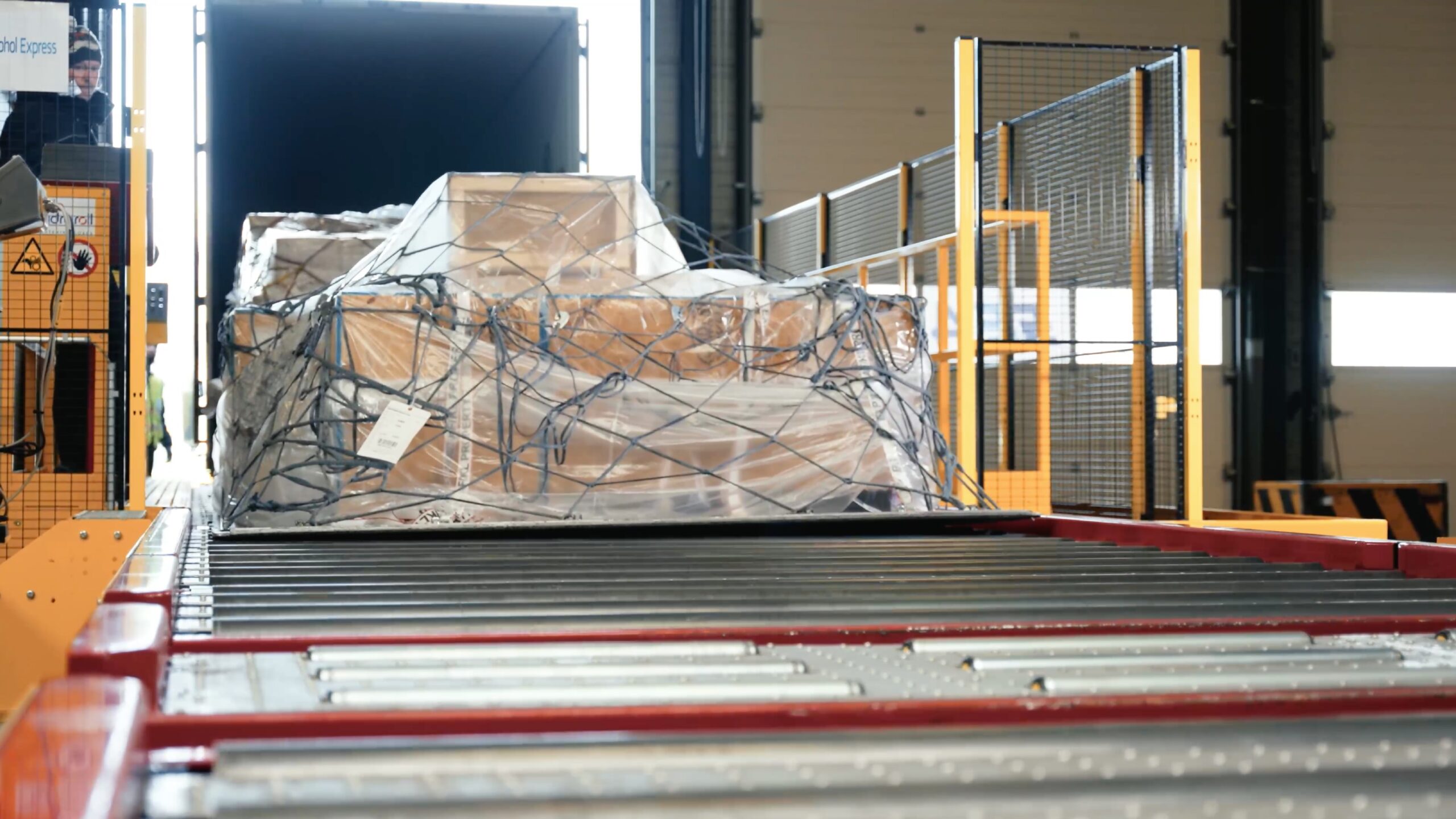
Van Workum: “Specific constraints include maximising cubic space, particularly for cold stores. Loading and unloading remains one of the big mysteries to be resolved.”
Nuttall: “We’re one of the biggest buyers of technology. Technology isn’t the hero, it’s the operation. Make sure it’s the right process, then the technology fits, rather than trying to solve it with technology and back that into a process. The operational challenges are about defining the process, getting it run well with the customer knowing how to use it. Start with everything manual and justify it as a business case as to how you then mechanise. In some cases, growth is so fast it outpaces the ability to apply technology. Future-proofing is important. Service level pressure is an issue too.”
Logistics Business: For companies looking to future-proof their warehouse operations, what should they prioritize when evaluating technologies? How can they determine which solutions truly fit their operational needs?
Nuttall: “We take a process perspective. If you apply software to enable processes and make them more efficient, then look at technical applications, you’re focus is on how to ‘do more with less metal’. The alternative is finding a technology and backing a process into it, which is how a lot of the market operates. We build it the other way, from first principles. How does technology improve the business case and balance the risk? Adding technology is great, but it comes with downsides in terms of the complexity, support and maintenance. Not every customer is a good operator.”
Logistics Business: Do customers know what they want in terms of automation?
Nuttall: “The real danger is that a customer doesn’t know what they don’t know, so they can meet an integrator and, if they don’t ask the right questions, everything is going to fit and sound like it’s a good idea. Take a step back and look at what problem are you trying to solve. If you don’t ask this you may get a benefit in the short term but not a good fit for where you want to be in 5 years’ time, when you want to add other technologies. How does it fit as a holistic package? Some of our customers start with just an assessment, where we look at their current operation and how we can help. Are they leveraging the equipment?”
Van Workum: “We promote that. A customer might say ‘I need a shuttle, can you help me integrate?’ But do they need a shuttle? Maybe they need something else. Let’s do the proper assessment and understand the process. Quality over quantity. There have been many changes in the market, but we want to be a stabilizing factor.”
Go-live is not the finish line
Logistics Business: Do you think established technologies such as sortation systems will eventually be replaced by new forms of automation, or will they continue to evolve?
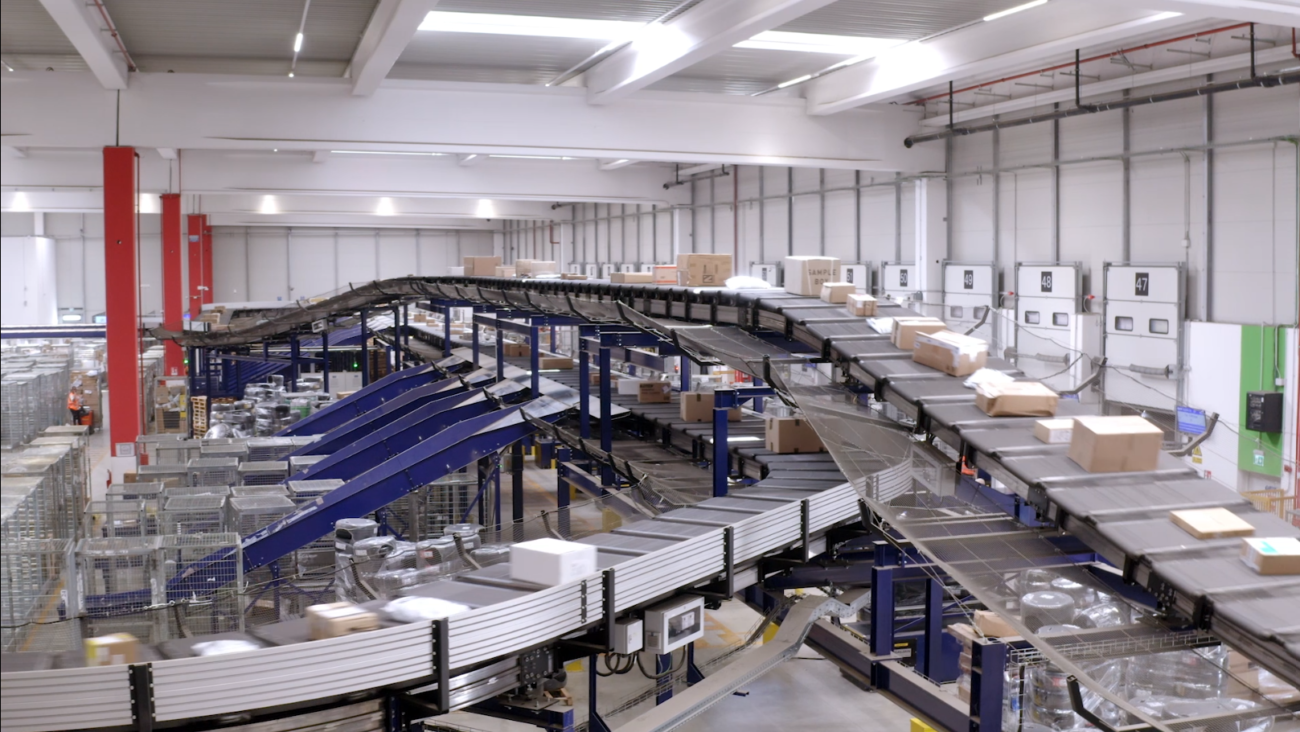
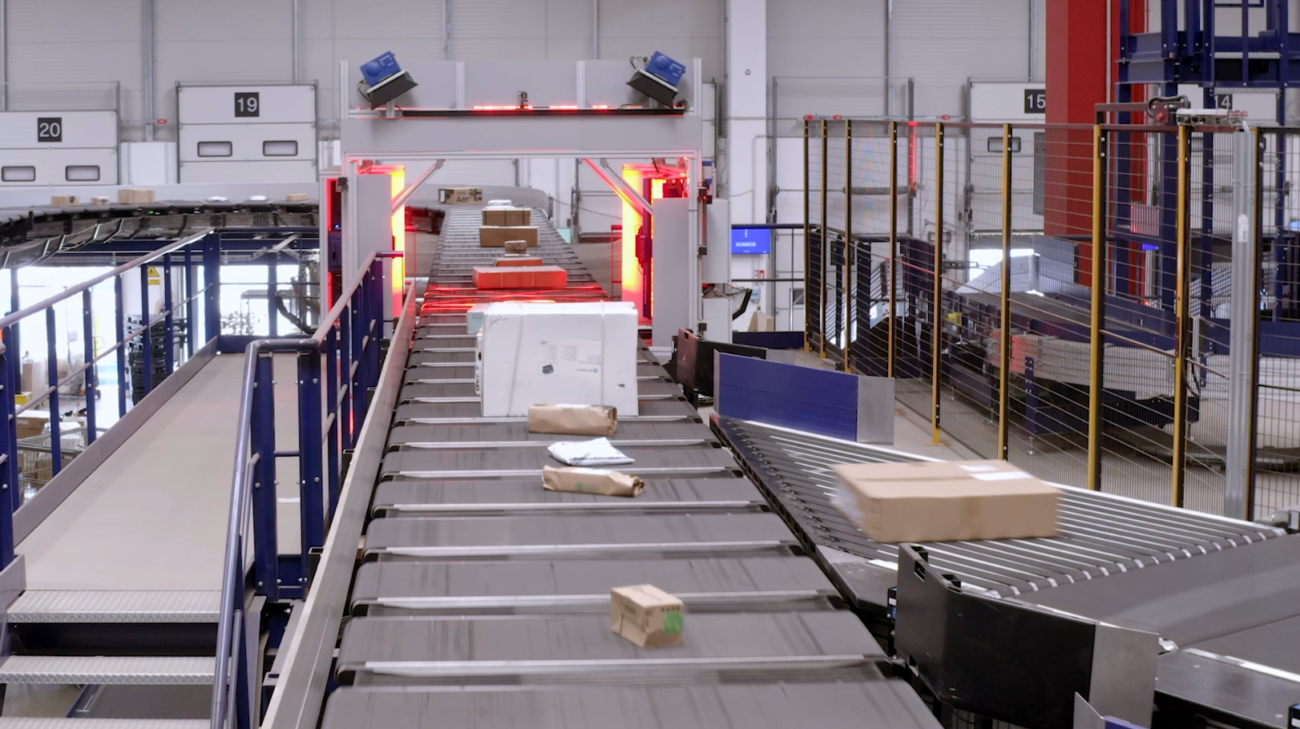
Van Workum: “We know a fair bit about sortation, and we have it in-house for a reason as it serves a purpose (e.g. the former van Riet conveyors). We don’t believe that they will fade away. There will always be fixed solutions in the market, parts of a process. End-of-line sortation of multiple parcels is not going to change. Ecommerce growth and the omnichannel is driving that, as opposed to the sending of pallets to retail stores. Sortation will evolve and we’re on top of that ourselves. There will also be room for more flexible solutions, including AMRs and AGVs.”
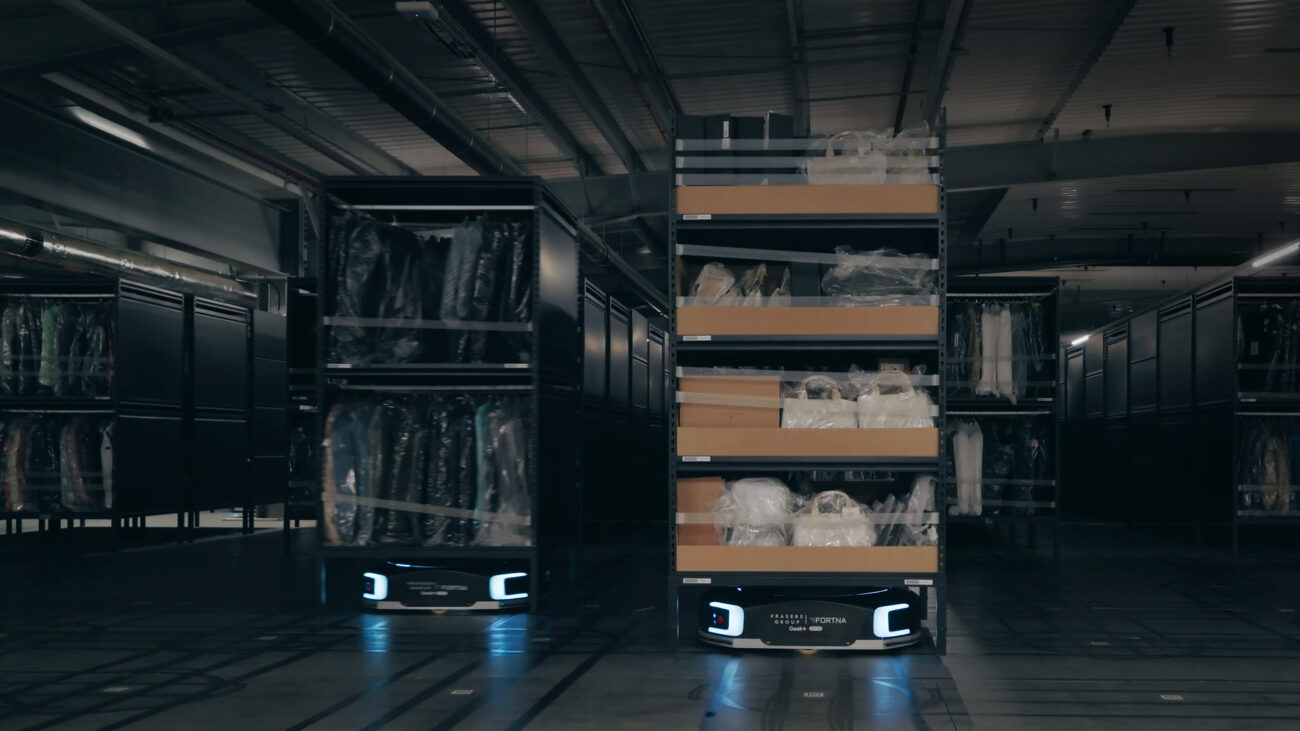
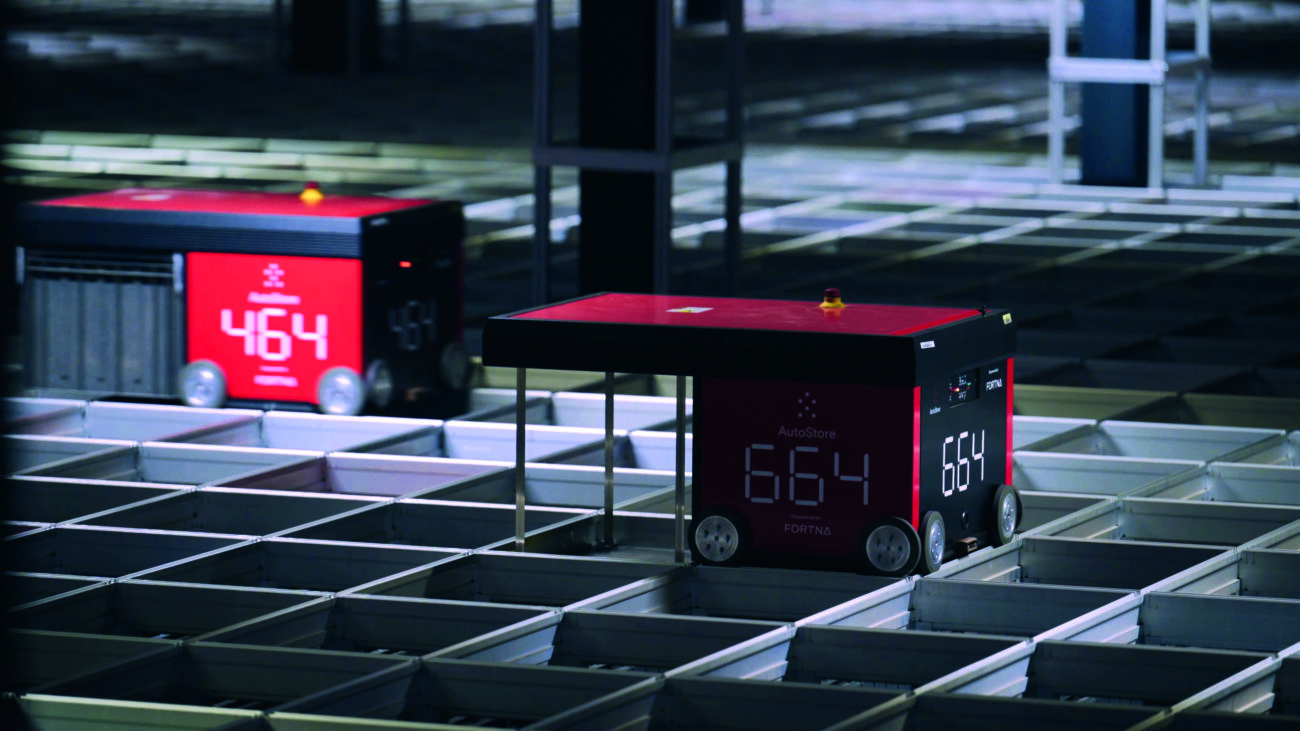
Nuttall: “We’re doing that today with OptiSweep, which is mixing AMRs with high-speed sortation systems. We’re an OEM from that perspective. From a distribution and fulfilment perspective, where we don’t have a technology agenda, we’re not cordoned into a corner – that’s the beauty of our situation. We’re seeing the emergence of ASRS and shuttle solutions and we can be across all those technologies, assessing them for appropriateness, which broadens our palette to ensure we’re using the right system for the application. Each system doesn’t solve the problem entirely. We can mix and match with a common front-end, which is our software. An operator at a goods-to-person station just sees FORTNA, it doesn’t matter where the item has come from.”
Asking for a price
Logistics Business: The demands of ecommerce fulfilment have reshaped warehouse design and operations for over a decade. Which market, technological or operational shifts will most strongly influence supply chains operations and intralogistics in the coming years?
Nuttall: “What we’ve seen is a focus on shortening return on investment periods and the ability to self-fund projects. That dramatically changes the scale and complexity of how we can solve problems, adding pressure. A bigger constraint than anything else is liquidity in the market for customers to be able to fund projects, externally verses internally, and the total cost of ownership. We spend a lot of time with customers talking about service levels, developing the design, increasing ecommerce range, indirect benefits and other value-added areas. Doing a network strategy sets you up for success.”
Van Workum: “Customers need to move fast. Cut-off times are getting earlier, which makes things harder. 3PLs have volume in the market. If we spend time working out their bids they may not yet have the contract. Price is always under pressure and lead time is too. The attractiveness of a 3PL as customers of ours is limited to strategic accounts or a problematic approach. So we have a select amount of 3PLs that we engage with on a weekly basis. We are heavily involved in their pipeline and we explain to them how they can truly differentiate themselves through the solution we can bring. Those are the best relationships.”
Don’t fly blind
Logistics Business: How has system design changed in intralogistics with the emergence of digital twinning as well as simulation?
Nuttall: “It’s no longer optional to question if the operation is performing optimally. You have to have a feedback loop to know how it’s performing. Systems have to be easy to run and have good operators to use it effectively. Training, easy software, visibility and depth of data are important. Do we really need an operator to make a decision? If the software can make it for you and has the richness of data then why ask the (human) customer to act. Within our software and technology stacks we can see things long before an operator can react to it. By limiting the number of inputs the customer needs to react to helps them operate better. The real power is in tuning, self-adjusting and forward planning, rather than experimenting live. Twinning will become mandatory.”
Van Workum: “We‘ve been using simulation in our design process for over a decade. What you’re trying to do with it is highly-dependent on the data from the assessment. With today’s technology we can also emulate, by running our software in a virtual environment to see what the actual outcome is going to be. That shortens our time on site and ramp-up time. Digital twins are extremely important for the operator. It goes much deeper than seeing bottlenecks, down to a part level of the machinery deployed. If there is a breakdown somewhere you immediately can see what’s broken and decide on replacements, decreasing resolution time.”
Marginal gains
Logistics Business: Looking ahead, where do you see the greatest untapped potential for efficiency improvements in warehousing and distribution?
Van Workum: “A big chunk of it lies in the existing legacy installation. With today’s capability of data analysis we can get better utilization out of existing solutions. Small modifications and upgrades can be made, large-scale investment can be postponed to get more out of what you have. Apart from efficiency there’s a whole conversation about availability. Maybe it’s ok not to be as efficient if you have availability. We now need to design solutions that are a bit bigger than they should be (for extra stock) or a set-up where there’s intentionally some redundancy or slack.”
Nuttall: “Are customers using the system to its top potential? Do they know what they have? Is it running well and serviced well? Customers are proud of their operation, and rightly so, but a core part of our business is going in to facilities, as an ice-breaker, proving our capability by walking round a DC and spotting cost-free improvements to be made. Some customers think they know what ‘good’ looks like but it takes an external party to realise untapped potential, before adding more automation.”