Managing Seasonal Pressures in Warehousing

Scott Saunders, technical service manager at Watco, shares practical advice to help facility managers keep warehouses safe and efficient during the peak season.

The run-up to Christmas and the New Year sales period is one of the busiest periods for logistics and warehousing. From November to January, the season brings higher order volumes, shorter turnaround times, and pressure on the supply chain. With Black Friday and Cyber Monday now well established too, the challenge grows each year, and with it the need for greater control over safety and efficiency.

By preparing early, reviewing layouts, and strengthening maintenance routines, warehouse facilities management (FM) teams can not only get through the busy period smoothly but also set themselves up for the months ahead.

Optimising warehouse layout

As seasonal stock arrives, warehouse space becomes more valuable. Cluttered aisles and congested loading bays slow operations and increase the risk of accidents. Before the busiest period begins, reviewing the layout and applying durable floor paints to define areas can make a big difference.

Line marking, completed using coloured paints or durable tapes, creates a visual map on the floor of the facility. Illustrating defined zones, walkways, and storage areas by painting the floor in specific colours helps to coordinate where vehicles and team members will be in the facility, reducing confusion. It also highlights routes for deliveries and collections, improving flow through loading docks and dispatch areas.

Colour-coded pathways and painted sections of the floor guide team members to emergency exits and fire extinguishers, making them easy to locate in an emergency too. Line marking can help to reduce accidents. Paints or safety tapes with anti slip properties can be used, increasing grip underfoot to prevent falls in areas that get wet during winter months e.g. pathways near entrances and loading bays.

Supporting temporary staff

During peak season, many facilities rely on temporary or seasonal staff to meet demand. With higher footfall across the warehouse floor, ensuring these team members can work safely is essential.

Structured inductions are key to help new team members understand how the warehouse operates: where things are located, how to move around safely, and how to report issues. Clearly defined floor areas and walkways are also particularly useful because by following them and learning the colour scheme, team members can stay out of the path of hazards and vehicles.

However, the third point requires the FM team to agree a system. The increase in traffic during the busy period puts more strain on surfaces, so cracks and holes appear. To ensure that repairs can be completed before it is left to worsen over time, the FM team needs to know about it. A central reporting system, e.g. a physical notebook to write in, or an allocated team leader to tell, or even a number to call will mean that FMs are aware of damaged surfaces sooner and can schedule fast, cost-effective repairs. Regular reminders on the importance of reporting hazards, such as wet floors or damaged surfaces, also foster a culture of shared responsibility.

Staying proactive with maintenance

When surface damage such as cracks and holes are left to worsen over time, they can escalate into a time-consuming, costly repair that requires operations to be adjusted away from the area. During peak season, damaged surfaces impact safety and productivity, creating trip hazards for busy team members or risking damage to vehicles and equipment if wheels get stuck in the uneven floor.

Completing a full site inspection now will help to get on top of existing damage and hazards prior to the peak busy period, however, during the period FM teams should be regularly inspecting key areas of the facility and logging damage ready for action. To ensure that all FM team members can confidently complete repairs, managers should signpost resources such as checklists, eBooks and how to videos which support varied learning styles.

Keeping fast-curing repair products on hand will also help to manage the downtime and disruption required during peak season, while ensuring that required repairs take place. These products often cure within hours, helping facilities stay operational even when damage is spotted.

Taking this proactive approach not only improves safety and reliability but also ensures that repairs are easier and less disruptive.

Stronger foundations

The end of the year will always bring extra pressure for the warehousing and logistics sector. Yet facilities that invest time in preparation, from clear line marking and organised layouts to staff training and proactive maintenance, are the ones most likely to benefit from smooth operations. The same systems that keep things running smoothly during the peak season will continue to deliver benefits long after the season has ended.


France Ends VAT Regime 42 from 2026

From 1 January 2026, France will abolish the long-standing VAT simplification known as Customs Procedure 42 (commonly “Regime 42”) for non-EU importers. According to customs specialists, Gaston Schul, this change represents a significant shift for those using France as an EU import gateway, particularly for businesses based outside the EU (such as the UK, Norway or Switzerland). Although EU-established businesses are not directly impacted by the end of the simplified regime, all importers should review their French entry-point strategies now.

What is Regime 42 and how has it operated?

Regime 42 allowed importers to bring goods into one EU Member State and immediately dispatch them on to another without paying upfront import VAT. The VAT liability was instead accounted for in the destination country.
For example: a UK company selling goods to a German customer could import into France, clear under CP 42, transport directly to Germany, and pay import VAT in Germany rather than in France.

What changes from 1 January 2026?

  • The simplified version of Regime 42 available to non-EU importers will be abolished.
  • For non-EU businesses (e.g. UK, Norway, Switzerland) importing via France:
    • French VAT registration will be required.
    • They must appoint a fiscal representative.
    • They must submit periodic French VAT returns for import VAT and intra-EU supplies.
  • For EU-established businesses, Regime 42 remains under “normal” intra-EU VAT rules — the change primarily removes the benefit that non-EU importers previously enjoyed.

Who will need French VAT registration?

From 1 January 2026:

  • Non-EU businesses importing goods into France will need a French VAT number.
  • EU-based businesses may need French VAT registration if they store goods in France, make domestic supplies in France, or are involved in a chain transaction with France as part of the supply route.
  • French customs may demand a VAT number in specific circumstances, to ensure proper VAT control and compliance.

Business impact & alternatives

  • Global exporters currently using France as their EU import gateway (especially outside the EU) will face additional administrative and financial burdens. They will need to review cash-flow implications, as upfront import VAT may apply unless deferred accounting via a fiscal representative is arranged.
  • France may lose some of its competitive edge as an entry-point for non-EU imports.
  • Alternative EU entry routes for non-EU importers remain available that still allow VAT deferral/postponement:
    • The Netherlands: via Article 23 licence plus fiscal representation.
    • Belgium: via the ET 14000 authorisation and fiscal representation.

Five practical steps to prepare

  1. Review current import routes – identify where Regime 42 is used and assess the cash-flow impact of the elimination of the simplified route.
  2. Compare alternative EU ports – evaluate options like Netherlands or Belgium for efficiency and VAT deferral advantages.
  3. Register for French VAT early – if you plan to continue using France, begin now to avoid compliance delays.
  4. Reassess Incoterms – consider shifting from DDP (Delivered Duty Paid) to DAP or EXW to reduce exposure to French VAT obligations.
  5. Work with a trusted fiscal representative – select a partner experienced in VAT compliance and representation in France to manage the upcoming changes.

Why proactive action is essential

The end of the simplified regime signals a structural shift in how goods enter the EU via France. Those businesses that act early can preserve cash-flow efficiency, maintain compliance, and avoid operational disruption. Delayed action risks import delays, higher costs and weakened competitiveness.

If you are a non-EU business using France as your EU import gateway, the clock is ticking. From 2026 the simplified route under Regime 42 disappears. You will need French VAT registration, fiscal representation and new logistics options. Even EU-based businesses should review their strategy. Now is the time to act, to ensure your EU trade continues smoothly and cost-effectively.

Digital Supply Chain Connection

Whether it’s car care, automotive accessories, electrical installation materials, or e-bikes MarkenTechnikService (MTS) ensures that products reliably reach customers. The company is bringing visibility to its supply chain with the help of OSCA SCM software.


Whether on vacation or in everyday life, millions of consumers rely on products from the MTS Group. With its strong brands NIGRIN, FISCHER, UNITEC, and cartrend, the group covers nearly every aspect of mobility and technology.


With such a diverse portfolio, MTS is represented across nearly all sales channels: in hardware stores, specialty and wholesale stores, hypermarkets, and major discount retailers – as well as on all leading online platforms. “Three-quarters of our sales come from brick-and-mortar retail, while one-quarter is generated through e-commerce – both via our own web shop and major online retailers,” explains Helge Jager, Head of Supply Chain at MTS.


Today, the total portfolio includes more than 20,000 items distributed across Europe. Procurement takes place primarily within the EU, while private-label products are largely sourced from Asia. To ensure reliable and fast product availability, the Group operates logistics networks with more than 80,000 pallet spaces across four logistics sites. The largest facilities are located in Radevormwald, in the Bergisches Land region, and in Malsch near Karlsruhe. Bicycles and e-bikes are stored in a dedicated distribution centre to maintain efficient processes and the highest delivery quality.


For many years, the MTS Group relied on its merchandise management system to manage the inbound supply chain. “However, this approach had a major drawback – we couldn’t track the shipping process within the system. That meant we could only react after deviations from the plan had already occurred,” explains Jager. This sometimes led to delays of up to two weeks. That has now changed. At the end of 2021, the supply chain manager and the CIO began searching for SCM software to better manage the supply chain and increase transparency in the inbound process.

The team evaluated a total of ten solutions.

“We chose OSCA because it’s a fully integrated, well-established solution that connects all partners across the supply chain, with every process step documented in the system. For instance, when someone fills in during vacation, they can easily see how the order history developed without having to dig through old emails,”

says Jager.

“Complexity can only be managed through standardized solutions – OSCA is a prime example of that,”

adds CIO Moritz Gütermann.


The CIO and his team followed a strategic, phased approach to implementing the SCM software. First, all suppliers in Asia were onboarded, followed by the freight forwarder. Around 220 suppliers from Germany and the EU deliver directly to the logistics facilities free of charge and are not connected to OSCA. Today, about a dozen MTS Group employees use OSCA – not only dispatchers, but also warehouse and accounting personnel.


Always in stock


According to Jager, the implementation phase went very smoothly, even with the large number of suppliers that had to be onboarded quickly. One challenge was that some partners handle only a small portion of the roughly 1,500 annual shipments and required extra training. “For those cases, Setlog’s dozen or so short tutorial videos were an ideal solution,” says Jager.


For Setlog Managing Director Guido Brackelsberg, the MTS Group stands as a prime example of how modern trading companies with global sourcing have positioned themselves for the era of high-performance logistics. “In this highly competitive industry, a digitized supply chain is what separates the leaders from the laggards,” he emphasizes.


Jager can no longer imagine working without OSCA: “The system brings clarity to highly complex processes, fosters greater trust among all partners, and enables real-time, data-driven decision-making.” Even with many other IT projects still on his agenda, he’s already considering adding another OSCA module – quality management.


The average driver rarely realizes what goes on behind the scenes at the MTS Group. Yet they benefit directly from the company’s increased focus on digitizing its supply chain -the product they’re looking for is always in stock and ready for purchase.

AI-Driven Warehouse Innovation

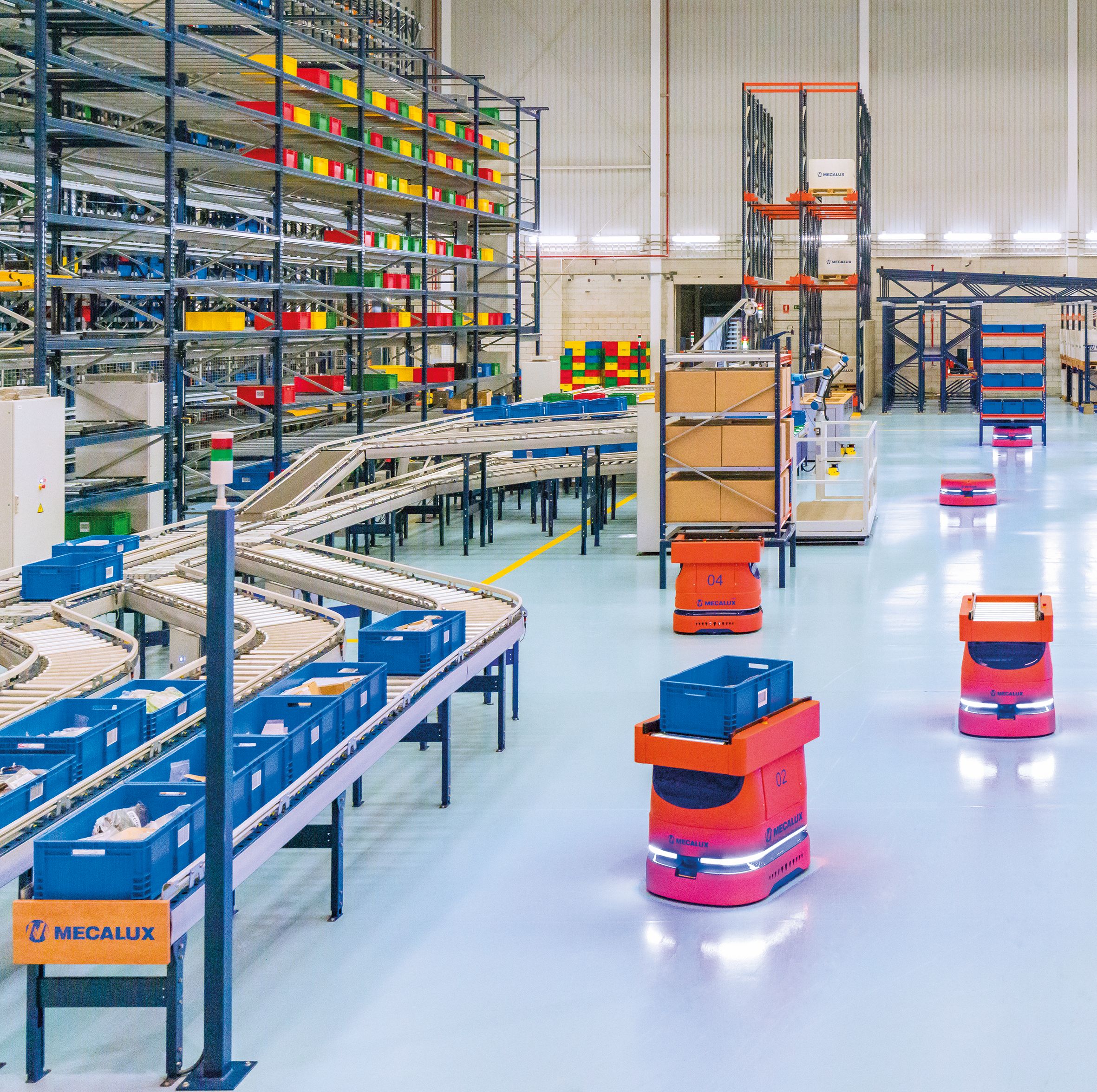
Artificial intelligence is no longer a futuristic concept — it’s a driving force transforming how goods are stored, moved and managed. From predictive analytics to self-learning systems, AI is enabling a new era of intelligent logistics. Mecalux, a provider of intralogistics solutions, is at the forefront of this transformation, embedding AI across its warehouse management software and robotics systems to deliver smarter, more adaptive supply chains.

Turning data into decisions


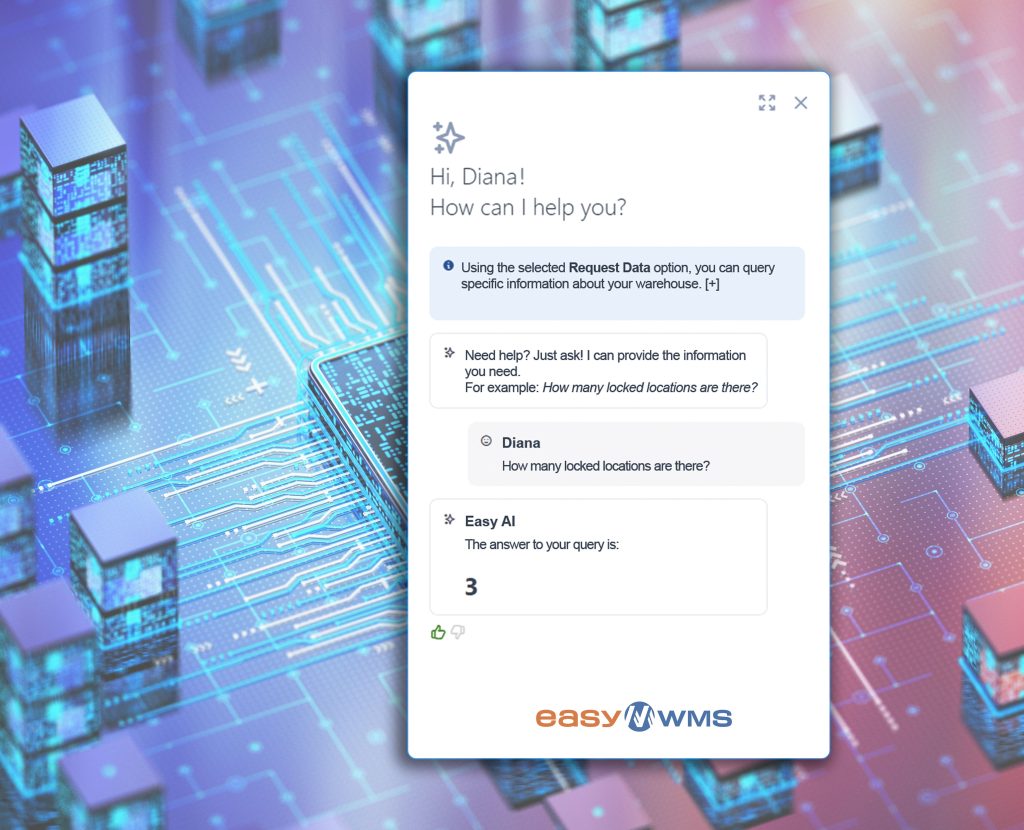
Mecalux Software Solutions has taken a bold step forward by integrating generative AI into its flagship warehouse management system, Easy WMS. Deployed in over 1,100 facilities worldwide, the software now enables users to interact with the system naturally, in seven languages, through an intuitive chat interface. Managers can ask, “Which products are nearing stockout?” or “Show me today’s picking efficiency,” and receive real-time, data-rich answers.


This conversational capability goes far beyond convenience. Easy WMS’s AI assistant can generate KPI dashboards, reports, custom views and even execute specific actions such as releasing orders or unlocking aisles — all within seconds. By learning from every interaction, the system continuously refines its responses, helping teams make faster, more accurate decisions.

Mecalux is also applying this technology internally. Its Easy Builder development platform and AI web portal for programmers empower engineers to code, debug and document software more efficiently. These innovations improve software quality, accelerate development and strengthen Mecalux’s ability to deliver ever more sophisticated logistics solutions.

AMRs with collective intelligence


Automation is evolving rapidly from static systems to autonomous intelligence. Mecalux’s research into automated mobile robots (AMRs) is pioneering this shift. Traditional AMRs rely on predefined routes, which can cause bottlenecks and limit flexibility. Mecalux is developing AI-driven free navigation, where robots learn to adapt dynamically, avoiding obstacles, optimising paths and coordinating seamlessly with humans and other machines.


Through simulation and digital twins, engineers test these algorithms in virtual environments before deploying them in real facilities. The goal: to build swarm intelligence — a network of self-learning robots capable of acting as a collective, predicting demand changes and optimising resources in real time. This next generation of autonomous robots will dramatically enhance warehouse resilience and performance.

Innovating with MIT

To accelerate innovation, Mecalux has joined forces with the Massachusetts Institute of Technology (MIT) to establish the Intelligent Logistics Systems Lab at the MIT Center for Transportation & Logistics. This collaboration explores the use of machine learning and reinforcement learning to revolutionise distributed order management (DOM) systems.


Led by Matthias Winkenbach, the initiative focuses on developing orchestration models that replace static rules with self-learning AI capable of adapting to shifting demand, capacity and delivery constraints. By leveraging simulations, these models can test thousands of scenarios safely and efficiently.

Towards a new era of intelligent logistics


Across its software, automation and research initiatives, Mecalux is redefining how intelligence operates in the warehouse. Its approach combines cutting-edge AI, robust engineering and academic collaboration to design systems that think, learn and evolve.


From predictive order management to autonomous robotics, Mecalux’s innovations represent a clear vision of the warehouse of the future — one where humans and machines collaborate seamlessly to achieve unprecedented efficiency, accuracy and sustainability.

Fully Digitalised Strapping

Mosca GmbH, a specialist for strapping machines and materials, presents the SoniXs P7-Connect, the next generation for fully automated operations. The new machine succeeds the SoniXs MP-6 and offers extended functionalities.

The SoniXs P7-Connect sets new standards in the entry-level segment of automated strapping. The strapping machine has been specifically developed for seamless integration into fully automated production lines. It is based on state-of-the-art technology for strapping cartons or bundling products in a production line. It offers customers reliability and focuses on connectivity and Industry 4.0 capability with its cutting-edge control system.

The highlights of the SoniXs P7-Connect


“With the SoniXs P7-Connect, we offer our customers a future-oriented entry into the world of fully automated and digitalised strapping,” explains Andreas Ding, Senior Innovation Manager Sales at Mosca. The machine has three key features that set it apart from its predecessor MP-6 and further equipment in the market segment. For example, the switch from circuit board to intelligent controls offers greater functionality, increased modularity, and maximum process reliability. It resembles the SoniXs TR-Connect in terms of control technology, but at a significantly more attractive price.


The SoniXs P7-Connect is network-compatible and enables data transmission via mobile communications directly to the cloud, from where the recorded information can be integrated into ERP systems and reused. The WebHMI is available to customers as standard for intuitive operation. An optional WLAN module makes it quickly and flexibly accessible. Thanks to the new interface options and extended access via the WebHMI, customers can establish comprehensive settings and configure interfaces individually. The machine’s IoT capability also ensures high data transparency and improves availability, even beyond the actual production site.


The proven user-friendliness has been retained in the new generation. Among other things, it features the integrated spool slider for easy material access as well as the automatic threading process, which further increases ease of use.


Technical specifications and variants


The core of the SoniXs P7-Connect is the proven and highly efficient standard 7-SoniXs sealing unit. The energy-efficient SoniXs ultrasonic sealing technology is one of Mosca’s key competencies and enhances the quality and performance of the strapping process. To ensure maximum flexibility, the machine supports PP straps with a width of 5, 8, 9, or 12 mm. The SoniXs P7-Connect will be available in the standard frame sizes 600×600 mm, 800×600 mm, and 1000×800 mm.


Powered transport tables in belt or roller versions, which are designed for automated product feeding, enable the integration into automated lines. The machine has all necessary interfaces, including the highly flexible OPC UA interface, to ensure smooth machine and system communication and enable customers to use data-based solutions.


With the launch of the SoniXs P7-Connect, Mosca underlines its role as an innovation leader, as Andreas Ding confirms: “We provide our customers with technologies that already meet the upcoming market requirements for digitalisation today”.

New Director for Palletised Freight Firm

Pall-Ex Group, network provider of palletised freight distribution, has appointed Claire Screen (pictured) as its new Commercial Director. This appointment will enable the company to continue driving its ambitious growth plans throughout 2026 and beyond.

An experienced Commercial leader, with more than 25 years of experience across transport, supply chain and the port sector. Screen brings extensive experience in executing national and international commercial strategies, providing a fresh perspective to support Pall-Ex’s growth. A strong leader with a focus on quality and service excellence, building long-term mutually beneficial relationships and getting results.

Screen’s appointment is one of many updates within Pall-Ex’s award-winning commercial team. Louise Andrews has been promoted to Business Development Director, with Jonathan Weir moving to the newly created role of National Business Development Manager, focusing on the network’s corporate accounts.
Headed up by National Sales Manager, Gareth Fenton, a team of seven regional commercial managers that are deployed around the country helping Pall-Ex’s shareholder members sell their entire range of services. This newly invigorated team supports the network’s commercial growth strategy as the business prepares to move to a purpose-built, state-of-the-art flagship hub in 2026.

Pall-Ex-and-Fortec-scaled

On her appointment, Screen commented: “It is exciting to be joining Pall-Ex at such a pivotal time in its growth journey. It is already a company recognised for its successful network, innovation, and exceptional standards that are visible across the business every day. I look forward to working with the team and our shareholder members to continue driving growth and value for our customers, exploring new avenues in the industry, and launching new initiatives where any gaps in the market may exist.”

Michelle Naylor, Managing Director of UK Networks, added: “We are delighted to welcome Claire to the senior leadership team. She brings a wealth of end-to-end supply chain knowledge, and her proven expertise across the sector will play a key role in Pall-Ex’s future growth. Her career has seen her work across the UK, Europe, and the Far East, which brings a unique perspective to Pall-Ex.”

Screen’s appointment marks another milestone in Pall-Ex’s commitment to investing in talent and strengthening its position as an industry leader. With a refreshed commercial team and exciting plans on the horizon, Pall-Ex is poised to deliver even greater value to its stakeholders as it enters a new era of growth and innovation.

First UK Base at Hams Hall for Fiege

Prologis UK has leased the 261,147 sq. ft. DC2 facility at Prologis Park Hams Hall to Fiege, one of Europe’s leading third party logistics providers. The deal marked Fiege’s entry into the UK market, where it is servicing a major existing e-commerce client.

Located just one mile from Junction 9 of the M42 and 10 miles from Birmingham city centre, Hams Hall offered Fiege excellent connectivity. The park sits at the heart of the UK motorway network and includes an on-site intermodal rail freight terminal linking directly to major seaports and the Channel Tunnel.

This strategic position enabled Fiege to strengthen its client’s European fulfilment network and respond directly to rising UK demand for e-commerce fulfilment services. From Hams Hall, the company can manage cross-border flows more effectively, shorten delivery times, and reduce transport miles by serving customers from a centrally located hub. The site also provides the scalability Fiege needs to grow, ensuring future capacity in one of the UK’s most competitive logistics markets.

Kristian Loepert, Senior Manager Key Accounts & Real Estate at Fiege, said: “Opening our first UK site was a milestone for Fiege. The quality and readiness of Hams Hall made it the right choice for our expansion, allowing us to support our client with a modern and highly efficient operation. We were excited to build on our trusted relationship with Prologis, who already support us across Europe.”

DC2 was delivered to Prologis’ high sustainability standards. The facility achieved net zero carbon in construction, holds a BREEAM ‘Excellent’ certification, and has an EPC A rating. Its enhanced fit-out included smart LED lighting, full sprinkler and frost-protection systems, and EV-ready car parking bays, saving incoming occupiers up to £2.95 million and 24 weeks of installation lead time.

Fiege also benefited from a comprehensive turnkey solution through Prologis Essentials, which included wide-aisle racking, a full office fit-out, modern staff welfare amenities, and IT and power infrastructure. Delivered alongside the enhanced base build, these measures allowed the company to accelerate its start-up schedule and ensure operations could begin without delay.

Jason Pickering, Director, Capital Deployment at Prologis UK, said: “By providing a move-in ready facility through our Essentials platform, we enabled Fiege to focus on their customer from day one rather than on set-up. It’s a practical example of how we reduce lead times and de-risk market entry for our customers.”

With this agreement, Prologis Park Hams Hall became fully occupied. The park is already home to leading brands including Jaguar Land Rover, BMW, DHL and Kuehne+Nagel, reinforcing its role as a hub for manufacturing and logistics in the West Midlands.

Shortlist Revealed for 2025 Freight Service Awards

The British International Freight Association (BIFA) has announced the shortlist for its 2025 Freight Service Awards, naming 33 companies as finalists across nine service categories. Now in their 37th year, the awards highlight excellence and innovation in UK freight forwarding, with seven companies appearing in more than one category.

This year’s shortlist reflects strong performance across air, sea and European forwarding, customs compliance, sustainability, staff development and value-added services. The Extra Mile and Project Forwarding categories again drew particular interest, acknowledging organisations that have demonstrated exceptional problem-solving and specialist capability.

Alongside the company awards, BIFA has also confirmed the finalists for its two individual honours: Apprentice of the Year and Young Freight Forwarder of the Year, both designed to spotlight emerging talent and encourage long-term career development within the sector.

The final round of judging is now underway, with winners to be revealed at the annual BIFA Freight Service Awards Ceremony on Thursday 15 January 2026. The event will be hosted by TV presenter and adventurer Steve Backshall, who will present trophies alongside category sponsors.

Tickets are now on sale, with the ceremony once again expected to provide a valuable networking opportunity, as well as a chance to recognise exceptional performance across the freight forwarding industry.

Read more and discover the finalists here: 2025 Finalists – BIFA Awards

Ecommerce Retailer Boosts Order Fulfilment

Eco-friendly gardening ecommerce firm Gardening Naturally has transformed its operations with Forterro’s Orderwise, achieving a 3,500% increase in fulfilment speed and tripling revenue since deploying the ERP and warehouse management system (WMS).

Founded in 2007 and now employing more than 20 staff, the family-run business operates seven ecommerce websites and supplies more than 60 garden centres across the UK. Its highly seasonal sales cycle – 70% of annual turnover takes place between April and July – makes warehouse efficiency and logistics coordination critical. The company manages a complex multi-channel setup spanning its own websites, Amazon, eBay, and other online marketplaces, all now integrated through Orderwise.

“Before Orderwise, it could take three hours to pick and process 200 orders. We can now do that in just five minutes,” said Scott Brandreth, Managing Director, Gardening Naturally. “At our busiest, we’re dispatching up to 5,000 orders a day. Without Orderwise, there’s absolutely no way we could have scaled to meet that demand or grown from £2.7 million to £8 million turnover in just two years.”

Since adopting Orderwise eight years ago, Gardening Naturally has unified its ecommerce and warehouse management processes, automated key fulfilment workflows, and integrated with automatic packing machinery to dramatically speed up despatch. Advanced delivery rules ensure 99% of orders are automatically assigned the correct courier method, while real-time visibility across channels helps the team hit same-day shipping targets and Amazon Prime KPIs.

“The reliability and scalability of Orderwise make it invaluable to us,” Brandreth added. “It’s robust, efficient, and continues to evolve with our needs. The system gives us confidence that we can keep growing, even during our busiest seasons.”

Tom Price, Director, Forterro, said: “Gardening Naturally is an outstanding example of how a modern, integrated ERP and WMS can unlock performance and scalability. Orderwise has helped them turn seasonal pressure into a competitive advantage and build a foundation for sustained growth.”

Built on decades of ERP expertise, Orderwise helps distributors, manufacturers, and retailers simplify complexity, connect operations, and scale confidently.

B&Q Seasonal Logistics Boosted by New Hub

In May 2025, AR Racking, completed the installation of its AR PAL racking system to help increase seasonal storage capacity at B&Q’s Blyth Distribution Centre (DC). The project added new storage locations to the existing facility to increase capacity and improve seasonal logistics performance.

B&Q sought a solution that combined high density with full product selectivity to handle fast-moving seasonal ranges. The company chose AR PAL, which offers rapid accessibility and can be tailored to CHEP UK pallets (1,200 × 1,000 mm) as well as the bulkier loads introduced in the second phase.

Over the build period, Key Account Manager Mike Smyth and the AR Racking team worked hand-in-hand with lighting and fire-protection engineers, aligning construction schedules and minimising disruption.

Mike Smyth added,

“We adapted each task during the build to the required overall programme and clear, daily communication was key.”

The new racking installation expands the existing storage capacity at the DC and drives efficiencies by streamlining order preparation for peak seasons, cutting internal travel and loading times. Its phased design also keeps the facility fully operational during future expansions or layout changes.

“We entrusted the first phase to AR Racking because of their ability and willingness to work with every project partner… In the second phase, completed early in 2025, AR refined the design and delivered the solution on schedule, which has supported us in fulfilling orders even more smoothly and efficiently.”

says Jeff Tearall, Property Portfolio & Specifications Manager at B&Q.

The Blyth DC project demonstrates AR Racking’s strength in providing scalable, safe solutions aligned with the demands of omnichannel distribution. Backed by its own industrial base and a global footprint, AR Racking continues to grow its portfolio of projects that blend advanced engineering with close customer collaboration.

Subscribe

Get notified about New Episodes of our Podcast, New Magazine Issues and stay updated with our Weekly Newsletter.