
Warehouse intelligence is making new advances spearheaded by the innovation of Dexory. Paul Hamblin spoke to the company’s Emily Nerland (pictured).
Dexory, already making waves with its warehouse intelligence platform that provides real-time visibility of warehouse operations and inventory, announced the next stage in the technology’s evolution at MODEX in April. DexoryView Adapt is a new capability within the company’s DexoryView platform that, the company says, transforms real-time warehouse data into autonomous, evidence-backed operational decisions.
Emily Nerland, SVP of Growth, began by telling Logistics Business why an autonomous data collecting robot is so useful to the logistics industry.
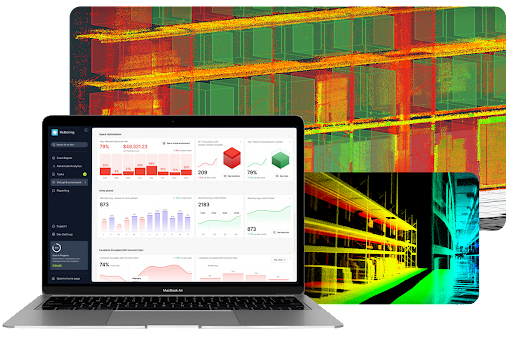
“It gives you a full picture of the integrity of your warehouse – essentially, what’s there and what is not. So you can optimise based on that data. There are further benefits, such as a picture of the storage health of your warehouse. Are there damaged goods, are there damaged pallets? What about the weight of the goods on the racks? So DexoryView is a very valuable second set of eyes from a health and safety standpoint, too.”
Asked which markets it best suits, she prefers to look at the question from a different perspective. “Instead of thinking of customers in terms of verticals, I think of the three objectives we’re helping our customers to meet: high volume, high velocity, high value. That’s how they get an ROI so quickly.”
Fast ROI is proven, she says. “The brilliance of Dexory is that we have a product that actually solves a problem for our customers today, and it solves it very quickly. It is about deploying in 10 days, proving ROI within the first 30 days so that customers see that value very fast. In fact, we’ve just had a deployment that within three weeks, in that period of deciding KPIs and setting up and mapping the environment, the customer has already boosted accuracy from 89% to 95%. From a manufacturing standpoint that is mega – it shows how DexoryView makes a material day to day difference for our customers.”
British Success
Sold as a service, so not necessarily making demands on CapEx, DexoryView has built traction in the manufacturing, automotive, retail and pharma spaces and works direct with customers as well as partnering with integrators. Flexibility is vital. “No two warehouses are ever the same,” Emily Nerland points out.
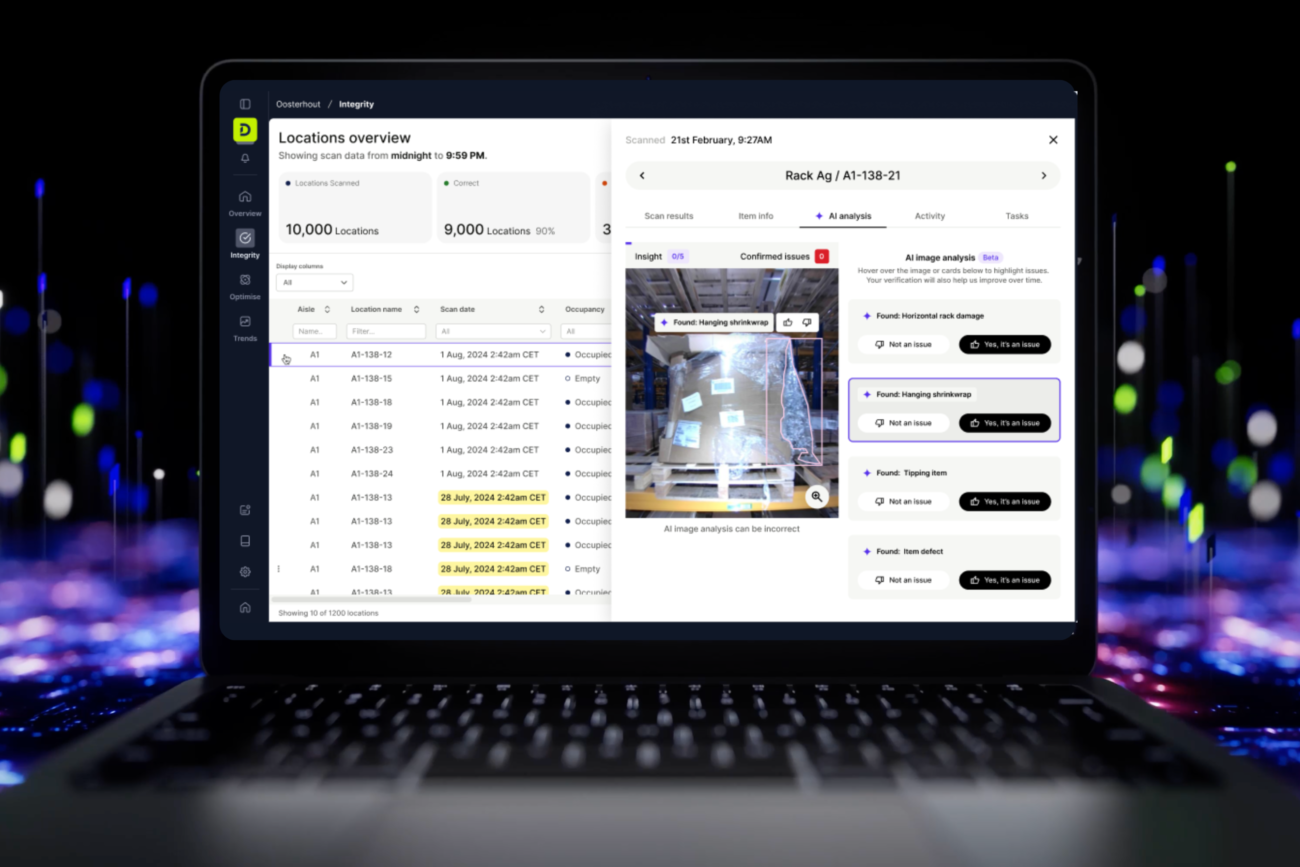
The company is based in Oxford, UK and all products are built there. Solutions have been deployed in Europe, the Middle East, North America and also Asia-Pacific.
Nerland says there are no plans to move the business to the USA, despite booming business in the territory totalling 60% of revenue already and a new North America HQ in Nashville. New VC funding of $165M was announced in August last year, and head count is over 200. “We’re growing so fast, our biggest challenge is to get out of our own way,” she adds, with a smile.
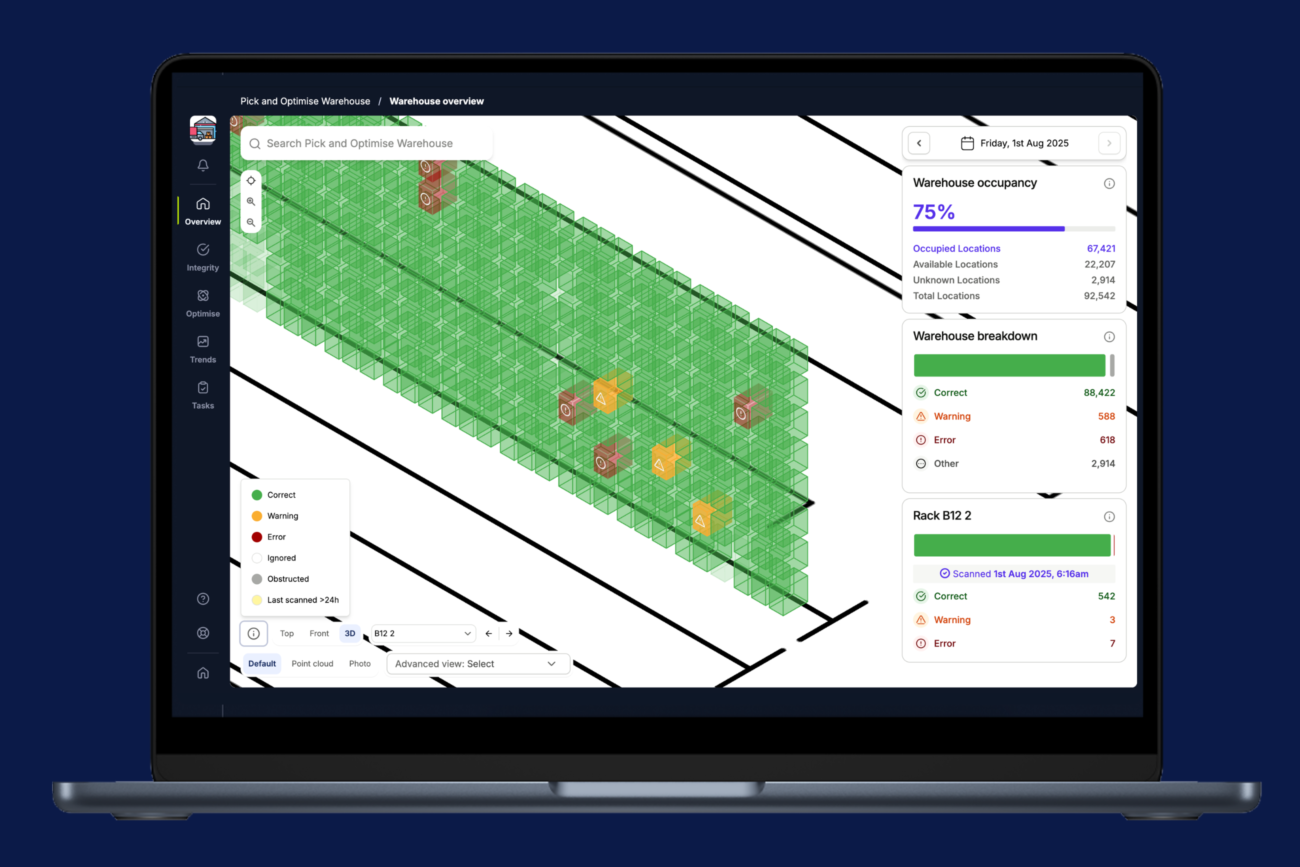
DexoryView Adapt takes the technology to the next stage. It analyses operational data in real time, connecting signals across previously siloed systems, detecting patterns before they escalate, and recommending specific, evidence-backed actions. It brings together three core inputs: real-time physical warehouse data, captured continuously by Dexory’s autonomous robots and the DexoryView digital twin; site-specific rules, systems, and operational constraints unique to each warehouse; and a growing warehouse knowledge base built from multi-site, multi-industry, and multi-geography deployments, as well as broader supply chain expertise. All are continuously integrated to create a unified, real-time understanding of warehouse operations.