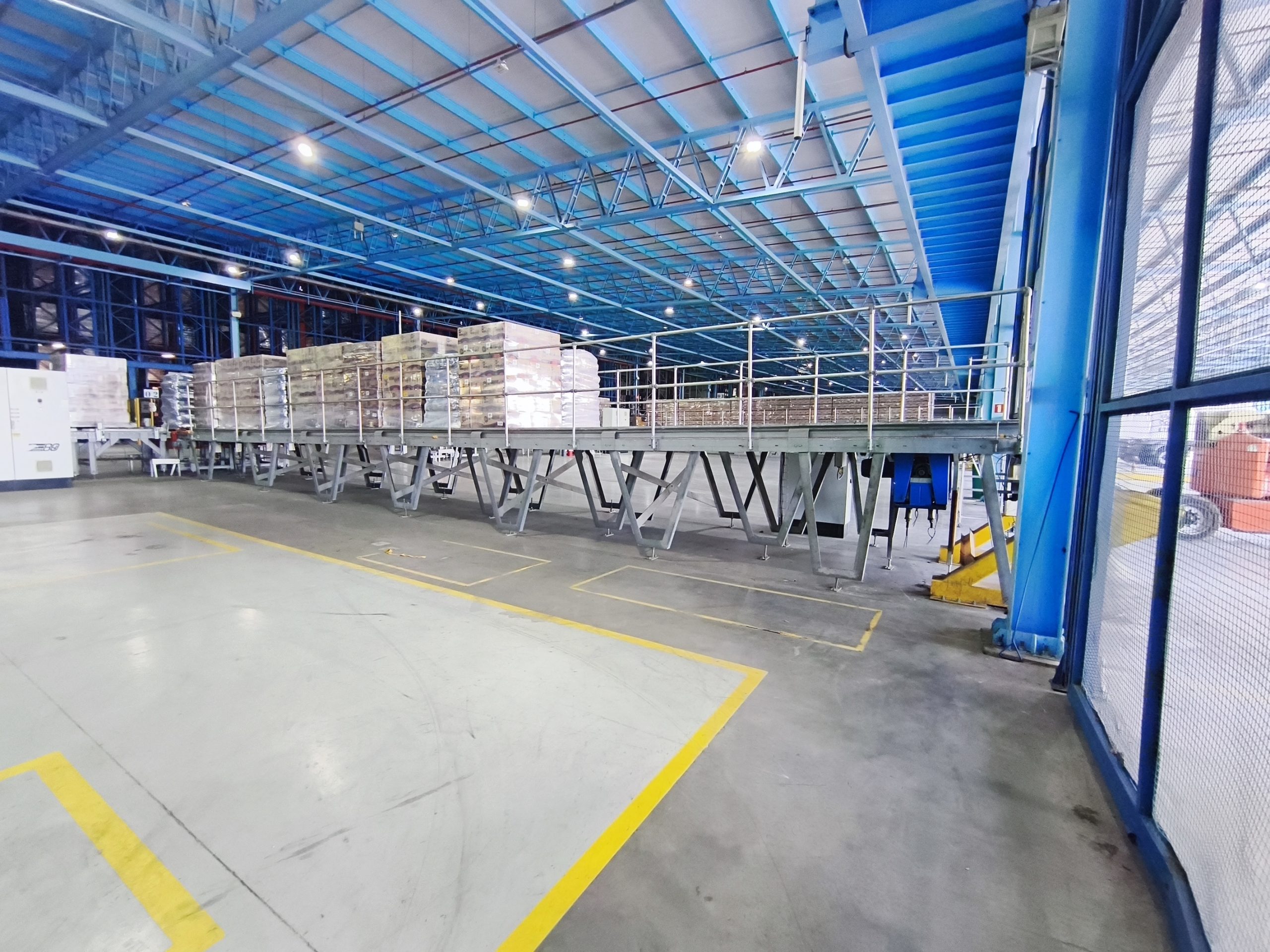
The Role of Automation in Operational Agility

Zero touch production lines and super slick warehouse operations enable manufacturers to quickly ramp up for major sporting event promotions and other timely opportunities to tap into massive global demand. Yet behind the scenes, the continued reliance on manual loading and unloading processes creates a huge operational overhead, demanding third party co-packing partners and significant additional resources.

As Wouter Satijn (pictured, below), Chief Revenue Officer, Joloda Hydraroll, explains, long overdue automation within unloading and loading processes is now imperative to deliver the end-to-end agility required to maximise short lived promotional opportunities – all while responding to new compliance demands and adding vital supply chain resilience in the process.

The digital transformation that has occurred throughout manufacturing over the past decade has radically expanded the opportunities for marketing innovation and customer engagement. Short run promotions – such as those linked to sporting events like the World Cup – can be more easily achieved with super-efficient, often zero touch production lines. At the same time, warehouse transformation driven by the additional distribution complexity created by short run lines, as well as e-commerce, has led to extraordinary new efficiencies. AGVs, conveyors and the use of real-time data feeds enable essential agility throughout the logistics process.

Between these two highly efficient centres of excellence, continued reliance on manual loading and unloading remains a concerning business constraint. The management of short run promotions, for example, requires dedicated and expensive co-packing partners. It demands additional staff, including scarce forklift drivers. Yet product marketing teams are desperate to exploit the power of event-linked customer engagement, especially for global events, with their huge media reach. The operational conflict is inevitable.

End-to-End Agility

Event-led marketing is just one expression of a far broader requirement for more agile operations. Indeed, while companies can choose whether to introduce short run promotions, future regulatory changes are non-negotiable. New packaging demands, such as the EU Packaging and Packaging Waste Regulation (PPWR), will inevitably lead to more SKUs and product complexity that will place a significant burden on existing loading and unloading processes, and test the agility of operations to respond.

Companies in all markets are also wrestling with the continued supply chain challenges created by geopolitical uncertainty. Swivelling in response to shipping delays, fast rising costs, even the creation of completely new supply chain routes demands new levels of agility and responsiveness, especially if they are to still keep up with short promotional windows. Yet while production and logistics models based on real-time data provide immediate insight to support rerouting, the lack of visibility within the cumbersome and slow manual unloading docks is effectively an information black hole that is adding significant operational risk. Without live dock-level insight into the progress of load/ unload activity, organisations are missing essential insight to join up the final component in the end-to-end supply chain management view essential for real-time decision making and supply chain responsiveness.

Automated Loading and Unloading

It is now a priority to create a seamless, agile and automated unloading and loading process that removes the current constraints and ensures the highly effective processes on either side – in manufacturing and logistics – can be optimised throughout. Replacing manual loading and unloading, which relies heavily on forklift trucks, with automated systems such as slipchain, moving floor, trailerskate and other automated container loading solutions, fundamentally transforms the way loading is managed within the end-to-end production and distribution model.

Cutting load times from 45 minutes to less than ten provides the scalability required to seamlessly respond to peaks in production, such as those driven by event-led product marketing campaigns. It reduces the number of people required to handle the load process, allowing the manufacturer to more effectively manage dedicated packaging requirements internally. Plus, it plugs the current black hole in end-to-end visibility, providing the information required to support a far more effective response to supply chain upheaval.

Conclusion

Automation within loading and unloading provides the foundation for a more agile business model, but it also unlocks incremental additional potential. End-to-end operational visibility enables real-time allocation of goods to specific loading bays to improve truck fill rates. It provides the scalability required to respond to new sustainability demands, from the inevitable increase in SKUs to the new demands to handle returns for recycling.

Critically, it enables product marketing to embrace creative innovation without facing a production stand-off or reliance on expensive third-party co-packing providers. With a super agile production and logistics model, including automated loading and unloading, manufacturer marketing teams can confidently embrace short run promotional innovation and maximise the global customer engagement opportunity.

Where’s your Labour Resource Management on the Warehouse Maturity Curve?

Labour costs are rising, skills shortages are persisting across the logistics sector, and warehouse management teams are under constant pressure to do more with fewer resources. Resource management is one of the key dimensions that warehouse leaders need to consider when assessing operational maturity, but it’s not the only one.

Aptean’s webinar with Logistics Business on 18th June will explore the broader characteristics of warehouse maturity, including workforce management, operational performance, technology adoption and process optimisation.

Register here

The skills shortage isn’t going away

Finding and retaining warehouse talent remains a challenge and shows no signs of abating. A Chartered Institute of Logistics and Transport (CILT) survey found that 86% of companies have experienced warehouse operative staff shortages, and with fewer young people entering the industry, the long-term talent pipeline remains uncertain. At the same time, warehouse operators are facing significant cost pressures resulting from recent UK employment legislation and tax changes.

From April 2025, employers saw increases to both the National Living Wage and employer National Insurance contributions, while the earnings threshold at which employers begin paying National Insurance was reduced. Together, these changes have increased employment costs across labour-intensive operations such as warehousing and distribution. Looking ahead, proposed reforms under the Employment Rights Bill are also expected to place additional focus on workforce planning, employee protections and labour management practices.

Maturity model for labour and resource management

How warehouse managers respond to these new employment challenges varies enormously depending on the maturity level of their labour and resource management. As warehouse management experts, we see a huge variety in terms of approach, which can be illustrated using a maturity curve. It starts with the most basic tracking and compliance functions at one end and progresses to dynamic, system-orchestrated workflows at the other. Once you understand where your warehouse sits, it becomes possible to consider how to move up the curve and achieve performance improvements. We will be considering this in our upcoming webinar.

Level 1: Foundational Maturity – Tracking and standards

At the foundational level, labour management is mainly concerned with optimising visibility and compliance. Warehouses at this stage know who is logged in, what tasks are being performed, and which pieces of equipment are in use. Performance standards are defined for core activities such as picking, putaway and replenishment, and managers can compare actual task completion times against expected norms.

This is valuable information, enabling shift-level and individual performance comparison. It helps identify knowledge gaps and training requirements and supports basic resource utilisation analysis for key assets like forklift trucks. But these capabilities primarily focus on what has already happened. They do not help prevent problems before they arise or optimise how work is sequenced to maximise efficiency.

Level 2: Advanced Maturity – Balancing demand and capacity

More mature operations have moved beyond historic reporting. They utilise resourcing data with order demand and inventory profiles to allocate resources across shifts and tasks more strategically. At this level, warehouse managers are using their WMS to analyse future order volumes against available labour by shift, to identify periods where demand is likely to exceed capacity, and reallocate resources proactively, before bottlenecks arise.

Level 3: High-performance maturity – dynamic management

At the highest level of maturity, labour and resource management is dynamic. The WMS doesn’t just monitor or plan, but sequences work requirements based on real-time conditions, for example, operative location and skill level plus the availability of handling equipment. The system acts like a decision engine, constantly optimising the next best action for every person and piece of equipment on the warehouse floor. One of the defining capabilities at this level of maturity is task interleaving.

How does task interleaving differentiate warehouse maturity?

In a traditional warehouse, teams tend to be divided by function. One group manages goods-in, another handles internal stock movements, others focus on picking, packing or despatch. It’s a siloed approach and can result in a lot of wasted resources, for e.g. a forklift completes a putaway and returns to the dock empty for a new assignment. Or a picker finishes an order and walks back across the warehouse without doing anything productive on their return journey.

Task interleaving eliminates wasted resource like this by using the WMS to combine related tasks into a single, continuous workflow. Rather than assigning tasks in silos, the system sequences work so that every movement contributes to productivity. Warehouse operatives complete stock replenishments, putaways, stock takes and picks in a logical sequence, leading to significant productivity gains.

Rather than returning empty, a forklift operator completing a putaway could be directed to collect a pallet for another task. A picker finishing an order might be assigned a replenishment task on their return route. All this is managed continuously, in real time, by a WMS with the right capabilities to support this shift. Once the software is configured with the right set of parameters to define the tasks and resources to be allocated, it takes care of all the decision making, creating a steady flow of tasks for maximum efficiency.

The productivity benefits achievable from task interleaving are well-evidenced. When implemented effectively on one customer site, a 22% labour productivity improvement was achieved, with equivalent gains made to the utilisation levels of forklift truck equipment. There are other gains to consider beyond productivity. More efficient equipment utilisation means there is less wear and tear on materials handling equipment when the number of journeys is reduced. There is a reduction in the amount of energy used to power vehicles. And with operatives able to work more efficiently, perhaps fewer operatives are required, helping to manage employment costs.

Where is your warehouse in the maturity curve?

Current market conditions make warehouse maturity more important than ever. Skills shortages continue to constrain growth and rising labour costs driven by wage increases, National Insurance changes and evolving employment legislation are placing further pressure on operating margins. In this environment, learning from high-performing operations presents an opportunity not to be missed.

Join our webinar on June 18

To understand exactly where your warehouse sits on the maturity curve and how you can move up it, join our upcoming webinar. Eric Carter, Senior Solutions Consultant at Aptean will be talking to Peter MacLeod, Editor of Logistics Business Magazine, sharing practical, evidence-based insights about what high-performing warehouses do differently. We will be drawing on the research behind Aptean’s Warehouse Maturity Curve eBook to map four core capability areas across three levels of warehouse maturity.

Freight Exchange Built on Security Certifications

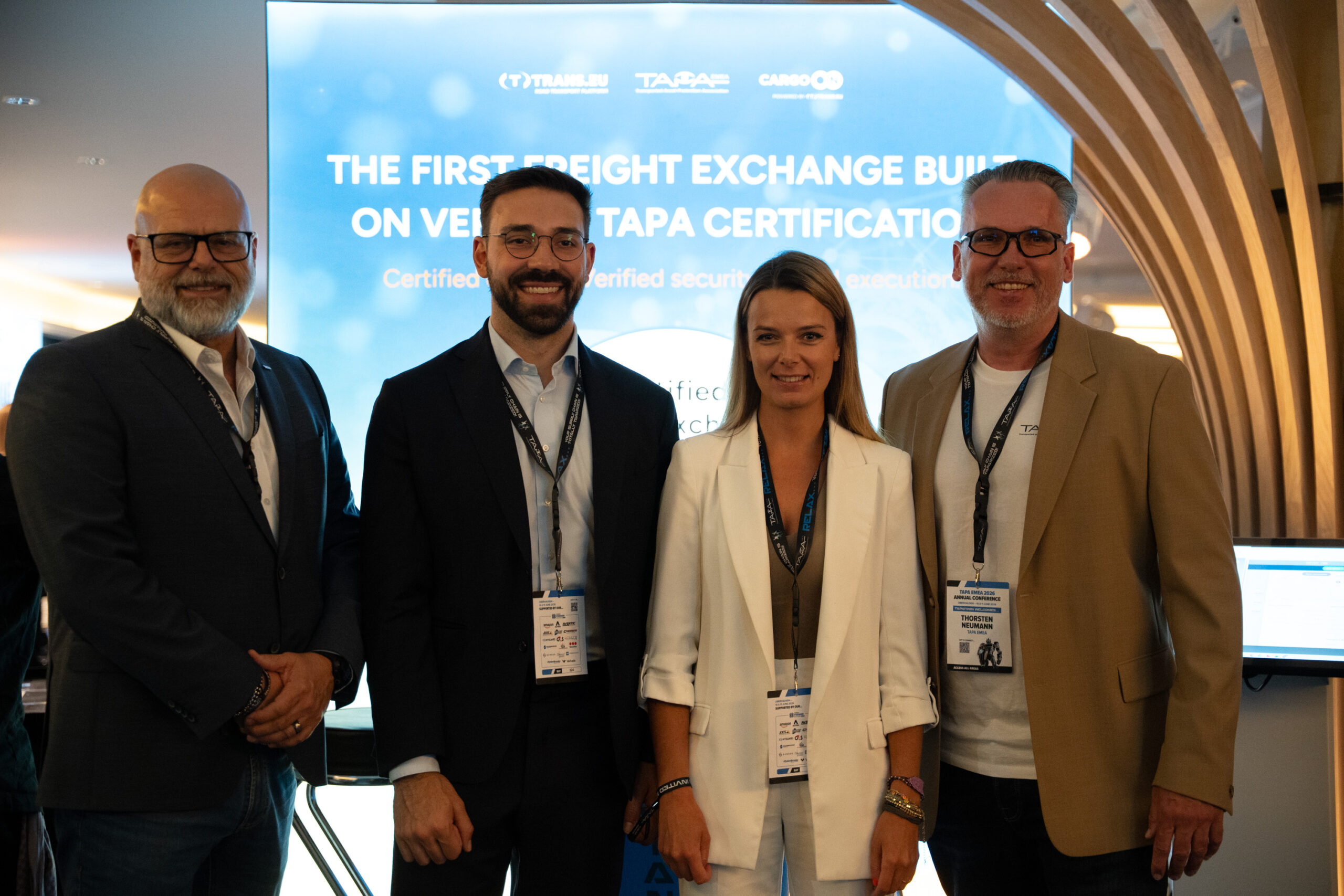
The Transported Asset Protection Association (TAPA), an authority on supply chain security, and Trans.eu Group have announced the launch of the Certified Carrier Exchange – Powered by TAPA EMEA Standards & Intelligence, marking a new chapter in their strategic partnership: the first freight exchange platform built entirely on verified TAPA TSR (Trucking Security Requirements) certification.

Trans.eu Group will also support increased awareness of the security and commercial benefits of the TAPA TSR Standard across its digital ecosystem reaching over 44,000 carriers, freight forwarders and shippers to help increase the community of TAPA-certified transport providers across the European region. ​
​​
​The announcement was made at the TAPA EMEA 2026 Annual Conference in Oberhausen, Germany, in front of more than 800 industry leaders, law enforcement representatives, and supply chain security professionals from across Europe and beyond.

A new community for secure freight

Annual global cargo losses are estimated at $40 billion, with cargo crime in the EU alone accounting for up to €8.3 billion each year, according to a European Parliament study. Criminal methods have evolved far beyond opportunistic theft: today, ​ organised crime groups exploit identity fraud, fake carrier profiles, and AI-generated documentation to circumvent existing security requirements and steal loads without breaking and entering. The core vulnerability they exploit is always the same: trust based on unverifiable claims.

The Certified Carrier Exchange directly addresses this gap. By combining Trans.eu’s security infrastructure with TAPA’s independently audited TSR certification framework, the platform creates what both organisations describe as a ‘double-locked environment’ for freight transactions.

“No freight exchange platform can truly guarantee absolute security. But what we set out to achieve is to minimise risk and losses by building a platform grounded in the highest security standards, which have been created by the industry, and where transparency, verification, and reliability are built into every layer. By working closely with Trans.eu, we are able to verify that every participating freight forwarder and carrier holds a valid TAPA security certification. And ‘valid’ is the key word here. These certifications are not just claimed; they are controlled, maintained, and managed under TAPA’s strict compliance framework. This is how we are significantly reducing uncertainty and eliminating one of the biggest risks in logistics: relying on information that cannot be trusted.”

— Thorsten Neumann, President & CEO, TAPA EMEA

How it works: a seamless integration of security and efficiency

The Certified Carrier Exchange is a closed, premium environment within the Trans.eu technology that seamlessly integrates TAPA’s TSR security standard with the operational needs of the logistics sector. The core functionality revolves around providing reliable, verified, and TAPA-compliant capacity to shippers and freight forwarders, while simultaneously offering new business opportunities to carriers that adhere to the Transported Asset Protection Association (TAPA) security requirements.

Access to the Certified Carrier Exchange is exclusively limited to carriers holding a valid TSR 1, TSR 2, or TSR 3 certification, automatically verified in real time against the TAPA database. This means that, in contrast to what happens on other platforms, certifications are not self-declared; they are continuously validated and actively maintained under TAPA’s oversight framework.

Shippers and freight forwarders, including those which are not TAPA members, can access the exchange to connect with this verified pool of capacity, eliminating weeks of manual security vetting while gaining confidence that every carrier they see meets the highest globally recognised TAPA Standard for cargo protection.

For certified carriers, the exchange unlocks a tier of business that is difficult to reach through standard freight platforms. TSR-certified companies gain direct access to high-value cargo loads — the kind that command better rates and require the security standards they have already invested in meeting. They gain visibility with a calibre of shipper and freight forwarder that typically operates within closed networks.

Lastly, users of the Certified Carrier Exchange also benefit from the Trans.eu platform’s full transaction lifecycle, which allows them to go from load offer to confirmed transport order within a single, secure, and traceable environment, processing deals in minutes rather than days.

More than a handshake: built on proven foundations

This collaboration between TAPA EMEA and Trans.eu Group aims to deliver a powerful shift in the logistics landscape: moving from freight matching to a vetted, high-security ecosystem. With over 44,000 vetted companies in its network, Trans.eu Freight Exchange provides an optimal infrastructure and environment for transactions. The platform processes over 11 million load offers monthly and operates one of Europe’s most rigorous carrier vetting processes.

TAPA EMEA, a not-for-profit​ industry association which has spent over two decades establishing and maintaining the TSR standard as the benchmark for trucking security worldwide, remains neutral, championing a secure environment that protects the entire supply chain from organized crime. TSR is one of 4 certifiable Standards offered by TAPA EMEA alongside its Facility Security Requirements (FSR), Parking Security Requirements (PSR), and Cyber Security Standard (CSS). ​

“The freight industry has been asking for a modern exchange that embeds ​ security in every step of the process architecture. At Trans.eu, we built exactly that — a platform where verification never stops, where every transaction stays within a traceable, protected environment, and where the network itself becomes a line of defence against fraud. ​ We created the digital infrastructure to ensure a highly secure flow of information where risks are minimized as long as the transactions are concluded within the platform. That is precisely the philosophy TAPA EMEA recognised when they chose us as their partner. The Certified Carrier Exchange is the natural next step: proof that speed and security are not a trade-off, but a single, engineered outcome.”

— Ewa Węgorkiewicz, Chief Operating Officer, Trans.eu Group

Propelled Semi-Trailer Pilot Launched

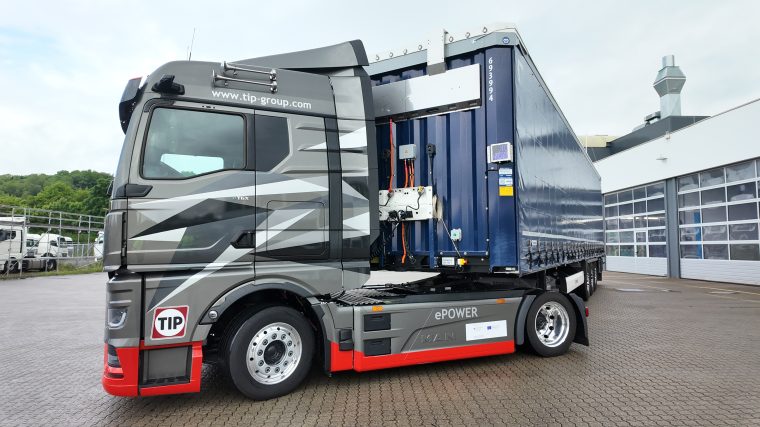
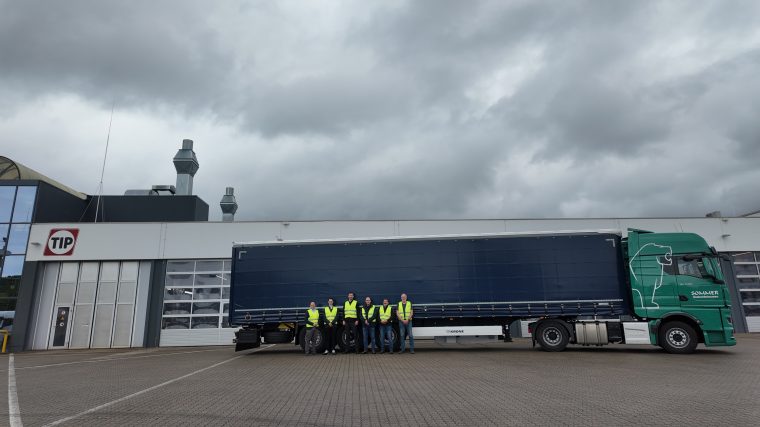
Transport equipment solutions provider TIP Group, electric powertrain specialist Nivalis Energy Europe, and leading trailer running gear specialist BPW, have announced the start of a pilot trial of a propelled semi-trailer without refrigeration for the German transport operator Sommer.

The pilot, which began at the end of May, tests a Nivalis Powered Trailer Kit fitted to a TIP Group trailer under real operating conditions with Sommer’s fleet. The kit transforms a standard trailer into an intelligent, self-assisting unit that actively contributes to its own movement – reducing the energy demand on the tractor engine, without adding significant weight, and without changing how the driver operates the vehicle.

The pilot will evaluate how energy-assisted trailer technology performs under real-world long-haul logistics conditions. The new system is targeting to reduce truck’s fuel consumption by up to 7,000 litres of diesel per trailer per year – a potentially significant operational saving for high-utilisation fleets – while cutting CO2 emissions by up to 18 tons per trailer annually.

How it works

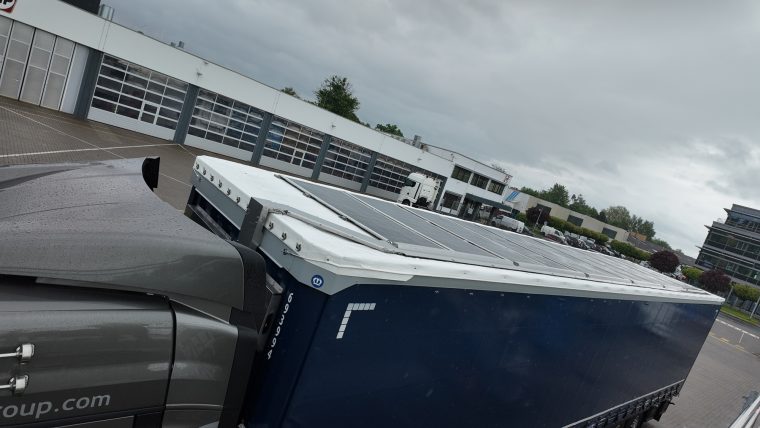
The Nivalis system integrates an electric axle (e-axle), a joint development of Nivalis and BPW, directly into the trailer chassis. Unlike the company’s electrified e-Reefer refrigeration platforms which focus on powering refrigerated transport, the Powered Trailer system is designed to reduce the energy demand placed on the tractor unit through propulsion assistance and energy recovery. The batteries receive energy from three sources simultaneously: the e-axle during braking, a full-roof array of photovoltaic (PV) solar panels during daylight, and a 32A AC three-phase grid connection during parking stops. The system generates, recovers and redistributes energy continuously across the working day.

An onboard Energy Management Unit (EMU) hosts all power electronic components and Integrated Power Distribution Unit (IPDU) orchestrates all power flows, while a compact Human-Machine Interface (HMI) display, readable from the cab’s side mirror, keeps the driver always informed of system status and battery charge level.

The system also feeds real-time and historical performance data into Nivalis’ telematics platform, giving fleet managers full visibility of energy generation, savings and system health. Predictive maintenance alerts and over-the-air software updates reduce downtime and enable integration with existing fleet management solutions.

The fuel saving and TCO

The Nivalis system has been designed to deliver meaningful fuel savings for long-haul routes, with projected fuel consumption reductions of up to 7000 liters of diesel, and 18 tons of CO2 per trailer per year. The rooftop PV array generates up to 3.7kWp, further reducing grid dependency.

”Our e-system is focused on 3 targets: fuel cost reduction, minimal intervention in customer’s operating processes and improved sustainability.” says Pavel Gilman, Vice President Sales & Marketing at Nivalis Energy Europe.

“We want to showcase how the transport industry can step-by-step release itself from fossil fuels without exceptional investments and changes to infrastructure. We think it is the right time for customers to make the change and gain important competitive advantages.”

“From an operational perspective, the key question is how the system performs in everyday transport conditions – across different routes, loads and driver behaviours. This pilot gives us the data and experience to assess that in a practical and real-world way,” shares Christian Schütz, Head of Fleet & Asset Management Central Region at TIP Group.

“By focusing on the use of harvested energy and following a strict down-scaling approach, the Nivalis system lowers the threshold to profitability and avoids dependency on electricity prices and charging opportunities. Smaller batteries and optimized drivetrain power reduce investment cost, weight and impact on vehicle stability. We think that the system operates in the economic sweet spot of TCO for propelled trailers and support the field test to validate our expectation,” says Hans Werner Kopplow, Head of R&D Customised / E&I-Solutions at BPW.

Homologated and road-ready

Especially with technical innovations and pilot vehicles, administrative requirements for registration and operation can be complex. TIP has successfully obtained the required approval for this trailer configuration, enabling its registration and use across EU and EFTA countries in line with applicable national regulations.

The Nivalis high-voltage Li-Ion battery packs are certified under UN 38.3, and the electric powertrain complies with UNECE Regulation No. 100. Drivers operate the trailer under standard European and national driving regulations, with no additional licensing or training required.

What this pilot means for the industry

For TIP, this pilot extends an active portfolio of sustainable full-service solutions already in commercial operation across Europe. The propelled trailer pilot opens a new front in that work: addressing traction energy at the trailer level, rather than solely through the tractor unit or ancillary systems.

“Our customers need solutions that improve efficiency without disrupting operations. This pilot allows us to evaluate whether propelled trailers can deliver measurable gains in day-to-day use and make a meaningful contribution to decarbonization” says Rogier Laan, Vice President Global Sales and Marketing at TIP Group. “Our role is to bring these technologies into real-world operation and help accelerate the transition to more sustainable transport.”

Interim findings from the pilot will be shared during the trial period. Subject to results, TIP and Nivalis plan to explore broader European deployment options.

Subscribe

Get notified about New Episodes of our Podcast, New Magazine Issues and stay updated with our Weekly Newsletter.