A Fresh Approach to Warehouse Automation

REWE, one of Germany’s leading grocery retailers, has automated the fresh food operations at its logistics facility in Oranienburg, which supplies the metropolitan region north of Berlin.

Working closely with Cimcorp, a pioneer in intralogistics automation, REWE has automated fulfilment of fresh produce orders for over 370 supermarkets and 580 stores in the greater Berlin region. Robotic systems at the distribution centre in Oranienburg, approximately 50 km north of Berlin, have secured transformational benefits for the retailer, including unprecedented levels of efficiency, reliability and workplace wellbeing.

Cimcorp’s intralogistics solution provides accurate, fast and reliable fulfilment for fresh fruit and vegetables in plastic crates. In addition, the automated system provides a safe and ergonomic working environment for logistics employees. High system availability is ensured through comprehensive customer service for the site, provided 24/7 by Cimcorp.

Speed means freshness

Up to 650,000 units of produce move through the Oranienburg facility every day, with speed being of the essence to ensure freshness for consumers. “In fresh food logistics, every minute counts and every delivery is critical,” explains Matthias Menzel (pictured, below), General Manager at the Oranienburg DC.

“Missing the delivery window means a significant financial loss. That’s why we invested in automation that delivers absolute reliability, real-time control and the capacity to serve Berlin and the surrounding regions.”

Accuracy and traceability

Cimcorp’s ‘Dreamfield’ solution at the Oranienburg DC integrates cutting-edge robotic systems, conveyor technologies and leading-edge software. The automation ensures fast and seamless material flows, resulting in reliable, on-time deliveries to REWE’s stores. With the end-to-end Dreamfield solution, every unit of produce is traceable and every process is managed for efficiency and quality. “Our customers expect that our reliability increases every year,” says Menzel. “As stores learn that they can trust our deliveries, it brings improvement not just to our logistics, but right through to the customer experience in the store.”

At the heart of this reliability is Cimcorp’s Warehouse Control System (WCS), which integrates the robots, conveyors and inventory management to ensure system-wide transparency. This advanced software manages everything from inbound barcode scanning and depalletizing, through inventory and picking, to precise outbound labelling and shipping – all the while maximizing transparency, safety and system uptime. User-friendly dashboards and error-management tools give operators full visibility and rapid response capabilities, further reducing the risk and impact of errors.

Robotic picking

Crates of fresh produce are picked by gantry robots, which form the backbone of Cimcorp’s Dreamfield solution. A key benefit of using this technology is that the open-floor design, without the need for racking, means easier cleaning and enhanced hygiene.
Inbound goods arrive at the DC on Euro pallets, which are automatically registered and scanned. Manual unwrapping and quality checks ensure that only compliant goods enter the system. Cimcorp’s robots then depalletize stacks, buffer them and manage their storage using FIFO (First In, First Out) or FEFO (First Expired, First Out) inventory strategies.

The fully integrated Cimcorp WCS orchestrates picking – managing workload balancing among the robots – and coordinates outbound pallet building and dispatch. The system is designed with redundancy, with dual robot cells and transfer cars ensuring continuous operation, even in rare outage scenarios.

Mitigating labour shortages

Crucially, the Cimcorp solution addresses labour shortages and workplace ergonomics for REWE. Labour availability has become a significant challenge for many retailers today. “Finding employees for the physically demanding jobs in warehouses, especially when it comes to the heavy lifting needed for fruit and vegetables, is getting harder every year,” says Menzel.

Cimcorp’s systems take care of the heavy lifting, leading to a safer and more productive work environment. With automation, strenuous manual picking is replaced by system oversight, process management and quality checks. By supporting workplace wellbeing, ergonomic working also helps with employee recruitment and retention.

“With this solution, our people can focus on work that is safer, more rewarding and less exhausting,” says Menzel. “We’re no longer fighting to fill overtime hours; instead, our staff are excited to work with new technology and see the benefits of automation in their daily roles.”

Sustainable solution

Sustainability is a fundamental element of REWE’s business strategy. By streamlining every process, automation is intrinsically eco-friendly. In addition, optimised truck loading means delivery vehicles have better space utilisation, resulting in less traffic and consequently lower environmental impact. Plus, a faster supply chain means longer shelf life for fresh produce, leading to less food waste. Then the service agreement with Cimcorp enhances sustainability by extending the lifetime of the system.

Scalable automation

Being modular in design, the Dreamfield solution can be easily expanded to meet growing order volumes. The solution is suitable for optimising material flows in the fresh food, liquid dairy, bakery and beverage sectors and REWE is one of a number of customers benefiting from the enhanced efficiency and profitability that Dreamfield delivers. The solution is powering fresh food logistics for Alimerka and Mercadona in Spain, as well as Edeka and Netto in Germany. These flagship facilities are not simply moving groceries but redefining what’s possible in food retail logistics.

Next‑Generation Industrial Printer Series

Building on the successful launch of the BX400 (4”) and BX600 (6”) series, Toshiba is proud to introduce the BX820T, its new 8-inch wide-web next-gen industrial printer.

Thanks to this new offering, Toshiba provides a comprehensive BX industrial printer lineup spanning 4”, 6” and 8” print widths – all driven by the innovative A‑BRID printer operating platform.

Designed to address the unique demand for ultra-wide label printing, the BX820T opens new application opportunities in sectors requiring large-format and bulk labelling. Typical use cases include chemical and pharmaceutical production, heavy industry, paper manufacturing, drum and barrel labelling, as well as logistics, pallet and container identification.

Driven by Toshiba’s innovative A-BRID platform, the BX820T delivers embedded intelligence directly at the printer level. This enables seamless system integration, flexible label management and future-ready capabilities – without the need for middleware or complex IT changes.

Wide-Web Industrial Printing Without Limits

While all BX models share the same powerful architecture, the key differentiator of the BX820T is its 8-inch print width, enabling precise, high-quality output for wide-web labels, large compliance labels and industrial tags. This makes the BX820T ideally suited for environments where standard label formats are no longer sufficient.

By completing the BX industrial series, Toshiba now provides end customers and business partners one consistent, scalable printer platform capable of covering virtually any industrial labelling requirement – from small component labels to large format bulk packaging labels.

Like all BX printers, the BX820T is built on Toshiba’s A-BRID next-generation printer operating platform, which brings intelligence, flexibility and control directly into the printer.

Key A-BRID highlights include:

  • Direct PDF printing – print labels directly from PDF files without middleware or performance loss.
  • Label updates without system changes – adapt formats and data directly at the printer, without modifying host applications.
  • Print data converter – supports new requirements such as QR codes or Digital Product Passport data without disrupting existing workflows.
  • Automatic printer language detection and emulation – enables true drop-in replacement of legacy printers.
  • Embedded intelligence – supports standalone operation and flexible workflows directly at the device.

Expanding Opportunities for Customers and Business Partners

With the launch of the BX820T, Toshiba empowers business partners to expand their addressable market and approach new projects with confidence – from standard industrial labelling to highly specialised wide-format applications.

“The BX820T completes our BX industrial printer family and marks another important milestone in the evolution of Toshiba’s industrial printing portfolio,” said Akira Ito, European Product Marketing Manager at Toshiba Tec.

“By combining 8-inch wide-web printing with the full power of our A-BRID platform, we enable our Business Partners and their customers to tackle demanding bulk and compliance labelling applications while benefiting from a unified, future-ready platform.”

Automation Drives Cold Store Efficiency

Clavo Food Factory has increased storage capacity and reduced operating times after implementing an automated logistics solution developed by Mecalux at its production facility in Tordesillas, Spain.

The company specialises in the production of ready-to-eat chilled and frozen food and produces 14,000 tonnes annually, supplying more than 42,000 restaurants worldwide with a portfolio of over 1,000 SKUs.

As demand for these products has grown, Clavo Food Factory faced increasing pressure to scale its operations while maintaining strict requirements for temperature control, traceability and efficiency. The company also needed to manage large volumes of raw materials and finished goods stored at subzero temperatures, without expanding its existing warehouse footprint.

To address these challenges, the company implemented a comprehensive intralogistics solution from Mecalux, combining an automated storage and retrieval system (AS/RS), Easy WMS warehouse management software and mobile racking.

Increasing capacity and improving efficiency

At the centre of the installation is Mecalux’s high-density 3D Automated Pallet Shuttle system, designed to maximise storage capacity and streamline pallet movements. The results have been significant. Clavo Food Factory has increased its storage capacity by 50% without expanding the footprint of the facility, while operating times have been reduced by approximately 20%.

“With the 3D Automated Pallet Shuttle, we’ve doubled our storage capacity, reduced idle time and lowered costs,” says Alejandro Lara, Plant Manager at Clavo Food Factory.

The system currently manages 5,827 pallets of raw materials and finished products, operating continuously to support production and distribution requirements.

Automation in a temperature-controlled environment

The automated warehouse operates at temperatures of up to -24°C, requiring reliable and efficient handling of goods under demanding conditions.

Inside the Mecalux system, a fleet of autonomous shuttles moves pallets across aisles and levels, changing height and direction as required. This coordinated movement ensures smooth and continuous operations while optimising storage density.
By automating pallet movements, the solution reduces manual handling in a cold environment and improves operational consistency.

From manual processes to digital control

Before implementing the new Mecalux solution, pallet location management in the freezer warehouse was carried out manually. This required operators to identify available storage positions and manage inventory without real-time visibility. The introduction of Mecalux’s Easy WMS has transformed this process.

“Before, we assigned pallet locations manually. Now, the WMS assigns slots automatically, so we no longer need to search for available space,” explains Iñaki Frías, Logistics Manager at Clavo Food Factory.

Easy WMS provides full traceability of food products and complete visibility of stock at all times. Integrated with the company’s ERP system, it also allows incoming goods to be pre-allocated, improving warehouse organisation and reducing handling times.
“Easy WMS provides us with complete visibility of every pallet. It helps us anticipate demand, which improves accuracy and gives us peace of mind in daily operations,” adds Frías.

Streamlining order fulfilment

Automation has also improved order preparation processes. The system coordinates picking operations and pallet dispatch more efficiently, reducing unnecessary movements and improving workflow organisation.

For example, when an order includes both full pallets and items requiring picking, the system first generates the picking tasks and then completes the order with the remaining pallets. This structured approach reduces processing times and improves overall efficiency. As a result, the company can manage higher volumes of orders while maintaining service levels and operational accuracy.

Optimising space and energy use

The high-density design of the Mecalux automated system enables more efficient use of available space, which is particularly important in temperature-controlled environments. By increasing storage capacity within the same footprint, the company reduces the need for additional warehouse space while improving internal logistics flows. In addition, optimised pallet movements and reduced handling contribute to more efficient energy use in the freezer warehouse.

Continuous operations and improved service

The integration of Mecalux automation and warehouse management software has enabled Clavo Food Factory to operate with continuous processes, supporting production and distribution activities more effectively.

“Our customers are already noticing faster service, and we can now handle a higher volume of operations,” says Alejandro Lara.
Automation has also contributed to improved internal organisation, helping streamline workflows and optimise the layout of the facility.

Supporting future growth

The modernisation of logistics operations at the Tordesillas plant represents a key step in Clavo Food Factory’s growth strategy. By combining automation, digital control and high-density storage, the company has created a more efficient and scalable logistics operation capable of supporting increasing demand.

The project also reflects the company’s commitment to innovation as a driver of competitiveness in the food industry, where operational efficiency and product traceability are critical. Following the implementation of the new system, Clavo Food Factory has improved efficiency and agility across its supply chain, enabling it to respond more effectively to demand peaks and support its continued expansion in international markets.

Enterprise Grade System

How does a mature and successful transport tech firm continue to innovate and grow? David Priestman spoke with Mike Blackburn, Chief Revenue Officer at Microlise.

A fresh pair of eyes can help when it comes to the quest for expansion. Blackburn (pictured, below) joined the firm he describes as ‘a massively stable business’ in late 2024. His background is in tech and software, rather than logistics. I asked him to summarise his mission.

“Every build project is the same. Grow the numbers by growing the team and helping them become the best version of themselves through training and partners,“ he says. “If we make the mission about customer value and understanding it then it becomes much more than a software pitch.”

Nottingham-headquartered Microlise listed on the AIM market of the London Stock Exchange in 2021 and is a plc with 730 staff and a turnover of £84 million, focused on transport management software (TMS) as a service. It has commercial vehicles fleet customers predominantly in the UK, Ireland Australia, New Zealand and France. “APAC is a huge growth region for us. France is a mature market. Australia is at a different place in terms of compliance, with trucks often a long way from home, so we have a different customer journey in different continents.” Development work is also done in India.

British Success Story

As well as TMS for routing, costing and consolidation the company also offers fleet telematics for tracking and temperature-monitoring and delivery management with analytics and (e)proof-of-delivery. The emphasis at its recent annual MTC conference in Manchester was on compliance, risk and safety, encouraging the adoption of dash cams (Streamax technology) to spot fatigue, distractions and phone usage, then notifying the driver and head office.

Driver excellence is the goal and up to twenty-four parameters can be monitored for data analysis. Is there a limit to how much data is analysed? When do we reach the point where the customer says, ‘there’s too much data!’? “The trick is to know what you want to impact,” Blackburn urges. “We can have two different types of conversations with customers. One, where they know what they want to change and fix, so we can help show them where they’re at and take them to where they want to be. Or we can just talk about what we’ve done for other customers and pick some targets, then embed it. It’s important to invest in your teams, as well as in the trucks and tech. Changing driver behaviour is easier with the tech. Putting it in is a safety net to keep us honest.”

Incremental Gains

Big customer wins include Culina, Maritime, Bibby, GXO and Europa Worldwide – large HGV fleets, using enterprise-grade functionality platforms. Customer success teams are deployed to maximise retention. “Where do customers want to go, what’s the value discovery?” Blackburn asks. “It’s either fleet compliance or fleet performance. We want to unlock value. There’s the cost of inertia and small, incremental gains to be made.” Roll-out deployment of the TMS and tech is typically between two and six months, but it can be a year if the whole range of products is being deployed.

I asked Blackburn whether he would still describe Microlise as a software business or a tech company. “Everything anybody wants to do in business, the biggest change you can have is through your people,” he advises. “If we can enable our customers’ people to enact change, we’ll have an impact on their performance. Yes, we’re a tech business, but we’re about making people better. We don’t have to build everything ourselves. If there’s a partner out there that we can work with and deliver that value quicker, then that will be how we do it.” Trimble being one example of this approach, as it is not a competitor.

Is a takeover on the cards? “Yes, there’s an opportunity to explore that, we’re adopting a buy, build or partner mentality. There are 3 options available. Acquisitions and regional growth excite me.” TruTac software of Coventry (compliance specialists) were bought and kept in situ, bringing new customer wins to the group.

As well as further internationalisation, Blackburn’s specific goals, via trebling the sales teams in some places, are to grow in the mid-market, mid-sized fleet sector and with ecommerce operators. “A la carte is possible; we do build for individual needs, to simplify and make it easy to consume. Give customers access to their data and show them how they can use it.”

EV users are also good prospects because they need more data to manage the complexity of charging. “It’s inevitable. How long it will take depends on the culture of the business. Most of our customers are running mixed-fleets. OEM trucks are going to have tech, end points that we can work with. If you set your data up that way with 5 or 6 manufacturers in your fleet how are you going to manage that complexity? We can help unlock that. The key thing is to work with customers and ask them where they want to take us in 18 months’ time.”

Automated Fulfilment Comes to Lyon

Paxon has completed the transformation of a logistics site near Lyon into a fully automated e-commerce fulfillment hub for JDE Peet’s coffee brands, including L’Or and Tassimo, marking the first large-scale collaboration between Active Ants and Staci under the Bnode group.

Delivered in less than eight months, the project combines Active Ants’ automated e-commerce fulfillment expertise with Staci’s established logistics network in France, creating an integrated solution designed to support growing online retail demand.

The facility in Pusignan, located close to JDE Peet’s production site in Saint-Étienne, officially went live on 1 February 2026 following a major site overhaul. The transformation included the installation of automated picking and packing equipment, conveyor systems, new racking, upgraded electrical infrastructure and Active Ants’ fulfillment technology.

The site also features automated packaging technology that prints customised boxes and right-sizes packaging to reduce waste.

Today, the platform processes several hundred thousand e-commerce orders annually, with peak volumes exceeding 3,000 orders per day. The launch has also doubled the site’s workforce, increasing headcount from around 20 to 50 employees.

The project builds on Active Ants’ existing relationship with JDE Peet’s in Belgium, the Netherlands and the UK, extending the partnership into France.

This project demonstrates that we can rapidly deploy a high-performance automated e-commerce model by combining Active Ants’ fulfillment expertise with Staci’s omnichannel logistics flexibility. It also reflects what Paxon stands for: complementary strengths brought together under one name to offer customers an integrated, flexible and scalable logistics solution that supports their business.

said Rainer Kiefer, CEO 3PL Europe & Staci Americas.

Jean-François Pagnoux, CEO of Staci France, added:

We were already supporting JDE Peet’s across several European markets. This new operation in France allows us to extend this collaboration into a strategic market, with a solution tailored to the requirements of both e-commerce and the local supply chain

Active Ants and Staci, alongside Radial and Base Logistics, will soon operate under the Paxon brand, further strengthening Bnode’s global logistics offering.

Electric Focus, Diesel Strength

Peter MacLeod hears how Bobcat used LogiMAT to underline both its move into electric material handling and its doubling down on high-capacity diesel where the application still demands it.

Greeting me on the busy Bobcat stand a year on from when we last spoke, Jan Droogendijk (pictured, below), Product Manager Material Handling at Bobcat EMEA, pointed to 12 months of transition from ‘coming soon’ to fully commercialised product lines.

“So, what has changed now is that they are officially launched. Officially. They’re ready to order,” he said, referring to the company’s new generation of three-wheel electric forklifts and lithium-ion battery offering.

Electric Core

At the centre of that push is the BNT series – Bobcat’s first lithium-ion three-wheel electric forklifts – aimed squarely at the high-volume core of the market. “That’s the biggest segment,” Droogendijk noted. “I think every OEM has this as their number one.”
Designed primarily for SMEs, the trucks are deliberately positioned as practical, application-led machines rather than feature-heavy flagships. “Simple, reliable trucks that do the job,” is how he described them, with operating profiles typically in the two-to-five-hour range per shift rather than intensive, multi-shift environments.

A key element is flexibility in battery configuration. Customers can choose between different lithium iron phosphate battery capacities depending on runtime requirements, a decision guided more by usage patterns than by technical specification.

“Typically, you talk about runtime – how long do you need to run the truck during the day,” Droogendijk explained. “That’s how you define the solution.”

This reflects a broader shift in the market, with electrification continuing to gain momentum. “Every year we see the electric market growing,” he said. “LPG is shifting strongly to electric, especially for indoor use where in some countries it’s becoming mandatory.”

Diesel Matters

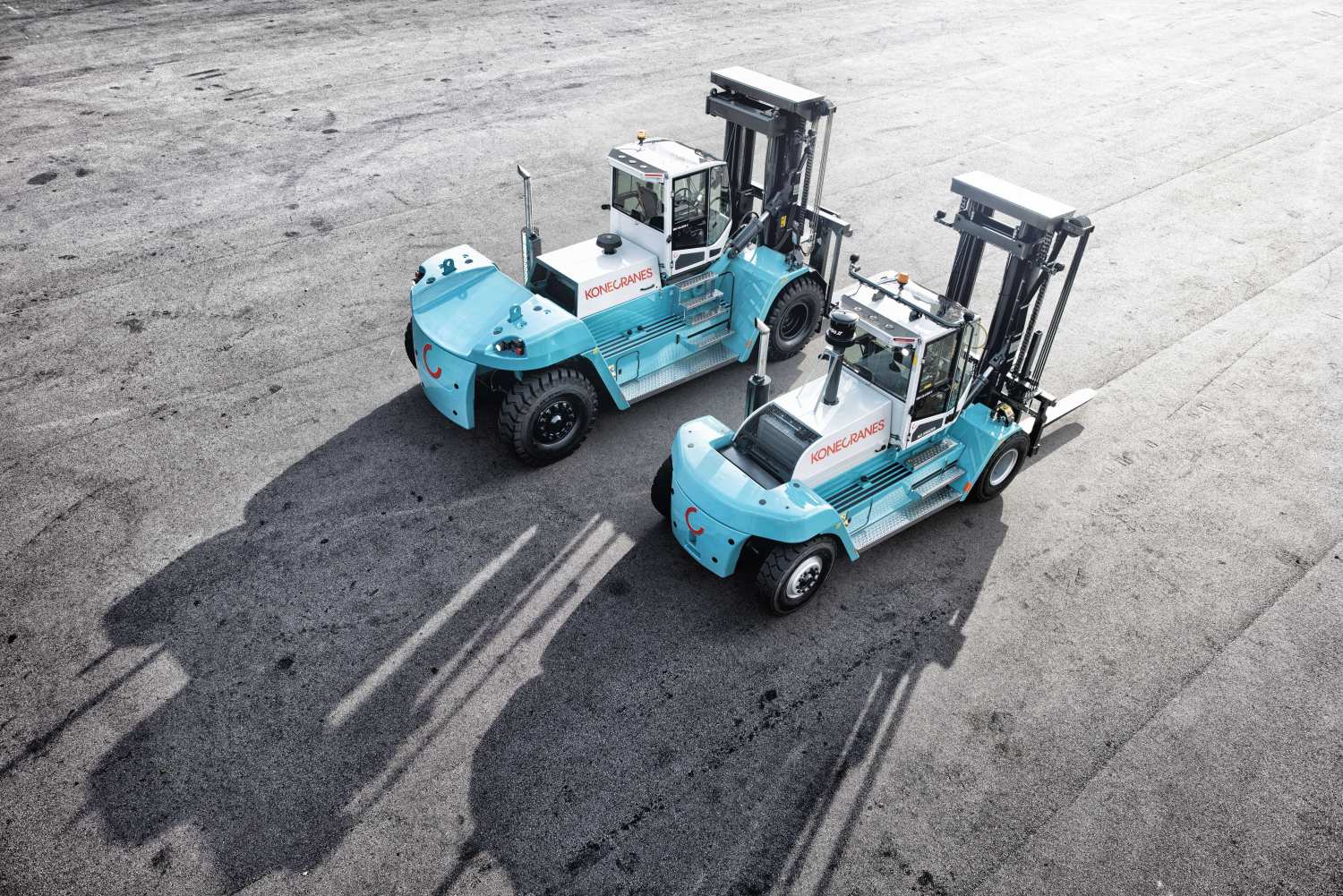
However, the company is equally clear that diesel retains a critical role, particularly at the heavy end of the market. At LogiMAT, Bobcat confirmed the launch of its largest diesel forklifts to date, the DV180S-9 and DV250S-9 models, extending its range into the 18- and 25-tonne segment.

“These are for timber, metal, concrete, ports – heavy outdoor applications,” Droogendijk said. “You don’t always have charging infrastructure, and the battery size required would be enormous. Diesel still has its place.”

This dual-track approach – electrification for warehouse and SME use, diesel for high-capacity outdoor operations – reflects the realities of a highly fragmented EMEA market. Regulatory pressures also play a role. In Europe, Stage V emissions rules have driven the development of new diesel models, while in other regions, legacy platforms remain viable. “Temperature, regulation, infrastructure – it all varies,” Droogendijk smiles. “You have to design products that can work in Norway, but also in the Middle East.”

Digital Layer

Alongside new hardware, Bobcat is also beginning to layer-in digital capability. A telematics system is now being introduced, initially bundled with lithium-ion batteries. The platform provides battery health data alongside machine-level insights such as operating hours, idle time, error codes and shock events.

“It’s like a soft launch,” he said. “We start with the battery, where monitoring is expected, and then we will roll it out further across the range.”

Underpinning all of this is a focus on durability, a core Bobcat brand attribute it shares with its construction equipment stablemates. “Bobcat is a tough animal,” Droogendijk said. “We try to bring that toughness into the trucks.”

In practice, that translates into design features such as additional protection for key components, without over-engineering machines for environments where such robustness may not always be required.

Beyond product, Bobcat continues to expand its dealer network across Europe, the Middle East and Africa, targeting both established markets such as Germany, France and Italy, and emerging opportunities in regions where coverage is still developing.
Looking ahead, the direction is clear. Investment in electrification is accelerating, supported by the opening of a dedicated battery R&D facility in Korea. “That shows the way forward,” Droogendijk said. “More electric trucks, more battery development – that’s where we are heading.”

Materials Handling Group Power

Bowe Group aims to provide integrated automation backed up by state-of-the-art software intelligence. Paul Hamblin spoke to two of the company’s leaders at LogiMAT.

All successful companies evolve. The 80-year journey of BOWE began with the manufacture of household goods, progressing via dry cleaning and car wash systems to document and paper management. Engineering innovation and fast identification of trends and customer needs ensured success and further growth.

Over time, the company began to focus more exclusively on paper insertion and document management technology, hence the renaming to BOWE Systec in 1991, the name by which most of today’s logistics professionals are likely to have first encountered its technologies.

Today, the company is a great deal more than document management and smart inserting systems. Eighty years on from those early days in the cowshed, the company is now one of the premier names in the global intralogistics landscape. Based in Augsburg, it operates a global sales and service operation. Manufacturing sites are largely European: sorters and conveyors are produced in Germany, Sweden, the Netherlands and Italy, while Holmfirth, UK houses the company’s Software Competence Centre.

1 Group, 4 units

The word ‘Group’ is very important because it conveys the integrated nature of the portfolio of solutions offered by the full enterprise. It comprises four business units: BOWE Systec, the ‘original’ arm, continues to handle mail, plastic card and inserting systems; BOWE Intralogistics takes care of materials handling for e-commerce, retail, manufacturing and parcel shipping via sorters and conveyors; BOWE IQ deals with the all-important software and BOWE Move is the division focused on the company’s robotics, automation and AMR portfolio.

The objective is to solve specific customer challenges across the warehouse logistics environment with a key role played by software intelligence. Where BOWE Systec once focused on a particular aspect of the intralogistics process, customers are now offered forensic choices to suit their wider automation needs.

Nick Craven-Smith is MD at BOWE IQ. He describes the challenges that customers wish to address:

“In simple terms, it’s about moving materials, more efficiently and more accurately. Our customers might be running with fewer staff or perhaps trying to increase operations efficiency with existing staff. Accuracy is absolutely key to that, making sure they are picking the right items in the right quantities. So, whether it’s about labour shortages or cost control, our software, AMRs, sorters and conveyors will provide a solution to cover these areas. We are a one-stop shop in that context.”

He explains what AMRs bring to the intralogistics challenge:

“AMR can enhance the operations of conveyor and sortation equipment collecting and moving totes and cages when ready to the next position in the warehouse flow. Our intralogistics solutions optimise a combination of fixed position equipment to work harmoniously with AMR. AMR may bring goods to the fixed sorters and once sorted carry the goods to staging areas or directly to the truck. Our software platform sits above it all.”

All is linked within the group umbrella. “Within IQ we have drivers and connectors for all of the equipment and platforms manufactured across the Group. We then have drivers and controls for each of those, and BOWE IQ brings it together, whether at the automation control level, the orchestration level or illuminating and informing on activities with reporting dashboards and KPIs.”

Craven-Smith’s business unit offers a comprehensive range of logistics-friendly software. The portfolio includes WMS and WCS process optimisation, asset tracking and asset management systems as well as last-mile tracking options.

AMR Versatility

Wolfgang Wagner runs the BOWE Move business unit. A significant innovation from his team on show at LogiMAT is the TugBot, a versatile AMR with an impressive pulling power of up to 600kg, a perfect fit for loaded cages.

He describes its attributes: “Parking tugged carts requires space. Reverse parking reduces that footprint – but is often difficult to execute. With its compact and agile design, the TugBot performs precise forward and reverse manoeuvres with ease, even in tight environments.”

At LogiMAT, the AMR is demonstrated in a live setup interacting with a sorting chute from the BOWE Intralogistics portfolio. As soon as a cart is filled with parcels, the BOWE IQ software detects it and triggers the next step: the TugBot autonomously collects the cart and moves it to its destination – including precise reverse parking where needed.

Wagner sees significant growth potential driven by the increasing need for efficiency in intralogistics. “Compared to production environments, warehouse logistics is still at an earlier stage of automation, offering substantial opportunities for AMR solutions. While the main growth is expected in warehouse logistics, emerging applications in hospitals and healthcare environments are also gaining momentum,” he explains.

Road to Automation

Integration of new software into legacy systems can make some customers wary of new automation projects. What is Nick Craven-Smith’s advice to them?

“All partners in the automation and logistics sector have to work together to ensure products connect, because no single solution in isolation fulfils a customer need. It’s all about working together, whether hardware, controls solution or AMR – on all the best projects we’ve had, everyone is on board, the customer stakeholders and ourselves. The IQ software might perhaps be integrated with older legacy IBM I-series systems, as well as at the same time an SAP in a different plan, and all that can be tied together with automation from both BOWE and third parties.”

What does Wolfgang Wagner advise to those companies that may be nervous about embarking on the road to automation?

“We guide our customers step by step, addressing concerns such as employee acceptance, hidden costs, and system complexity. With trials and proof-of-concepts, we can provide early insights before moving to full-scale deployment. As a full-service solution provider, we ensure transparency through digital simulations and ROI calculations – giving customers the confidence to make evidence-based decisions and scale at their own pace.”

Adjustable Pallet Racking for New Warehouse

AR Racking, in collaboration with First Floors Mezzanine, has supplied a tailored AR PAL Adjustable Pallet Racking solution for a new warehouse and production facility in Wolverhampton. The project has been developed for a global leader in chemical and adhesive solutions for the construction industry, with the aim of maximising storage capacity while maintaining direct access to every pallet.

The installation forms part of a large-scale warehouse project covering 405,000 m². With a total capacity of 5,370 pallet positions, the racking system has been designed to make full use of the building height, reaching 11,500 mm, and to provide full selectivity for Euro pallets, including ground-floor picking locations to support agile daily operations.

The project was supplied, delivered and installed within seven weeks from the order stage, with a three-week installation programme on site. In addition to the pallet racking structure, First Floors Mezzanine also delivered and installed mesh decking, rack-end barriers and upright protectors, reinforcing safety and security throughout the facility.

A key feature of the project was the collaboration with AR Racking’s Engineering Team, which developed a specialist solution to reuse previously supplied AR Racking beams within the new configuration. This customised approach allowed the installation to respond to the operational needs of the new facility while making efficient use of existing components.

“What stood out most was the attention to detail and commitment to safety throughout the process. Everything was completed on schedule and to a very high standard. We wouldn’t hesitate to recommend their services to anyone looking for a reliable and well-executed racking design and installation,” stated a representative of the end customer.

“This project reflects the value of combining AR Racking’s engineering capability with the installation expertise of First Floors Mezzanine. Together, we have delivered a robust, efficient and future-ready storage solution that maximises the height of the building, ensures direct access to every pallet and supports the client’s new production and warehouse operations,” said Gonzalo Crovetto, Project Manager at AR Racking.

Through this project, AR Racking and First Floors Mezzanine strengthen their collaboration in the UK market, delivering high-quality storage systems designed around each client’s operational priorities, available space and long-term growth needs.

Fully Electric Cargo Flight Makes Stopover

Last weekend Ostend-Bruges Airport welcomed a fully electric cargo aircraft for the very first time, a BETA ALIA CTOL CX300. This demonstration flight was part of a series of operational test flights within the Benelux. The stopover at the NSAC Business Terminal in Ostend highlights the shared ambition of Ostend-Bruges and Antwerp airports to play an active, pioneering role in the transition toward low-emission aviation.

A pioneering role for regional airports

“Regional airports like Ostend-Bruges and Antwerp have the necessary space and operational flexibility required to thoroughly test and further scale up new technologies such as electric flying,” says Nathan De Valck, CEO of Ostend-Bruges and Antwerp Airport. “In this way, we can and want to play a pioneering role in making the aviation sector more sustainable.”

Opportunities for the economic heart of Western Europe

This stopover makes it possible to experience firsthand what this development looks like in practice. The introduction of electric aviation will trigger a shift in regional air transport over the coming years. This new generation of electric and hybrid aircraft is designed to efficiently connect secondary cities and business hubs within a radius of 500 to 1,000 kilometers with low emissions.

“That is where the opportunities lie for our airports,” De Valck notes. “Our airports are located in the economic heart of Western Europe; the Netherlands, France, Germany, the United Kingdom, and Luxembourg are all within easy reach.”

Broad utility: From critical cargo to business aviation

In the initial phase, the airports intend to focus on socially crucial, critical niches within freight transport. The primary focus will be on the fast and reliable transport of organs and the distribution of urgent medicines. Additionally, it offers opportunities for rapid, small-scale e-commerce and high-value cargo.

“We expect the technology to be ready for a broader rollout within a few years, allowing regular passenger transport and business aviation to launch as well,” says De Valck.

Display Pallet for Essity in Lidl Stores

Global hygiene business Essity has collaborated with European pallet suppliers IPP to introduce a display pallet to support increasing demand from Lidl.

IPP supplies more than two million pallets per year for Essity, which owns tissue and paper towel brands including Cushelle, Tork and Plenty.

The two businesses have collaborated for nearly two decades, a partnership which has now been extended to include display pallets on the aisles of Lidl UK. Essity uses IPP’s wooden Dusseldorfer pallets for displaying its products, which provide ease of use with seamless integration into the supply chain.

One of the main strengths of the display pallet is its capability to support product growth and promotional peaks within a demanding retail model, enabling Essity’s expansion within this arena. As part of IPP’s pooling network, pallets are consistently maintained and managed to reduce environmental impact and improve transport and storage efficiency across the supply chain.

Paul Vale, Essity’s UK logistics manager, said:

“Our long relationship with IPP is down to its excellent service, agility and transparency, along with trust and reliability. It has an in-depth understanding of our business and can respond and react as and when we need. IPP is on hand to provide support with promotional peaks and has been instrumental in helping launch our display pallets in Lidl. It’s been an exciting year so far for us at Essity, and we’re glad to have a reliable supply chain provider which continues to invest in solutions to drive performance.”

The two companies have developed a strong partnership focussed on innovation and sustainable ways of working, with IPP establishing an operational presence at two of Essity’s largest UK manufacturing sites in Trafford and Prudhoe, to mitigate costs, reduce Co2 emissions and help operations run smoothly.

This work includes incentivising transporters and identifying empty running legs where additional Essity products could be decanted and trans-shipped.

IPP specialises in providing reusable wooden pallets for major manufacturers and fast-moving consumer goods brands. It is constantly evolving and investing in digital and data-led solutions to improve visibility and efficiencies across customer supply chains, ensuring partners receive the best support as they continue to grow.

Andy Maddock, regional managing director for IPP UK&I, said:

“IPP’s long relationship with Essity is testament to our quality and dependable supply, and ability to grow alongside the company. We’re excited to have helped Essity provide display pallets in budget supermarkets this year and renew our contract. We look forward to seeing where the future takes our partnership.”

Subscribe

Get notified about New Episodes of our Podcast, New Magazine Issues and stay updated with our Weekly Newsletter.