Reusable Labels Support Warehouse Flexibility

It’s standard practice in modern warehousing to label every storage location to ensure fast, reliable identification. But what happens when areas of the warehouse are temporarily taken out of service?

That was the challenge facing one of Germany’s leading bicycle manufacturers. As the business prepared to bring a new warehouse into operation – with over 30,000 racking locations – it needed a way to mark 5,000 of those locations as ‘temporarily blocked’ until they were required.

The solution had to be quick, clear, cost-effective, and above all, flexible enough for the team to update manually, without the need for complex relabelling.

Reusable labels for temporary use

The manufacturer had been working with Inotec since 2022, successfully completing two warehouse labelling projects. For this third application, Inotec recommended its innovative Drytack label – a reusable, residue-free label that adheres antistatically to smooth surfaces, making it ideal for temporary marking in logistics environments.

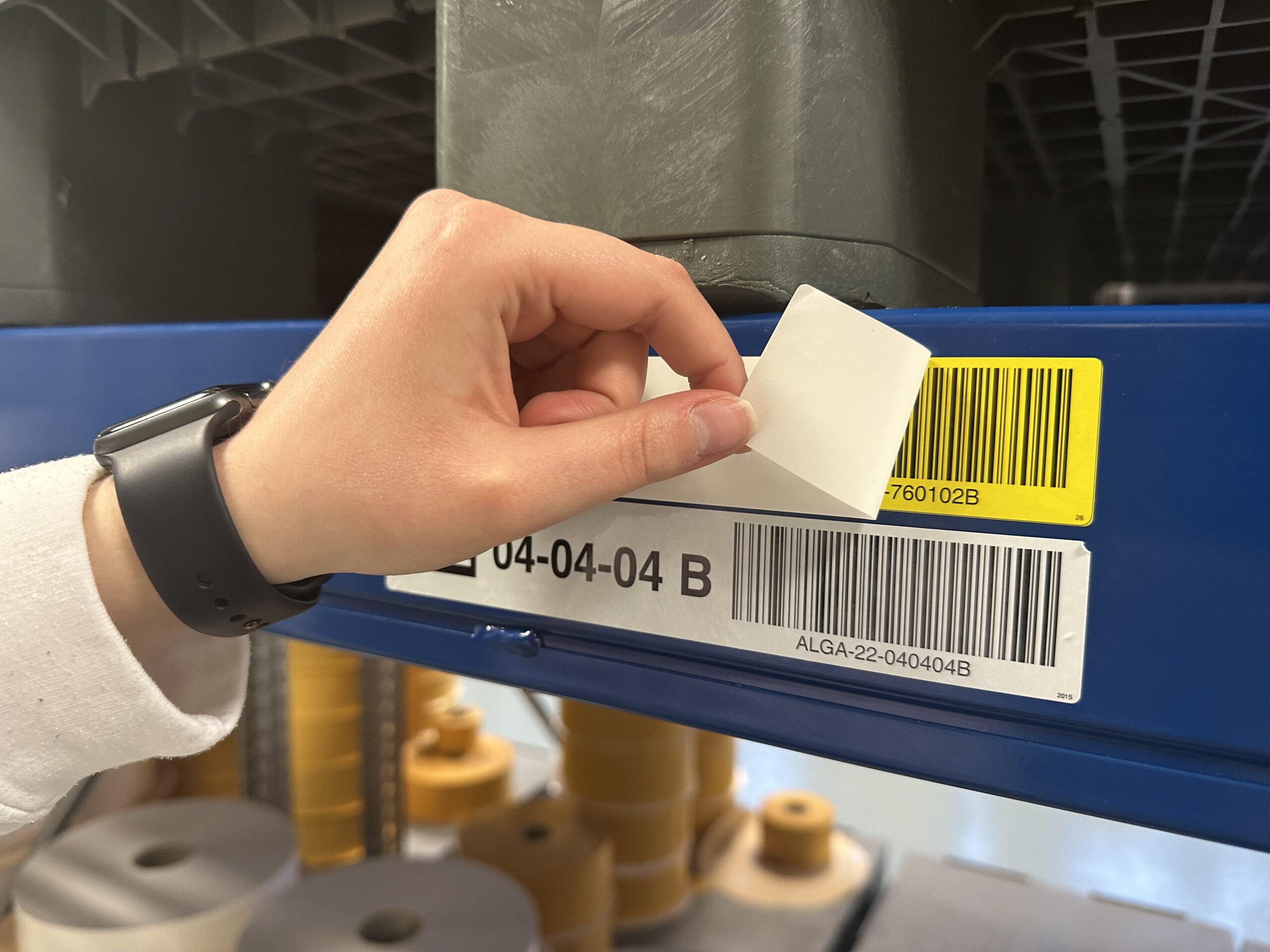
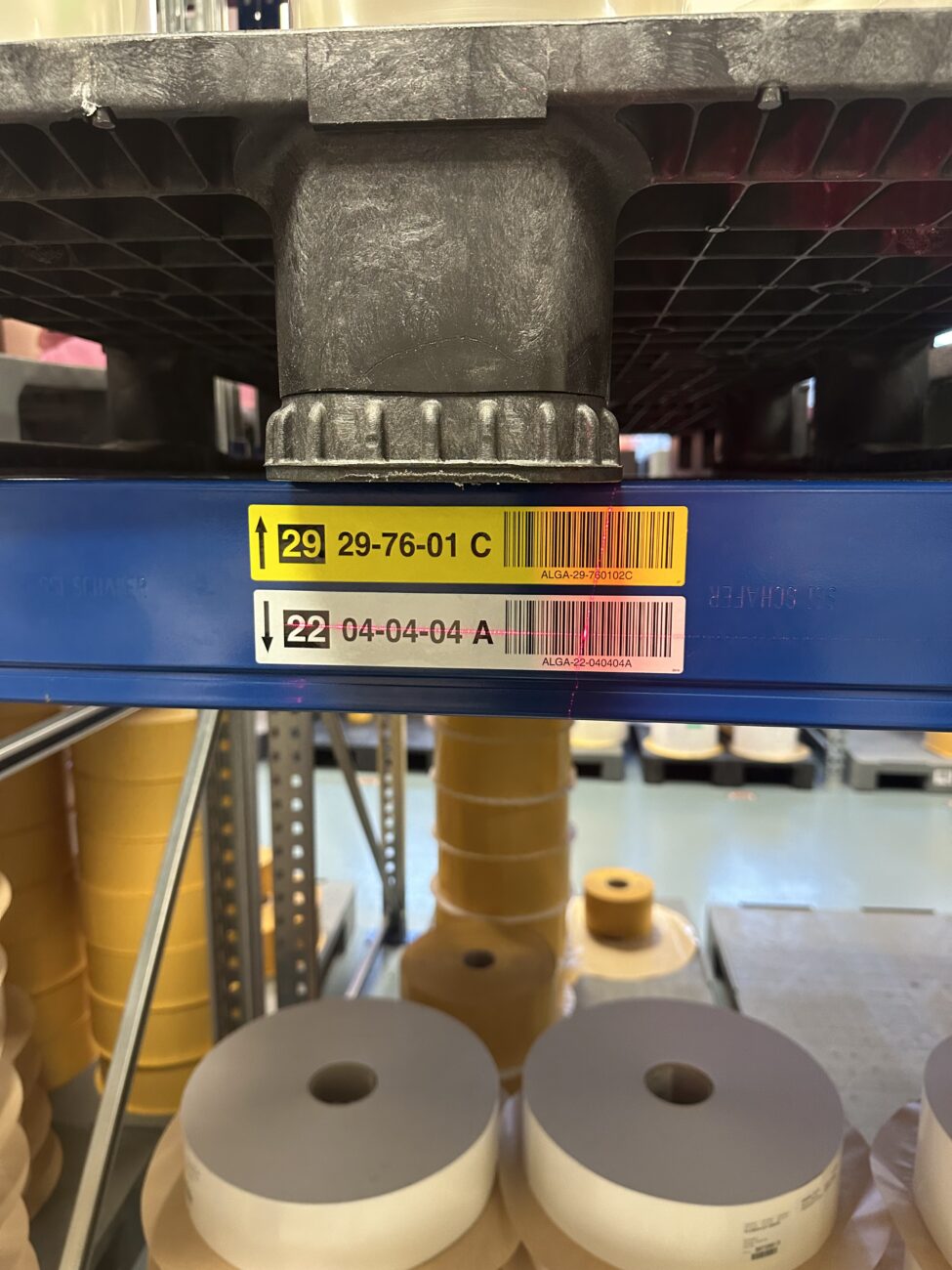
Drytack labels were applied directly over the existing location barcodes on the warehouse racking. This ensured that the blocked locations could not be accidentally scanned while still allowing the customer to uncover the original barcode easily once the location was ready for use.

Because it is reusable, the team can remove and reapply the labels multiple times, providing a fast and sustainable solution for managing changes within the warehouse.

Key benefits

  • Clear visual communication: Staff can instantly recognise blocked bays
  • Error prevention: Covered barcodes eliminate accidental scans
  • Flexible: Locations can be released at any time by simply removing the label
  • Reusable: Labels leave no residue and can be reapplied repeatedly
  • Sustainable: Reduces waste and avoids the need for printing new labels
  • A versatile product for warehouse operations

Drytack labels can be supplied blank on rolls for manual application, printed with custom messages, or provided for on-site thermal transfer printing. The labels work on flat, curved or even angled surfaces, and can be used indoors or outdoors (subject to the variant selected). Application is quick and easy (as long as the temperature is above 15°C) and the label’s rounded corners make removal simple and clean.

The result: More control, less disruption

The manufacturer now benefits from an adaptable, efficient way to manage blocked locations, improving both visual communication and warehouse safety. Drytack helps avoid scanning errors, speeds up manual handling, and provides a future-proof solution that saves time and reduces material usage.

“Inotec showed us a simple yet highly effective solution for blocking our racking locations. Drytack is easy to use, and its reusability adds a sustainable touch to our logistics processes.” – Production Manager, Leading German Bicycle Manufacturer

The Brexit Move Rivals Mocked

The UK’s departure from the European Union brought significant challenges for businesses involved in cross-border trade, with new customs requirements, additional paperwork and increased complexity reshaping the logistics landscape. While many companies struggled to adapt to the changing regulatory environment, some saw an opportunity to innovate and gain a competitive edge.

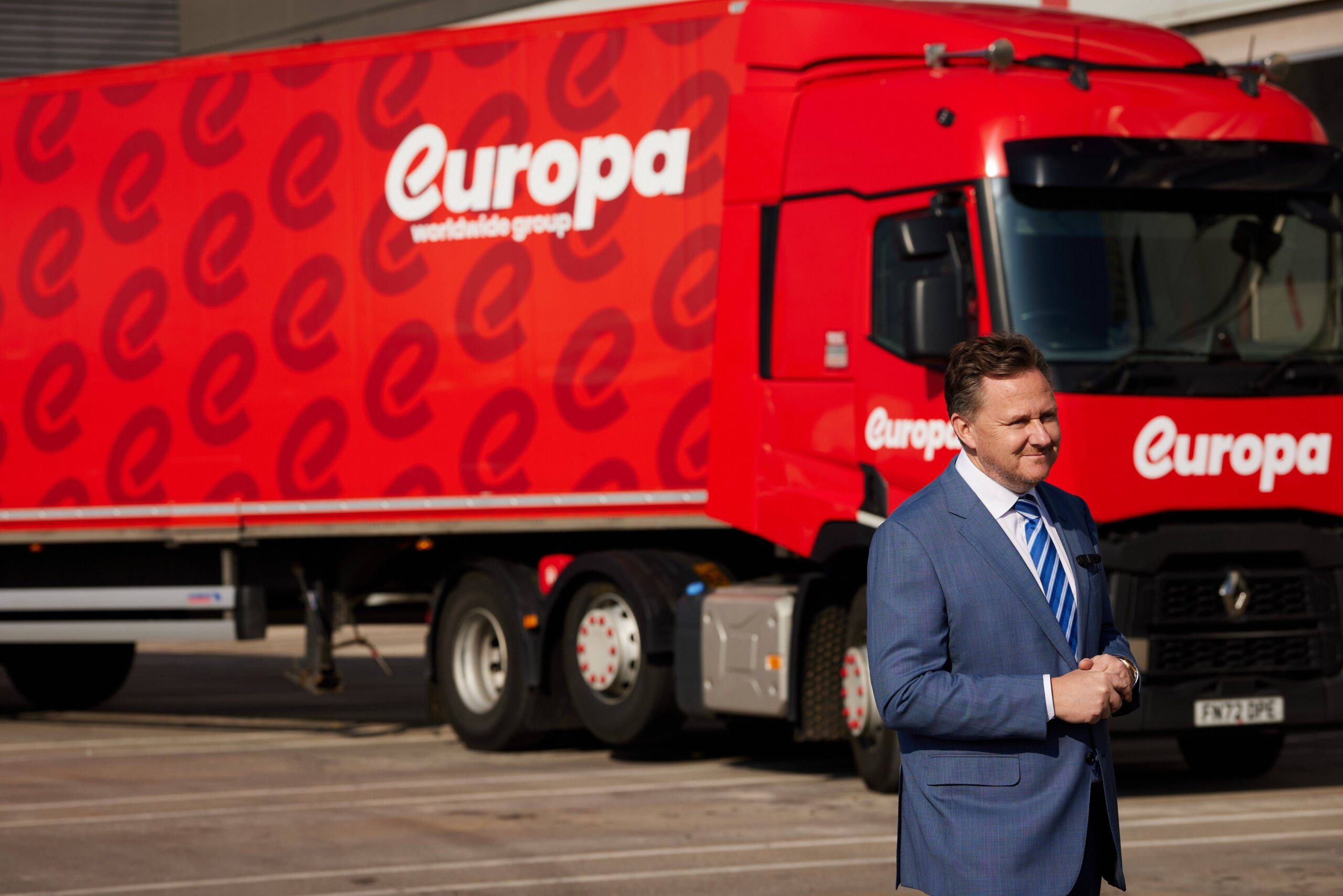
Andrew Baxter, Chief Executive of Europa Worldwide Group, today revealed how his company transformed a major Brexit challenge into a significant competitive advantage, despite fierce criticism and accusations of fraud from rivals.

In the years following the EU referendum, while many competitors complained about the complexities of leaving the customs union, Europa took a different approach. The business developed a groundbreaking solution to streamline the movement of goods between the UK and Europe, enabling thousands of UK exporters to maintain seamless trade.

Life outside the customs union meant every shipment required export and import declarations, along with the need to onboard importers and charge them for duties, VAT and clearance fees… This had the potential to create major disruption. We tackled the problem head on and launched a solution that operated successfully for over a year before any competitor could replicate it.

said Baxter.

The result speaks for itself. Europa is now the clear market leader, moving more than double the volume of its nearest competitor and facilitating over £12 billion in UK exports via its innovative route.

The innovation that changed the game

Traditional shipping terms were typically Delivered Duty Uncleared (DDU), leaving the importer responsible for all clearance costs, duties and VAT. Europa instead created a Delivered Duty Paid (DDP) product – placing full customs responsibility on the UK exporter.

Many competitors dismissed the DDP model because UK exporters could not reclaim EU VAT, viewing it as commercially unviable. Europa saw a different path. By leveraging an existing EU customs regulation, the company clears all continental European goods through France (with French-destined goods cleared in Belgium). This allows zero-rating of VAT and enables a seamless DDP offering that protects customers from friction and delays.

We developed something that many said was impossible… At first, competitors didn’t just doubt us – they accused us of non-compliance and even fraud. Some actively told our customers we would be shut down. The more they attacked us, the more determined we became – and the more market share we won.

Baxter added.

Baxter noted that it took competitors around three years to develop their own versions, which he says still lag behind Europa’s solution. Today, the majority of UK exports to Europe move on a DDP basis, either through Europa or its competitors. Without this mechanism, Baxter believes UK–Europe trade would have suffered far greater damage.

A committed Brexiteer driven by principle

A vocal supporter of Brexit, Baxter hosted the launch event for the Leave campaign alongside Boris Johnson. He is clear that his support was based on principle, not prior knowledge of any commercial workaround.

I supported Brexit because I believed the UK should be an independent, self-governing nation… I knew it would complicate my own business – and I had no special customs insight at the time. But that personal commitment to making Brexit work for our customers drove us to find a genuine solution rather than just complain about the problem.

Baxter said.

Powered by Better

As Europa enters its seventh decade in business, the company continues to invest in smarter solutions, customs expertise and international capability to support customers trading across more than 160 countries worldwide.

From its origins as a specialist European operator to its position today as a global logistics provider, Europa remains focused on helping businesses navigate complexity and release opportunity wherever it exists.

Ten years after the Brexit referendum, the company’s conclusion is clear: businesses that embrace change, invest in innovation and maintain a global outlook will be best placed to succeed in the years ahead.

Fleet Sustainability Gains Recognition

Microlise has been awarded the London Stock Exchange’s Green Economy Mark for the sixth consecutive year.

The accreditation is awarded to listed companies that generate more than 50% of their revenues from products and services that contribute to the global green economy.

As part of the 2026 assessment, 60.9% of Microlise’s revenues were classified as green. 

The recognition reflects the role technology can play in helping transport operators improve fleet efficiency, reduce fuel consumption and lower emissions.

The assessment was carried out by LSEG Data & Analytics using publicly available information. Microlise provides technology that helps transport operators improve vehicle utilisation, reduce fuel consumption and cut emissions. Its solutions support fleets with everything from route optimisation and driver performance to vehicle tracking and operational efficiency.

The recognition comes as sustainability continues to climb the agenda for transport operators. Microlise’s latest industry research found that 60% of transport and logistics organisations now consider sustainability and environmental impact a top priority for their fleets, up from 36% in 2025.

Nadeem Raza, Chief Executive Officer at Microlise, said:

“Fleet operators are facing increasing pressure to improve efficiency, manage costs and meet ambitious sustainability targets. Technology has an important role to play in helping them balance those priorities.

“This recognition reflects our continued commitment to developing solutions that help operators make better-informed decisions, improve fleet performance and support their sustainability objectives.”

The Green Economy Mark is awarded using the London Stock Exchange Group’s Green Revenues Classification System and helps investors identify companies generating significant revenues from products and services that contribute to environmental objectives and the transition to a lower-carbon economy.

Company Launched to reduce emissions through supply chain optimisation

As businesses face increasing pressure to reduce their environmental impact, supply chains remain a significant source of emissions and operational inefficiencies. Optimising logistics networks and improving visibility across supply chains are becoming critical priorities for companies seeking to meet sustainability goals while maintaining performance. In response, DP World has launched EcoRoute, a suite of solutions that helps businesses optimise supply chain performance while reducing emissions by combining network design, lower-carbon logistics solutions, emissions measurement and strategic partnerships. 

Freight and logistics account for approximately 10% of global energy-related CO₂ emissions. At the same time, tightening regulations, investor scrutiny, and customer expectations are raising expectations of supply chain performance. 

To respond to these challenges, DP World says EcoRoute offers: 

1. Optimised supply chain networks, balancing cost, speed and emissions to create more efficient and resilient supply chains. In Africa, through their centralised Logistics Control Tower solution, DP World helped a major retailer increase transported volumes by 45% while increasing fleet size by only 5%, improving vehicle utilisation to 88%, operational efficiency and supply chain resilience. 

2. Lower carbon solutions through modal shift programmes, alternative fuel and electric transport solutions, and lower carbon warehouses and facilities. In India, DP World helped a customer reduce transport emissions by 78% on the Chennai–Kolkata corridor through a multimodal rail to coastal solution, while improving reliability and lowering logistics costs. 

3. Carbon Insetting programmes to help customers reduce emissions within their own supply chains, addressing Scope3 emissions. Through carbon inset programmes at Southampton and London Gateway, in 2025 alone DP World generated more than 9,400 tonnes of verified CO₂ insets across 257,000 TEU of cargo flows, helping deliver emissions reductions within customers’ own logistics value chains unlike traditional offsetting models. 

4. Emissions measurement and visibility through their Carbon Emissions Calculator, powered by EcoTransIT World and aligned with ISO 14083. The Carbon Emissions Calculator provides end-to-end visibility of emissions across transport modes, helping customers identify reduction opportunities. 

Through EcoRoute, they also aim to collaborate with customers and strategic partners to extend sustainability impact beyond business operations. By linking lower carbon supply chains with social and environmental initiatives, customers can advance their ESG goals while creating positive outcomes for communities and ecosystems. 

Beat Simon, DP World Group Chief Operating Officer, Logistics, said:

At DP World, we believe a well-connected supply chain is a more sustainable one. EcoRoute helps customers reduce emissions while improving efficiency and resilience by combining connectivity, data and operational expertise across our global network.

Ayla Bajwa, DP World Group Senior Vice President – Sustainability, said:

EcoRoute is about turning ambition into action. It gives our customers the tools, insights and partnerships needed to reduce emissions across complex supply chains, while also delivering broader environmental and social impact. By connecting sustainability with real operational change, we are helping businesses build supply chains that are fit for the future.

EU Customs Overhaul: New Duties and Charges for E-Commerce Imports

Effective 1 July, the EU abolishes the customs duty relief previously available for low-value consignments. Under the current regime, goods with an intrinsic value of EUR 150 or less could enter the EU without payment of customs duty. The vast majority of e-commerce parcels benefit from this relief.

However, the volume of parcels entering the EU has surged dramatically in recent years, reaching nearly 6 billion in 2025 alone, placing unsustainable pressure on customs authorities. Compliance checks have revealed widespread failure by online sellers to adhere to EU product safety and regulatory standards.

In response, the EU now eliminates the low-value consignment relief and imposed stricter obligations on online marketplaces and sellers to ensure a level playing field and protect consumers. The UK is thinking of a similar abolishment of the duty relief for consignments valued up to GBP 135, though current announcements refer to a date of March 2029 (at the latest). In the U.S., the de minimis exemption for consignments valued up to USD 800 is currently suspended.

From 1 July, a flat-rate customs duty of EUR 3 will be levied per item in each business-to-consumer consignment with a value not exceeding EUR 150 entering the EU. Although the precise definition of “item” remains subject to ongoing discussion (for example, two identical t-shirts within a single consignment would be treated as one item), this measure will materially increase the cost for EU consumers purchasing goods online from non-EU sellers.

For shipments to commercial buyers, the flat-rate duty will not apply; instead, these imports will be subject to the applicable rates under the Common Customs Tariff, consistent with the regime that governs all other imports into the EU. In addition, no later than 1 November, the newly introduced Union Handling Fee will apply to all business-to-consumer consignments, regardless of their value. The fee is designed to cover the costs incurred by customs authorities in conducting controls on small parcels. While the final amount has not yet been determined, initial indications suggest a charge in the region of EUR 2 per item. Together with the flat-rate duty, this fee will further increase the landed cost of goods purchased by EU consumers from outside the EU.

Both measures raise significant questions under international trade law. The interim flat-rate duty of EUR 3 will be charged even on products that are otherwise subject to a zero-percent tariff under the Common Customs Tariff. Moreover, consignments declared through the VAT Import One Stop Shop will not be eligible for preferential tariff treatment that would otherwise eliminate the EUR 3 charge; a provision that materially disadvantages businesses (including SMEs) in the United Kingdom, Türkiye, and other EU trading partners with existing preferential arrangements. As for the Union Handling Fee, although it is framed as a cost-recovery mechanism, the underlying costs it purports to cover have not been clearly identified or quantified. Taken together, there are substantial grounds to question whether the flat-rate duty and the Union Handling Fee are consistent with the EU’s obligations under international trade agreements. Much of the legal justification advanced for these measures appears to have been reverse-engineered to support what are, at their core, politically motivated decisions to put a halt to cross-border e-commerce. Rather than deriving the policy from established legal principles, the EU appears to have settled on the desired outcome and then constructed the legal rationale after the fact. It is only a matter of time before these measures face a formal challenge.

The changes on 1 July also fundamentally shift customs liability. From 1 July, the end consumer will no longer be the party liable to customs for low-value consignments. Instead, liability will fall on the marketplace, online seller, and/or logistics operator handling the shipment.

 This is a consequential change: in cases of non-compliance at scale, these economic operators will bear liability that may extend years beyond the date of importation. We therefore expect enforcement activity not only in the near term, which could lead to operational disruption with parcels stuck at the border, but also over the longer horizon, as EU customs authorities begin conducting retrospective data audits on imports from 1 July 2026 onward.

The European Commission is clearly anticipating efforts to circumvent the new regime and has introduced a dedicated anti-avoidance provision aimed at preventing operators from consolidating individual parcels into larger consignments to avoid payment of the flat-rate duty.

The pace of implementation has been remarkably swift by EU standards, and this speed has come at a cost: significant uncertainty remains for all stakeholders. Portions of the legal package have yet to be officially published, although adopted versions of the relevant texts are already circulating among practitioners. Given the technical complexity of both the underlying subject matter and the regulatory changes themselves, many economic operators remain unprepared. Significant confusion on and after 1 July appears likely.

The package introduces enhanced customs declaration requirements, most notably the obligation to declare product identifiers at the time of importation, which places considerable burden on the parties involved in cross-border e-commerce. While product identifiers may already exist for goods in commerce today, integrating that data into customs declarations requires significant system modifications to ensure the information flows to the appropriate parties at each stage of the supply chain.

 Given the compressed implementation timeline, operators have very limited time to design, test, and deploy these changes before the new requirements take effect. Customs authorities, for their part, face the additional challenge of implementing the necessary system changes within an extremely compressed timeline, historically a source of operational disruption in its own right.

These measures are only the precursor to a far broader overhaul of EU customs legislation, with the aim of tightening the screws at the EU’s external border. A comprehensive EU Customs Reform, which reached political agreement at the end of March, will establish an entirely new Union Customs Code.

The official publication of the new Code is expected after the summer. The reform will introduce substantive changes extending well beyond e-commerce, affecting all operators engaged in international trade with the EU. An EU Customs Authority will be established in Lille, France to support risk-based enforcement and coordinate crisis management, and customs declarations will be replaced by data submission in a centralized Data Hub.

Written by Philippe Heeren, Trade and Compliance Partner at Reed Smith.

Major Cargo Expansion at San Francisco Airport

San Francisco International Airport (SFO) is advancing a major expansion of its air cargo infrastructure through a more than $300 million investment. Designed to accommodate growing cargo volumes through advanced automation, the facility will enhance efficiency and further strengthen SFO’s position as a leading air cargo gateway on the U.S. West Coast. Lödige Industries, a cargo terminal technology provider, has been selected to equip the terminal with customized solutions for automated storage, retrieval, and high-throughput operations.

Air cargo plays a vital role in global supply chains, facilitating the rapid movement of high-value, time-sensitive, and e-commerce shipments. As trade patterns evolve and customer expectations for speed and reliability continue to increase, airports and cargo operators are investing in modern infrastructure and automation to improve operational efficiency, optimize capacity, and enhance service levels.

Designed to deliver fast, reliable, and scalable cargo handling operations, the terminal will enhance the efficiency of cargo movement through the airport and strengthen SFO’s ability to serve airlines, freight forwarders, and logistics partners. The facility is scheduled for completion in Spring 2028, with operations expected to commence later that year.

This investment reflects SFO’s commitment to providing modern, efficient cargo facilities that support our airline partners and the regional economy

says Samuel Chui, Project Manager at San Francisco International Airport.

The cutting-edge cargo terminal positions SFO at the forefront of West Coast air cargo logistics… Our automated systems are engineered for maximum efficiency and scalability, enabling SFO to handle growing cargo volumes while fully leveraging advanced automation and digital connectivity.

states Jonathan Hardy, Managing Director North America at Lödige Industries.

At the core of the 310,000-square-foot, two-story terminal are three Elevating Transfer Vehicles (ETVs), delivering fast, reliable, fully automated storage and retrieval of Unit Load Devices (ULDs). Operating on a rail-guided system, the ETVs can move ULDs vertically and horizontally simultaneously, boosting operational speed and flexibility. This automated equipment is designed to streamline workflows, increase throughput, and significantly reduce turnaround times at the airport.

The project reflects a broader industry trend toward increased automation in air cargo operations, as airports seek to improve throughput, make more efficient use of available space, and support future growth. Automated storage and retrieval systems, integrated controls, and digital connectivity are becoming increasingly important tools for cargo operators seeking to enhance productivity and operational resilience.

Hardy adds:

Growing e-commerce and global trade are driving an increase in air cargo volumes, prompting key U.S. cargo hubs to expand and modernize. Lödige Industries is dedicated to serve as a reliable strategic partner, supporting airports as they navigate an evolving industry landscape. The project at SFO marks another important milestone in our commitment to innovation in North America’s air cargo industry, building on current projects at New York John F. Kennedy and Toronto Pearson International Airport.

INTRA-LOG Expo expands in South America

INTRA-LOG Expo South America 2026, a trade show focused on intralogistics, warehouse automation and supply chain operations, will take place Sept. 15-17 at Expo Center Norte’s Blue Pavilion in São Paulo. Free registration is open for logistics, automation, supply chain, warehouse, distribution, engineering and IT professionals.

The event is entering its third edition with expanded exhibition space and a broader program for companies evaluating technologies that move, store, track and manage goods inside industrial, retail, e-commerce and distribution operations. The 2026 edition has doubled its footprint compared with last year, with 95% of exhibition space sold, and is expected to gather more than 400 national and international brands and more than 8,000 visitors.

INTRA-LOG Expo was launched in 2024 and drew 4,600 qualified visitors and 200 brands in its first edition. In 2025, attendance rose 35% to 6,228 visitors, with 250 Brazilian and international brands. The 2026 edition will also host the debut of Label & Pack Expo, a parallel event dedicated to industrial packaging, labels, tagging, printing, traceability and technologies applied to the logistics chain.

When we created INTRA-LOG Expo, there was a clear gap in the market… Companies in intralogistics and automation were taking part in several industry events, but they did not have a dedicated environment to discuss what happens inside operations. The show grew because the market needs a focused place to compare technologies, see equipment and systems in operation, speak with specialists and make better decisions.

said Cassiano Facchinetti, managing director of INTERLINK Exhibitions, which organises the event in partnership with Grupo IMAM.

Robotics, automation and live demonstrations

The 2026 program reflects the growing role of robotics, artificial intelligence, connectivity and automated distribution systems in logistics operations across Latin America. At least 20% of exhibitors are from outside Brazil, mainly from Asia, as global technology providers use the event as an entry point into the regional market.

The Robotics & Automation Summit will convene manufacturers and providers of robotic solutions to discuss market growth and applications in warehouses, manufacturing, distribution centers and e-commerce operations. Topics will include autonomous mobile robots, automated guided vehicles, mobile robots, robotic arms, autonomous material handling, automated picking and automated storage systems.

“Robotics is moving from isolated projects to the core of productivity, safety and scalability strategies,” Facchinetti said. “The Summit was created to connect global suppliers with the companies that are now assessing how these technologies can work in real logistics operations.”

A 600-square-meter Arena Tech will feature live demonstrations and equipment interaction. The free conference hub will offer technical sessions led by exhibitors, giving decision-makers in logistics, supply

chain, operations, manufacturing, technology, maintenance, engineering and procurement the opportunity to assess solutions in operation.

INTRA-LOG Forum to recognize operational innovation

The third INTRA-LOG Forum will present practical cases involving automation, artificial intelligence, robotics and operational excellence. The 2026 edition will also introduce INTRA-LOG Smart Solutions Honors, a recognition program for CEOs and directors whose companies have developed advanced projects in intralogistics and automation.

“We want the INTRA-LOG Forum to go beyond technical discussion,” said Eduardo Banzato, director of Grupo IMAM and ambassador of INTRA-LOG Expo. “Brazilian logistics has professionals and companies making important transformations that often happen outside the spotlight. Smart Solutions Honors was created to recognize leaders who are changing operations in practice, with impact on productivity, service, safety and competitiveness.”

Label & Pack Expo debuts alongside INTRA-LOG

Label & Pack Expo will run simultaneously with INTRA-LOG Expo in 2026, creating a combined platform for automation, traceability, sustainability and high-performance printing in the packaging chain. The event will feature solutions for industrial packaging, labeling, traceability, digital and flexographic printing, industrial automation, RFID, IoT, artificial intelligence and technologies for controlling and managing products, pallets, packages and cargo.

The exhibitor lineup includes Serralgodão, Robopac, Packing Group, Isoflex, Signode, José Braulio Paletes, CD Embalagens, Polibras, Valgroup, Z-Pisa, Emplaca, D&A Print and Colátio, among others.

Label & Pack Expo will also host the Label & Pack Congress, with content curated by the Brazilian Packaging Association, known as ABRE, and Projeto Pack. The program includes three mornings of sessions on packaging as a logistics strategy and on how the packaging industry is preparing for circularity, competitiveness and future supply chain demands. The congress will also host the launch of ABRE’s Transport Packaging Guide.

Companies scheduled to present cases include Syngenta, Termotécnica, Bosch, Exxon Mobil and Lord Embalagens.

Label & Pack Expo was created as a business-oriented environment for live demonstrations, direct access to specialists and practical discussions on automation and traceability… The packaging sector needed a dedicated and structured event, and that is the gap we intend to address.

Facchinetti said.

Why Brazil matters

For INTERLINK Exhibitions, the integration of INTRA-LOG Expo and Label & Pack Expo reflects a shift in how companies evaluate logistics efficiency. Brazil brings together industrial scale, large transportation networks, logistics operators, e-commerce platforms, retail, manufacturing and growing demand for technologies that can improve productivity and reduce operating costs.

Brazil is a gateway to Latin America and a laboratory for complexity… Companies that can apply technology here are better prepared to operate in other markets across the region. At the same time, Brazilian companies are developing competitive solutions, and international companies are looking at São Paulo as a starting point for growth in Latin America.

Facchinetti said.

Brexit: A Decade of Friction

Ten years ago this month, the UK voted to leave the European Union. At the time, many within logistics and supply chain management warned that introducing barriers into what had become one of the world’s most efficient trading relationships would create complexity, cost and delay. A decade later, those concerns appear well founded.

For businesses involved in cross-border trade, Brexit has fundamentally altered the operating landscape. Customs declarations, rules of origin requirements, border checks and regulatory divergence have added layers of administration that simply did not exist before. What was once the routine movement of goods between the UK and continental Europe has become significantly more complicated.

The economic picture reflects this reality. Numerous studies suggest the UK economy is smaller than it would have been had it remained within the European Single Market. Business investment has suffered from prolonged uncertainty, while many exporters – particularly SMEs – have struggled with the additional bureaucracy. In logistics, the promise of frictionless trade was replaced by a world where the management of friction became a daily operational challenge.

Brexit was never solely an economic decision. For many, it represented sovereignty and greater national control. But for those responsible for moving goods across borders, practical realities matter more than political slogans.

This leads to one of Brexit’s less-discussed consequences.

Whenever systems become more complex, someone finds a way to profit from that complexity. Over the past decade, an entire ecosystem has emerged around helping businesses navigate the post-Brexit environment. Customs specialists, compliance consultants, software providers and logistics operators have stepped in to help companies manage the new requirements. Many have delivered genuine value and expertise. Others, however, recognised a commercial opportunity in the disruption itself.

Some of the logistics industry’s most vocal Brexit supporters were also well positioned to benefit from the additional complexity it created. A world where more paperwork generated more fees. One where greater uncertainty increased demand for specialist services. The vultures were circling then and did not take long to feast on the carrion of post-Brexit Britain.

That may sound harsh, but market disruption always creates winners as well as losers. The distinction lies between those solving problems and those exploiting them.

If there is a positive note on this tenth anniversary, it is that supply chains adapt. Logistics has always thrived on overcoming obstacles, and the past decade has demonstrated that even when politicians redraw the map, supply chain professionals will still find the most efficient route through it.

The lesson from Brexit is not that supply chains cannot cope with friction. It is that they should not have to. Every additional barrier carries a cost, and those costs are ultimately borne by businesses, consumers and economic growth itself.

UK Port Adopts Vacuum Lifting for Pipe Handling

B&B Attachments has successfully supplied two vacuum lifting systems to Associated British Ports (ABP) at the Port of King’s Lynn, providing a safer and more efficient method of handling large-diameter water pipes throughout the vessel discharge and storage process.

The specialist vacuum lifters have been introduced to support the handling of coated water pipes arriving at the port, enabling operators to safely lift and transfer multiple pipes without the need for traditional mechanical clamping methods. The systems provide reliable vacuum lifting, helping to improve both operational efficiency and safety during vessel discharge operations.

The solution was selected following discussions between B&B Attachments and ABP’s operations team, who were seeking a safer handling method for large cylindrical loads while maintaining productivity on the quayside.

The vacuum lifting attachments use advanced suction technology to securely grip the pipe surfaces, allowing operators to lift and position the loads with greater control while reducing the need for personnel to work in close proximity to suspended loads.

The introduction of the vacuum lifters forms part of ABP’s ongoing commitment to improving operational safety and investing in innovative cargo-handling solutions.

Andy Constable, Head of Operations at Associated British Ports, in East Anglia, said:

Safety is always our primary consideration when handling cargoes of this nature. We were looking for a solution that would allow us to offload large water pipes safely and efficiently. The vacuum lifters supplied by B&B Attachments have delivered exactly that, giving our operators greater confidence and control during discharge operations.

The handling process utilises two vacuum lifting systems. A 25,000kg capacity crane, fitted with a vacuum lifter, is used to safely discharge the water pipes from the vessel onto a shunter wagon. The shunter then transports the pipes along the dock to a storage yard, where a second vacuum lifting system, mounted on a 42,000kg reach stacker, offloads and stacks the pipes ready for onward transportation.

Both vacuum lifting systems are capable of handling up to three 14-metre-long pipes in a single lift, with a nominal lifting capacity of approximately 10,000kg. The units feature radio-controlled individual vacuum pad isolation, interchangeable battery packs and interchangeable vacuum pads to accommodate the two pipe diameters being handled at the port.

Working closely with ABP throughout the project, B&B Attachments specified the vacuum lifting systems to suit the dimensions, weight and surface characteristics of the pipe cargoes being handled at King’s Lynn.

Steve Egginton, Key Account Manager at B&B Attachments, said:

Every lifting application presents its own challenges, particularly when dealing with large cylindrical products such as coated water pipes. By working closely with the team at ABP in King’s Lynn, we were able to provide a vacuum lifting solution that integrates seamlessly with their crane and reach stacker operations while delivering significant safety and productivity benefits…

Vacuum lifting technology offers a highly effective way of handling difficult loads without mechanical gripping or slinging arrangements. We are pleased to support ABP with a solution that improves operational efficiency while reinforcing safe working practices on the quayside.

The project with ABP highlights B&B Attachments’ ability to deliver bespoke handling solutions for customers across a wide range of industries. By understanding each application’s unique challenges, B&B works with customers to specify the most suitable attachment or lifting system, helping to improve safety, efficiency and productivity in sectors including ports, logistics, manufacturing, construction, warehousing and recycling.

Strait of Hormuz deal opens 60-day window for shipping industry

A new agreement between the United States and Iran has reopened the Strait of Hormuz to commercial shipping and established a 60-day negotiation period that could shape the future operating environment for one of the world’s most important maritime trade routes.

The memorandum of understanding, signed this week following months of disruption and conflict in the Gulf region, allows vessels to transit the strait without fees during the negotiation period while wider discussions continue on security, navigation and longer-term arrangements for the waterway.

The Strait of Hormuz is one of the world’s most strategically important maritime chokepoints, handling a significant share of global oil, LNG and bulk commodity movements. The route has experienced severe disruption since February, leading to vessel backlogs, increased insurance costs and delays across international supply chains.

While commercial traffic has begun to recover following the agreement, industry observers warn that a return to normal operating conditions is unlikely in the short term. Shipping activity remains constrained by navigational risks, mine-clearance operations and elevated war-risk insurance premiums. Hundreds of vessels have accumulated in the region during the disruption, creating a substantial backlog that will take time to clear.

Data from maritime analysts indicates vessel movements through the strait increased immediately after the agreement was signed, providing an early indication that operators are gradually resuming transits. However, shipping companies and insurers continue to assess security conditions before returning to pre-conflict operating patterns.

A key issue for the logistics and shipping sectors is what happens after the 60-day negotiation period expires. Iranian authorities have indicated they intend to introduce a system of maritime service fees for vessels using the strait once the current toll-free arrangement ends, although the details and legal framework remain subject to negotiation.

The agreement also provides a framework for further talks between Washington and Tehran on broader political and security issues, with both sides seeking a longer-term settlement that could stabilise traffic through the waterway. Analysts remain cautious about the prospects of reaching a final agreement within the 60-day timeframe.

For supply chains, the reopening of the Strait of Hormuz removes an immediate threat to energy and commodity flows, but logistics providers are likely to continue facing elevated costs and operational uncertainty until navigation risks are reduced and insurance markets return to more normal conditions. Industry experts suggest full recovery of shipping activity could take several months, even if the current ceasefire and negotiation process remain on track.

Subscribe

Get notified about New Episodes of our Podcast, New Magazine Issues and stay updated with our Weekly Newsletter.