Morrisons HGV Strike Threat Withdrawn

A threatened strike involving nearly 500 HGV drivers supplying Morrisons stores across northern England has been called off after Unite reached an agreement with Eddie Stobart over the use of agency labour.

According to Unite, drivers based at Morrisons distribution centres in Wakefield, Stockton-on-Tees and Northwich had voted in favour of industrial action on 4 June. However, negotiations between the union and Eddie Stobart resulted in a deal before any strike action took place.

The dispute focused on the company’s use of agency drivers. Unite had claimed that around 40% of drivers at the Stockton and Northwich sites were agency workers and argued that directly employed drivers were being replaced by workers on less secure contracts with weaker terms and conditions.

The drivers are responsible for supplying Morrisons supermarkets with grocery products across northern England. Unite had previously warned that industrial action could lead to delivery disruption and shortages on store shelves.

The union announced that the threat of strike action had ended after Eddie Stobart signed an agreement addressing concerns that Unite described as “union-busting”.

Although the drivers are employed by Eddie Stobart rather than Morrisons, the dispute also placed pressure on the supermarket retailer. In May, a spokesperson for Culina Group said the company had been engaged in ongoing consultations with Unite regarding a long-term strategy for driver recruitment and retention amid continuing driver shortages.

Unite has described the outcome as a positive result for the affected drivers. The dispute highlights ongoing tensions within the UK road transport sector over the balance between agency labour, directly employed drivers and collective bargaining, particularly within supermarket supply chains where disruption can have an immediate impact on product availability.

Not All Rack Protectors Are Created Equal

Independent testing reveals why appearances can be deceptive when it comes to protecting warehouse racking.

Walk around any major logistics trade fair and you’ll find a variety of rack protection products on display. Brightly coloured, made from various polymers and elastomers, many of them appear remarkably similar to the untrained eye. Their manufacturers will all claim they are robust, effective and capable of protecting valuable warehouse infrastructure from forklift impacts. But in reality, are they all the same?

Sentry Protection Products believes the answer is a resounding no. In fact, the company argues that significant differences exist between products that, at first glance, appear almost identical. The challenge, however, is proving it to those charged with specifying the product, on whose shoulders the responsibility of running a safe workplace falls.

Everybody claims to have the best rack protector… That’s a hard fact. You go to a trade show, look through brochures or visit websites, and every product sounds fantastic. But not everybody can be the best – that’s simply impossible. We wanted to find a way to cut through the marketing hype and get to the facts.

says Jim Ryan, founder of Sentry Protection Products.

The issue is an important one. Pallet racking forms the backbone of modern warehousing operations, supporting hundreds of thousands of tonnes of inventory every day. Damage to rack uprights caused by forklift impacts remains one of the leading causes of rack failures, potentially resulting in injuries, damaged goods, operational disruption and costly repairs.

Rack protectors are designed to absorb impact energy and help preserve the structural integrity of the rack, yet while many products look alike externally, their performance characteristics can vary significantly.

The reality is that customers often assume a rack protector is a rack protector… If they can’t see a meaningful difference, human nature says they’ll choose the cheaper option. The problem is that they may not be comparing like with like.

Jim explains.

The answer was to create from scratch a testing protocol that spelled out clearly and objectively the difference in performance that exists between outwardly visually similar products. Sentry commissioned Element Materials Technology, an independent testing facility based in Michigan, to design and conduct a comparative evaluation of a range of rack protection products available on the market.

The brief was straightforward, but far from simple: develop a testing methodology that would assess each product under identical conditions, using the same criteria, while ensuring that the only variable was the rack protector itself.

Compression testing was selected as the most appropriate approach. “Compression is a common denominator when it comes to rack protection,” says Ryan. “Ultimately, what matters is how much force a protector can absorb before it bottoms out and stops doing its job.”

The independent test measured the compressive force resistance of each protector and its ability to recover following sustained loading. Each product was compressed between a rigid beam and a flat plate, with pressure steadily increased until either visual failure occurred or a predetermined load threshold was reached. The evaluation included Sentry’s Rack Sentry and Rack Sentry CONTOUR products alongside several other well-known competitor brands operating within the market.

The results proved illuminating. Testing found that Rack Sentry demonstrated the highest level of performance, with Rack Sentry CONTOUR ranking second. In practical terms, both products were able to absorb higher levels of force before losing effectiveness compared with the alternatives tested.

“The more energy a rack protector absorbs, the more it protects the rack upright behind it,” Ryan explains. “Our goal wasn’t to embarrass competitors. It was to provide meaningful information so that customers could make informed decisions based on performance rather than assumptions.”

For warehouse operators under constant pressure to control costs, that distinction matters. The consequences of selecting inappropriate protection extend far beyond the initial purchase price. Rack repairs, damaged stock, operational downtime and the potential safety implications of structural failures can quickly outweigh any savings achieved through choosing a lower-cost product.

“Testing gives people confidence,” concludes Jim Ryan. “We’re not asking customers to take our word for it. Independent testing provides transparency. It allows them to understand what they’re buying and why performance differences matter.”

New Multimodal Podcast Episodes Arrive 6 July

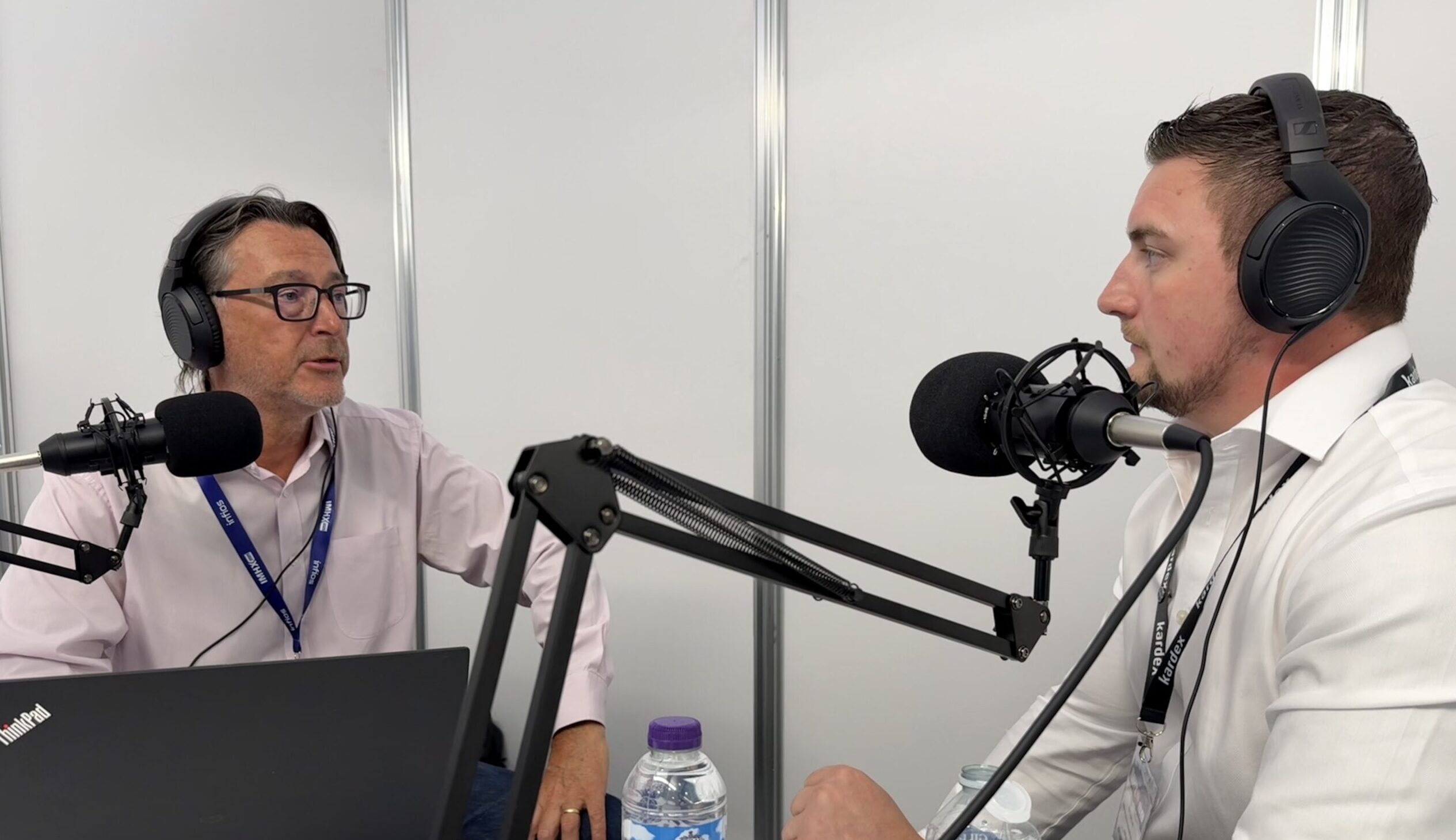
After a packed run of podcast releases covering some of the biggest topics in logistics, warehousing and supply chain technology, Logistics Business Conversations will be taking a short two-week break before returning on the 6th of July with a series of special episodes recorded live at Multimodal 2026 at the NEC in Birmingham.

Recent episodes have explored a wide range of challenges and opportunities facing logistics professionals today. Listeners have heard from Mike Morgan of OPEX on how warehouse automation continues to evolve through the integration of AI and robotics, while Jamie Spencer of Ocado examined how flexible fulfilment strategies, digital twins and autonomous mobile robots are helping businesses adapt to changing customer demands.

The series has also tackled critical technology and infrastructure topics. Smitha Rafael discussed the rise of hybrid warehouse management systems and why businesses are increasingly looking beyond cloud-only architectures to improve resilience and reduce downtime risks. Meanwhile, Gerry Daalhuisen of Transporeon highlighted why the yard remains one of logistics’ biggest blind spots, explaining how better visibility and digitisation can unlock significant efficiency gains.

Other recent conversations have examined high-throughput fulfilment with AutoStore, future-ready delivery networks with Descartes, the impact of rising energy costs on logistics operations, and how technologies such as LiDAR are improving warehouse safety and operational performance. These discussions have combined practical advice with real-world examples from some of the industry’s leading technology providers and operators.

The upcoming Multimodal episodes will continue this focus, bringing listeners exclusive interviews recorded at one of the UK’s premier logistics and supply chain events. Featuring conversations with exhibitors, solution providers and industry experts, the series will provide fresh insight into the trends, technologies and strategies shaping the future of logistics.

While the podcast takes this brief pause, now is the perfect opportunity to catch up on any episodes you may have missed. Whether you’re interested in automation, artificial intelligence, fulfilment, warehouse management systems, sustainability, transport optimisation or broader supply chain strategy, the Logistics Business Conversations archive offers a wealth of expert insight and practical takeaways.

All episodes are available through the Logistics Business website and on major podcast platforms. You can browse the full catalogue here:

Logistics Business Conversations Podcast Archive

Who Leads the World’s Supply Chains? 2026 Report

Gartner, Inc. has announced the results for their 2026 Global Supply Chain Top 25, which recognizes leading supply chain organizations and identifies the underlying trends that drove their performance. Schneider Electric retained its top position in the rankings for the fourth consecutive year, NVIDIA placed second and Walmart climbed 10 spots to third in this year’s rankings (see table below).

This year, leaders are differentiating themselves by building autonomous workforces, investing in network-centric strategies and orchestrating supply chains end-to-end across increasingly complex ecosystems… Leading supply chains are embracing AI not simply to automate tasks, but to fundamentally redesign how work gets done between people and machines.

said Laura Rainier, Senior Director Analyst with the Gartner Supply Chain practice.

In the final year of its three-year Impact Supply Chain transformation, Schneider Electric maintained its leadership position by integrating autonomous workforce capabilities and end-to-end resource orchestration across its operations. The company is prioritizing generative and agentic AI to support human decision-making, enhancing real-time visibility, predictive insights, and coordinated action across the entire supply chain.

Schneider Electric continues to demonstrate how organizations can balance bold transformation ambitions with disciplined execution… Its approach to AI-enabled orchestration, circularity and workforce transformation exemplifies how supply chain leaders are preparing for the autonomous business era.

said Rainier.

The Gartner Supply Chain Top 25 recognizes the outstanding long-term supply chain excellence, maturity and leadership of a select group of companies through the Masters category. The Masters are recognized with their own distinguished category. They remain part of Gartner’s annual evaluation. To maintain Masters status, they must attain one of the five highest composite scores for all companies for at least seven out of the last 10 years.

Amazon, Apple, Procter & Gamble and Unilever all retain their Masters category status this year.

The Gartner Supply Chain Top 25 for 2026

RankCompanyComposite Score
1Schneider Electric7.05
2NVIDIA6.42
3Walmart5.78
4Cisco Systems5.77
5AstraZeneca5.49
6Danone5.21
7Lenovo5.20
8L’Oréal5.18
9Johnson & Johnson5.14
10Microsoft4.92
11Colgate-Palmolive4.88
12Toyota4.86
13Siemens4.83
14Novartis4.48
15Nestlé4.44
16JD.com4.41
17Dell Technologies4.31
18General Mills4.30
19Coca-Cola Company4.25
20Johnson Controls4.09
21Diageo4.06
22HP Inc.4.05
23Taiwan Semiconductor Manufacturing Company4.03
24GSK4.01
25Inditex3.99

Composite score: (Peer score x 25%) + (Gartner expert score x 25%) + (Change in ROPA score x 10%) + (Change in Gross Margin score x 5%) + (Revenue growth score x 5%) + (Inventory as a percentage of revenue score x 10%) + (ESG points x 20%)

Source: Gartner (June 2026)

Autonomous Workforce

As supply chains enter the autonomous business era, leading organizations are reimagining work for a future in which people and machines operate both independently and collaboratively. Rather than using AI to accelerate existing processes or reduce labor costs, Top 25 companies are redesigning how work gets done. Employees are increasingly managing, governing and improving intelligent systems, while also being augmented by them in day-to-day decision making and execution.

This shift requires companies to prepare both their people and their organizational structures. Leading supply chains are investing in upskilling programs that go beyond basic AI literacy. They are also redesigning roles so that AI agents can manage routine tasks, while people focus on building relationships, managing strategic decisions and driving continuous improvement.

Network-Centric Strategies

Supply chain leaders are navigating challenges including geopolitical uncertainty, tariff volatility, climate disruption, and supply shocks. In the face of turbulence, network design cannot be treated as a one-time decision, but as a continuous set of agile adjustments that enable adaptability, resilience and long-term growth.

What differentiates leaders is their focus on strategies that are grounded in adaptable, resilient physical supply chain networks, which serve their long-term business objectives such as growth. While not the only approach, many Top 25 companies are manufacturing and sourcing most products within the same region where they are sold, reducing challenges associated with cross-border operations.

End-to-End Supply Orchestration

Top 25 supply chains are extending visibility, planning and decision making beyond enterprise boundaries. End-to-end supply orchestration enables organizations to sense constraints earlier, optimize scarce resources and coordinate decisions across the value chain. Through collaborative planning and ecosystem data sharing with partners, companies gain a more complete view of demand, inventory and capacity.

Top 25 supply chains are also mitigating constraints and securing long-term supply by embedding sustainability and circular supply chain strategies directly into their product design and material flows.

Consumer Demand Brings More Parcel Lockers to UK

InPost, the out-of-home parcel locker provider, has reached 15,000 lockers nationwide, marking a major milestone in the growth of its network and reflecting a fundamental shift in how consumers expect delivery to work.

The expansion means millions of consumers across the UK now have access to 24/7 parcel collection and returns, with InPost Lockers located in supermarkets, retail parks, transport hubs and residential areas.

The growth comes as pressure continues to build on traditional home delivery models. One in three parcels fails on the first delivery attempt, while 40% of consumers miss at least one delivery every month. These aren’t operational failures but are the predictable result of a checkout model that optimises for cost rather than the consumer. In most online purchases, shoppers have near total freedom over how they pay, but almost no say in how their goods are delivered. When deliveries fail, consumers blame the carrier
for a choice they never made.

Out-of-home delivery, such as InPost Lockers, removes those failure points. When consumers are given a real choice, the system works differently. 58% of consumers now say parcel lockers are a better option than home or workplace delivery, and two in five UK adults are already using them. This shift is also creating measurable value for retailers. 78% of consumers make a purchase when visiting a locker, spending an average of £22.903, showing how out-of-home delivery is becoming a driver of footfall and additional revenue, not just a fulfilment option.

Paul Selvey, Network Director at InPost UK, said:

Reaching 15,000 lockers is a significant milestone, but it also reflects a bigger shift in how delivery is expected to work. For years, delivery has been designed around cost and convenience at checkout, not around what actually works for the people receiving parcels. That’s why failure rates are so high, because the system was never built around the end user.

When consumers are given real choice, behaviour changes fast. More control, more certainty, delivery that fits around how people actually live. That’s what out-of-home enables and why it’s no longer a niche preference. It’s becoming the expectation.

Elis Invests in Major Fleet Expansion Programme

Companies operating in the textile services sector rely on extensive transport networks to collect, process and redistribute essential items such as workwear, linen, mats and washroom products. Elis, which supplies and maintains workwear, linen, floor mats and washroom solutions for businesses across a range of sectors, is supporting its logistics operation with a major fleet investment programme. The company is introducing 140 new DAF rigids, supplied by Ford & Slater and built in partnership with Tiger Trailers, which is also providing a third double-deck trailer for the fleet.

The rollout will take place over two years, with 53 rigid bodywork solutions entering service in 2026 and a further 87 arriving in 2027. Spanning 7.5-tonne, 12-tonne and 18-tonne vehicle categories in a range of body lengths, the new vehicles will enhance fleet flexibility and support the efficient collection and delivery of products across Elis’ UK network.

Peter Kelly, Group Compliance and Fleet Manager at Elis says:

This is our second year working with Tiger after the first two trailers and a trial rigid they supplied previously, and we continue to be very pleased with the end products. Tom and the team listen to our requirements, and we are proud to welcome these ongoing Tiger vehicles to our fleet. Thanks also goes to Stuart and his colleagues at Ford & Slater for continuing to look after us as our choice of chassis dealer.

Elis have switched from DAF XB to flagship DAF XD 260 FA chassis from Q2 of 2026 onwards to not only obtain a 3-star rating for DVS, but to equip the drivers with the latest technology and safety features available to date.

Customised to meet their unique requirements as the end user, the Tiger-built rigid bodywork solutions for Elis include a high-impact side rave for protecting bodywork when operating in tight environments, Anchorfix in the side panels to mitigate internal load securing damage, a new design of heavy-duty tail-lift from Dhollandia with a power closure and steel platform, and a ‘Tiger Tale’ sloping rear body for aerodynamics and fuel efficiency.

The rigids’ specification also includes BackWatch’s rear radar detection system as part of London Direct Vision Standard compliance, Durite’s innovative Red Halo warning light which casts an arc of red light at the rear to protect users and pedestrians, and a wet-lay floor in conjunction with an internal sanitiser system, for transport of damp hospital items.

Stuart Morley, National Account Manager at Ford & Slater comments:

These large quantities of Elis rigids we’re collaborating with Tiger on this year and next are part of the larger partnership we have with the manufacturer, working together to deliver tailored solutions for a variety of end users. We’re delighted that our mutual long-term customer Elis has chosen the DAF XD 260 FA model for the next phase of its fleet expansion. Thank you to Peter at Elis and Thomas at Tiger for your ongoing trust in Ford & Slater.

Elis’ latest trailer manufactured by Tiger is an additional double deck straight-frame, with a full-length moving deck finished with the same non-slip flooring as the lower deck. The primary load transported is cages of 1700mm in height, secured by LoadLok tracks, and designed to be removeable from the upper deck while the tail-lift is in the up position.

The moving deck is powered by Tiger’s hydraulic four-ram direct drive system, while Tiger’s solenoid safety system warns against low or inconsistent power supply, to enhance operator safety.

Thomas Stott, Key Account Director at Tiger Trailers remarks:

We’re grateful for and proud of our ongoing partnership with both Ford & Slater and with Elis, one of the leaders in their sector. It’s always a pleasure to collaborate closely with their respective teams who are passionate about having the best-suited vehicles in place for busy daily operations often in urban areas.

Tiger arranged the contract hire for the additional double deck trailer deal through its own in-house finance division, meaning that the manufacturer is responsible for maintaining these vehicles, while PACCAR Financial UK funded the DAF chassis.

Elis’ operations span workwear, hospitality, and healthcare, and the rigid trucks along with the trailer sport various eye-catching liveries depicting the sectors involved.

To date, Tiger has already supplied around 150 rigid bodywork solutions through Ford & Slater DAF to a range of end users including Elis.

New Fulfilment Centre in the Netherlands

ecommerce logistics specialists Cainiao is expanding its European logistics footprint with a new high-efficiency supply chain fulfilment centre in the Netherlands, reinforcing its cross-border and local fulfillment capabilities across the region. The new site is designed to support both B2B distribution and B2C order fulfillment, helping merchants and consumers across Europe benefit from more efficient logistics services.

The company has secured the warehouse on a 10-year lease. The facility, recently completed by a local property developer, spans 26,000 square meters and includes both warehouse and office space. Its location offers convenient access to the Port of Rotterdam and key transport links across inland Europe, making it well positioned to serve regional distribution needs.

This will be Cainiao’s second warehouse facility in the Netherlands. It is also part of a broader acceleration of the company’s warehouse expansion across Europe. In April, Cainiao launched four new overseas warehouses in Daventry in the UK, Paris in France, Madrid in Spain, and Rokitno in Poland, reflecting continued investment in regional logistics capacity.

The expansion comes as demand for global warehousing and fulfilment services continues to grow. Cainiao is actively building out its European warehouse network to help global merchants improve delivery efficiency and better serve customers across the continent. By increasing localized infrastructure, the company aims to support faster and more reliable cross-border operations at scale.

“Europe is one of our key strategic markets, and we are continuing to build out a stronger warehouse network to support merchants across the region,” said Sun Beibei, Deputy General Manager of Cainiao Global Supply Chain. “What merchants need today is not just storage space, but a supply chain infrastructure that can respond quickly, flexibly and efficiently to changing business demands. Warehouses are becoming much more than storage facilities.”

The new Dutch fulfilment centre will also feature more than 100 of Cainiao’s self-developed climbing robots. These robots are designed to automate storage and retrieval tasks within the warehouse, helping improve productivity and operational consistency.
“As we scale our warehouse network, automation becomes essential to smarter operations,” Sun said. “Robotics allows us to improve throughput, reduce operational friction and build a more scalable fulfillment model for the long term.”

“Climbing robots are particularly valuable because they combine ground movement, vertical climbing, and bin transport and retrieval in one system. That makes them a practical solution for improving efficiency while also making better use of warehouse space.”

Looking ahead, Cainiao will continue to make robotics and automation a central pillar of its long-term strategy as it expands its international logistics footprint and builds a more efficient, scalable, and resilient global supply chain network. Cainiao’s global supply chain network now operates more than 50 warehouses across 18 countries and regions, serving industries including automotive parts, home goods, appliances, and furniture.

WMS and Voice at New Fresh Food Facility

Swiss food discount retailer Denner has successfully gone live with the LFS Warehouse Management System and LYDIA Voice, the voice-directed picking solution from EPG (Ehrhardt Partner Group), at its new fresh food distribution centre in Mägenwil. A key distinguishing feature of the project was Denner’s ability to carry out the implementation largely independently. Thanks to many years of experience with LFS and LYDIA Voice, combined with close support from EPG, the company was able to efficiently and seamlessly transfer the established processes from its six existing sites in Schmitten, Frauenfeld, Lyss, Dietlikon, and an adjacent warehouse in Mägenwil to the new facility.

“Our long-standing and trusted partnership with EPG is an excellent example of sustain-able knowledge transfer,” explains Micha Burkhardt, Head of Business Applications Sales & Logistics at Denner.

During our first joint projects, the EPG team invested heavily in training and supporting our key users, enabling us to build extensive expertise in operating LFS and LYDIA Voice over the years. As a result, we were able to handle the commissioning, user training, and first-level support for the new fresh food facility largely on our own. Throughout the project, EPG primarily acted as a sparring partner for solution design and quality assurance, helping ensure a successful implementation.

The temperature-controlled warehouse in Mägenwil is already the sixth Denner site running EPG solutions. From this facility, Denner supplies approximately 250 stores with fresh products while meeting strict refrigeration and hygiene requirements. More than 700 products are stored across approximately 10,000 square meters of warehouse space at temperatures ranging from 2°C to 5°C. One of the primary objectives of the new facility was to significantly reduce transportation distances and further strengthen regional fresh food logistics. As a result, several thousand transportation kilometers can now be eliminated annually.

LFS manages all warehouse processes, from goods receipt and order picking to ship-ping, while ensuring strict compliance with the FIFO principle. Maintaining an uninter-rupted cold chain is another critical requirement. The operation relies on conventional material handling equipment, including order pickers, reach trucks, and counterbalance forklifts. For voice-directed picking, Denner uses LYDIA Voice on Zebra TC22 mobile devices paired with Bluetooth headsets. Employees currently work with the system in German, French, and English.

A key advantage of the voice solution is that it requires no voice training. Employees can begin working productively with LYDIA Voice immediately, regardless of language, dia-lect, or accent. This provides a high degree of operational flexibility, particularly when onboarding new employees or temporary workers.

The complete go-live was successfully completed in less than two weeks. However, the collaboration between the two partners is far from over. Denner is currently constructing another new distribution center in Aclens for ambient products, which is scheduled to go into operation in 2027.

Storage Capacity for Healthcare Logistics

Movianto, part of Yusen Logistics and specializing in pharmaceutical and healthcare logistics, has significantly expanded its facility in Aalst, Belgium. Temperature-controlled pallet storage capacity has nearly doubled from 14,000 to 25,000. The newly extended site, which is now fully operational, increases space for pharmaceutical and medical products across ambient (15–25°C), refrigerated (2–8°C), frozen (–20°C), and ultra-cold (–80°C) temperature ranges. The expansion addresses growing demand for specialized healthcare supply chain services even amid a challenging economic climate.

“Despite broader economic headwinds, demand for our specialized healthcare solutions continues to grow,” said Bruno Jacques, Deputy Managing Director of Yusen Logistics (Europe) and CEO of Yusen Logistics Healthcare.

“This growth is driven by two factors: our strong pharmaceutical focus, which allows customers to choose services ranging from storage to full order to cash solutions, and a growing preference for integrated supply chain models that combine warehousing with international freight forwarding by rail, air and ocean.”

These integrated capabilities, long established within Movianto, have been further strengthened since the company became part of Yusen Logistics last year. The expansion supports Yusen Logistics’ strategy to build global, industry focused supply chain solutions, with pharmaceutical and healthcare logistics positioned as one of its core verticals alongside aerospace, automotive, food, retail and technology.

The expanded Aalst site went live this month following inspection by the relevant authorities. The multi user warehouse complies with EU Good Distribution Practice (GDP) requirements for medicinal products and meets the stringent security standards of TAPA, alongside ISO quality certifications. “This is one of the most demanding certification frameworks in the industry,” said Leen Michiels, Site Manager, Movianto in Aalst.

“It goes well beyond standard ISO 9001 requirements and includes measures such as video surveillance, full perimeter fencing and controlled access.”

The expansion also strengthens Movianto’s specialist service offering and supports workforce growth at the Aalst site. Dedicated new areas have been added for hazardous goods and narcotics, responding to rising customer demand, while the local team will increase from around 100 to 150 employees. The hazardous goods zone provides 576 pallet positions within a controlled 15–25°C environment and is equipped with in rack sprinklers on every level.

Bonded Transit Hub

Bruno Jacques added: “Like our Belgian site in Houdeng Goegnies, Aalst is playing an increasingly important role in international healthcare supply chains. Non European customers use Belgium as a strategic gateway to Europe, while the site also serves as a transit hub for global logistics flows—allowing customers to route goods efficiently to both EU and non EU destinations.”
Licensed as a bonded warehouse, the Aalst site allows goods in transit to be stored duty free and provides customs clearance for EU imports and exports. The expansion also enables customers to combine additional storage capacity with specialist services, including clinical trial logistics and GMP licensed activities such as secondary packaging and country specific adaptations, including leaflet changes.

Sustainability Built into Daily Operations

To support efficient and environmentally responsible operations, Movianto’s Aalst site integrates a range of sustainability measures into both the original facility and its expansion. A rooftop photovoltaic system will supply around 50% of the site’s projected electricity demand, up from 30% previously. Heating and cooling of the ambient warehouse are provided by a heat pump. The cool warehouse is using natural CO₂ as refrigerant, which is non toxic and non flammable. Energy consumption is further reduced through high efficiency LED lights and motion-activated lighting, while rainwater harvesting supports non potable uses such as toilet flushing. To minimize land sealing, all parking areas are surfaced with permeable paving, allowing rainwater to drain naturally.

The Aalst expansion underscores Movianto’s long term commitment to pharmaceutical logistics in Belgium and Yusen Logistics’ strategy to build integrated, compliant healthcare supply chain solutions worldwide.

Virtual Data Centre for Materials Handling Firm

Aprolis UK is a specialists in the sale, rental and ongoing support of materials handling equipment. The company consists of a group of businesses, each focused on delivering tailored solutions to meet the demands of specific market sectors. As part of the Aprolis division within the Monnoyeur Group, Aprolis UK has grown through both organic development and strategic acquisitions, and now supports more than 500 customers across the UK.

But as IT Manager Marcus Curtis points out, the company’s growth brought with it a number of IT considerations.

“We had around 90 ageing servers distributed nationwide across 15 depots and workshop locations. Managing them centrally was challenging, and resolving issues often required scheduled site visits. While this supported day‑to‑day operations, it also highlighted opportunities to further improve efficiency, particularly in how quickly IT issues could be resolved and how consistently teams could access core systems. Addressing these areas had the potential to create a more streamlined and productive working environment for our engineers and administrative teams.”

The solution

While assessing his options, Curtis discovered Node4’s Virtual Data Centre (VDC) offering. “It was refreshingly simple,” he recalls. “There’s a fixed monthly price with no hidden charges for networking, data transfer, or micro-transactions. It finally allowed me to present a solid business case to the board and demonstrate a costed pathway towards cloud and virtualisation.”

As a first step, Node4 established a centralised network backbone by deploying secure MPLS connections from one of its data centres to each of Aprolis UK’s depots.

From there, server migration was straightforward: new servers were provisioned in the VDC, and ageing on-premises machines were gradually decommissioned. “It’s so easy to spin up new servers and transfer the data,” Curtis explains. “It means we can respond quickly and bring new machines online at a moment’s notice.”

“This helped improve resource sharing and site resilience right from day one,” Curtis adds. “It also delivered efficiency improvements and consistency across the business. From a practical perspective, it meant that file share layouts were standardised across all sites.”

Improved disaster recovery

From the outset, Curtis was impressed with the redundancy and resilience built into Node4’s VDC. But he admits visiting the Northampton data centre was still a real eye-opener. “We saw the physical redundancy for ourselves – extra generators that would keep our servers running even if the power failed, secured access areas, and perimeter protection.”

This has a direct, positive impact on depots, warehouses, and overall supply chain performance. Engineers do not have to be dispatched from HQ to fix the problem, saving time and money and improving operational efficiency. If there are any issues at a site, the workload can be transferred to another location so the business can keep running.

“For all these reasons, Node4’s resilience and redundancy bring us peace of mind. We know that our servers will continue to run, whatever happens. That’s thanks to Node4’s service level guarantees,” Curtis explains. “It’s taken away all our disaster recovery headaches. These days, I’m an IT manager again, not an IT worrier.”

Looking ahead, Curtis is considering backing up his virtual servers to Node4’s Wakefield facility. “Presenting options like this to the board demonstrates I’m always thinking a step ahead and offering new ideas to improve our redundancy.”

Data sovereignty

Curtis’s visit also highlighted that Node4 physically stores Aprolis’s data in the UK, which helps support data sovereignty.

“Data sovereignty has links to operational resilience and supply chain continuity,” he explains. “So, having our data physically stored in the UK is an advantage. It’s useful from a governance and security perspective and helps us align with group-level security policies and standards.”

Simplified, unified security Node4’s VDC also makes it easy to establish and control default security settings. Curtis explains:

“That matters because our parent company has its own security team, and they pass those policies to us for implementation. When that happens, we can roll out security updates to existing machines as they’re needed and update templated security settings for new virtual servers. This ensures consistent security across all depots and warehouses and promotes stronger supply chain resilience.”

Stronger security and improved MPLS connectivity also make remote working more viable. “Node4’s VDC and supporting connectivity strengthen support for our distributed workforce,” Curtis notes. “These days, field engineers, depot managers, and warehouse supervisors don’t need to be in Doncaster to work on files from the Doncaster server; they can access them quickly and securely from anywhere in the country just by connecting to the VPN, making for a much more efficient and agile workforce. This is important in the event of a site outage. Order processing can still be managed remotely or from another site. Plus, there’s no double entry when the site comes back online.”

Faster integration of acquired companies

The ability to quickly bring new virtual servers online has made it easier and faster for Curtis and his team to integrate newly acquired companies into the Aprolis UK group. “With Node4 providing the connectivity and the centralised VDC, migrations are completed in a matter of weeks.”

“This improves depot team and engineer productivity as we can now deploy policies and processes quickly when we acquire a new company. Those updates span order processing and HR, for example, and mean it doesn’t take as long to get the new company working in sync,” Curtis notes.

“It’s also where centralised policies, firewalls, and security settings all really come into play. But integration isn’t just about systems and processes; it’s so much better for everyone if this procedure happens quickly and new employees can start to feel they’re part of the company.”

Cost and efficiency savings

Asked to identify cost savings from the project, Curtis explains that his new virtualised server environment freed him from expensive five-year server purchase-and-refresh cycles – making budgeting and forecasting far easier.

“We’ve saved money by maintaining high-quality, responsive IT support with the same-sized team, even though the company continues to grow,” Curtis comments. “Reducing our physical server estate by around two-thirds means we don’t have to make as many site visits, which frees up a significant amount of our time. Eventually, that need will vanish entirely, but it’s already made our department far more productive.”

“There’s significantly less travel time,” he adds. “Colleagues can collaborate remotely without needing to be on the same site. Crucially, Node4’s VDC gives us a single version of the truth, allowing teams across different depots to work on the same documents simultaneously, with full confidence that everyone is accessing the most up-to-date information.”

Looking to the future

When asked about how he thinks the project will evolve, Curtis explains that he’s keen to explore the potential for AI deployments. “I’d like to focus on areas that would benefit customers and improve efficiency. That might include scheduled and predictive maintenance,” he observes. “But we could also consider chatbot deployments that help customers get fast access to technical vehicle-related information. Whichever route we take, with centralised data in the VDC and the ability to practice good data hygiene, we’re paving the way for AI to run smoothly and deliver for the business.”

Summing up

“Node4 is the extra team member you can call on whenever you need them,” Curtis comments. “The one who always has your back. Their technology is amazing, but the real difference is that it’s underpinned by helpful people who genuinely want our business to succeed. I know I can pick up the phone to speak with my account manager or meet in person at any time. They’re always happy to discuss new options and approaches, but they don’t push us to spend more. That direct connection, commitment, and desire to build a genuine long-term relationship sets Node4 apart. It’s what makes their offering unique — it’s a true partnership, not your traditional vendor-customer relationship.”

Subscribe

Get notified about New Episodes of our Podcast, New Magazine Issues and stay updated with our Weekly Newsletter.