Elanders helping solve UK supply chain challenges

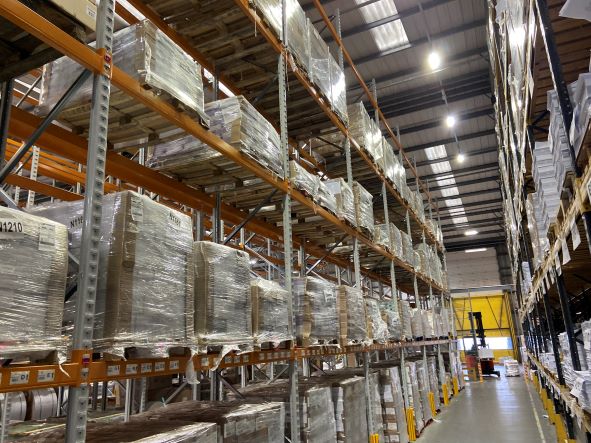
Elanders, a global print, packaging and supply chain management specialist, has converted 25,000 sq ft of additional space at its Newcastle Upon Tyne (UK) site to support customers in the light of all the current global supply chain challenges.

The logistics site, on New York Business Park, now has capacity for an additional 1,250 pallets to support its existing fulfilment services and capability.

The proactive investment meets Elanders’ current and new clients’ needs that range from being a modern facility, through to effective operational design, secure storage, separate caged areas and security access control.

These services will help businesses who are experiencing storage and fulfilment challenges, which will have been exacerbated by the recent global supply chain issues.  Elanders in the UK has ‘Excise warehouse’ status to support alcohol supply chain services and a ‘Bonded’ supply chain operational solution where utilising this capability will negate any double duty and UK tax payments for goods that are shipped to the UK from outside the EU and later sold to EU customers.

The additional space has been designed to work with small- to medium-sized businesses who operate in both the B2B and B2C markets. In all cases, the focus is on bespoke solution design and operational engagement that is focused upon the final customer needs.

Kevin Rogers, Managing Director for Elanders in the UK, said: “Supply chain solutions are under immense pressure today. The business situation has highlighted that many supply chain solutions are not that agile or flexible to mitigate significant challenge and disruption. New solutions and structural designs are now actually needed to meet a changed customer demand requirement. What Elanders has today is the flexible solution that can support both B2B and B2C activities – creating more localised responsive and personal supply chain solutions in a global economy.”

Elanders’ supply chain solutions support customers who also require add-on services to support their operational needs, such as order management and value adding services in addition to the core warehousing and logistics needs – including the reverse logistics of customer product returns.

Tower Cold Chain launches new brand identity

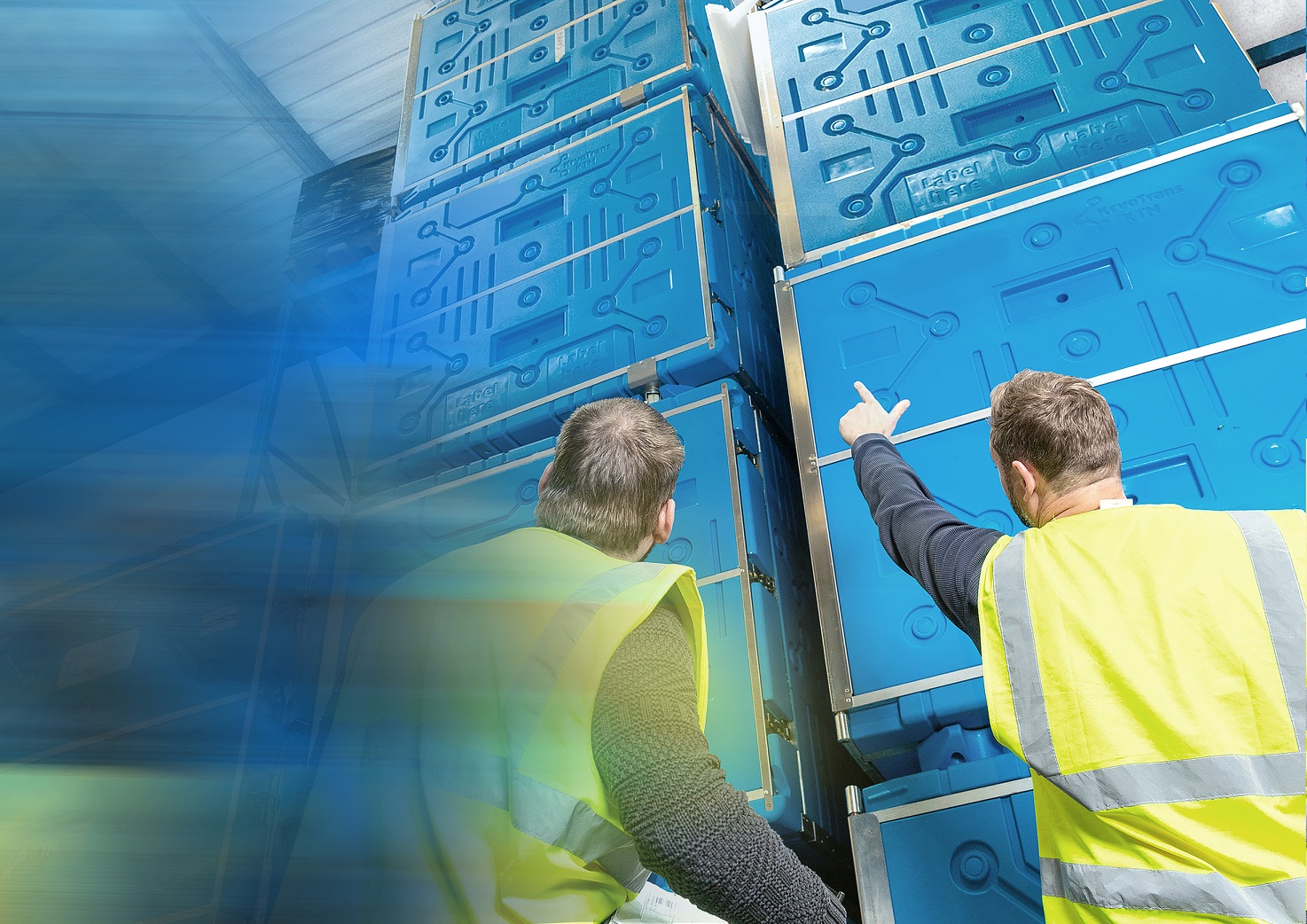
Pharmaceutical thermal protection specialist Tower Cold Chain has launched a new brand identity, supported by a new website that provides an enhanced experience for the company’s growing global customer base.

Both the branding and website reflect Tower’s global focus on promoting circularity and driving innovation in cold chain delivery to offer added customer value and best-in-class technical support services.

The website has been designed to be fully customer-centric, including the introduction of a new technical resource area, streamlined product information and the provision of a personalised dashboard that helps users configure the specific requirements for their cold chain payloads.

In addition, following specific customer feedback, the site also incorporates a dynamic map of the Tower’s global network with detailed information on its strategically located hubs throughout Europe, the USA, Asia-Pacific, India, and South Africa.

The website includes full details of Tower’s complete range of robust, reliable and reusable containers, which covers all pharmaceutical temperature configurations and standards, as well as meeting the different requirements of Euro, US, single and double pallets, and the smaller sub-pallet consignments. This enables customers to easily compare models and identify the most appropriate solution for their requirements.

Niall Balfour, Tower Cold Chain’s CEO, said: “Our new website and branding reflect both our global capabilities and our commitment to deliver the highest standards of products and services.

“Through simplifying what is a highly technical and highly regulated supply chain, we believe we can deliver real value for our customers. Our website is central to this, enabling them to find the information they require with the very minimum of clicks and helping them to specify and book the services they need.”

Tower’s latest investment and digitalisation of its services follows the recent opening of its new global headquarters in Theale, UK, where its Innovation Centre and expanded laboratory facilities will play a key role in delivering the next generation of cold chain products.

The company was one of the first to adopt phase-change materials to protect temperature-sensitive materials, as well as developing an integrated data logger for its products. More recently, Tower introduced a range of unique biotechnology deep frozen pack-out solutions.

“Innovation has driven Tower’s development and our new brand and website will spearhead our commitment to becoming the provider of choice in digitalised thermal protection solutions,” concluded Balfour.

“I am delighted at the positive feedback we have already received as we continue to develop the Tower offer and provide the high-performance containers our customers demand to deliver pharmaceuticals to patients safely and efficiently worldwide.”


Big Box provides expansion space for IPL Hull

IPL Hull (formerly known as Straight Manufacturing), a long-established plastics manufacturer, is currently undergoing an ongoing development and investment programme, and Big Box Buildings (part of The Big Box Group) has been a part of that.

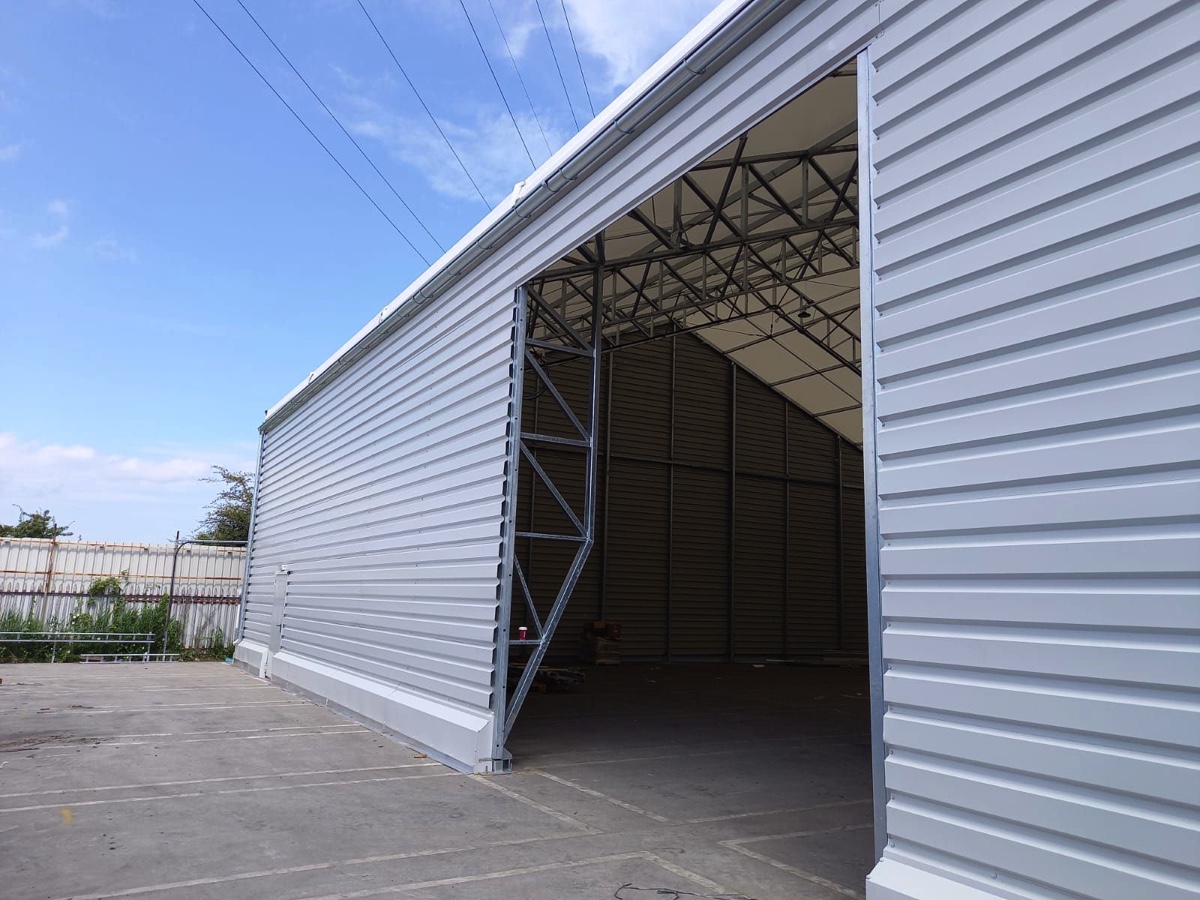
The significant growth of IPL’s business was putting increasing strain on storage space and the outside yard was fully used. Covered outdoor storage was desirable from a quality and auditing perspective and it required an L-shape format. Big Box was able to provide two steel-framed buildings joined together with a valley gutter.

The solution was both cost effective and efficient to build. It has a single-skin PVC roof which makes it economical and single-skin cladded steel walls, which also provides security.  A steel valley gutter runs down the middle and rainwater gutters/downpipes run along the sides.

Steel-framed buildings are considerably stronger than aluminium so have a much longer life expectancy. At larger sites and/or exposed windy locations, steel-frame buildings are often a great choice. Big Box Buildings’ steel-frame design can be retro-fitted to an existing concrete pad (or flat tarmac sometimes) without requiring costly groundworks.

Big Box Group has a long existing relationship with IPL Hull as a racking and safety goods supplier. In line with Big Box’s ‘turn-key’ solution approach, in addition to the building project, it also undertook ground works to an adjacent but unrelated area and supply of a small plant room.


DP World trumpets European green credentials

Innovation holds the key to reducing emissions and creating a greener and more sustainable trade and logistics industry in Europe, according to global end-to-end logistics and smart trade enabler, DP World.

DP World operates 20 terminals in 12 countries across the breadth of Europe, all of which are at various stages of their respective journeys towards implementing more sustainable operations.

The Netherlands

The business has an impressive story to tell in Western Europe where its Rotterdam World Gateway (RWG) terminal, located in the Netherlands, is on the pathway to be the first carbon neutral container terminal in the world.

The fully electric terminal – renowned for its high level of automation – boasts a number of new and existing green innovations and technologies, including 84 electric lift AGVs (automated guided vehicles) that operate on green electricity and 18 state-of-the-art cranes that capture and regenerate their own energy. The use of plastic and other oil-based packaging materials at the terminal has also been cut back and all of its waste products can now be fully recycled.

In addition, RWG is also the first deep-sea terminal that is ‘LNG (Liquefied Natural Gas) ready’ and is capable of loading and unloading containers whilst the vessel is refuelling. The transition from using fuel oil to LNG as a sustainable fuel represents an important step in making shipping and the industry more sustainable.

Belgium

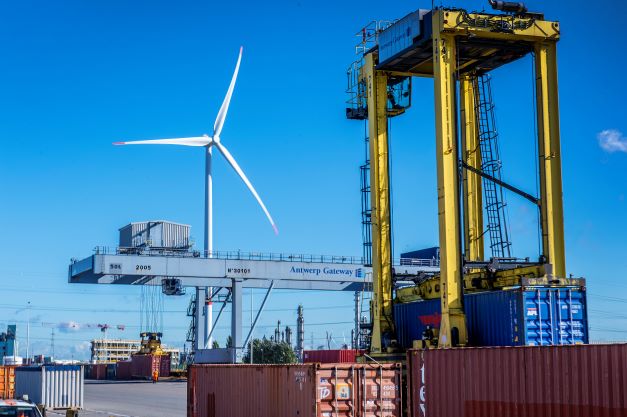
In neighbouring Belgium, DP World Antwerp (pictured) has its own set of impressive green credentials, as the first terminal in the world to publish its own sustainability report. Between 2017 – 2018, the report found that DP World Antwerp saved over 10.6 million kilograms of carbon dioxide over a four-year period, while the business simultaneously took over 90,000 trucks off the Belgian roads in the space of a year by offering greener intermodal options.

Its commitment to sustainability is exemplified in its investment in automated stacking cranes, wind turbines and a biogas plant. In addition, the new operations building at the dock – part of the business’ €200m investment plan at the port – harnesses residual energy to control the temperature of the building, making it almost energy neutral.

Denmark

Elsewhere in Europe, DP World-owned Unifeeder, based in Denmark, is a provider of the largest feeder and shortsea network in the region. The innovative firm recently introduced new state-of-the art live tracking technology – ‘Actual Emission Tracker’. The real-time tool calculates, on a micro level, the emissions of each individual twenty-foot equivalent unit, thereby giving businesses greater awareness, visibility and control over their overall emissions.

In September this year, Unifeeder announced its ‘ElbBlue’ vessel was carrying out a world-first trial voyage using liquefied Synthetic Natural Gas (SNG), a synthetic form of LNG that is carbon-neutal and generated from 100% renewable energy.

Turkey

In Turkey, DP World Yarimca recently purchased hybrid vehicles and installed solar panels at the terminal that are expected to generate 4% of its annual electricity needs, helping to reduce overall carbon output by over 220,000kg per year.

Rashid Abdulla, CEO, DP World – Europe and Russia, CEO, commented: “We are absolutely committed to doing all we can to help not only our own operations, but also our supply chain partners and customers, reduce their carbon footprints. We are making great progress in the region, which is largely due to the adoption of innovation and technology, which drives awareness and visibility of where action can and must be taken.

“Over the next decade, consumer choice and corporate procurement responsibilities will drive this type of emission tracking and data capture from being a ‘nice to have’ to a ’must have’ and we want to be at the forefront of driving that highly significant change in attitudes.

“Our terminals in Rotterdam and Antwerp are leading the way and we have a number of exciting green solutions that will be implemented in other areas of Europe over the next five to ten years.”

Europe

Another key part of the firm’s green strategy in Europe is to reduce the number of trucks on the roads, achieved through the increased accessibility of intermodal transport across inland Europe. As a result, DP World’s Inland business unit – which operates across Germany, France, Switzerland, Belgium and the Netherlands – offers resilient trimodal-transport solutions to its customers, acting as a bridge for the flow of trade between European deep-sea ports and its network of inland terminals.

The firm offers rail and/or barge infrastructure at approximately 95% of its terminals in the continent and is investing further across its portfolio, including further east at its ports in Serbia, Romania, Ukraine and Turkey, helping to create more sustainable routes stretching across mainland Europe.

Abdulla continued: “Our Inland network is absolutely key to our strategy in Europe, with established rail networks in the UK and the vital Hinterland area in the northwest. However, our trimodal transport strategy stretches further east where our terminals in the Ukraine (DP World TIS Pivdennyi) and Turkey (DP World Yarimca) are already seeing the benefits of rail investment.”

A recent study revealed that, when using the same amount of fuel, trucks move cargo a fraction of the distance compared to alternative modes of transport such as rail and barge. The studied highlighted how trucks – operating off 4.5 litres worth of fuel – can only transport a ton of cargo 233 kilometres, whereas rail and barge achieve significantly higher distances of 768 and 1,041 kilometres respectively.

One significant example where DP World is looking to maximise barge use is on the River Danube, which passes through more countries than any other river in the world, thereby making it a hugely important trade route.

Barges on the Danube can transport goods all the way from south-west Germany, through several mainland countries, including Serbia – served by the DP World Novi Sad terminal, all the way through to DP World Constanta in the southeast coast of Romania, where it meets the Black Sea Basin connecting to Eastern Europe, Central Asia and the Middle East.

Abdulla added: “It is no secret that the industry must come together to make genuine and impactful sustainable changes as we look to achieve as a sector in supporting the net zero emission commitments made in the Paris agreement.

“At DP World we are very aware that we still have a long way to go, but we are excited by the progress made in recent years and we are in no doubt that we will be at the very forefront of that conversation in Europe.”

Trelleborg introduces versatile press-on tyre

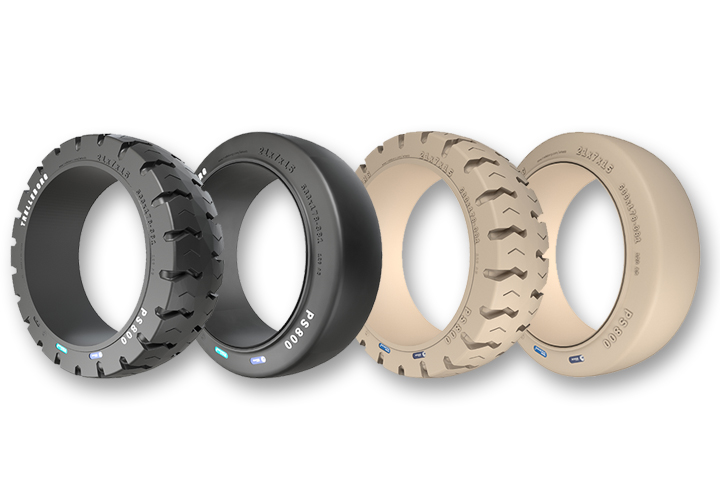
Trelleborg has launched the PS800, its newest press-on solid tyre for medium-intensity material handling applications; versatile for working in all conditions indoors or out.

Luca Sabelli, Product Manager Material Handling at Trelleborg Wheel Systems, said: “At Trelleborg, we know that tailoring our solutions to customers’ needs is essential when it comes to handling their everyday challenges. Designed to help operators that deal with high loads and repeated vehicle cornering within a medium working cycle, the PS800 can get the job done easily with the versatility needed.”

Available in smooth or traction profiles and in two different compounds, multi-purpose and non-marking, the PS800 guarantees high performance and enhanced comfort in indoor operations or the needed grip and increased traction for outdoor ones, even on wet paving.

Trelleborg says both PS800 tread patterns carry good overall performance, day in and day out. Thanks to its optimised compounds, wear is reduced, meaning the PS800 tyre lasts 18% longer than equivalent tyres on the market.

Flexibility comes first with the PS800 line, so customers can select the right tyre to run their operations with confidence in the comfort, stability and safety they will have while working on any surface.

WMS: what comes first – hardware or software?

As the world still grapples with supply-chain issues brought on by the pandemic, companies are increasingly looking for ways to streamline their operations. One area that is increasingly receiving more attention is Warehouse Management Solutions (WMS). Andrey Kazachkov, Head of Warehouse Automation at premiere custom software development provider First Line Software, takes a look at some warehousing situations that determine whether to first invest in hardware or software when beginning the process of warehouse automation, and some notable exceptions to either case.

Andrey Kazachkov, Head of Warehouse Automation at premier custom software development provider First Line Software

In my recent article, Should My Warehouse Be Automated? we reviewed the basics of WMS and looked at the differences between a manually operated warehouse with people as the primary resource moving goods, as opposed to a fully or partially automated warehouse scenario. Once you’ve determined that your warehouse requires some level of automation, the next question is whether to initiate the conversion with hardware or software.

Not surprisingly, your company’s own business process will determine which comes first.

Most organisations looking to implement a WMS solution will likely have some existing hardware and equipment in place and wish to integrate this infrastructure with software to run it more efficiently, and we’ll take a look at that situation in a moment. But let’s start with a couple of scenarios where software takes precedence.

Where software comes first

Let’s begin with the premise that you’re creating an automated warehouse from the ground up. This includes raising a brand-new building or starting out with an existing empty shell.

Here, you may initially think that the answer is to first purchase the hardware needed for your particular needs and the software will likely come integrated with it or be added afterward. Normally this would be the preferred route to take when starting from scratch as we’ll see in a moment. However, exceptional, non-standard conditions are a great example of where the correct choice of software has to come first, primarily because software is easier to customise than hardware.

Situations include, but are not limited to:

  • Highly secure tracking requirements for products such as narcotics, controlled substances, hazardous materials, or extremely high-value goods.
  • When specific features need to be integrated such as Augmented Reality glasses, Pick By Voice commands, or highly specialised robotics.

Another common situation where software is the predecessor to hardware is when pre-existing hardware exists, and new hardware must be integrated into the system. This is often the case when speed and productivity need to be increased. Here, new software is the bridge to compatibility between the existing and new hardware.

Where hardware comes first

One of the main drivers in the decision to choose hardware before software is… you guessed it, cost. The price of warehouse management software in a common warehouse system is approximately 20% of the total budget. This is primarily driven by the fact that hardware is less flexible in terms of customisation. You buy the hardware knowing it can do the job required, while software can be continuously modified and updated to fit your equipment needs.

As I stated before, if you are building or starting a warehouse from scratch, initiating the construction with hardware would be the preferred route. There can be myriad reasons for this, but here are some of the main factors to highlight:

  • Knowing your hardware and equipment in advance allows you to most efficiently plan the layout of your warehouse, allocate workplaces, and choose hardware suppliers taking into account licensing agreements.
  • You can de-bug your process at an earlier stage before you implement the automation aspect of the software.
  • The type of hardware and equipment you purchase will be the determining factor in calculating the speed of your warehouse. Software created by experienced providers allows you to modulate your equipment’s load based on needs, but there is usually a speed-limit to most hardware.
  • The old adage, “Time is Money” is most applicable here since your warehouse will be up-and-running much faster if you start with the hardware and equipment first.

When hardware already exists

As mentioned earlier, most organisations looking to implement a WMS solution will likely have some existing hardware and equipment in place, and wish to integrate this infrastructure with software to either enhance or create some level of automation. As it turns out, this route can ultimately be far more expensive for a customer if they are not aware of some of the pitfalls when trying to merge existing equipment with new hardware and/or software.

There are more points here, but some are also applicable to the hardware vs. software question above:

  • The operational system of the new WMS needs to connect to operational system of the rest of the company as well. This is typically not a low-level integration.
  • You need to know the equipment standards that are applicable in your area or country. Equipment from the same manufacturer can be location specific, and in some cases may not be compatible with your existing hardware.
  • When choosing one equipment vendor over another, evaluate not only the initial cost of integration, but also the cost of future technical support and maintenance.
  • Integration with so-called basic equipment such as scales, scanners, or computer monitors, (not enough monitor resolution is an example) etc. should be a focus of attention. Overlooking the small stuff can get very expensive quickly.
  • When combining older or existing hardware with new hardware and software, simulators are usually created that imitate the legacy systems before they are deemed fully compatible with the new. This can cost tens of thousands of dollars or Euros.
  • There are off-the-shelf simulator solutions for the customer to DIY, however the process of getting system approvals and making them work can be time consuming.

When hardware and software both come first

Of course, as in all aspects of life, there are exceptions to every situation. Warehousing facilities that have extremely specific requirements and very demanding environmental situations will necessitate acquiring, and integrating hardware and software at the same time. This requires sourcing equipment that can handle such environmental extremes and concurrently developing the software that can integrate with the equipment to do the work that’s required.

Here’s a couple of examples:

  • A temperature-controlled warehouse for goods that need either extreme cold or hot storage and subsequent movement within, and in and out of the facility.
  • Special climate conditions such as reduced oxygen environments where the protection of assets from fire, moisture, and pests is paramount.

A real-world example of this last point is First Line Software’s partnership with viastore that automated the Archive and Logistics Centre of one of the largest banks in Europe which occupies 53,000 sq m. It was the largest warehousing automation project in Eastern Europe. The challenging fact is that the ALC employees have no physical access to the storage areas due to the reduced oxygen supply needed to protect the contents from fire, moisture, and pests.

This scenario necessitated that the entire process of archive operations be fully automated. Here the client’s process requirements dictated that the solution needs to have software, and the specialised hardware sourced together to execute the facilities demands.

Where does your WMS begin?

Amid all the pitfalls addressed above (and others not addressed for lack of space), do not despair! The good news is that it’s possible to integrate and update your existing warehouse at a reasonable cost, even using equipment from different manufacturers. The first step to achieving that goal is the responsibility of the customer.

Do your best to eliminate – or at least minimalise – the “middle man”. It is important for you to control the development process at all stages and review your requirements as early as possible. From there, you should expect to uphold a direct line of communication to your software and hardware implementer. Project Management should be kept in-house if possible.

The most critical decision you’re likely to make is choosing that all-important implementer. Not every developer or supplier can understand complex WMS processes. Here you should employ the “one vendor” concept: First Line Software’s partner, viastore can supply not only its own hardware, but equipment from other manufacturers as well; in addition to providing their state-of-the-art WMS software solutions.

Having a single vendor to work with and communicate directly has an obvious advantage aside from ease of further hardware servicing, and updating software systems; you are establishing an evolving partnership that will help fuel your company’s future successes.

Come meet us at the free online event of First Line Software on 18th November – How to assemble the WMS/MES/ERP puzzle to increase production efficiency.

RESERVE YOUR FREE PLACE HERE


Deadline approaches for IFOY entries

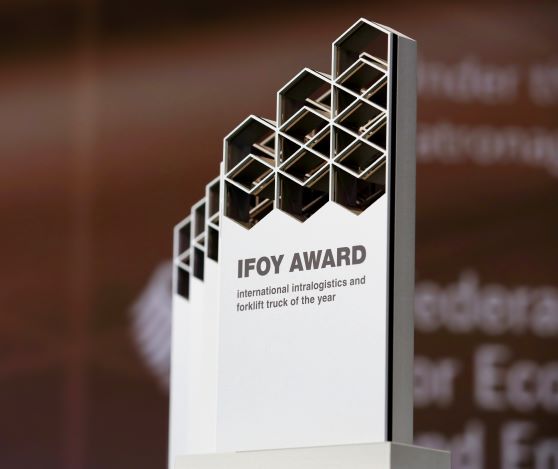
The application period for the IFOY AWARD 2022 is entering the finishing phase. Suppliers of products and solutions can apply only this week. The application portal at www.ifoy.org is open until 30th October, 2021. In addition to forklifts, warehouse technology and special vehicles, automated guided vehicle (AGVs), shuttles, robots, cargo bikes, drones, cranes, software and apps as well as successfully implemented, integrated warehouse solutions are also eligible for application.

Furthermore, outstanding technical details or components, such as ergonomic innovations, safety solutions or automation components, are also awarded. In the “Start-up of the Year” category, newly-founded companies with innovative prototypes or functional developments can apply for an IFOY AWARD.

Due to its expertise, the IFOY AWARD is considered the most important innovation award in intralogistics. The election by an international jury selected from internationally renowned trade journalists and the leading logistics media – including Logistics Business as the sole UK media representative – is preceded by an extensive audit with nomination and test cycles. The equipment and solutions nominated for the final undergo individually tailored driving or functional tests, including the test protocol comprising around 80 criteria and the scientific IFOY Innovation Check, on the occasion of the IFOY TEST DAYS from 18th – 23rd March, 2022 at the Messe Dortmund exhibition centre.

In addition, jurors and their teams of advisors from the business world will travel to examine the finalists themselves before casting their vote. As part of IFOY TEST DAYS, TEST CAMP Intralogistics will be held again in 2022, admitting B2B trade visitors interested in innovation. The number of participants is limited.

Applications can only be submitted online HERE.

Doosan upgrades electric forklift range 

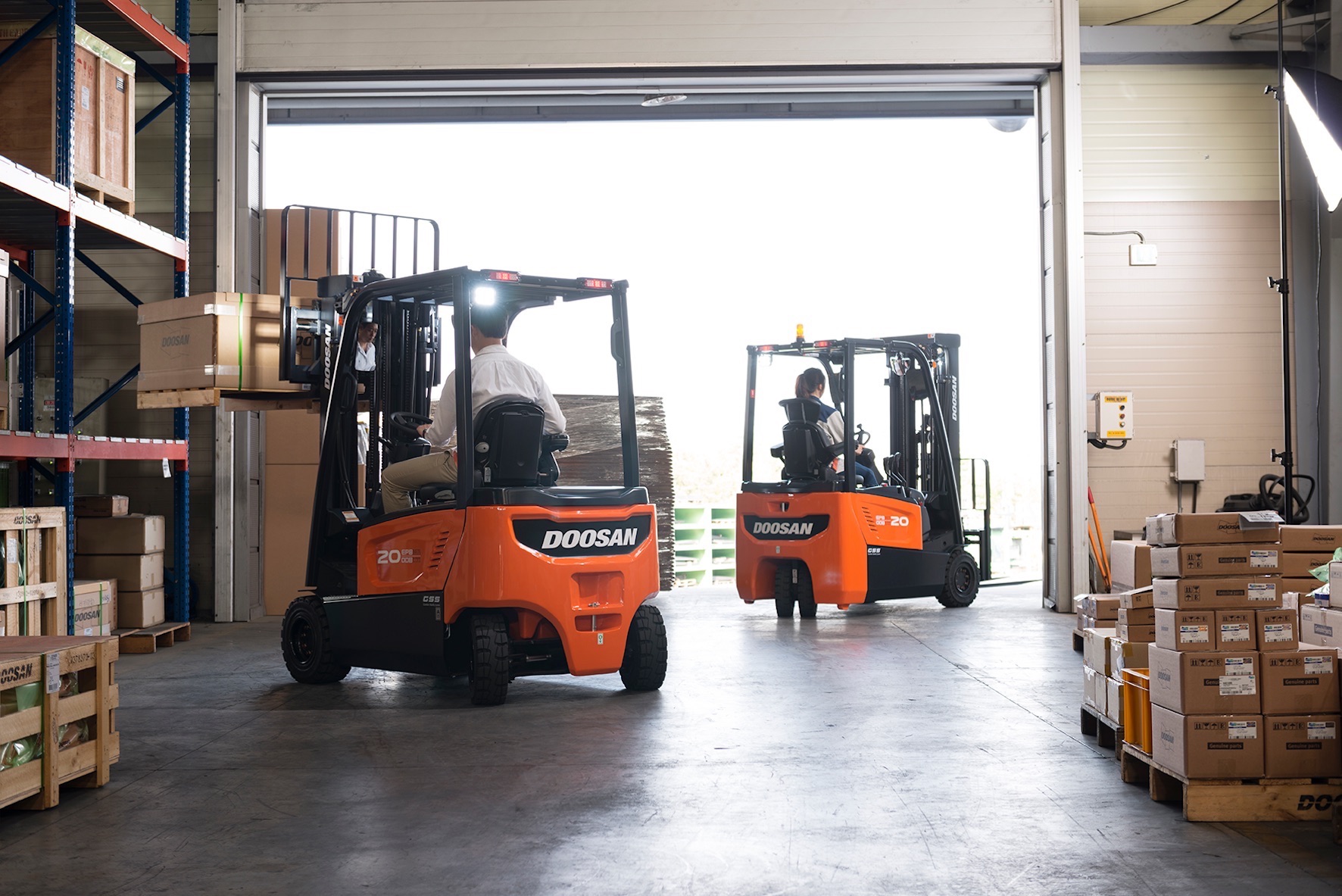
Doosan, a leading manufacturer of robust high-performance forklift trucks, has unveiled a major upgrade to its successful BT/BX 7 Plus Series electric counterbalance forklift trucks, bringing advanced performance-enhancing design and improved capabilities to the three and four wheeled, 1.5-to-3.5-tonne, mid-market product range.

Designed to deliver simple, powerful performance in even the harshest of operating environments, Doosan says its BT/BX 7 Plus models have now been upgraded, resulting in enhanced braking, reduced noise levels, greater cooling performance, and extra driving comfort. Further advantages include: more efficient ergonomics, new safety features as standard – plus greater choice on options – and improved waterproofing for better all-weather performance and reliability.

Safety upgrade

Safety has been stepped-up a gear with Doosan’s all-round braking system, which includes the Doosan Electric magnetic auto Parking Brake (EPB) and Electric Foot Brake (EFB) systems, together with an unlimited ramp-hold capability. With the EPB system the parking brake automatically activates when the driver leaves the seat, ensuring safety around the vehicle, and with the new EFB system brakes are automatically applied as soon as the operator’s foot lifts off the accelerator pedal.

In the cab, clever design features, greater driver comfort and well thought-out ergonomics go hand-in-hand with safer working. The new improved mast design significantly reduces mast oscillation, which allows the operator to safely manoeuvre when the mast is fully elevated. In addition, Doosan’s optional Guardian Stability System (GSS) ensures safe handling by automatically reducing travel speed as a load is elevated.

Further safety improvements include: a newly designed overhead guard with angled roof bars for a clearer upward view, a large panoramic mirror for better rear visibility and a new fence-light feature that offers a warning to pedestrians by projecting red lines around the vehicle. In addition, optional front and rear safety lights are available for extra visibility.

Extra options

An optional feature on the new models is fingertip controls. Fast, precise and fully adjustable fingertip control makes hard work effortless and efficient. Also, with the NFC Start option, security has been improved, allowing only authorised employees to operate the vehicle.

Doosan says operator comfort has been significantly upgraded with the introduction of a new Doosan low-vibration, shock-absorbing seat, with full suspension adjustable up to 150kg and far greater armrest control.

Noise levels have been markedly improved too. The combination of a low-noise drive axle and a new sound suppression design has resulted in a 37% reduction in sound intensity compared to the previous model, creating a far more comfortable working environment for both driver and those working close by.

In keeping with Doosan’s reputation for rugged design and reliable performance, the latest models have improved waterproofing, offering protection against water and dirt in the harshest of outdoor applications, whatever the weather. All connectors are water protected to IP67, controllers sealed and rated to IP65 and motors and pumps offer full dust and water protection to IP43 rating. Electric motor cooling performance has been improved too, with a new centralised cooling fan.

Productivity boost

Helping to maximise productivity and improve safety within busy operational environments, Doosan’s new, improved curve speed control system automatically reduces the vehicle’s travel speed to an optimum level when cornering, reducing the risk of accidents and damage – allowing operators to perform everyday handling tasks with greater confidence.

Further efficiency gains can be achieved in battery changing operations, with Side Lift In and Lift Out (SLIO) and Side Roll In and Roll Out (SRIO) design, allowing fast changeover of batteries for multi-shift operations. Helping to reduce valuable warehouse space, a tighter turning radius on the new BT/BX 7 Plus models offer businesses the potential to move to a more compact racking layout, with narrower aisle widths.

OT Group opens new centralised hub

National business supplies and services provider, OT Group – which includes the OfficeTeam, Office Depot UK & Ireland, Zen Office, and Spicers Ireland brands – has relocated to its new headquarters in Ashton-under-Lyne.

The move comes as a result of the completion of OT Group’s acquisition of parts of Office Depot UK & Ireland’s contract arm earlier this year, which is already based at the location. Further significant investment is intended for the 275,000 sq ft site, with plans to bring up to 200 new jobs into the local area.

The move will enable the business to provide a higher quality service to its customers – with the facility having the capacity to hold over 22,000 products and, using sophisticated picking technologies, achieves a 99.8% order accuracy rate.

Previously located at its central distribution centre in Birmingham, the facility will provide greater stability for OT Group’s customers through improved distribution capabilities, at a time when supply chain turbulence is at an all-time high.

Andrew Jones, CEO of OT Group, commented: “We’re thrilled to be based in Ashton-under-Lyne – the area has so much to offer, and the site is more fitting with our long-term strategy thanks to its industry-leading technology and experienced team.

“It also serves to showcase the rapid growth the Group is undertaking – and evidences where we are innovating within our industry and leading within the market, while still providing the reliability our customers need.

“And, with a ‘local first’ recruitment policy in place, we’re excited to be looking to the talent pool of Ashton-under-Lyne and the wider Manchester area to fill any newly created positions.”

The Ashton-under-Lyne facility houses advanced warehousing and distribution centre technologies, meaning that OT Group will be able to provide an even more efficient, competitive, and responsive service to its customers as it continues with its rapid growth plans.

The launch of the new flagship site coincides with the acquired parts of Office Depot UK & Ireland business’ full integration into the OT Group, where it began trading under the new Group umbrella on 27th September 2021.


Quantron aims to become zero-emission vehicle OEM

Quantron AG, specialist for commercial vehicles with electric and hydrogen drive trains, is setting out to become an OEM for zero-emission vehicles. To strengthen the identity of the products and the Quantron brand, the company is bringing international design expertise on board.

The aim of the “Quantron vision 2025” project is to build a strong brand DNA by creating a unique Quantron look and feel. Vehicle design not only has an aesthetic function, but also has a major impact on aerodynamics and thus on the vehicle’s energy consumption.

The experts accompanying Quantron on this journey are well-known figures in the mobility-industry: Italian car designer and design strategy consultant Fabio Filippini – who led for more than six years the Pininfarina Transportation Design in Turin – and Spanish design and innovation consultancy Mormedi, led by Jaime Moreno.

Fabio Filippini comments on his collaboration with Quantron AG: “Quantron has built very strong roots in its past. Transforming these into the new world of Quantron, which is a much more complex ecosystem of services, existing and new products, presents a great challenge for any creative. That’s why I wanted to include Mormedi, which are specialized on this type of brand identity within the transportation industry. That way we can make sure we’re up to the big challenge as one team.”

Jaime Moreno of Mormedi complemented his words: “This is a great opportunity. Today we need brands like Quantron that are committed to zero emissions. And they are not dreamers, they are already building vehicles. What we want to offer Quantron is a vision of what the new products will look like in the next five to ten years.”

Quantron vision 2025

The “Quantron vision 2025” project begins with a unique Quantron design for its 12m bus, which will be launched in the near future. A Quantron design for a light truck and a heavy US truck are also in the planning stages.

Michael Perschke, CEO of Quantron AG, explained: “Quantron AG has the vision to become a global leader in zero-emission global transportation services and products. Therefore the unique touch and feel of the design has to be in sync with the brand DNA of Quantron, which stands for clean technology and zero-emission.

“There is no better team to give Quantron a global identity than Fabio Filippini and Moreno. Our ambition has to be that by 2025 latest, our sustainability focussed customers will recognise a Quantron product at first sight, clean, sophisticated, high-tech and representing the future of sustainable transportation.”

CLICK HERE to view a video of the cooperation announcement


Subscribe

Get notified about New Episodes of our Podcast, New Magazine Issues and stay updated with our Weekly Newsletter.