Footasylum and THG Fulfil put automation at the heart of retail growth. David Priestman spoke with Tom Killeen, Chief Operating Officer of THG Ingenuity, about a warehouse upgrade project.
A new AutoStore installation delivered by THG Fulfil for Footasylum demonstrates how warehouse automation is evolving from an operational efficiency tool into a strategic enabler of retail growth. Combining high-density storage, robotics, proprietary software and a Robotics-as-a-Service (RaaS) model, the project has transformed fulfilment capacity and provided a platform for future expansion.
Retail fulfilment has changed considerably in recent years, something that THG Ingenuity know, having been a retailer for 20 years (with the MyProtein brand). Retailers must contend with increasingly complex product ranges, fluctuating demand and seasonal peaks. For Footasylum, the existing warehouse infrastructure had become a constraint on growth, built around a simpler retail model that no longer reflected the demands of the business.
The solution emerged through a partnership with the fulfilment arm of tech group THG. Both businesses have their roots in the Northwest of England, providing a geographical advantage that helped bring operational teams together and accelerate decision-making. THG Fulfil brought experience gained from deploying and operating 6 AutoStore ASRS systems across its own international fulfilment network, which has gone from primarily B2C to now nearly 50% B2B.
“THG Fulfil is our crown jewel within the estate – fulfilment, courier management, SaaS-based services and automation. No-one would expect us to be selling automation as an integrator, so it’s game-changing.” Tom Killeen
“AutoStore is resilient, low-risk automation,” Killeen states, “We ran simulations to determine algorithms and picking strategies to understand what grid size was needed, dig depth and how many bots. The system is designed for perfection, but you can’t fill all the bins as it needs holes for momentum! The performance of the AS is only as good as the way you put stock in it. Product composition and commonality are very important. We wanted to understand all this because, if you’ve got a unit per order of four and you can have a composition bin of four different SKUs, you want one bin presentation.”
The opportunity was to apply expertise to a new infrastructure designed around the retailer’s requirements, rather than simply expanding an increasingly unsuitable manual operation. Upgrading the system won the argument because it kept local jobs, kept fulfilment in-house and added value to the business. Two national distribution centres, one each for retail and ecommerce, were consolidated into one site.
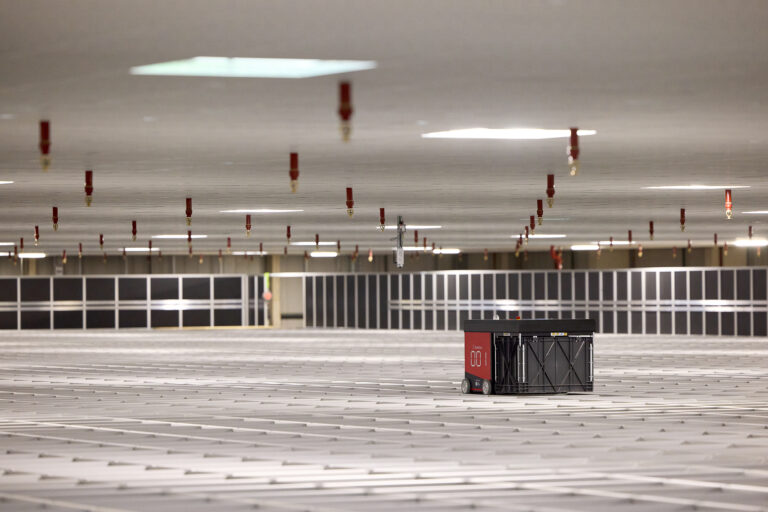
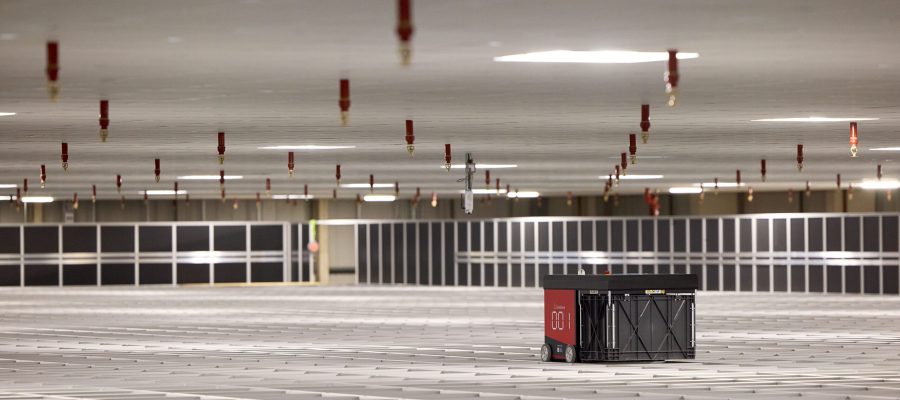
The resulting installation comprises 85 robots serving 96,000 bin locations and 24 ports. Designed to accommodate the full range of SKUs, the system uses the cube-storage technology to maximise the use of available warehouse space. By storing goods in a dense, 3D grid, AutoStore can reduce the footprint required for storage by up to 75% compared with conventional shelving arrangements, depending on the configuration and operation. Robots retrieve the required bins and deliver them to workstations.
The project was delivered at pace thanks to forward planning, with the physical build completed in three months, including a suspended ceiling and sprinkler system, thanks to a fast delivery of the ASRS. “It is pretty much copy and paste depending on how the warehouse is structured and what condition the floor is in,” Killeen adds. Some floor grinding was required. First orders were dispatched in September.
The first robot being placed on the grid represented more than a technical milestone. It marked the culmination of a collaborative effort with a shared understanding of the performance improvements the new system needed to deliver. “Our ambition is always to deliver early, not to overpromise but just to take days off because, ultimately, the more time they get to run the system up until peak, the better.”
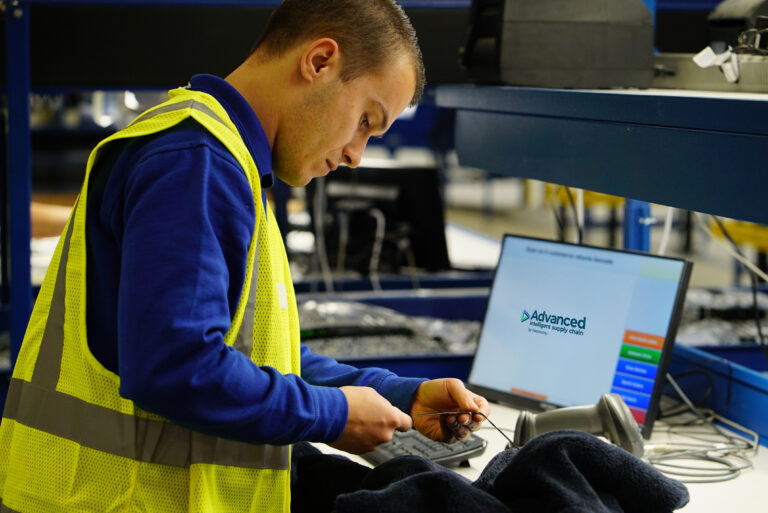
Footasylum’s decision to pursue automation was driven by more than the need for additional capacity. Manual processes had become increasingly repetitive for staff and difficult to scale, while the business wanted greater control over its fulfilment operation and a more engaging working environment. Bringing automation into the operation offered the prospect of addressing these challenges together.
Software Differentiator
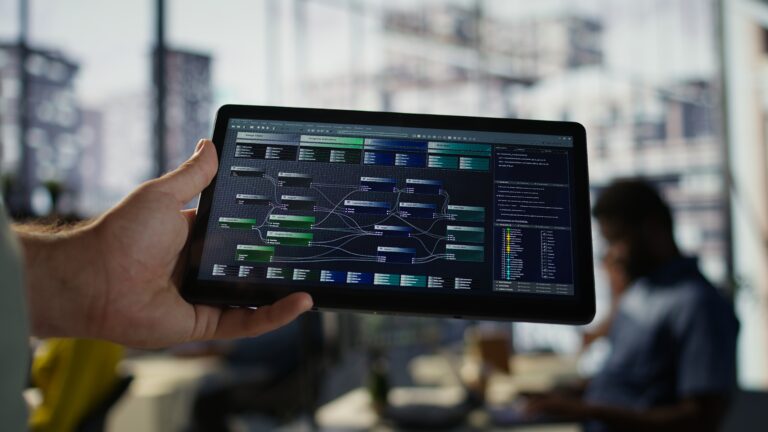
While the AutoStore grid and robots provide the physical infrastructure, software is central to the system’s performance. THG Fulfil has developed its own Warehouse Control System (WCS) since 2016, which manages robot movements, coordinates activity and optimises batch processing. Killeen says the WCS is the intelligence behind the hardware. “The ability to build your own software is a bit of a gift. We’ve got multiple pieces of software that has been built by the eyes of a retailer, for the end consumer’s benefit.”
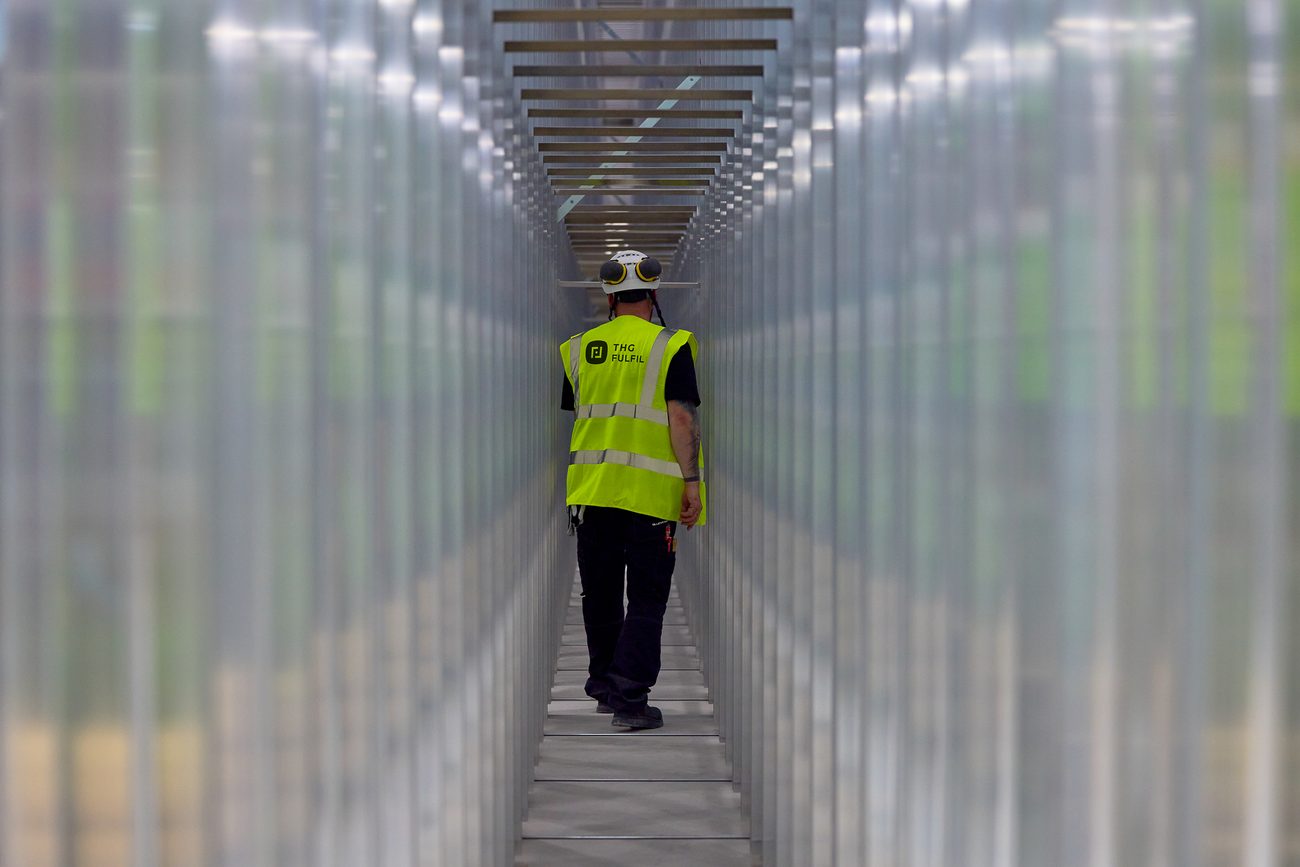
THG Fulfil’s experience operating automation internally has allowed it to refine the software through practical application. Operational data informs continuing improvements, helping to increase efficiency and system uptime. Rather than treating commissioning as the end of the project, the approach recognises that performance can continue to improve as the system accumulates data and the operating model evolves.
The reported output from the new installation is equivalent to 212% of the previous manual-task benchmark, despite halving the number of packing stations. This provides an indication of the potential productivity gains. There is capacity to scale up for the next two years. The benefits extend beyond headline throughput. Greater consistency, improved stock retrieval and the ability to process orders more efficiently support later order cut-off times and more dependable delivery commitments. During peak trading the system provides additional resilience without requiring a proportional increase in manual labour.
An important feature of the partnership is the commercial structure. THG Fulfil’s RaaS model replaces the requirement for the customer to fund the entire automation investment upfront through capital expenditure. For retailers evaluating automation, the initial financial commitment can be as significant a consideration as the engineering challenge. A service-based model changes that calculation, making advanced technology more accessible while aligning the provider’s continuing involvement with the performance of the operation.
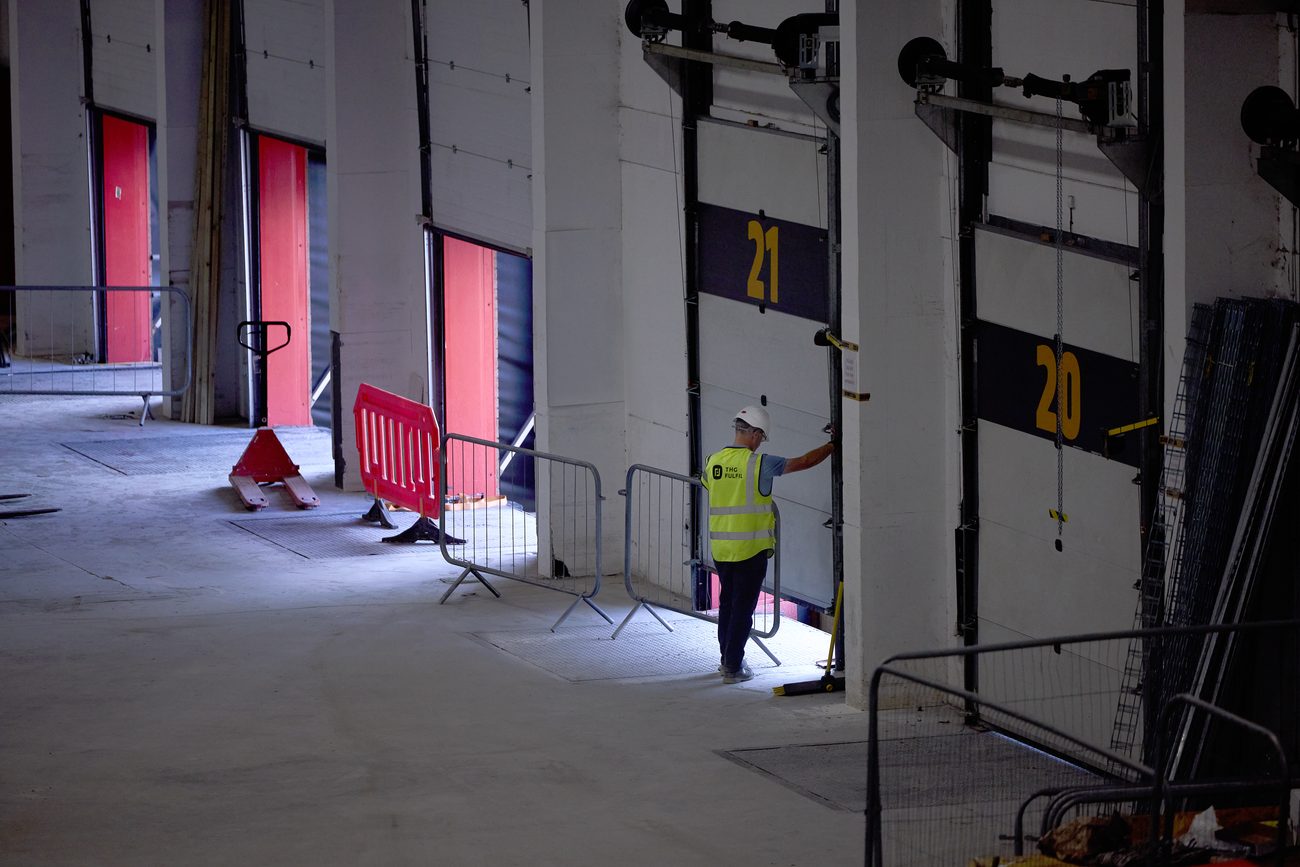
The relationship also supports ongoing optimisation. Rather than handing over a completed installation and leaving the customer to manage the consequences, THG Fulfil remains engaged in the system’s development and performance. Both parties have an interest in ensuring the platform continues to deliver as Footasylum’s business changes. “We’re an integrator that’s also a retailer at heart, a concept that’s pretty unique,” Killeen says, aiming to sell tens or even hundreds of AutoStore systems in the next few years.
Designed to Grow
Scalability was a central consideration from the outset. AutoStore’s modular architecture allows capacity to be expanded by adding robots and ports, subject to the constraints of the design and supporting infrastructure. This provides Footasylum with a route to accommodate future growth. A fulfilment platform must be able to respond to seasonal surges and longer-term expansion without becoming another constraint on the business. The Versa AI picking arm is something Killeen is keen to install on the THG’s own grid soon.
The Footasylum installation was a THG commercial milestone – its first external AutoStore project as a reseller. The experience provides a foundation for further deployments, allowing the company to apply operational knowledge gained from its own fulfilment network to a wider customer base. The lesson is that automation should no longer be assessed solely in terms of labour savings or warehouse capacity. Its strategic value lies in the ability to improve service, support growth, manage volatility and provide retailers with greater confidence in their delivery promises.
The question facing many operators is increasingly not whether to automate, but how to select the right technology, commercial model and implementation partner. Footasylum and THG Fulfil’s collaboration illustrates how a combination of operational experience, modular robotics and continuous software development can turn fulfilment from a back-office necessity into a source of competitive advantage. “That’s how you get ultimate payback from automation,” Killeen concludes.