CargoCrush Helps Hauliers Cut Empty Miles

Empty running and unused truck capacity continue to erode profitability in road freight, despite the millions of loads available through digital freight exchanges. EPG (Ehrhardt Partner Group) is addressing the challenge with CargoCrush, an application that automatically matches available truck capacity with suitable spot market loads.

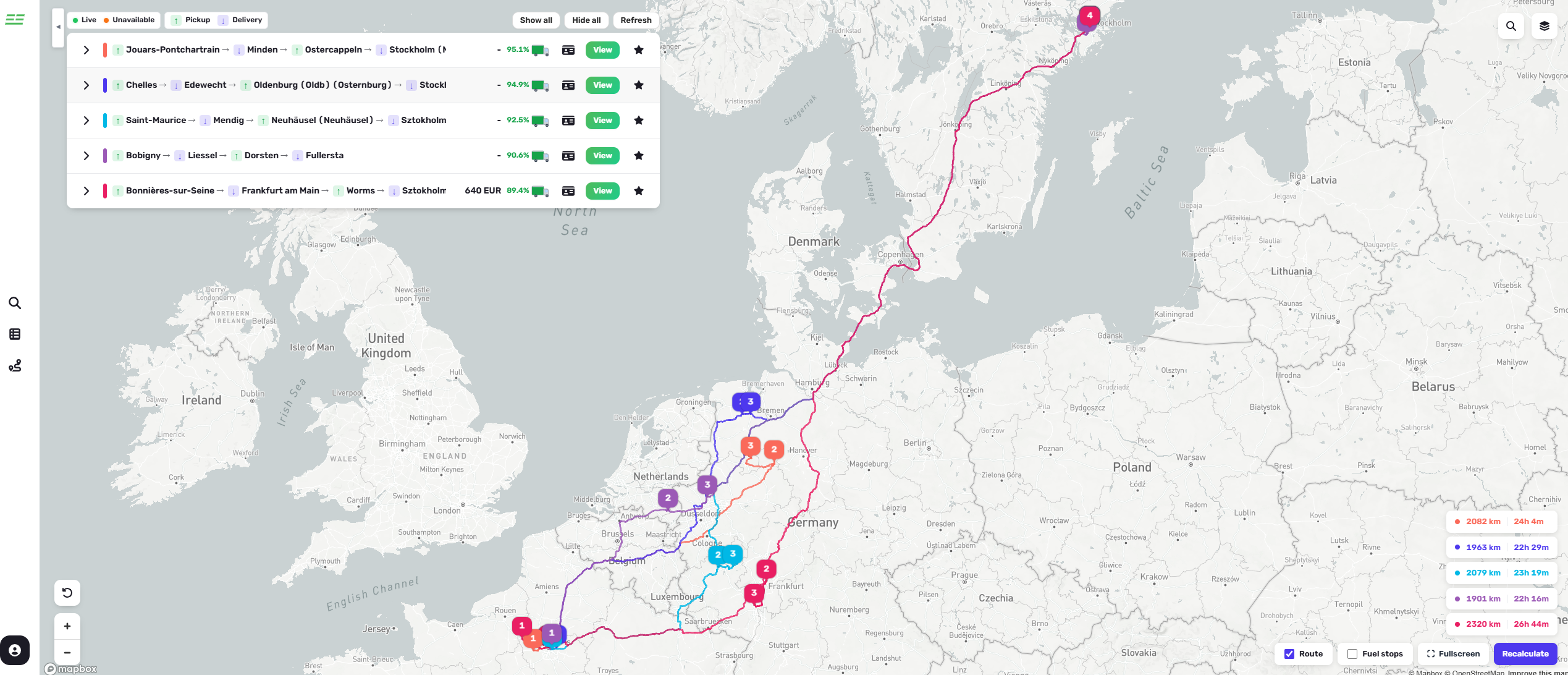
The software searches listings from connected freight exchanges, including Trans.eu, and identifies loads and combinations that fit an existing route. It evaluates potential opportunities against pickup and delivery locations, time windows, available vehicle capacity and the remaining journey, helping dispatchers identify financially attractive options within seconds.

For example, a truck that has unloaded in Brussels and needs to return to Stockholm could be matched with a single return load. CargoCrush can also identify multi-stop combinations, such as collecting a load in Brussels for delivery in Hanover before picking up another shipment in Celle for transport to Stockholm. The application assesses the additional empty mileage involved and the resulting vehicle utilisation.

Digital freight exchanges offer access to large numbers of potential shipments, but evaluating them manually can be difficult under the time pressures of daily operations. Dispatchers must consider whether a load fits the existing route, whether its collection and delivery windows are achievable, and whether the financial return justifies the additional journey.

“Digital freight exchanges bring together a vast number of available loads every day. To make these listings actionable in daily operations, they need to be matched quickly with a company’s specific route plans,” says Ewa Węgorkiewicz, Chief Commercial Officer at Trans.eu Group. “Connecting spot market data with intelligent route optimisation provides an important foundation for this.”

Faster analysis for better decisions

CargoCrush automatically evaluates individual loads, combinations and two-stop routes, identifying opportunities that might be difficult to spot through manual searches. The aim is not simply to secure the highest individual freight rate, but to find shipments that fit the existing journey and improve the overall economics of the route.

“The challenge goes beyond finding available loads. The key is identifying, among the many possible combinations, those that actually fit an existing route when accounting for routing, time windows, and capacity,” says Dr Clemens Beckmann, CEO of Greenplan. “Our mathematical optimisation logic automatically evaluates these options and identifies sequences of follow-on loads that would be difficult to spot reliably through manual searches in day-to-day operations.”

CargoCrush considers pickup and delivery locations, time windows, available capacity, the remainder of the route and the vehicle’s planned destination area. This helps dispatchers assess which combinations can reduce empty miles and improve utilisation on return journeys or individual route sections.

The application is available immediately, without an implementation project, and can be used independently of whether a company already operates Greenplan’s route planning and optimisation solution.

Turning available capacity into additional revenue

“Many transportation companies already have the capacity to handle additional loads. The challenge is recognising these opportunities in time and using them profitably,” explains Florian Merget, CEO of Greenplan. “CargoCrush helps dispatchers make these decisions much faster and on a more informed basis. This enables companies to improve capacity utilisation, unlock additional revenue opportunities, and reduce manual research in dispatching.”

A free trial is available through the CargoCrush website, allowing transport operators to test the application in their daily operations without implementation requirements.
Hellmann Automates Siemens Warehouse with Exotec

Hellmann Worldwide Logistics is partnering with Exotec to introduce robotic warehouse automation at Siemens Smart Infrastructure Buildings’ site in Nuremberg, Germany. The project will see Exotec’s Skypod system automate much of the storage, order fulfilment and internal movement of materials, creating additional capacity to support anticipated growth.

Hellmann has operated the warehouse as a full-service logistics provider for Siemens Smart Infrastructure Buildings since 2025. The new system is scheduled to go live in mid-2027 and will initially provide around 35,000 storage locations, with the flexibility to expand capacity and add picking stations as demand increases.

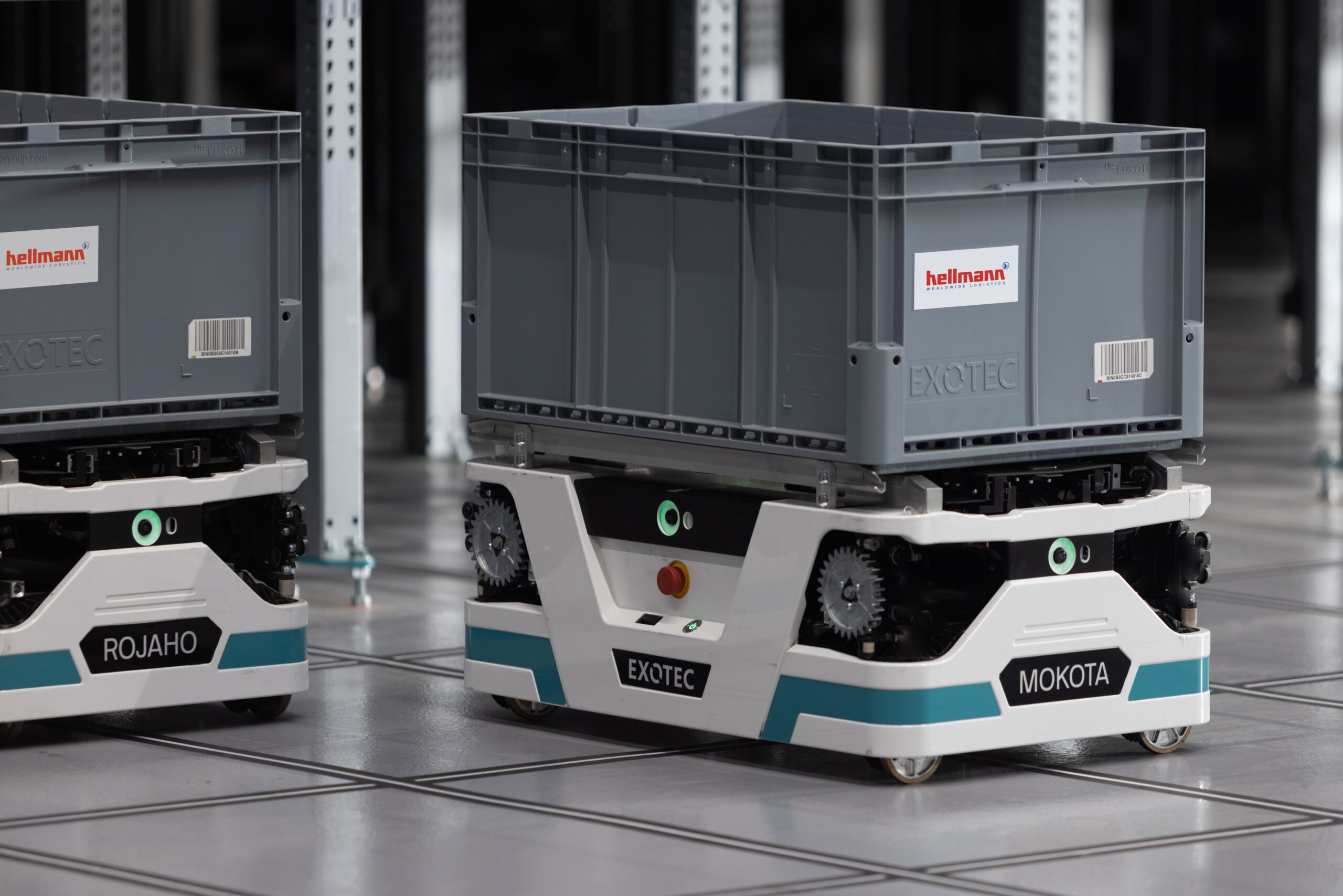
Autonomous robots will store and retrieve goods before transporting totes directly to picking stations, using a goods-to-person approach. The system will replace much of the site’s existing warehouse infrastructure, with Exotec’s Deepsky software coordinating the robots and other components. It processes real-time data, prioritises orders and manages the flow of goods and picking activities.

“By introducing this new automation solution at our Nuremberg site, we are creating the foundation to support future growth, continuously improve our operations and ensure a consistently flexible and high level of service for our customers over the long term,” says Daniel Schnuck, Director Global Warehouse at Siemens Smart Infrastructure.

Flexible automation for changing demand

The system is designed to scale as volumes increase, allowing Siemens to add storage capacity and picking stations with minimal effort. The combination of autonomous robotics and intelligent software is intended to improve efficiency, quality and space utilisation while providing flexibility to respond to changing operational requirements.

“Today automation is about much more than improving efficiency. It provides the flexibility needed to respond to rising volumes, market volatility and increasingly demanding customer requirements. In close collaboration with Hellmann and Siemens, we are implementing a project in Nuremberg that demonstrates how robotics and intelligent software can help shape the next generation of high-performance supply chains,” says Andreas Stöckl, eVP Sales Central Europe at Exotec.

For Hellmann, the project builds on its existing logistics relationship with Siemens, combining knowledge of the site’s processes with Exotec’s automation technology.

“Our strength lies in bringing customer requirements, technology and people together. As Siemens’ long-standing logistics partner, we understand the processes and requirements at the site. This enables us to work with Exotec to develop solutions tailored precisely to the operation. Ultimately, it is people and the trust they build that turn a technology solution into a successful partnership,” says Volker Sauerborn, Chief Operating Officer Contract Logistics at Hellmann Worldwide Logistics.

Shipping Faces “Patchwork of Decarbonisation Rules”

Shipping risks a costly patchwork of national and regional climate regulations unless member states of the International Maritime Organization (IMO) adopt its proposed Net-Zero Framework. The warning comes from maritime technology company PortXchange, ahead of a crucial IMO meeting following the failure of COP31 in Antalya to reach a final agreement on climate action.

COP31 closed on 22 November without an agreed final text. IMO member states now face their own decision at the 85th session of the Marine Environment Protection Committee (MEPC 85), scheduled for 30 November to 3 December, followed by a resumed extraordinary session on 4 December. An earlier attempt to adopt the framework was postponed in October 2025, following opposition and threats of trade measures from the United States.

“COP and the IMO are watching the same film,” said Sjoerd de Jager, Managing Director and Co-Founder of PortXchange. “A handful of countries whose economies run on oil and gas are blocking what most of the world has already said it wants. At COP they deleted the words. At the IMO, they went further and threatened the trade of anyone who voted the other way.”

Delayed action is affecting investment

The delay is already having consequences for shipping’s transition to lower-emission fuels, according to research cited by PortXchange. The UCL Energy Institute and Getting to Zero Coalition’s Climate Action in Shipping 2026 report describes last year’s failure to adopt the framework as “the single most transition-regressive event” in its five years of tracking.

The proportion of tonnage on order capable of running on scalable zero-emission fuels fell from 9.5% to 5.7%, while conventional-only vessels increased their share of the orderbook from 54% to 61%. Even if adopted at the forthcoming meeting, the framework cannot take effect before 2029.

The Global Maritime Forum counts 84 active green shipping corridors worldwide, but only four have reached the stage where vessels, infrastructure or fuel production facilities are being built or operated. PortXchange identifies the cost difference between conventional and low-carbon fuels as the main obstacle to progress.

“Nobody on the water is short of ambition. Owners are electrifying barges, trialling hydrogen-derived fuels and asking the IMO, again and again, for clear rules,” said de Jager. “What kills most corridors between pilot and operation is the operating cost: someone has to pay the premium on green fuel and electricity. The Net-Zero Framework is the only measure on the table built to close that gap worldwide and a few governments are holding it back while the rest of the industry pays for it.”

Regional rules risk creating additional costs

Without a global agreement, countries and regions are likely to continue introducing their own requirements. The EU already applies its Emissions Trading System (ETS) and FuelEU Maritime regulations to shipping, while the Netherlands and Spain have introduced additional national obligations for marine fuel suppliers.

The UK has also introduced a separate carbon price through the UK ETS, covering domestic voyages and emissions while vessels of 5,000 gross tonnes and above are in UK ports. Each additional regulatory layer creates further compliance requirements for operators trading across borders, potentially shifting costs and cargo between markets.

The UK Chamber of Shipping has called for any extension of the UK ETS to international voyages to be delayed until the IMO has completed its Net-Zero Framework negotiations. The decision expected on 4 December could therefore influence how far the regulatory patchwork extends into UK waters.

“If member states walk away again on 4 December, the IMO’s authority as shipping’s global regulator takes a hit it may not recover from,” said de Jager. “What replaces it is a patchwork of regional carbon prices and fuel rules and ships cross every border, so this industry will pay for that fragmentation more than any other.”

Ports and operators can act now

PortXchange is urging ports and shipping operators to pursue practical emissions reductions regardless of the outcome of the IMO negotiations. Coordinating vessel arrivals so ships can reduce speed at sea rather than wait at anchor can lower fuel consumption and emissions.

At the Port of Algeciras, real-time port call coordination using PortXchange’s Synchronizer platform reduced idle time per vessel arrival and departure by nearly 40%, avoiding an average of 32.9 tonnes of CO2 per port call.

The company’s EmissionInsider platform provides emissions measurement at individual port-call level, helping identify where investments in shore power and other measures could have the greatest impact.

“Member states have one job on 4 December: adopt the framework as it stands,” said de Jager. “Another year of delay is a decision too and the industry will remember who took it.”

He also urged the industry not to wait for governments to act. “Stop waiting for London. Every port and every operator can cut emissions this year with data and tools that already exist. If governments won’t lead, the industry has to and the companies that move now will be ready for whatever rules finally arrive.”

Gebrüder Weiss Expands Whisky Logistics to China

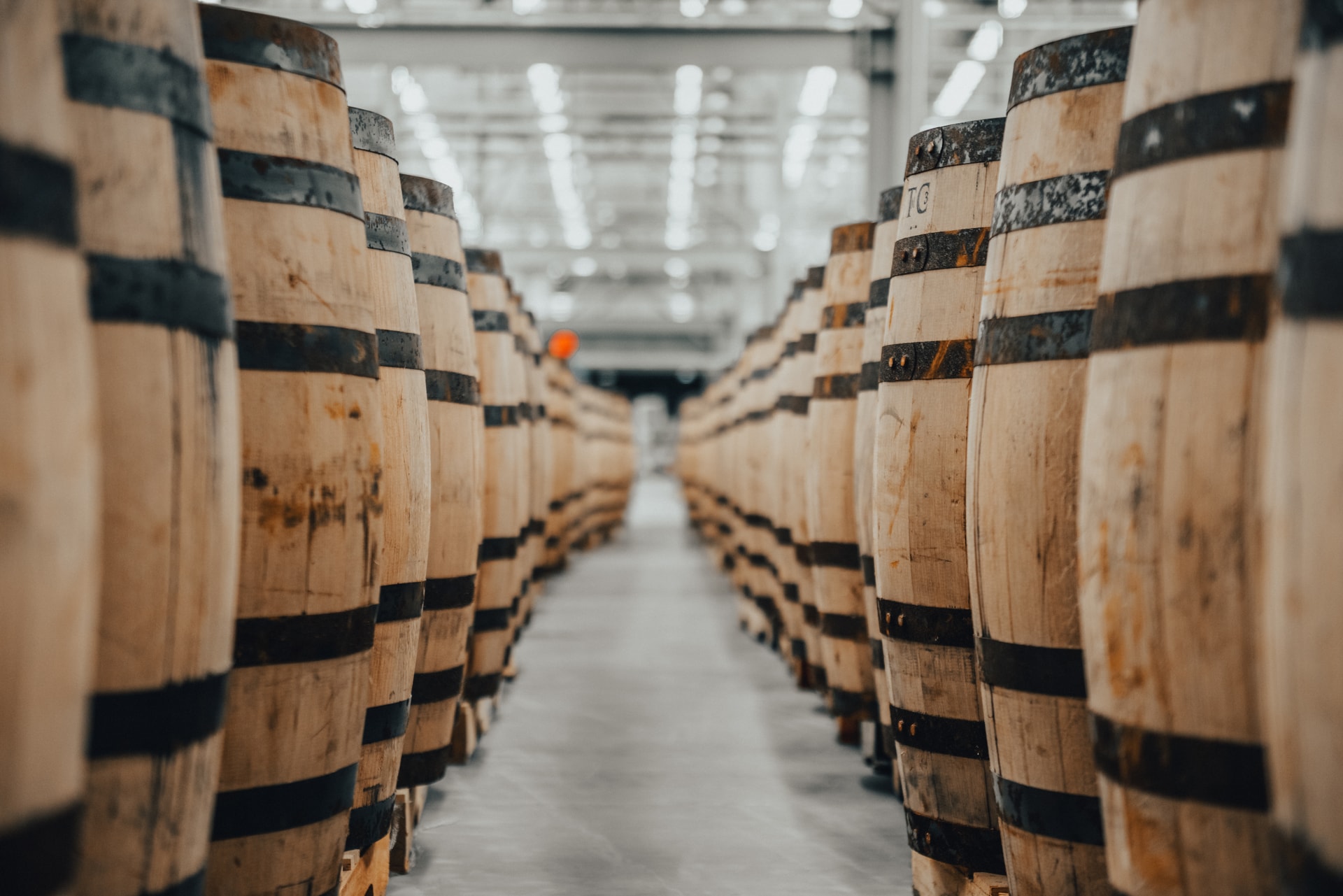
Gebrüder Weiss has expanded its logistics partnership with Shanghai Bacchus Liquor to include oak barrel shipments from the United States to China’s Laizhou Distillery in Sichuan province. The move builds on an operation established in 2024, when the logistics provider began managing shipments of barrels and raw materials from European suppliers to the whisky producer.

Since the partnership began, Gebrüder Weiss has transported more than 40,000 oak barrels from Spain, France, Portugal and other European countries to the distillery in Qionglai. It has also handled shipments of raw materials including malt and yeast, with the operation accounting for more than 500 ocean freight containers in total.

The expanded service now covers shipments from US barrel suppliers, with Gebrüder Weiss coordinating the transportation chain from supplier collection and export customs clearance through international shipping, import clearance in China and final delivery to the distillery.

“Gebrüder Weiss has a strong network of its own locations across Europe, China, and the United States. This allows us to coordinate shipments from different countries efficiently and manage the entire transportation chain through to Sichuan,” says Yongquan Chen, General Manager of Gebrüder Weiss China.

“Taking on shipments from the United States is an important next step in our logistics partnership with Shanghai Bacchus Liquor and reflects the customer’s trust in us.”

Supporting China’s growing whisky industry

The logistics operation supports the development of one of China’s largest whisky production sites. Founded in 2021, Laizhou Distillery released its first whiskies in 2024 and now stores around 700,000 oak barrels. Its facilities cover nearly 150,000 square metres.

A distinctive feature of the distillery’s approach is its use of more than 50 types of barrels from around the world. The different casks help shape the aroma, character and maturation of the whisky, making careful handling, accurate documentation and reliable delivery important elements of the supply chain.

“Careful barrel handling and reliable delivery are critical to our operations. Gebrüder Weiss has demonstrated not only extensive expertise in cross-border logistics but also an exceptional level of service and commitment. We greatly value this partnership and look forward to expanding it further,” says Luo Long, Deputy General Manager of Shanghai Bacchus Liquor.

The project reflects the rapid development of China’s domestic whisky market. Imported brands still account for around 85% of the market, but local producers are gaining ground as production expands and demand for oak barrels increases.

Gebrüder Weiss has maintained a presence in Sichuan since 2006, with a location in the provincial capital, Chengdu. The company also supports several leading Chinese baijiu producers with warehousing, e-commerce and distribution services.

The two partners are already exploring further logistics solutions, including the possibility of future exports of Laizhou whisky to international markets.

Subscribe

Get notified about New Episodes of our Podcast, New Magazine Issues and stay updated with our Weekly Newsletter.