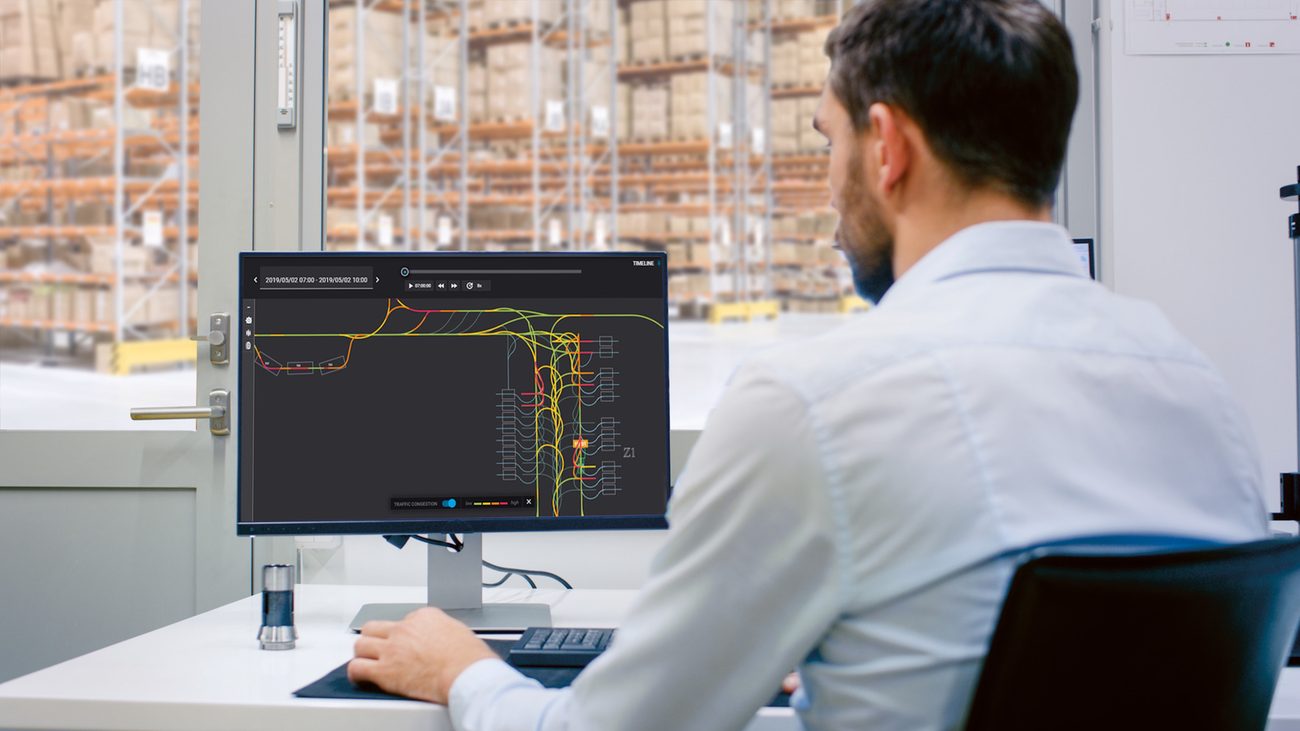
Clustag, a global provider specialized in RFID projects for companies in the retail sector, has launched ‘InLine’, its new division of solutions and services for intralogistics automation integrators. With a track record in the development and deployment of high-demand RFID solutions and experience in international projects, Clustag is making available to integrators, through InLine, identification, control and inspection technologies for logistics and industrial lines and flows, backed by technical know-how and specialized support.
Part of Clustag InLine’s technical expertise comes from Labelmasters, a company recently incorporated into Clustag to add experience in automatic label printing and application, as well as volumetric measurement and weighing systems.
“We have created this new business division to offer integrators a broader range of solutions that are easier to incorporate into their projects. We combine different technologies with technical knowledge and ongoing service to help them respond more quickly to their customers and give them the peace of mind of having long-term solutions and support,” explains Manolo Reguart, CEO of Clustag.
InLine includes automatic label printing and application systems, DWS equipment for dimensioning, weighing and scanning, machine vision, quality control, process validation, end-of-line operator stations and RFID. These solutions can be integrated into conveyors, sorters, order picking, e-commerce, parcel handling, packaging and dispatch, depending on the needs of each project.
“We want to become a technology partner for integrators, helping them find the solution that best fits each project and providing expertise, products and responsiveness whenever they need it. Our role is to make their work easier and give them the confidence of having a specialized team behind them throughout the project,” says Carles Barberá, Sales Manager at Clustag InLine.
For end customers, this offering translates into more traceable and efficient processes: automatic identification, verification of contents and shipments, dynamic measurement and weighing, error or damage detection and task automation at end-of-line operator stations. The goal is to turn data and images into operational decisions and prevent incidents before they impact production or service. “Our experience allows us to adapt each system to the real needs of each facility, since factors such as the product, line speed, application position or environment determine the solution required,” explains Giuseppe Vernone, Technical Manager at Clustag InLine.
The service includes 24/7 remote assistance, support via hotline and ticketing platform, troubleshooting by video call and the ability to provide on-site technical intervention.
Prologis has signed its first deal with Cadent, a 10-year lease for DC4 at Bromford Gate, one of Birmingham’s premier industrial and logistics parks. Located adjacent to its existing National Distribution Centre, the 80,000 sq ft DC4 enables Cadent to consolidate its Birmingham-based operations at Bromford Gate.
The agreement marks the start of a new relationship between the two companies, with Prologis working closely with Cadent to take a proactive and creative approach to the deal and building specification. With a lease agreement between parties reached in short timescales, Cadent is now undertaking fit-out works, with the ambition of becoming operational in DC4 in early in 2027.
Robert Martin, Real Estate Strategy Manager at Cadent, said:
“Bromford Gate is in a prime position for national distribution and with Birmingham being an important location for Cadent, the availability of the site was both well-timed and well-placed. We progressed quickly to secure the unit and look forward to being operational on completion of the fit out works.”
Cadent is the UK’s largest gas distribution network, managing 82,000 miles of pipes throughout the Northwest, East and West Midlands, East of England and London. The move will create approximately 100 new jobs in Birmingham, expanding Cadent’s local employment base and economic contribution to the West Midlands.
Tom Price, Leasing Director at Prologis, said:
“It’s been great to work with Cadent on this deal, which represents a new relationship for both companies. We look forward to doing more together in the future.”
The agreement adds to the established customer base at Prologis Park Bromford Gate, with GXO, Stellantis and Fischer Farms also operating from the park. It reinforces Bromford Gate’s position as a prime urban logistics location and demonstrates the value of a flexible approach that supports customer requirements.
With Bromford Gate now fully leased, Prologis’ available space in the West Midlands is currently concentrated at Prologis Park Coventry. Newly refurbished DC13 offers 228,000 sq ft of space, while DC8 offers 184,000 and is undergoing refurbishment scheduled for completion in December 2026.
At the recent European Supply Chain Summit in Düsseldorf, CILT International President Jan Steenberg (pictured, below) spoke to Peter MacLeod about AI, skills and the changing shape of logistics.
With AI taking more operational decisions, people entering logistics may have fewer chances to build experience in the traditional way. For Steenberg, President of the Chartered Institute of Logistics and Transport (CILT) International, that makes education and professional standards more important.
“An AI cannot be held accountable,” he told me. “Someone else needs to make the decision that makes them accountable.” As automation becomes more capable, planners and managers will need enough commercial and operational understanding to assess its recommendations and take responsibility for the decisions made.
That challenge sits alongside geopolitical uncertainty, decarbonisation and the need to attract new talent into a sector many people still discover only by chance. CILT’s role, Steenberg says, is to connect professionals and provide recognised training and education. “We connect people, we educate people,” he said.
Global Institute
CILT traces its origins to 1919 and received its Royal Charter in 1926. CILT International operates as a federation, setting education and membership standards while national institutes adapt their work to local conditions. It has representation in about 40 countries across every continent except Antarctica.
The Charter’s purpose is ‘to promote the arts and the science of our profession’. CILT offers training and internationally recognised qualifications in logistics and transport, supporting people from entry into the profession through to strategic leadership. Across the global CILT network, up to 10,000 students undertake studies each year. Student membership also provides opportunities to connect with fellow learners and professionals, joining a network that Steenberg says younger people increasingly value.
A membership collaboration app is in development to make those connections easier, including through specialist groups in rail, passenger transport, ports and shipping. Steenberg expects a wider rollout in 2027. “We are about networking, we are about connecting people, we are about learning from each other,” he said.
Skills for an Automated Industry
Steenberg worries that new entrants may know how to use automated systems without understanding their operational context. For CILT, the challenge is how to teach and assess knowledge that previous generations often gained through experience. The answer will help determine whether AI supports logistics teams or widens the gap between those who operate the tools and those who understand the business.
Members are also concerned about jobs being replaced and the effects of geopolitical change on sourcing, manufacturing and transport. Cost pressures are driving consolidation, but smaller operators being forced out can leave customers with less choice. Steenberg sees collaboration as one way to use existing assets more effectively. European manufacturers are pooling transport requirements and fleet capacity. He cites a major Australian retailer that has opened its distribution network to other users. In the UK, a telecoms company and an energy provider have combined parts of their field service operations. Such arrangements can reduce duplicated journeys, although they depend on trust and workable commercial agreements.
Technology and the Workforce
The economics of lower-carbon transport remain unsettled. Steenberg points to investment in ammonia-based shipping and says hybrid vehicles may be more likely than pure electric trucks in the near term, given current cost and range constraints. “Right now, these vehicles are incredibly expensive,” he said of electric trucks. Automated road transport could bring further change, particularly on trunk routes.
The driver workforce is ageing in many markets, while long periods away from home make the job harder to attract younger and more diverse people. To address this, CILT’s Turkish branch has started a programme, with Mercedes-Benz Trucks and government support, aiming to train and recruit 5,000 women into professional driving roles over five years.
Last-mile delivery will need different solutions for different needs. Parcel lockers can consolidate deliveries, but collection does not suit everyone, everywhere. Ageing populations and care delivered at home may increase demand for direct delivery of prescriptions and medical supplies.
Where roads are poor, drones can serve another purpose. Steenberg describes operations in Ghana delivering urgent supplies such as blood or medication to health centres. He says drones can reach destinations within a 100-kilometre radius in about an hour. “You couldn’t do that in Ghana with someone on a motorcycle,” he said.
As logistics becomes more visible, data-driven and automated, it will still need professionals who understand how supply chains work, recognise when assumptions fail and take responsibility for what happens next.
Pudu Robotics today announced the opening of its European headquarters in Neuss, Germany, strengthening its local operating capabilities as its business continues to expand across the region. The new HQ brings together sales, product demonstrations, training, warehousing and after-sales services, reinforcing Pudu Robotics’ investment in the local infrastructure and customer support needed to scale robotic deployments across European markets.
Scaled Deployment
The company’s business spans more than 20 countries across Europe, reflecting its expanding presence throughout the region. Over the past two years, markets including Germany, Austria, Switzerland, France, the Netherlands, Norway, the UK, Spain, Italy, the Czech Republic and Poland have each recorded annual business growth of more than 60%.
The company serves customers across 16 industries, including retail, food and beverage, hospitality, healthcare, transportation, education, and warehousing. Its European customers include groups such as EDEKA, Albert Heijn, Carrefour, Marriott, Van der Valk, Pizza Hut, Intermarché and Denner, as well as major transportation hubs such as Paris Charles de Gaulle Airport.
Next week in Amsterdam Pudu will hold a press event at its warehouse that Logistics Business will report from, with our particular interest in the T600, T300, T150 light payload industrial delivery bots and the MP2000 pallet handling robot.
Supporting deployments of this scale requires more than supplying robotic equipment. Pudu works with customers to adapt deployment plans to store layouts and operating patterns, while providing technical assistance and ongoing operational support. This combination helps customers integrate robotic cleaning into daily operations and expand its use across their businesses.
Building Local Capabilities to Support Customers
Pudu Robotics’ European growth is supported by an operating model built around local teams, regional partners and service infrastructure. The company continues to invest in local capabilities to strengthen collaboration with customers and partners and provide support throughout the deployment lifecycle.
Across Europe, Pudu has nearly 50 sales professionals supporting channel partners and customer projects, alongside nearly 40 technical support personnel serving different markets and deployments. Its local infrastructure includes a service centre in Germany and warehousing facilities in the Netherlands and Germany for whole-robot inventory and spare parts, helping support delivery coordination and service responsiveness.
The company also works closely with local distributors, system integrators and service providers to support market development, deployment and ongoing maintenance. Within its European subsidiaries, Pudu has established local organizational structures and operational objectives, with continued investment in sales and service teams, warehousing and local service networks.
By combining local market knowledge and service capabilities with its global technical resources, Pudu aims to help customers deploy robotic solutions more effectively across diverse operating environments. Multilingual support in English, German, French, Spanish, Italian and other languages further facilitates collaboration across the region.
Regional Hub for Growth
Located in Neuss, Germany, the new European headquarters brings together office operations, a product showroom, warehousing, training, sales, after-sales service and repair capabilities, all of which are now operational. The facility supports product demonstrations, customer engagement, distributor training and local service delivery, while providing a hub for coordinating regional business activities.
Looking ahead, Pudu Robotics will continue to develop its local operating capabilities, deepen collaboration with regional partners and expand the application of its robotic solutions across industries, supporting customers as robotics becomes increasingly integrated into everyday operations.
“Europe is an important growth market for Pudu Robotics. As adoption expands, customers need more than reliable robotic solutions—they need local teams and service capabilities that can support deployment and ongoing operations over the long term. Our European headquarters in Neuss strengthens our ability to work closely with partners and customers across the region and support the next phase of our growth,” said Bella Sun, Vice President and General Manager for Europe at Pudu Robotics.
Automating decisions is widely seen as a driver of productivity, innovation, and competitiveness. At the same time, it raises the question of how much control over decision-making we are willing to give up. How can we harness the potential of automation while retaining human oversight? And what does successful automation look like in practice?
In their paper ‘Targeted Automation and Sustaining Human-AI Learning,’ Kai Hoberg, Professor of Supply Chain and Operations Strategy at Kühne Logistics University (KLU), Christina Imdahl, Professor of Machine Learning in Operations Management at Eindhoven University of Technology, and William Schmidt, Professor at Emory University, make the case for targeted automation. Their approach is to automate decisions where human intervention adds little value, while keeping people involved where their input can lead to better outcomes.
Striking a Balance Between Efficiency and AI Improvement
Our research shows that companies should take a selective approach to automation. Rather than automating all decisions, they should deliberately retain human involvement in those decisions where people can help improve the algorithm. At the same time, sufficient human decision-making must be maintained to ensure that the algorithm can adapt to changing conditions
Kai Hoberg, Professor of Supply Chain and Operations Strategy at Kühne Logistics University (KLU).
This allows companies to strike a balance between short-term efficiency and continuous AI improvement, helping to ensure long-term success.
A Four-Step Approach to Targeted Automation
To put this into practice, the researchers developed a four-step approach to targeted decision automation.
Identify where human input adds value: First, they analyze when human corrections to algorithmic recommendations lead to better decisions.
Predict the value of human expertise: Based on these insights, the model developed by the researchers learns to predict when human expertise is likely to improve decision outcomes.
Automate decisions selectively: Decisions where human intervention is expected to offer little additional benefit are automated, while those where human expertise can add value remain in human hands.
Continuously improve the algorithms: Finally, human corrections are fed back into the system to refine and improve the algorithms over time.
How Human Expertise Improves Algorithms
“The crucial point is that it is not simply about leaving difficult decisions to humans, but about predicting which decisions actually allow humans to contribute to improving the system,” emphasizes Christina Imdahl, who earned her doctorate at Kühne Logistics University and is now a professor at Eindhoven University of Technology. This ensures that valuable human expertise continues to feed into algorithm development while still allowing for a high level of automation. “In our empirical application, we were able to automate around 84 percent of decisions,” she says. Professor Hoberg advises business leaders to take a gradual approach to automation, starting by establishing how they can measure the added value of human intervention.
This provides a basis for making targeted decisions about which tasks to automate and where human expertise is still needed
Humans and AI as Partners in a Dynamic System
For their study, the researchers analyzed an extensive dataset covering more than 475,000 order-related decisions processed over a four-year period at a major commercial vehicle manufacturer with annual revenues exceeding four billion euros. Their aim was to identify the circumstances in which humans outperformed the algorithm.
However, Hoberg, Imdahl, and Schmidt were not primarily concerned with the traditional question of ‘Who performs better: humans or AI?’ Instead, they sought to develop a model that views humans and AI as partners within a dynamic system. The goal is to relieve employees of repetitive tasks that add little value while ensuring that AI continues to evolve and improve through ongoing human feedback.
Ecommerce fulfilment provider FLEX., which operates a warehouse in Swansea alongside five sites in the EU, has opened its third German location. OSN3, in Lotte near Osnabrück in North Rhine-Westphalia, provides around 5,000m² (c. 53,800ft²) of storage with reserve space for expansion, and has been operating since 1st September 2026.
The site handles storage ahead of Amazon inbound, forwarding to Amazon fulfilment centres, FBA prep, B2C and B2B order fulfilment, returns and customs clearance. It is close to the Lotte/Osnabrück junction, where the A1 meets the A30 towards the Netherlands, about three hours by road from the Port of Rotterdam and within reach of Amazon’s inbound sites in Dortmund and Werne.
OSN3 joins WIL1 at the JadeWeserPort in Wilhelmshaven (opened in 2022) and MAG2 near Magdeburg (2023), giving FLEX. more than 15,000m² (c. 161,000ft²) in Germany. With CAM1 in Épinoy-Cambrai (France), KUT1 in Kutno (Poland) and SWA2 in Swansea, the network now covers more than 30,000m² (c. 323,000ft²), all run on one warehouse management system, myFLEX.
“For a company from outside the EU, Germany is usually the right place to start,” said Luke Peda, founder and chief executive of the FLEX. network. “It is the EU’s largest e-commerce market, it sits in the middle of the continent, and registering a new importer here is quicker than in several other large EU countries.”
Around 95% of FLEX. clients are based outside the EU, mainly in the UK, the US, Canada, Australia and India. Since 1 July 2026, low-value parcels sent to EU customers from outside the bloc, including from the UK, carry a temporary €3 customs duty per item category.
HelloFresh has selected Samsara as its telematics partner. After a successful pilot deployment in the Netherlands, HelloFresh Benelux will deploy Samsara across its entire fleet of more than 500 electric delivery vans, operating across more than 10 regional hubs.
In an industry defined by deep operational complexity, food e-commerce and meal-kit providers require unified, scalable technology to manage intricate logistics networks. Managing large-scale physical operations demands real-time visibility into driver safety, vehicle health, and temperature compliance, particularly for forward-thinking electric fleets across multiple hubs.
“At HelloFresh, innovation is at the heart of everything we do, from our kitchens to our final-mile delivery,” said Mark Sugirtharajah, Senior Director Logistics Europe at HelloFresh.
“Partnering with Samsara allows us to take our safety policies and operational practices to the next level. By providing our drivers with feedback on their driving style, we can proactively foster a safer driving culture, dramatically reduce on-road incidents, and better protect the communities we serve.”
HelloFresh Benelux will leverage Samsara’s open platform for advanced telematics, real-time safety coaching, and temperature monitoring to protect food quality. Drivers will utilise the Samsara Driver App to streamline daily workflows, while the entire platform integrates seamlessly into HelloFresh’s existing proprietary IT landscape.
“HelloFresh is a global pioneer in food tech, and we are excited to be selected as their long-term partner to digitise their physical operations in the Benelux,” said Ryan Yu, VP of Product at Samsara.
“By moving away from siloed systems and embracing our integrated platform, HelloFresh is establishing a new benchmark for how modern, sustainable fleets operate. This collaboration demonstrates how Connected Operations can empower teams to protect their drivers, safeguard their cargo, and run more efficient networks in real time.”
Blue Yonder has just released its 2026 Consumer Retail Returns Survey. It found that 89% of UK shoppers would shop less often or stop shopping entirely at a retailer that limited their ability to return items because they returned too frequently – the highest proportion across the five markets surveyed.
The survey polled more than 5,000 consumers across the UK, US, Australia, France and Germany, including 1,001 UK consumers. It asked how they shop, what they send back and how they respond when retailers tighten the rules. It found that UK consumers are highly resistant to return fees and remain sceptical of AI’s ability to recommend the right size or fit.
Key findings:
35% of UK consumers have stopped shopping at a retailer that implemented a stricter returns policy in the past year, while 52% have chosen one retailer over another purely because it offered a better policy.
25% of UK consumers make a return at least monthly, around half the proportion in France (48%) and Germany (46%).
Only 17% would trust AI to recommend the right size or fit, while 37% would not trust it at all – the highest proportion across the five markets surveyed.
Of the 23% of UK consumers who have purchased a product after receiving an AI recommendation, 41% have returned one in the past year.
Gen Z Drops Retailers Over Stricter Policies, but Boomers Walk When Flagged as Frequent Returners
Over half of UK respondents (52%) said that they have decided to buy from one retailer over another purely because it had a better returns policy. More than one-third (35%) have gone further and stopped shopping altogether at a retailer that implemented a stricter returns policy in the past year. Gen Z (52%) and Millennials (45%) were more likely to have stopped shopping with a retailer after it tightened its policy, compared with Gen X (31%) and Baby Boomers (19%).
The gap partly reflects how often each generation returns purchases. Thirty-seven percent of Gen Z and Millennials return a purchase at least once a month, compared with 12% of Baby Boomers, so a stricter policy affects them more often. The pattern flips when a retailer singles shoppers out. If a retailer told them they return too often and limited their returns, 62% of Baby Boomers would stop shopping there entirely, compared with 39% of Gen Z.
Despite reacting most strongly to return restrictions, UK consumers return products far less frequently than those in the other European markets surveyed. Only 25% make a return at least once a month – roughly half the proportions in France (48%) and Germany (46%), and just 14% had a return rejected during the past year, compared with 32% in France and 30% in Germany.
Retailers are adopting new tracking technologies, such as using AI to monitor return histories and flag frequent returners. When asked about the practice, 36% of UK respondents called it a fair way to control costs and 19% said it would not affect their shopping. However, 22% said it is invasive and would make them shop elsewhere.
“The instinct when returns go up is to tighten the rules,” said Duncan Angove, CEO of Blue Yonder.
“But the data tells you how that ends. Flag shoppers as frequent returners and limit their returns, and nearly nine in 10 say they’d cut back or walk away. And some of your most frequent returners are your best customers. The challenge is telling the difference between a shopper who abuses returns and a loyal customer who simply returns a lot. That takes systems that can set the right policy for each customer and handle every return as quickly and cheaply as possible. Done right, returns stop being just a cost and instead start earning loyalty.”
AI Recommendations Fuel UK Consumer Returns
Nearly a quarter (23%) of UK respondents said they have purchased a product after receiving a recommendation from an AI tool or assistant, such as a consumer chatbot. Of those, 41% have returned an AI-recommended purchase within the past year. Among UK shoppers who returned an AI-recommended purchase, the most common reasons were that it was different from its description (37%) and an incorrect size or fit (26%).
Younger consumers are more likely to shop with AI. More than a third of Gen Z (37%) and two in five Millennials (42%) have purchased a product after receiving an AI recommendation, compared with 13% of Gen X and 5% of Baby Boomers. More than half of Gen Z AI shoppers (56%) have returned an AI-recommended item in the past year. Trust also wanes with age. While 17% of all UK respondents would trust AI to recommend the right size or fit, that ranges from 25% of Gen Z to just 6% of Baby Boomers.
“Shoppers are taking AI’s advice faster than retailers are getting ready for it, and nearly half of them are sending something back,” added Angove. “That’s not really an AI problem. It’s a data problem. An AI assistant is only as good as the product information it can find, and most product data was written for a search bar, not for a machine suggesting products for someone. When what arrives doesn’t match what the shopper expected, it goes back in the box.”
Consumers Want Free and Easy Returns, but Accept Alternatives
Free and fast returns matter most to UK shoppers. For 43%, free returns shipping is the most important factor when returning an item, followed by fast or instant refunds (29%). If presented with a fee to return a product, 59% of UK respondents said they would not be willing to pay. Resistance increases with age, ranging from 38% of Gen Z and 49% of Millennials to 69% of Gen X and 70% of Baby Boomers.
Consumers are also accepting ‘keep it’ returns and alternative incentives in exchange for not making a return. Nearly three in five (58%) UK respondents have been told by a retailer to keep a product they wanted to return in the past year, up from 50% in 2025, with 67% of those saying it made them more likely to shop with that retailer again. For retailers, a keep-it refund can make economic sense when the cost of shipping and processing a return exceeds what the item could be resold for, provided they can identify shoppers who might take advantage of it.
Respondents would also accept a discount or partial refund (31%), store credit for a future purchase (30%), or a discount on a future purchase (27%), while 31% would not accept any offer in exchange for not making a return. More than half (56%) are concerned about the environmental impact of returned products ending up in landfill. Among this group, 30% would prefer to resell the product themselves and 23% would donate it to charity.
How does a major materials handling supplier maintain brand loyalty and continue to grow its products and sales? David Priestman visited Jungheinrich UK’s ‘solutions showcase’ open day in Warrington, UK to see new its warehouse trucks and understand the company’s gambit.
Despite the advance of warehouse automation systems and robotics, demand for traditional forklifts, reach trucks, VNA trucks and pedestrian warehouse vehicles remains robust. Retail warehouses and third party logistics operators are still the biggest users. Increasingly these fleets are electric, with Jungheinrich’s sales split fairly evenly between lithium-ion and lead acid battery power.
Safety First
“Safety should never be viewed as a cost, but as an investment,” UKMHA’s Rob Fisher told the audience. There are still, remarkably, 1500 serious injuries from forklift accidents every year in Britain, despite stringent legislation and full accident investigations. Are they all preventable? Good driving should be rewarded, Fisher says, allied with the usage of product and warehouse equipment such as pedestrian detection, speed control, cameras, access control, impact monitoring, rack protection and truck telematics.
The new EFG 2 and 3 series electric counterbalanced forklifts are the ‘bread and butter’ of Jungheinrich’s expansive fleet. Featuring a patented super-thin A-frame these trucks offer enhanced levels of visibility. Ergonomic advances are at the fore too, with additional leg room and an adjustable steering column that, impressively, can be moved up, down, in and out by the operator, as can the arm rest.
The display screen on the EFG is now at eye level and the 12mm polycarbonate roof option is both extremely strong and largely transparent, permitting the driver to look up and have more light in the cab overall. Automatic fork levelling keeps the mast in a 100% vertical position, dependant on the truck itself, which might not always be on a flat surface and could be on a slope. The rear camera distinguishes people from solid objects and then switches the forklift to a ‘red zone’ slow mode.
Transition to Electric
Electrification is a strategic, corporate decision these days but getting enough power to a distribution centre site is not always guaranteed. Luke Gardner has an unusual job title for a materials handling company – Energy Infrastructure Manager. He’s leading a new, separate energy department of consultants to support customers with an end-to-end process, whether that be on greenfield or brownfield sites. “If you spoke to someone a few years ago about energy they’d be talking about what battery that they wanted (full li-ion or not), but now it’s about having the right power at the right time,” says Tim Marriott, National Sales Director. “A lot of the time my sales team will start off discussing a solution and then decide they need to talk to the power expert, so it’s important to bring them in at the start.”
Every warehouse has a set power level that comes in and that is controlled by the grid. “We break its usage down according to EV charging (cars and CVs), lighting, offices etc and then calculate what electricity demand will come from the materials handling equipment (MHE). We have to make sure we get the power we need and get in there early,” Gardner tells me. That demand could be for a three-shift 24/7 operation or a two-shift, 5-day set-up and Gardner’s role is to simulate operations, dive deep into data and carefully consider what is feasible. A strong reputation for finding energy efficiencies can help secure contract wins, he states.
The Right Charger
Charging does not always have to be superfast. “There’s a lot of fearmongering out there about how much power lithium-ion needs,” Gardner says. “There’s no need for maximum charge as getting through the shift or to a break is sufficient. There’s usually a shift break, for team briefings for example, which creates a window for charging.” Very rarely are all machines on charge.
I asked him what proportion of total power usage in the DC can be taken for the MHE. “It depends on the size, but could be 50 or 60%,” is the surprising answer. “When handing-over a new system we manage the energy consumption and save power by changing shift patterns and determining the best battery and charging combination and infrastructure to use. It’s important to choose the right charger because that’s what pulls the most power,” Gardner informs me. This active load management or energy management system talks to the chargers and sets safe limits. It can vary charger levels, turn down the power and collaborate with the DC’s solar power system. His team are also exploring energy storage off the grid as the costs of those batteries have dropped. The sun’s rays during the day could power automation at night.
What we are hearing from customers is that the pressure to do more with less isn’t going away. Businesses are looking at how they can improve productivity, make better use of space and strengthen safety, while keeping a close eye on costs. For us, it is about understanding the challenges our customers face and working with them to find the right approach for their operations
Stephen Saunders, Managing Director of Jungheinrich UK & Ireland
Speedy Lifting
Jungheinrich built its first reach truck in 1956. Seventy years on the new ETV series has been launched, with 2i, 3i and 4i versions that come with lead acid or lithium-ion power. There is also an integrated pure li-ion option, made without using any derivative products, which comes in a more compact chassis, with the same lift height and a narrower turning circle.
With an 8.6m maximum lift height the ETV is fast in raising its forks, with a lifting speed of 1.2 m/s. Such speed raises productivity as more pallets can be picked per hour. The low stepping-on height of the new ETV2i, a mere 42cm, is ideal for operators that hop on and off the reach truck during shifts, whether that be to add labels, remove shrink-wrap or other quick checks. Being able to slide in without a step up creates more room in the cab.
Experience Matters
Karen Taylor-Ronson is National Customer Services Director at Jungheinrich UK & Ireland. She has been with the business for twenty-six years. Responsible for leading customer service operations, her focus is in delivering exceptional customer experiences and building long-term customer partnerships. Her long tenure is testament to this dedicated approach. “Brand loyalty is probably bigger now than when I joined the company,” she tells me, estimating that 80% of turnover is from recurring business and renewals. “We do a very good job with our customers when they’re in the initial contract stage. A lot of the loyalty comes from our service.” Most (60%) truck contracts are a 5-7 year lease or 12-month CAPEX purchase agreements. Major customers are too numerous to mention.
Jungheinrich’s approach utilises customer relationship surveys and transactional surveys, plus area sales manager feedback to provide KPIs in a dashboard for review. “We have a global initiative called CARE, which is our customer centricity platform. We monitor it closely,” Taylor-Ronson adds. Every time an engineer makes a visit a survey is sent out. “The transactional surveys give us more feedback as tickets can be raised and routed to the relevant person.” Unsurprisingly it’s the very good or sometimes bad experience that gets reported most, both from corporate and smaller customers. The objective is for day-to-day consistency at a high level.
Selling across such an extensive product portfolio provides opportunities to grow and satisfy customer needs. “That’s everybody’s objective, selling add-ons that give the right solution, including safety and fleet management systems (FMS).” FMS provides safety and usage information to managers. Remote diagnostics are a useful recent addition to the service. “We know when your truck has a problem and needs servicing before the customer does.” Automation customers are understandably more likely to buy WMS from Jungheinrich than those just buying forklifts and other trucks. “Every day is an opportunity to give the customer a better experience with us, and we know which customers are coming up for renewal next year,” Taylor-Ronson concludes.
As the cost of diesel has reached an all-time high, experts at fleet telematics provider Radius say now is a more important time than ever for fleet operators to tackle one of the biggest culprits of fuel wastage: idling. They have revealed how much fuel fleets could be losing to idling and shared their top tips for reducing it.
Jolawn Victor, CEO of Telematics at Radius, comments:
As diesel prices have reached their highest to date, it’s more important now than ever to consider how your team’s driving habits could be impacting your fuel consumption, and idling is often one of the biggest culprits of wastage. Even small changes can result in significant cost savings over time, especially for large fleets and heavy vehicles such as HGVs
The cost of idling can go beyond just fuel consumption. However, according to Radius, idling doesn’t just affect fuel consumption; it can also cause wear and tear on the vehicles themselves that can quickly become expensive. This can include:
Carbon build-up: When a vehicle is idle, it doesn’t burn fuel as completely as it does during acceleration. This partial combustion process is more likely to leave carbon deposits in the engine, reducing the fuel efficiency of the vehicle long-term.
Engine stress: While an engine is idling, less oil is being used to lubricate it. This can cause dirt buildup, which creates friction and causes wear and tear between the components.
Oil complications: Certain parts of the engine may not be completely sealed while the vehicle is idling. This can cause hot gas to leak into other components and damage the oil film.
Radius also adds that an idling engine may produce twice the carbon emissions of a moving car, meaning that if your fleet frequently idles, it can offset your impact reduction efforts and reverse your progress towards carbon neutrality.
How vehicle tracking can help operators reduce idling among fleets
From high repair costs to extra fuel usage, idling can throw a spanner in the works for any business. If your drivers are frequently idling in their vehicles – especially in vans or HGVs – it’s important to take steps to prevent the behaviour in future.
Victor recommends:
Vehicle tracking is one of the most effective ways to make sure your vehicles are being driven efficiently. By adding GPS trackers to your fleet, you can monitor driver activity and pinpoint problem areas like excessive idling. Since idling is a difficult problem to catch, tracking the whole vehicle is a good way to catch habits you might otherwise miss
Idling is a costly habit, both for your business’ bottom line and the environment. By understanding the impact of idling and implementing strategies to minimise it, fleet managers can significantly improve fuel efficiency, reduce emissions, and save money for their business.
Subscribe
Get notified about New Episodes of our Podcast, New Magazine Issues and stay updated with our Weekly Newsletter.
Download LB Media AppGet faster access to news, podcasts, magazines and your saved content.