Multidirectional Maestro of Long Loaders

Long loads, heavy loads – think Hubtex. Paul McNally, MD of Hubtex UK, tells Paul Hamblin about the company’s ethos and the reasons for its continuing success.

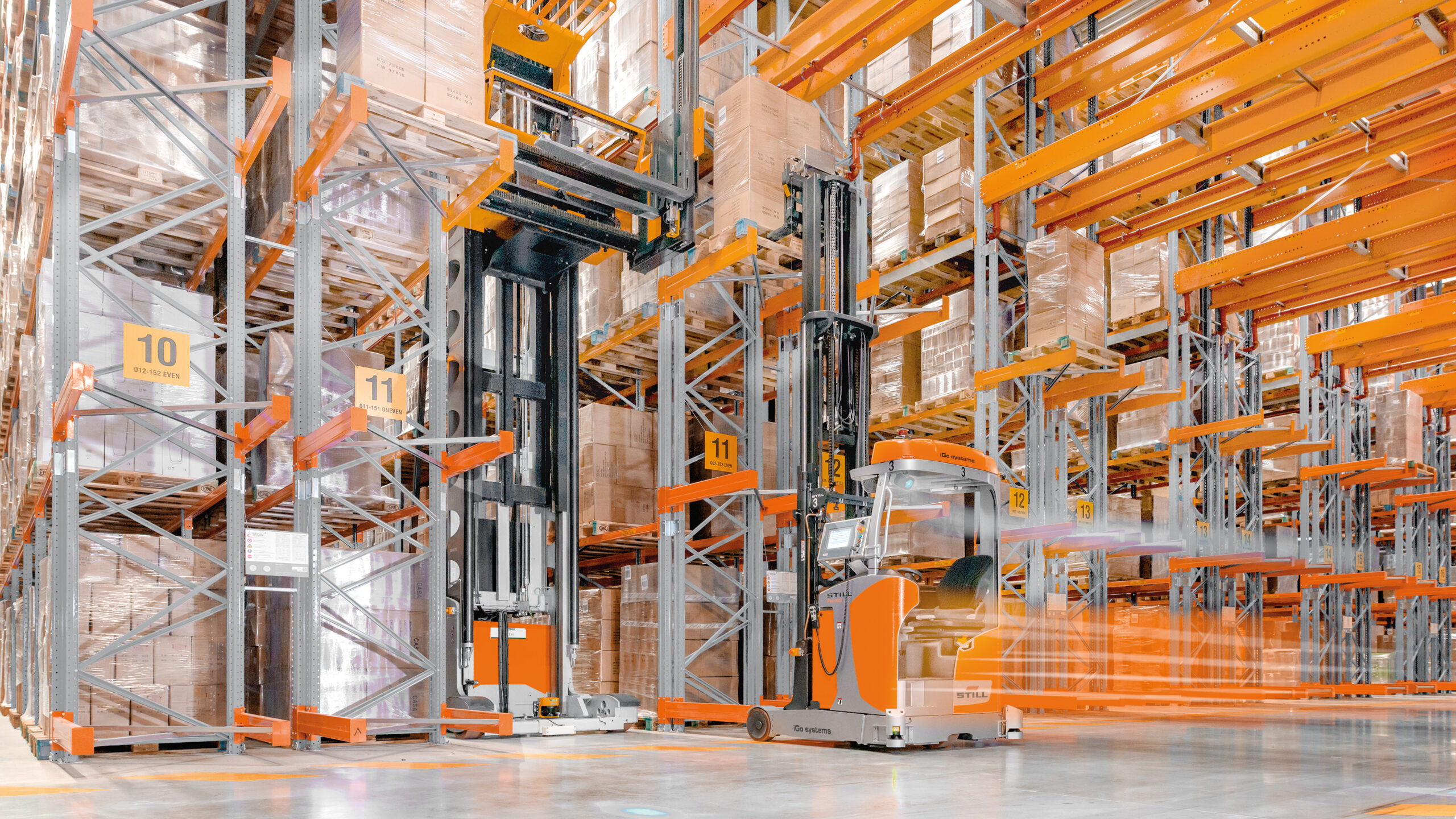
German-founded Hubtex is a big beast in global logistics, both for the capability of its long load specialist sideloader trucks, and for the reliability and durability of its machines. “Clients are looking for more than just a truck with us, they are looking for something they will use for 10, 15 years, even longer,” points out UK MD Paul McNally (pictured, below). “We have trucks still running with clients in the UK that have been in place for over 30 years, which is even older than Hubtex UK. They came from Germany and they’re still doing great service to this day.”
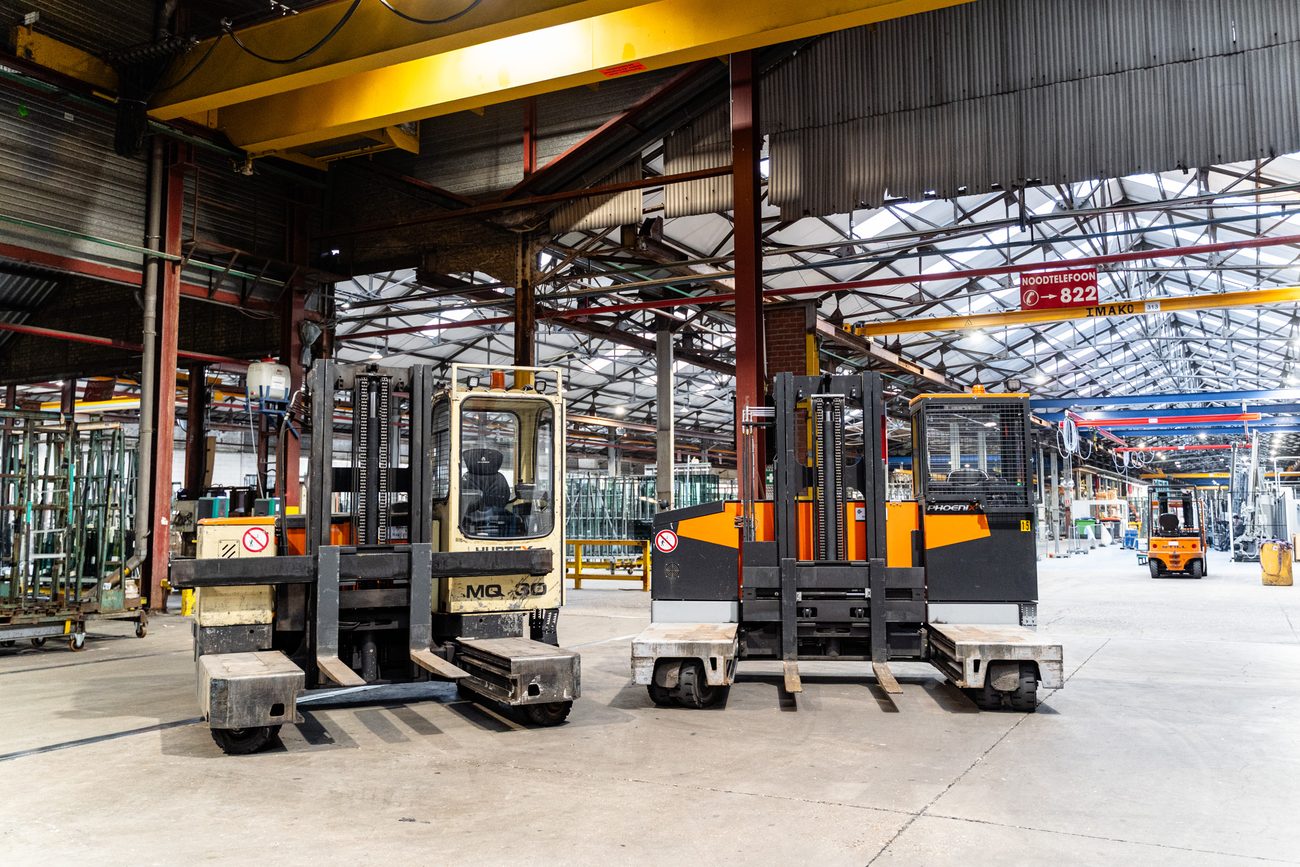
It’s a neat illustration of one core Hubtex strength – proven engineering reliability. Other qualities highlighted by Paul McNally include premium quality, safety and technical innovation, encapsulated by its hugely successful embrace of electric battery technology, no mean feat when your brief is to manufacture trucks that need the power and range to perform 24/7 shifts in heavy-duty environments, such as the timber, glass and steel sectors. Sceptics used to say that electric would never have the ‘oomph’ to cover such needs.

Our basis is electric and has been for many years.

The Hubtex magic is the company’s ability to meet specific customer needs, he says. It is about much more than picking a truck out of the catalogue.

We’re focused on a whole solution rather than selling a unit,” he explains. “We look at the complete warehouse. We’ll work with the client to explore how they can improve operational efficiencies across the board. That might include picking, or movements, safety, training times. It’s our forward-thinking in terms of the innovation embedded in systems and solutions that gives us that extra edge.

Return on investment

Hubtex customers need trucks that can answer tougher questions, for longer; 24/7 requirements are increasingly common. He agrees that this can make the trucks more expensive than competitors he regards as less versatile. “We’re not focused on volume, so the ROI has a different profile. Our units last longer, with more uptime and run time. That’s where the wins come from for our customers.”
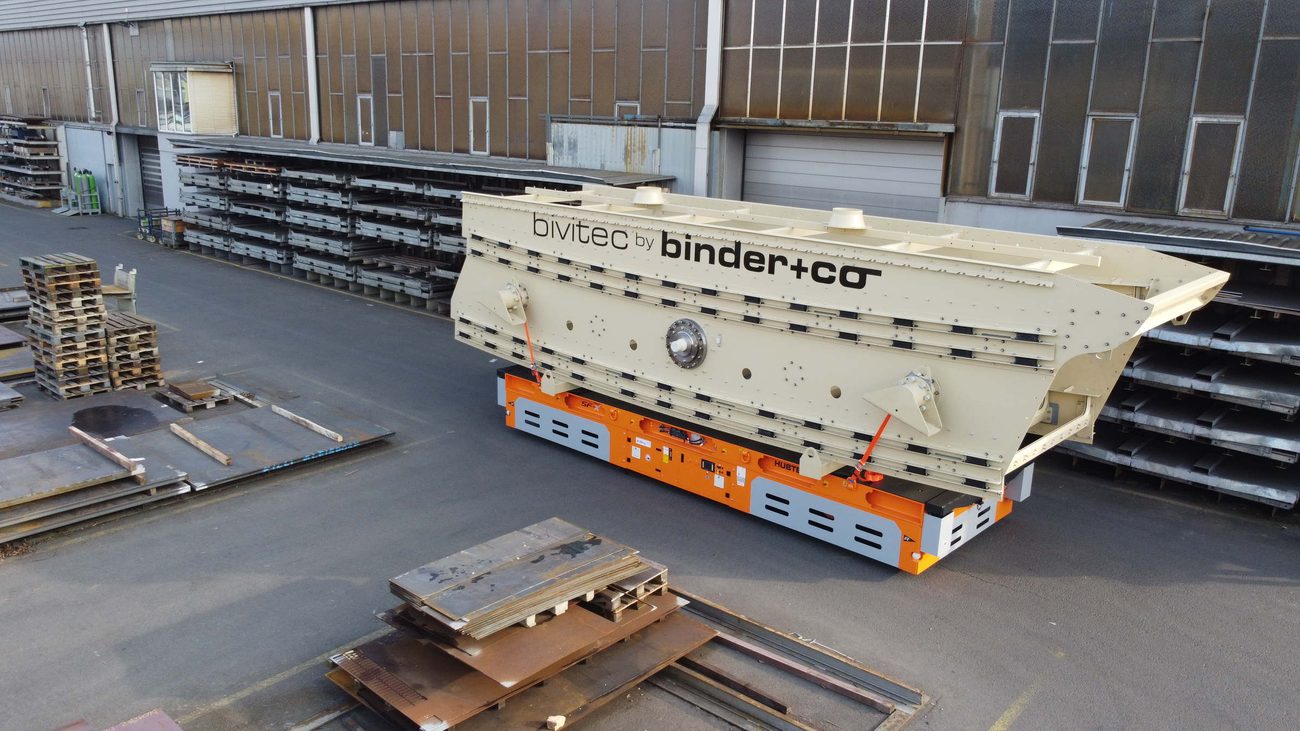
Key markets for the company in the UK are those with obvious long-load needs – fenestration (glass), plastic extrusion, and steel are typical. Automotive, aerospace and their feeder supply chains are all part of the picture. A recent success in the timber industry answered the needs of a client wishing to move deeper loads in a reduced working space area. A high-precision, highly manoeuvrable truck from Hubtex made all the difference.

We are more like consultants than sellers of product… What can the units do for you that allow you to improve your business operations as a whole?

The process is about working through current processes with the client.

The first thing we look at is what they are doing today. A customer might come to us asking for a 3 or 5 ton machine; we say, ‘Don’t look at the machine in isolation, let’s look at what you’re doing day to day.

A recent example involved a client with which the Hubtex team was already familiar. Changing customer circumstances meant that the client was lacking the extra capacity to increase outputs.

“It was a fixed warehouse, everything was already in place and they needed to improve that. So we started to look at the trucks, then we introduced new systems, such as aids to help operators drive into racking systems; they press a button and the truck drives into an area more quickly and easily.” The result is more output, more speed. He adds that the solution is a good example of an innovation developed with colleagues in Germany on another project then expanded and migrated to other markets.

Guidance Systems

What matters to the client in these discussions? “Cost is always a factor, of course, then the size of the operation, the envelope they have to work with. Can we reduce the space and therefore increase the amount of racking? Are they open to using additional tech, such as guidance systems, safety systems? We’ve done a lot of work with the truck’s intelligence to take things away from the operator. He or she can then concentrate solely on the movement of materials, whereas the truck as a unit has greatly increased ability to support the operator. Guidance to automatically adjust steering when required is one example.”

Staff resource headaches are successfully addressed with this approach, he says.

It means that training time is reduced, safely and fairly. We know that resource is an issue for our customers, just as it is across the logistics industry. Now, where it used to take a customer three months to progress an operator to the right level of ability and confidence, that process can now be completed in only three weeks. It means clients can recruit from a much larger pool of people, because the skill set now required is less onerous. And that small difference can make a much larger difference later on, in the increased uptime of trucks, powered by very sophisticated, very large lithium batteries and charging system, enabling 24/7 ops. So output is boosted. We were already running a very efficient system, but we found ways to squeeze more out. It brings us back to that core ethos – the question is not about trucks, its about the customer programme and their business needs.
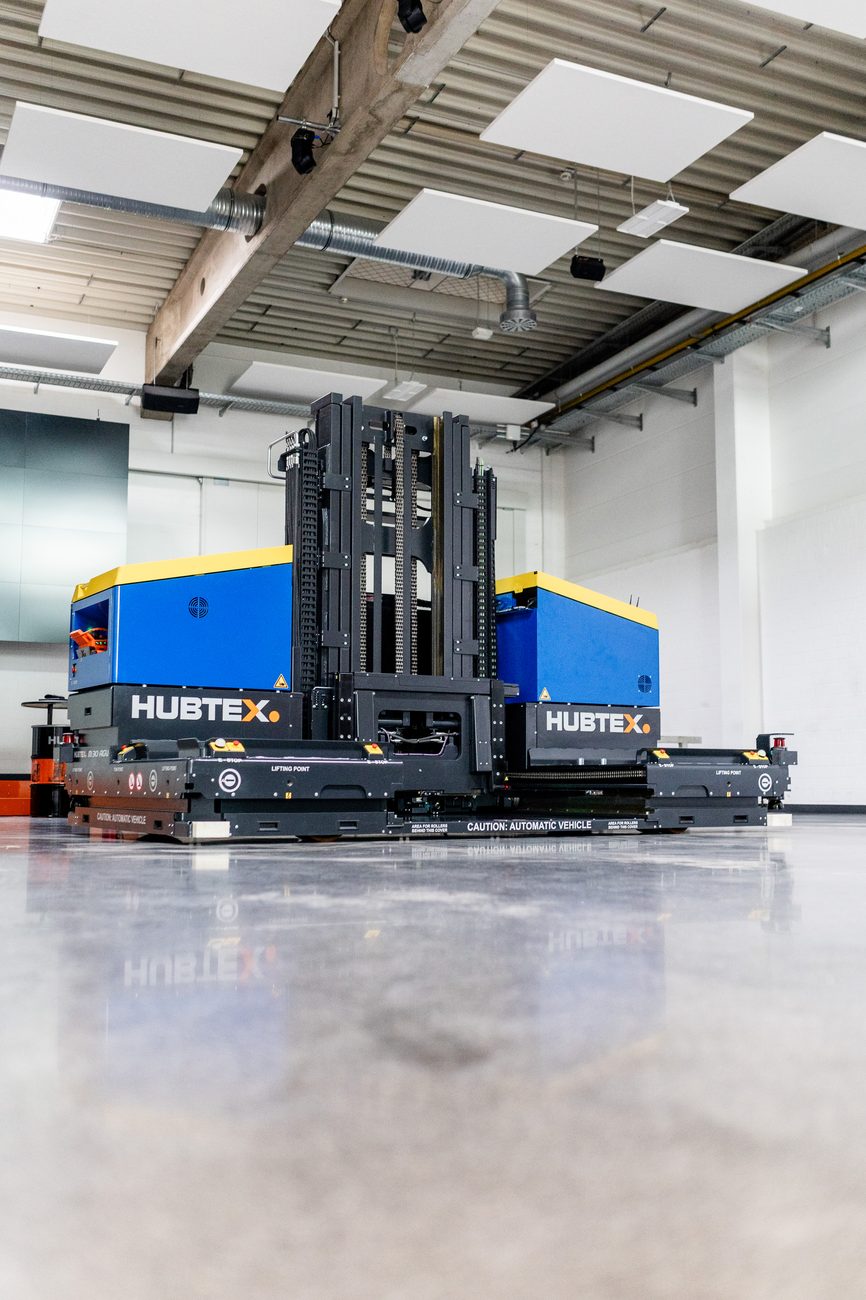
The truck has a lot more to do in today’s logistics, and for longer. “Customers need the trucks to integrate into their wider infrastructure, linking to the WMS and providing continuous data. It’s much more than a forklift.”

New markets with hyper-stringent testing requirements, such as renewable energy and the nuclear sector, are also now coming to Hubtex. “They are coming to us not only because we have the skills and expertise to a very advanced level, but also because our unmatched level of detail and reliability supports their rigorous testing needs. Customers with a challenge of that nature know we have the knowledge to work with them successfully.”
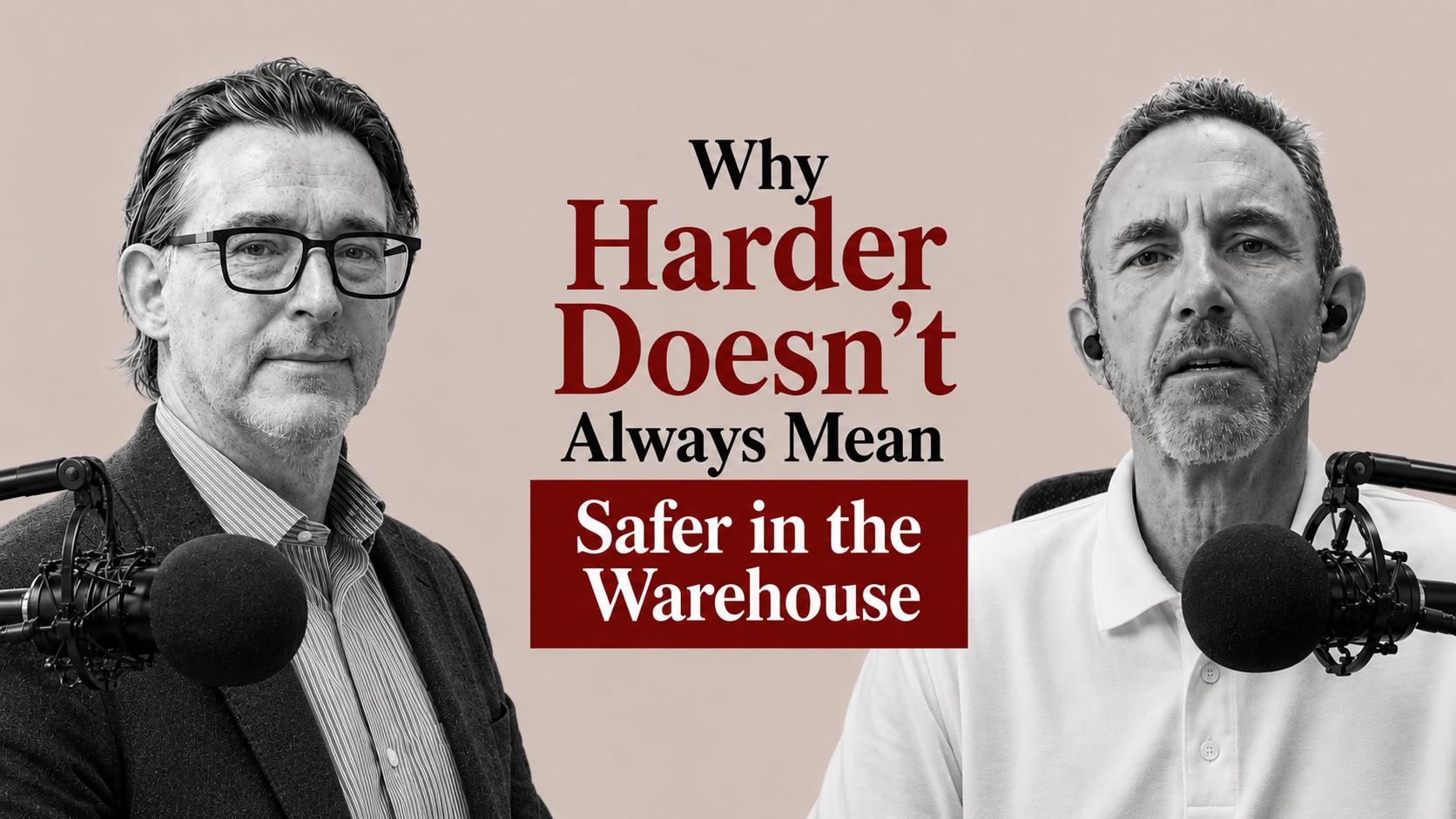
Why Harder Doesn’t Always Mean Safer in the Warehouse

When a forklift hits warehouse racking or a structural column, the obvious assumption is simple: the stronger the protection, the safer the warehouse.

But what if that assumption is wrong?

In the latest episode of Logistics Business Conversations, editor Peter MacLeod speaks with James Ryan, founder of Sentry Protection Products, about what really happens in the split second when several tonnes of materials handling equipment meets critical warehouse infrastructure.

Are Warehouses Getting Impact Protection Wrong?

With almost three decades spent developing warehouse protection systems, Ryan has seen first-hand how seemingly small decisions around safety can have much bigger consequences.

The conversation gets into the surprising physics behind forklift impacts, why some conventional approaches to protection may not work in the way operators expect, and the potentially significant costs hiding behind what initially looks like a relatively minor warehouse collision.

And it isn’t only about protecting racking.

From structural columns and forklifts to employees, downtime and productivity, one collision can have consequences that spread much further through an operation than the visible damage suggests.

Could Simpler Technology Make Warehouses Safer?

MacLeod and Ryan also look at some of the technologies changing warehouse safety, including new approaches to impact protection and collision avoidance, before turning to a bigger question: what happens as automation and autonomous vehicles become increasingly common in warehouses?

Ryan’s answer might not be what you expect.

As warehouses become smarter and more automated, the technologies that make the biggest difference may not necessarily be the most sophisticated.

So, when it comes to protecting a warehouse, how hard is too hard – and are we thinking about forklift impacts in completely the wrong way?

🎧 Listen to the full episode of Logistics Business Conversations below.

Volatile Markets Put Pressure on Procurement

“Secure it cheap now, rather than buying it later.” For years, this principle underpinned freight procurement strategies. However, that logic is becoming increasingly outdated, writes Bernhard Schmaldienst (pictured, below), Associate VP Transporeon Products at Trimble.

A combination of rising trade barriers, geopolitical instability, energy price shocks, and volatile demand cycles has fundamentally reshaped the operating environment for global supply chains. Predictability, once the foundation of procurement planning, has become the exception rather than the rule.

In this new reality, traditional procurement models are struggling to keep pace. Conventional tenders rely heavily on historical data and the assumption of relatively stable conditions. Yet freight markets now shift in much shorter cycles, with routes, capacities, and costs constantly in flux. As a result, the gap between planning and execution is widening, creating inefficiencies that are becoming harder for businesses to absorb.

Ghost Lanes or Uncertain Capacities?

One of the clearest examples of this mismatch is the persistence of so-called “ghost lanes.” These occur when pre-secured Full Truckload (FTL) capacity goes unused. On average, up to 70% of contracted capacity is not fully utilised. While such agreements are designed to provide cost certainty and security of supply, they can ultimately have the opposite effect. Unused capacity still carries a cost, and when it is not called upon, it creates inefficiencies for both shippers and carriers.

For carriers, blocked capacity limits their ability to optimise routes and maximise utilisation. Over time, these inefficiencies are priced back into future contracts, driving up costs for shippers. What was intended as a safeguard against volatility instead becomes a contributor to it.

At the other end of the spectrum lies the spot market. Short-term procurement offers flexibility, but it introduces its own set of challenges. Operational complexity increases significantly, with tenders often managed manually and under tight time constraints. Price transparency can be limited, making it difficult to benchmark effectively, while fluctuating capacity availability reduces predictability. For many organisations, relying heavily on the spot market is simply not sustainable at scale.

How AI is reversing the tender process

This tension between long-term rigidity and short-term unpredictability is forcing procurement teams to rethink their approach. Increasingly, the focus is shifting toward solutions that can combine flexibility with efficiency, without adding further complexity. This is where AI-supported autonomous procurement is beginning to play a transformative role.

Rather than treating procurement as a periodic, event-driven activity, autonomous procurement enables a continuous, dynamic process. It allows organisations to respond in real time to changing market conditions, rather than relying on static assumptions set months in advance.

At the heart of this approach is a fundamental shift in how offers are generated. Traditionally, carriers calculate and submit bids in response to tenders. In an AI-driven model, this process is reversed. Shippers use algorithms to generate market-based offers themselves, drawing on a combination of historical data, real-time freight and spot rates, predefined pricing parameters, and logistical and sustainability considerations.

Crucially, these systems can also incorporate behavioural insights, such as the booking patterns and preferences of individual carriers. This enables more targeted and relevant offers, increasing the likelihood of successful matches.

Once generated, offers are published in real time on a digital platform. If a transport order is not immediately accepted, the system automatically initiates further tendering rounds, adjusting conditions and selecting alternative carriers as needed. This process runs autonomously, within defined guardrails, and is scalable across large networks.

Measurable efficiency and cost saving

The impact of this approach is already measurable. Match rates for FTL transport orders can reach up to 90%, significantly improving utilisation across the network. Matching times are reduced to an average of around 70 minutes, accelerating decision-making and execution. From a cost perspective, shippers are achieving spot rates that are typically 8% to 12% lower than traditional methods, while continuing to work with their existing carrier base.

Operationally, the benefits are equally compelling. Dispatch teams report productivity gains of around 20% per year, as manual workload is reduced and processes become more streamlined. Importantly, this also lowers the barrier to entry for less experienced team members, enabling them to manage spot procurement more effectively.

For carriers, the advantages are clear. The need for time-consuming bid calculations is removed, replaced by a simple acceptance process. This not only improves efficiency but also supports better planning and helps reduce empty runs, an ongoing challenge across the industry.

Conclusion

Ultimately, the future of freight procurement will not be defined by ever more detailed long-term tenders. Instead, it will be shaped by the ability to remain flexible and responsive in the face of constant change. Organisations that can continuously adapt their decisions, without increasing complexity or cost, will be best positioned to navigate market volatility.

AI-powered autonomous procurement offers a pathway to achieve this. By combining real-time data, intelligent automation, and platform-based collaboration, it enables a more agile and efficient approach to managing freight capacity.

However, the effectiveness of such systems depends on one critical factor: data. The more structured and comprehensive the available data on freight flows, routes, and carrier performance, the more accurate and impactful the outcomes. This is why platform-based Transport Management Systems (TMS), particularly those connected to broad networks and reliable market data, are becoming essential infrastructure for modern procurement.

In a world where volatility is the norm, flexibility is no longer optional, it is a competitive advantage.

It’s All About Absorption

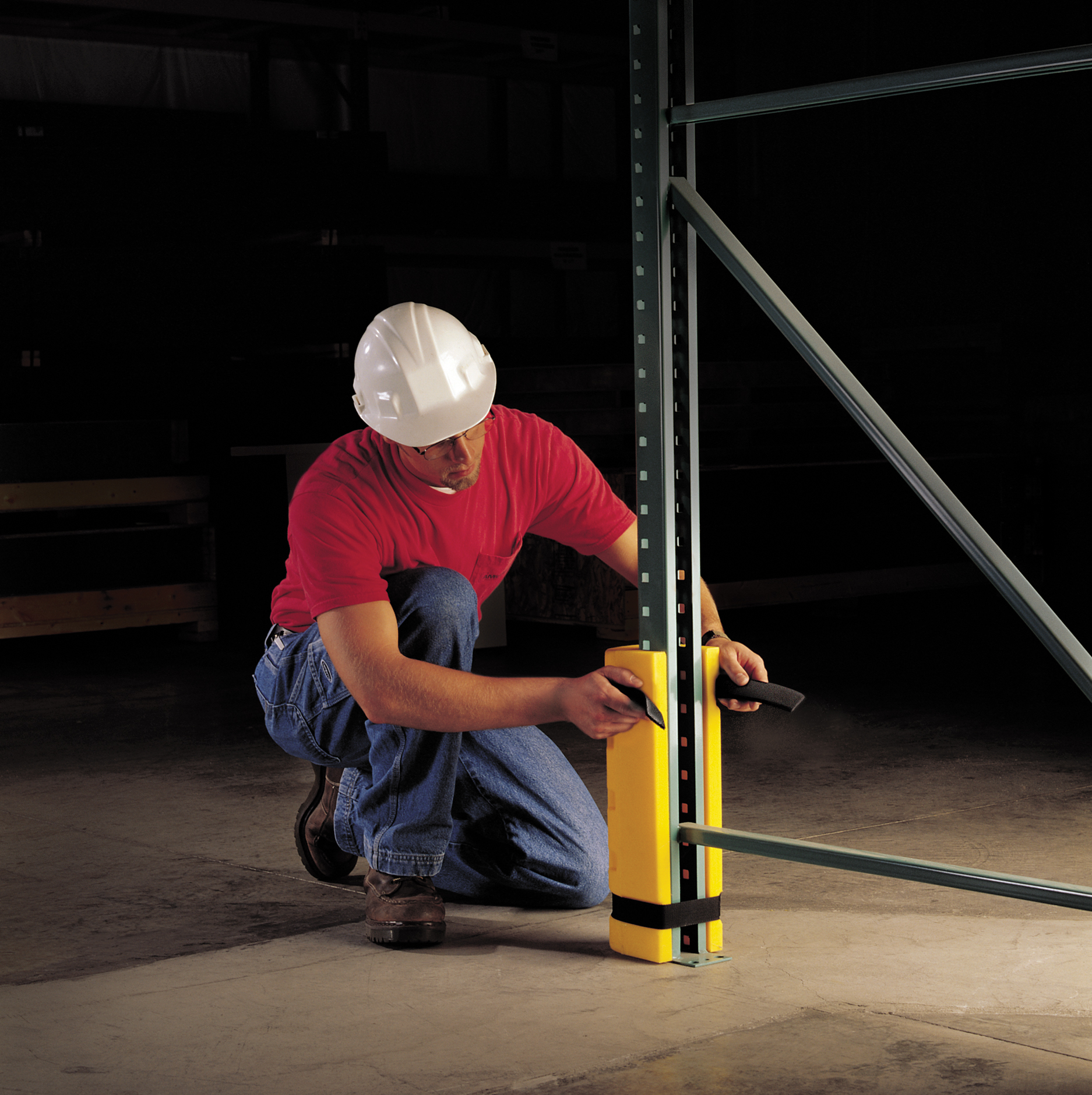
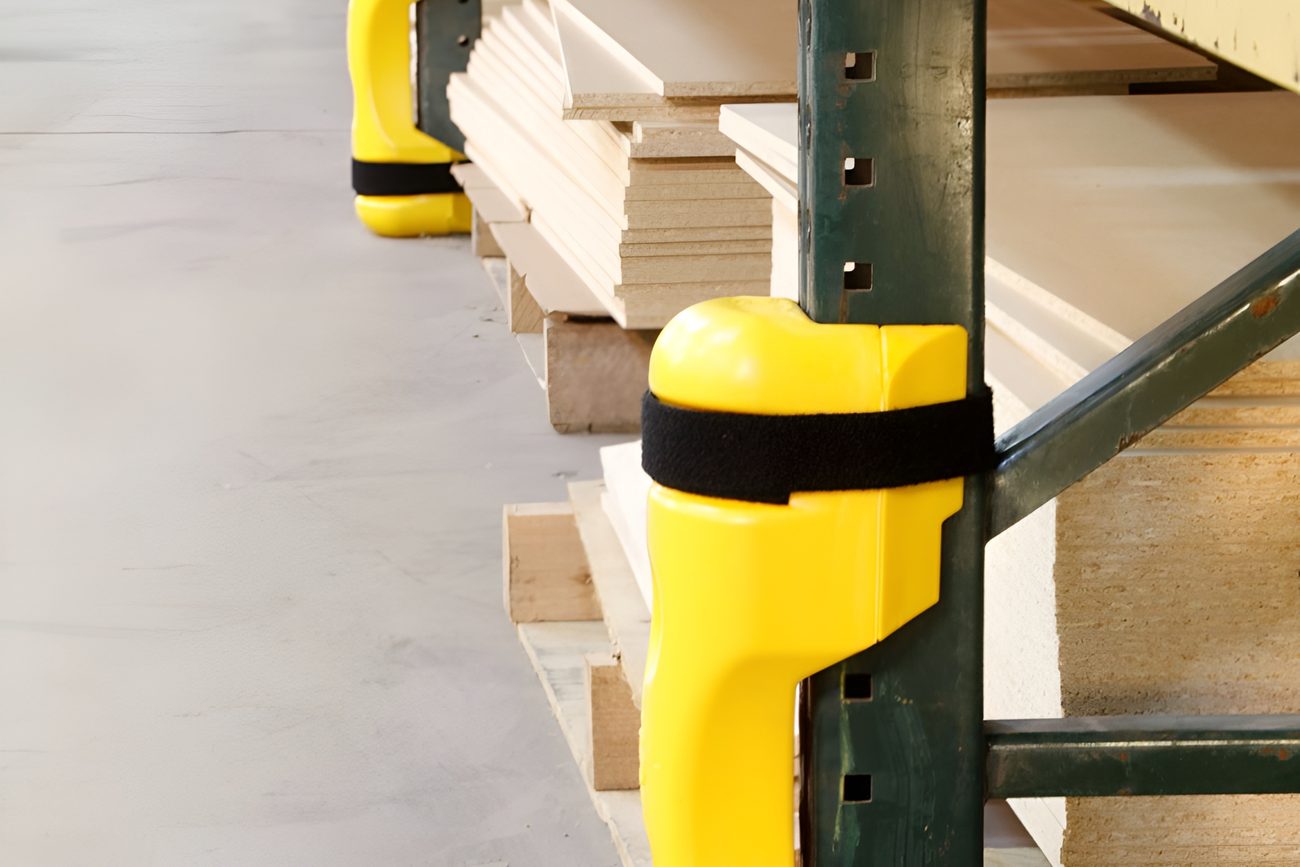
Research and testing by Sentry Protection Products shows that when it comes to warehouse safety, absorbing an impact is far more important than resisting it, writes Peter MacLeod.

If you ask any warehouse manager what they think makes a good rack protector, they would probably say ‘strength’. On the face of it, that’s a perfectly reasonable assumption. After all, the tougher and more rigid the protector, the better it must be at shielding valuable warehouse infrastructure from the inevitable knocks and scrapes of everyday operations, right?

According to Sentry Protection Products, however, that assumption overlooks one of the most important principles in warehouse safety. “The first reaction is always to think that harder must be better,” says Jim Ryan, founder of Sentry Protection Products. “But that’s not how physics works. The job of a rack protector isn’t simply to stop an impact – it’s to absorb it.”

The distinction may appear subtle, but it has significant implications for the long-term protection of pallet racking. With warehouses operating under ever-increasing pressure to maximise throughput, and despite the highest standards of driver training and advances in vehicle technology, accidental forklift impacts remain an unavoidable reality. The question is not whether those impacts will happen – that, unfortunately, is pretty much a given – but what happens to the energy generated when they do.

“If all that energy is transferred directly into the rack upright, the rack still takes the hit,” Ryan explains. “A protector that simply resists the impact isn’t necessarily protecting the rack behind it.”

Managing the Energy

Instead, the ideal rack protector behaves much like a spring. Think of a spring; compress it and it stores energy before gradually releasing it as it returns to its original shape. The same principle applies to rack protection. The more energy a protector can absorb before transferring the remaining force into the rack upright, the greater the protection it provides.

The challenge lies in achieving the right balance. A protector that is too soft may compress completely and become ineffective. One that is too rigid may transmit much of the impact directly into the rack structure. Effective protection lies somewhere between those two extremes.

The ‘Goldilocks’ Balance

“We often describe it as finding the Goldilocks point,” says Ryan. “Not too soft, not too hard – just right. That’s where the protector is doing the maximum amount of work before the rack has to.”

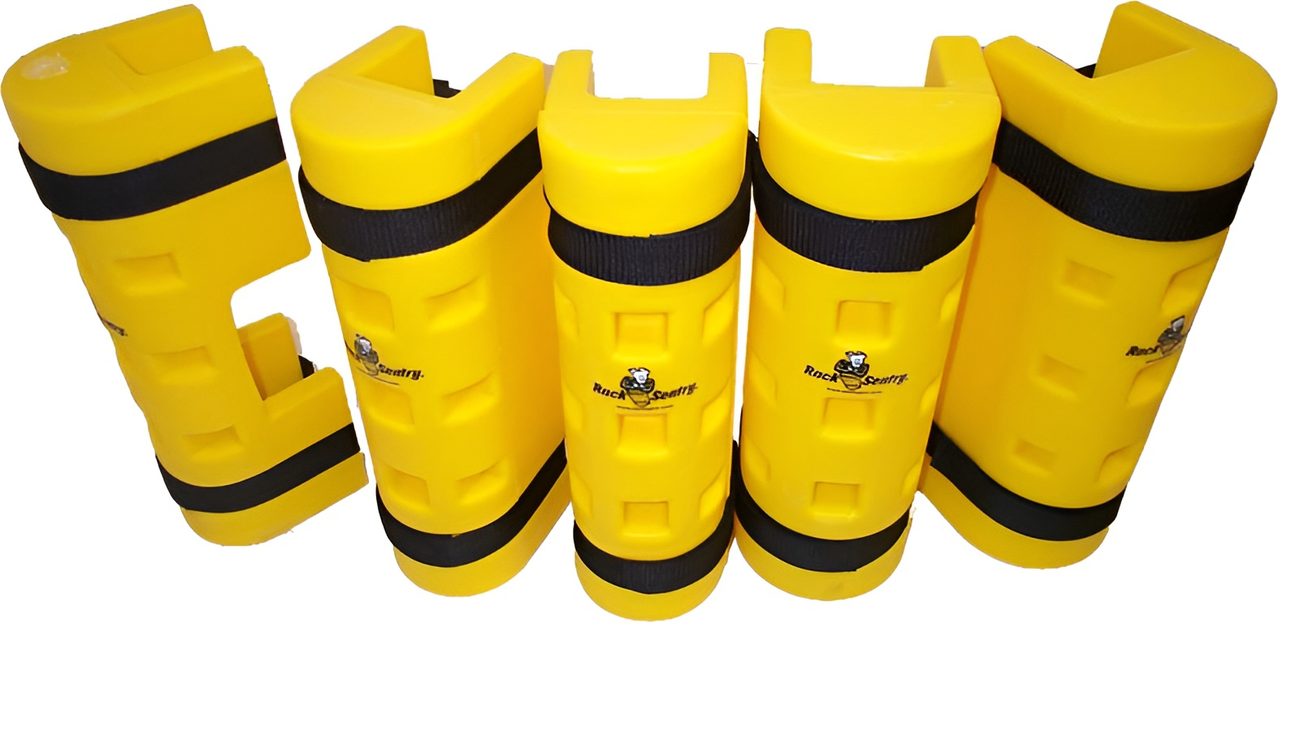
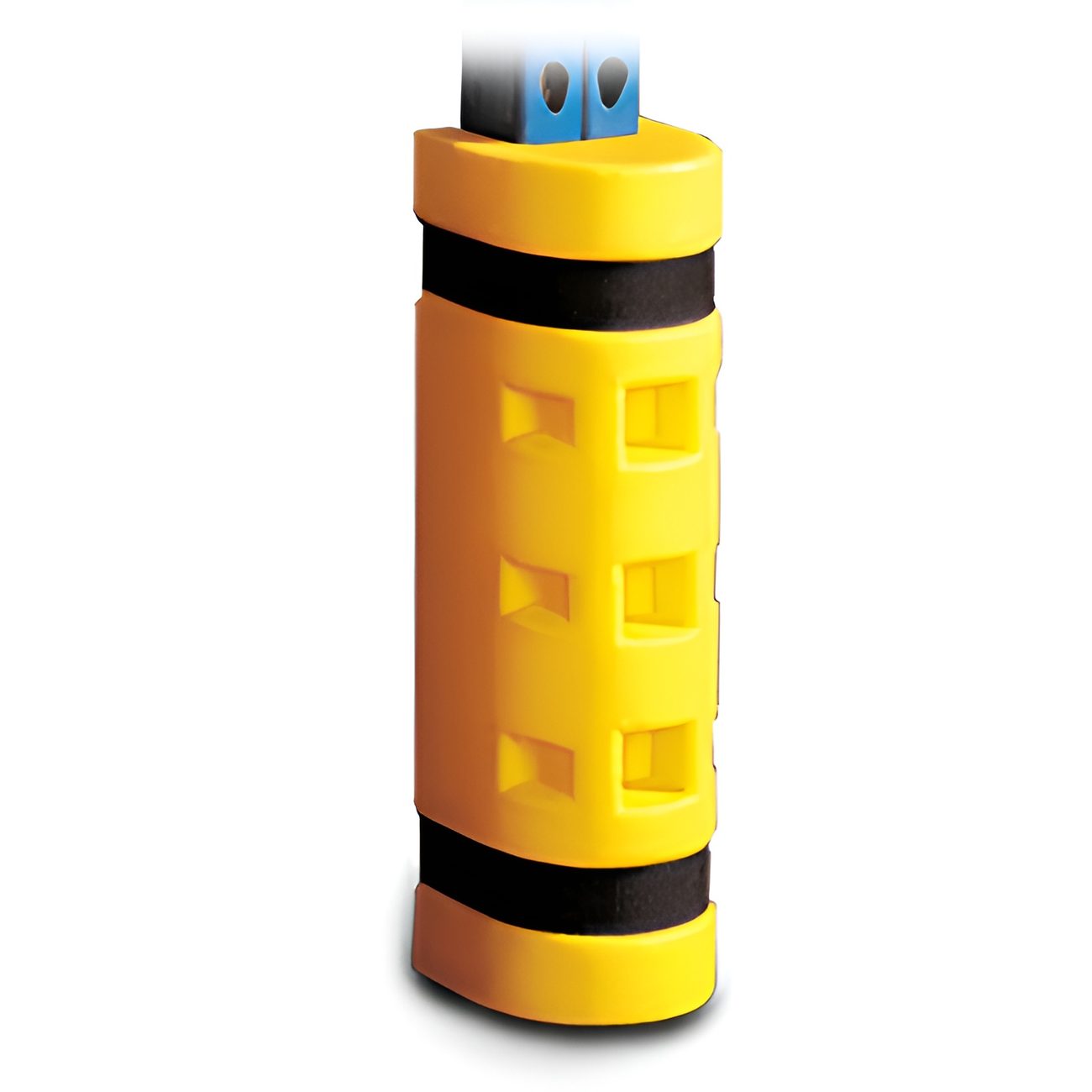
That philosophy has shaped the engineering behind Sentry’s Rack Sentry and Rack Sentry CONTOUR products. Manufactured from specially formulated impact-resistant materials and incorporating a series of carefully engineered internal air chambers, the products are designed to deform in a controlled manner before returning to their original shape, ready to absorb the next impact. Rather than simply making the protector as thick or as rigid as possible, Sentry’s engineers focused on how energy flows through the product during a collision.

“It’s really about managing energy,” Ryan explains. “The longer you can absorb that force before it reaches the rack, the better the outcome. That’s why engineering is so important. Two products can look almost identical from the outside yet behave completely differently when they’re struck.”

Engineering To Deliver Results

Of course, elegant engineering is only valuable if it delivers measurable real-world performance. That philosophy has been validated through independent compression testing, which compared Rack Sentry and Rack Sentry CONTOUR with several competing products under identical conditions. Both Sentry products demonstrated superior energy absorption before reaching the point at which they were no longer effective.

For warehouse operators, the science behind the product ultimately translates into better protection for the infrastructure that is essential to keep their business moving. “As warehouse operations become faster, busier, and more demanding, there’s less margin for error than ever before,” concludes Ryan. “You need products that don’t just look strong – you need products that genuinely protect the assets behind them.”

Much More than Manual Trucks

Still UK’s Automation Business Unit has been formed to deploy the company’s expertise and experience in intralogistics automation solutions. Paul Hamblin spoke to the company’s Paul McCann.

For most of us, STILL is a manufacturer of materials handling equipment of premium class – forklifts, pallet trucks, order pickers, and a great deal more. It’s the ‘orange one’ in the powerhouse KION Group stable that also includes fellow big players, Linde and Dematic, among others.

But like many traditional manufacturers, STILL has followed the needs of its customers and evolved into an all-round provider of intralogistics solutions, including its proprietary automated storage and retrieval offerings, incorporating both MHE and integrating software.

In short, if you believe STILL just makes trucks, think again. STILL UK, one of the company’s largest territories, has begun a mission to change this mindset, communicating to its largest accounts and dealer network not only how well-developed its automation portfolio really is, but how skilled and highly experienced its staff are in selecting, managing and servicing the equipment as part of a true partnership with customers.

STILL UK’s Automation Business Unit (ABU) was formed in January 2026 to connect all aspects of warehousing automation into a single entity. It ensures that three important revenue streams – storage solutions (including racking, rack-supporting floors and mezzanines), VNA trucks, and order pickers – are now united into one in order to offer a fully integrated solution portfolio.

Of course, STILL has for many years offered these different components; this change is about enabling a more holistic, consultative partnership with customers.

“In the past, a customer decided they needed a manual or an automated solution or a particular product from one segment of the portfolio,” explains Paul McCann, Senior Manager, STILL (UK) ABU. “We want to talk to clients about the full picture. Maybe this is an old term, but we are solution-selling, not simply costing an automated versus a manual piece of MHE. We are talking about several options, based on asking the customer what they want to achieve and helping them meet that objective. It is about true partnership.”

Integrating these three crucial strands is a logical step because they have a natural link to each other, he says.

“Consider the shuttle system,” he explains. “Racking is frequently the most important and most expensive part of the structure, so it’s vital to pay particular attention to its integration both with the shuttles and with the controlling software. Think about an automated VNA or any kind of automation using moving pallets, the equipment will usually be tied to a storage solution system.”

He says that STILL(UK) expertise is front and centre in its partnership with customers.

“We pride ourselves on professionalism and we have the experience to take a true collaborative approach,” says McCann (pictured, below). “We don’t just speak to customers about what they want the system to achieve, we go a great deal further to ensure that there are no unforeseen problems further down the track.

“To give you one example, we will also address the existing building infrastructure. A new build is fairly straightforward, generally you can do what you wish within cost and regulation restraints. Not so with a brownfield site, though. It’s important to consider the building envelope across all three revenue streams: with a shuttle system, the point load of the columns of the upright is important, for instance. Then, there is the floor. Is the slab strong enough and flat enough? We will establish what the imposed load of the racking system will be and can thus determine the suitability of the slab.”

They are important points that can sometimes be forgotten or postponed, he says. “A partnership with an experienced integrator such as us will prevent many headaches later on. Do you have a sprinkler system? We have a contractor we work with on all systems. Construction, Design and Management (CDM) regulations and building control regulations are an important part of our offering. We will raise this at initial conversations, discharging our duties as a good contractor. You cannot ignore the building envelope and a good automation partner will highlight this.”

Partnership and a consultative approach are keys. “We’re not just selling you a product. We’re partnering with you to ensure you have the right solution. A true consultative approach.”

Customers are generally seeking the same kinds of efficiencies in their automation enquiries, he says. “They are looking for more pallets, more efficiencies and to redeploy their people. And we will explore how best to achieve that with them across our solutions portfolio.”

The range of offerings, from plug ’n’ play to completely integrated fleets, is grouped under iGO, STILL’s modular automation ecosystem. It covers the full spectrum, from autonomous trucks and compact storage systems to intelligent software analysis tools. ROI figures are attractive to customers, he says. “They differ from project to project, for obvious reasons, but three to five years offers a broad timeframe.”

How about lead-time from initial meet to go-live? “It depends on the application. A four-way shuttle could be 12-18 months, including commission phase, build phase and installation phase. If you’re talking a tote to person system, it could be six months. An AGV moving from point to point can be running a month after delivery to site.”

It’s an exciting set-up – but does Paul McCann fear the march of Chinese and Far Eastern technology will hurt STILL?

“We build high-quality bits of kit,” he reflects. “But the most important thing about automation is the service provision behind it. Our Net Promoter Score is industry-leading in client satisfaction and callout times. You can have good kit but without good service and tech support behind it, you’re in trouble. The handshake between the software and the WMS is vital, and we are talking about the software interface at all stages of the project.”

Successful sectors for the company include pharmaceuticals, fresh food and fruit, 3PLs freezer and temperature control. “Automated cold stores are growing in popularity because of the difficult working conditions for people,” he points out. For now, he and his team are concentrating on building awareness of the STILL ABU offering. “In six months we’ve increased our pipeline by a large percentage,” he confirms. “A holistic partnership can reap real dividends for all parties.”

Agentic AI for Retail Stockouts and Returns

Blue Yonder has announced new retail innovations as part of its ‘Cognitive Solutions’ portfolio, designed to help hardlines and softlines retailers move from insight to action with agentic AI and connected retail decisioning. The latest enhancements create tighter alignment across forecasting, inventory planning, fulfilment, customer service and returns on the Blue Yonder Platform. Retailers can now respond faster to changing demand, improve inventory productivity and recover more value across the retail lifecycle. Rather than optimising individual retail functions in isolation, Blue Yonder connects decisions across planning and execution, so what a retailer learns about demand shapes both how they fulfil and how they manage returns.

“Many retailers can already see what’s happening. The hard part is acting on it before the moment passes,” said Gurdip Singh, chief product officer at Blue Yonder.

“With this release, we’re putting agentic AI into the flow of retail decisions. Forecasting, inventory, fulfilment and returns start working as one system instead of a chain of handoffs. That’s how you turn insight into action at the speed retail demands, with the precision to protect margins while you improve the customer experience.”

Smarter fulfilment and inventory visibility

Poor availability is expensive. Out-of-stocks cost retailers roughly $1.2 trillion a year in lost sales. The release adds predictive fulfilment intelligence and inventory network visibility in Order Management. This helps teams improve fill rates, service levels and fulfilment efficiency by identifying risks, bottlenecks and optimisation opportunities across inventory, sourcing, fulfilment and network operations. For retailers, that means better availability, fewer missed promises and smarter fulfilment decisions across stores, distribution centres and digital channels.

Unified workspace for service and selling

A new unified customer service and assisted selling workspace streamlines customer identification, product discovery, inventory visibility, pricing, fulfilment options, payment capture and order management. Customer service and store teams can respond faster, improve conversion and resolve issues with better context.

Recovering more value from returns

Returns are among retail’s costliest problems. U.S. consumers were expected to return nearly $850 billion in merchandise in 2025, about 15.8% of sales, according to the National Retail Federation. The new functionality includes:

Personalised returns experiences
Customer-specific returns policies
Configurable store credit strategies
Returns order receiving and receipt control
Smart Disposition and configuration
Test and Grade workflows
Unit-level simulation of disposition outcomes

Together, these capabilities target the same problems: reduce returns leakage, improve resale and recovery, cut fraud risk and keep shoppers satisfied. With Blue Yonder Returns Management, retailers move returned items back to sellable stock about 25% faster on average, improving in-stock levels and even reducing overall inventory levels.

“For most retailers, a return is a cost to absorb. I’d argue it’s a chance to reimagine the customer experience, save the sale and optimise inventory,” Singh said. “Now, the system doesn’t just initiate and process the return. It recommends the best decision for that item and allows users to act on it, from routing to receipt to resale. That’s an agent that does the work and helps recover more margin without adding headcount.”

AI-guided workflows

Blue Yonder enhances Orchestrator as the unified interaction and orchestration layer for workflows, insights, AI-powered guidance and actions. A new navigation experience combines traditional navigation with a prompt-driven, AI-first experience, so people move from decision to action faster across planning, execution and network operations.

Transport Operations Shifted Amid Driver Shortage

Girteka is shifting part of its transport operations to Riga (Latvia) and Oradea (Romania), establishing local entities as the company adapts its European operating model to changing labour market conditions and the continued shortage of professional drivers.

In Latvia, Girteka is already approaching the milestone of 100 locally registered trucks, with the fleet operating on the road. In Romania, the team is preparing to receive its first trucks and drivers. The new operations will include locally registered fleets, driver employment and transport management, with local administrative teams developing in line with operational needs.

Our focus is to be the best-performing logistics partner for temperature-controlled and high-value cargo. Customers in these segments expect reliability, consistent capacity and a high level of operational control. As labour availability, regulation and costs change across Europe, we need to make sure our operating model continues to support that promise and allows us to deliver at scale

says Pavel Kveten, CEO of Girteka Logistics.

Adapting to Europe’s driver shortage

Professional driver availability remains one of the biggest challenges for European road transport. According to the International Road Transport Union, around 502,000 truck driver positions were unfilled in Europe in 2025, representing approximately 13% of the workforce required by the sector.

The pressure is expected to increase further. IRU estimates that around 20% of Europe’s current truck driver workforce will retire within the next five years, adding further pressure to an already constrained labour market.

For an asset-based transport company such as Girteka, access to professional drivers is directly linked to the capacity it can provide to customers. The company delivers around 800,000 full truckloads annually for more than 5,000 customers across Europe, making the ability to attract, employ and support a stable driver workforce a core part of its operating model. By diversifying where its fleet and workforce are based, Girteka gains greater flexibility to secure the resources needed to serve customers reliably across Europe.

European operating network

Girteka already operates through multiple locations across Europe. In Poland alone, the company manages a fleet of around 3,000 trucks, supported by local driver recruitment, transport management and operational capabilities. The new entities in Latvia and Romania continue this approach, allowing Girteka to position its operations where they can best support both customer needs and access to professional drivers.

This is a necessary step to ensure the continuity and efficiency of our transport operations. The availability of professional drivers remains a key constraint, and we need greater flexibility to recruit at the scale our fleet requires… Establishing operations in Latvia and Romania gives us additional options to attract and employ drivers, organise our fleet more effectively and maintain the capacity our customers rely on.

says Mindaugas Paulauskas, CEO of Girteka Transport.

Developing local operations

The new entities will be fully integrated into Girteka’s European operations, providing the local framework for fleet registration, driver employment and transport management.

The company is already building local teams, with recruitment under way for transport operations and management roles in Riga. The company is looking for experienced professionals who can help establish processes, support fleet growth and build local teams as the operation develops. Recruitment in Romania will develop alongside the launch and growth of the local operation.

As the operations scale, Girteka will assess the need for additional local roles and functions in both countries. The aim is to create a sustainable operating setup that supports fleet performance, driver availability and reliable capacity for customers across Europe.

Fashioning the Future of Automation

A flexible robotic sorting system from Libiao Robotics enables Arvato to expand its fashion ecommerce fulfilment, writes Peter MacLeod.

The continued growth of online fashion retail is placing increasing pressure on fulfilment operations, where large product ranges, rapidly changing order profiles, high levels of returns, and seasonal peaks demand increasingly agile warehouse processes. For Arvato, a leading logistics provider supporting global retail brands, the priority is to increase throughput while retaining the agility needed to respond quickly to changing customer demand.

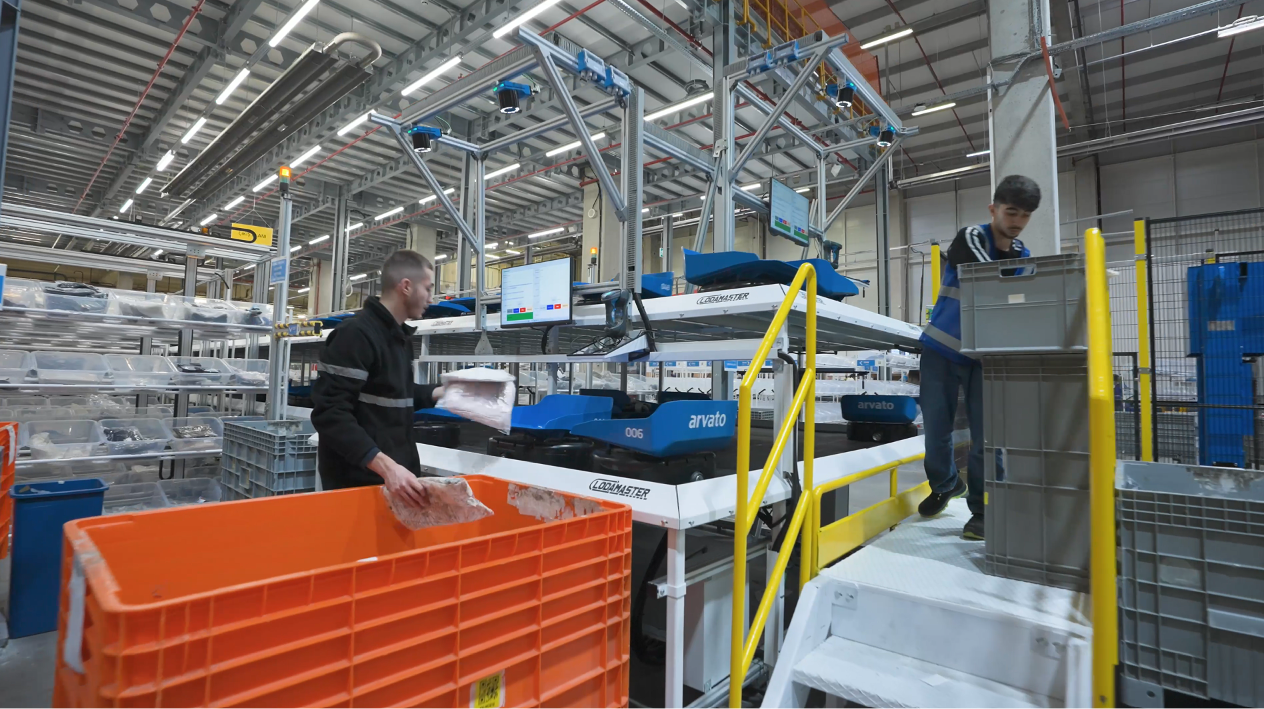
Against this backdrop, Arvato Türkiye looked to expand its ecommerce fulfilment operation on behalf of a leading global fashion retailer at its Platform S distribution centre in Istanbul. Rather than investing in a traditional conveyor-based sortation system, the company selected Libiao Robotics’ modular 3D Sorter, making its first significant investment in warehouse automation and laying the groundwork for further automation across its operation.

Flexible Approach

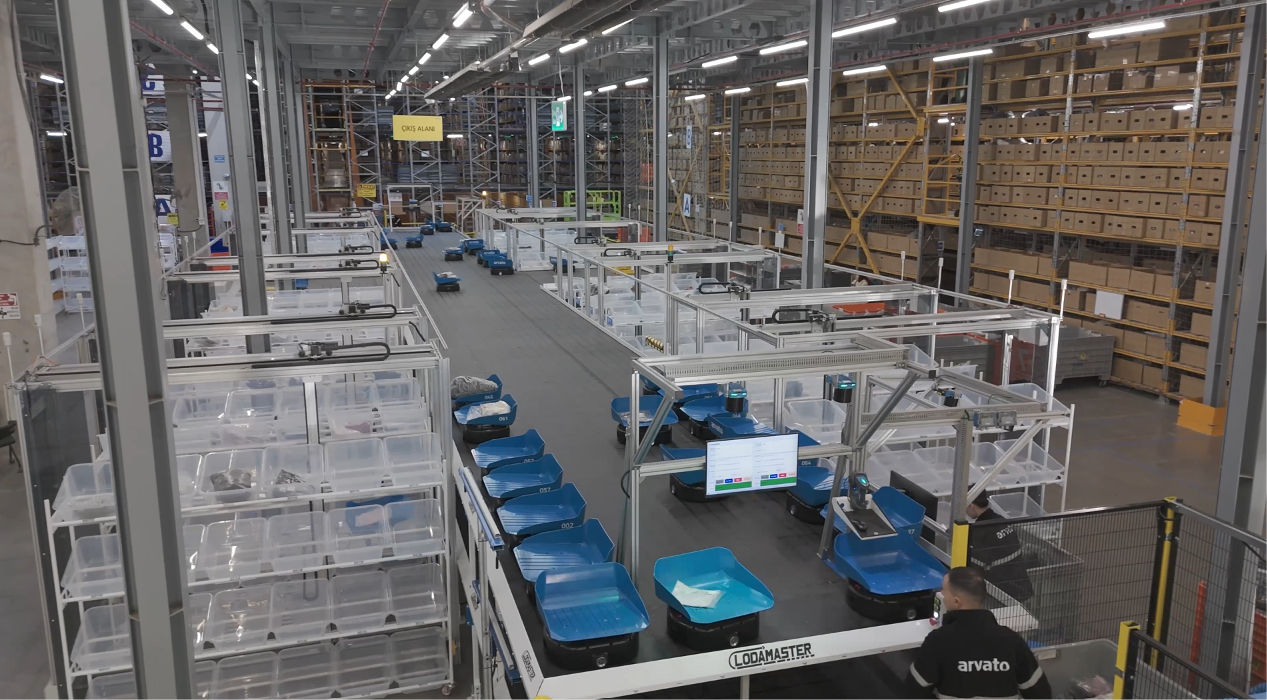
Working with local systems integration partner Lodamaster, Libiao Robotics designed, supplied and commissioned a robotic sorting solution tailored specifically to the requirements of a high-volume fashion fulfilment centre.

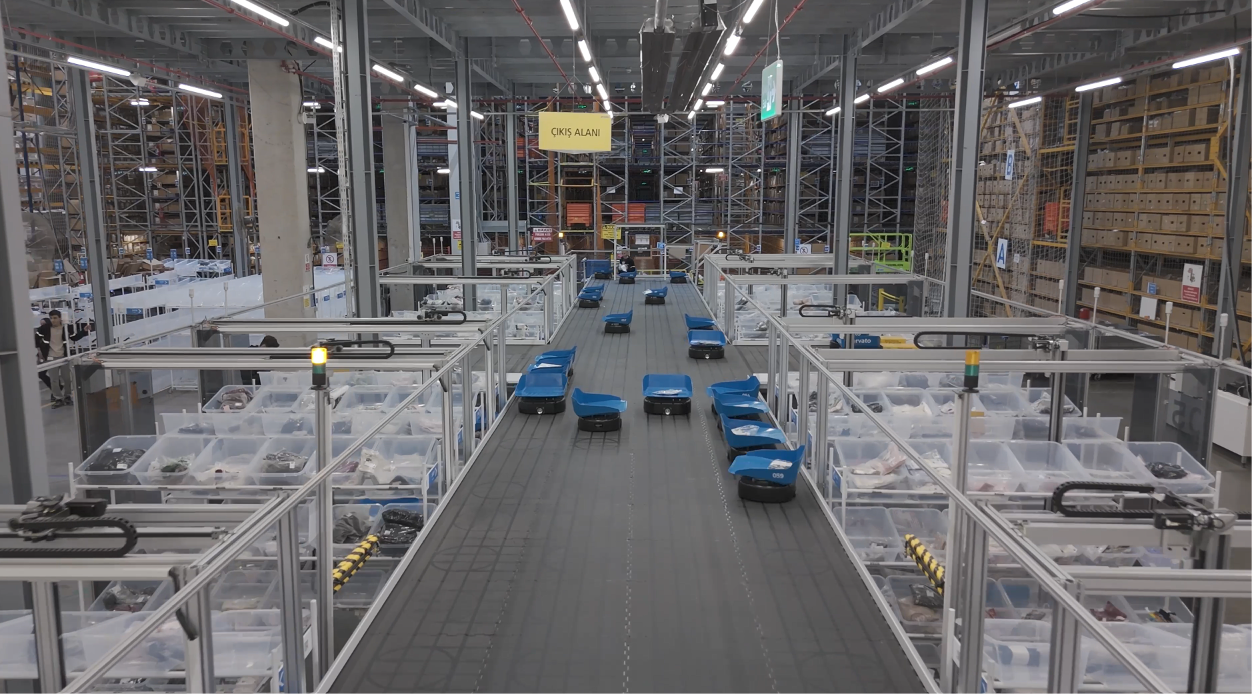
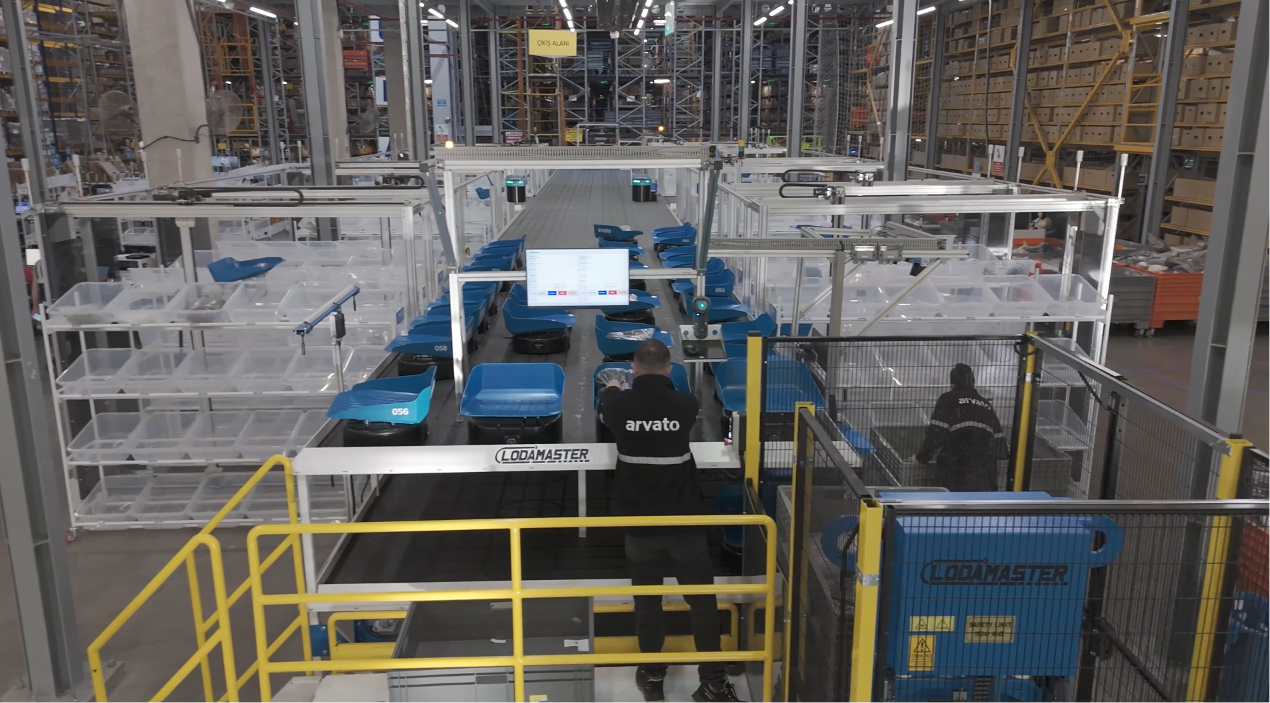
The installation comprises 66 autonomous sorting robots operating across a compact modular sorting grid, supported by 14 shuttle induction stations with the capacity to process up to 3,700 items per hour. The system can allocate products to 672 sorting destinations, providing the performance needed to manage large SKU counts, frequent order fluctuations and demanding service levels that characterise fashion ecommerce. Operating simultaneously across the grid, the robots independently transport items to their designated destinations, enabling thousands of products to be sorted every hour without the complexity of a conventional conveyor network.

For Arvato, the objective was not simply to increase sorting capacity, but to introduce an automation platform capable of supporting increasing ecommerce volumes without the disruption and cost associated with conventional conveyor systems.
Libiao’s 3D Sorter uses fleets of its distinctive autonomous robots to transport products to their required destinations. The approach reduces the need for permanent conveyor infrastructure while making future expansion considerably easier.

Designed Around the DC

The system has also been designed to accommodate the diverse product mix typical of fashion retail, handling everything from lightweight apparel to bulkier garments while maintaining high throughput throughout the facility. During implementation, the robotic system was configured to match Arvato Türkiye’s warehouse processes and physical layout, ensuring the technology complemented existing workflows rather than requiring them to be redesigned.

For Arvato Türkiye, the benefits extend well beyond increased sorting capacity. By automating the sortation process, it can increase picking batch sizes while reducing operator walking distances, minimise manual handling, improve warehouse flow and accelerate order fulfilment. Together, these improvements create a faster, more efficient fulfilment process capable of responding to fluctuating order volumes and seasonal peaks.

Equally significant was the speed of deployment. From the initial project concept through to full go-live took approximately six months, with the installation achieving its target throughput only three weeks after integration testing had been completed. The rapid implementation demonstrated how modular robotic automation can be introduced quickly while minimising disruption to ongoing warehouse activities.

Competitive Advantage

“Logistics providers today are under pressure from every direction,” said Ronan Shen, VP of Global Sales at Libiao Robotics.

“Order volumes continue to grow, customers expect faster delivery and greater accuracy, while warehouse operators are simultaneously facing rising labour costs, recruitment challenges and tighter margins. Success increasingly depends on investing in automation that not only delivers immediate productivity gains but also provides the flexibility to support future expansion without repeated investment in fixed infrastructure. This project perfectly demonstrates that philosophy. Arvato Türkiye has invested in a solution that can evolve alongside its business, providing the scalability to accommodate future volume growth and seasonal peaks while maintaining the speed and efficiency demanded by modern e-commerce operations. This project demonstrates how intelligent robotics can become a genuine competitive advantage, particularly in today’s uncertain economic climate.”

Building for the Future

Fashion fulfilment places unique demands on warehouses. High SKU counts, frequent returns and constantly changing order profiles require sortation systems that can deliver consistently high performance while adapting quickly as workflow requirements change. Increasingly, logistics providers are looking beyond conventional conveyor systems in favour of robotic technologies that can be expanded as business needs evolve.

Libiao Robotics developed its 3D Sorter specifically for these dynamic warehouse environments. Its modular architecture enables operators to increase automation incrementally without replacing existing infrastructure, allowing investment to be aligned with changing business requirements. Today, Libiao’s robotic sorting solutions are deployed across e-commerce, retail, parcel logistics, pharmaceuticals and manufacturing facilities worldwide, helping customers improve productivity while building more resilient and responsive warehouse operations.

Arvato Türkiye’s first investment in warehouse automation illustrates how robotic sortation can deliver immediate productivity gains while creating a foundation for future growth. Rather than investing in conventional conveyor infrastructure, the company has adopted a modular automation strategy that can evolve alongside changing business requirements.

Supply Chain Reliability with Success Services

REWE is securing its fresh food distribution now and in the future with comprehensive support from Cimcorp. With facilities typically handling over 650,000 units daily, the relentless pace and volume of REWE’s warehouse operations require services that can ensure continuous and punctual deliveries – especially in major urban markets, where missing a delivery window can mean failing to deliver altogether.

Deliveries to big cities like Berlin are a logistical tightrope… Missing the delivery window means a significant financial loss… highlighting the time-sensitive nature of fresh goods logistics. That’s why we demand not only reliability but the ability to act fast and prevent delays.

says Matthias Menzel, General Manager at the company’s largest fresh and chilled goods warehouse in Oranienburg, Germany.

A multifaceted service portfolio for peak performance

Cimcorp’s Success Services for REWE have been meticulously designed to guarantee the highest possible system uptime and thereby product availability for over 370 supermarkets and 580 stores served by the Oranienburg facility daily. The services include:

• Preventive Maintenance Service: This solution brings expert technicians to regularly analyse and report on the condition of REWE’s automated handling systems, perform fundamental maintenance and collaborate with in-house staff on best practices. By scheduling comprehensive inspections twice a year, REWE is able to proactively address wear and fatigue, reducing the risk of unexpected failures and safeguarding consistent, top-tier performance throughout the year.

• System Support Service: Offering rapid and reliable remote assistance, this service acts as a critical safety net. REWE’s staff receive direct support from highly trained specialists who diagnose and resolve technical issues that cannot be managed on site, significantly reducing the likelihood and duration of production stoppages.

• On-site Support Service: For incidents requiring immediate physical intervention, expert personnel are available to deliver corrective maintenance, repairs and ongoing preventive measures. The on-site response is structured flexibly, with service available six days a week – and extended coverage on Sundays and public holidays as needed – ensuring that even in urgent breakdown scenarios, downtime remains minimal.

• System Management Service: In an era of increasing IT security challenges, REWE’s system management offering remotely monitors, protects and maintains the IT backbone of its automated conveyor systems. This includes everything from antivirus protection and network administration to database oversight, always reinforcing system reliability and proactive threat detection.

Menzel underscores the necessity of strong preventive maintenance and fast, professional support, both on-site and remote: “For us, reliability is essential; our markets count on timely and error-free deliveries, and our system must reflect that expectation. We rely on our partners to deliver services that match the urgency of our market’s expectations.”

Empowering people and embracing the future

The transition to automation, paired with robust service, has been driven not only by the need for reliability but also by workforce realities. With labour shortages and physically demanding tasks impacting the sector, automation – supported by effective maintenance and support services – ensures that existing staff are better utilised and not overstretched.

“We want Cimcorp in the background running the system, a strong partner ready to react fast if something happens that we cannot solve ourselves,” Menzel explains. REWE’s commitment to comprehensive training means dedicated technicians are fully equipped to manage the system, with Cimcorp’s team always on standby for escalations.

Setting new standards in retail logistics

REWE’s investment in Success Services underscores the retailer’s strategic vision: to maintain operational excellence, optimise employee welfare and guarantee the highest standards of service for every store, every day. In a sector where timing and reliability define competitive advantage, the company’s pioneering approach is setting a new benchmark for logistics performance and resilience.

“Our customers’ success is our mission,” explains Heikki Seppälä, Head of Services at Cimcorp Group. “For REWE and clients like them, we secure uptime because system downtime is simply not an option, especially in fresh food logistics, where every second counts.”

Warehouse Advantage from Decisions, not Robots

As 3PLs, retailers and ecommerce operators face tighter service levels, labour pressure and unpredictable demand, the value of automation is shifting from reducing travel to orchestrating the entire operation. By Mike Harris (pictured, below), Vice President, Ocado Mobile Robot Systems, Ocado Group

Warehouse operators do not have a shortage of technology. They have a shortage of connected decision making.

Autonomous mobile robots have already proved they can reduce walking and improve picking productivity. But removing travel is only one part of the challenge. Orders, labour, congestion and exceptions demand intelligent coordination. Picking, replenishment, returns, sortation and dispatch must operate as a single continuous flow rather than five separate processes that happen to sit under the same roof.

When these decisions remain fragmented across systems and teams, automation simply moves the bottleneck. A robot that picks faster helps little if the pallet it depends on is still waiting at the dock, or if the exception it just created sits unresolved on a supervisor’s list.

That is why the next phase of warehouse automation will not be defined by how many robots an operator deploys. It will be defined by how intelligently the operation coordinates people, robots, tasks and workflows.

From task execution to orchestration

Many AMR systems are designed to receive a task and execute it efficiently. That delivers value, but it leaves the most important operational decisions elsewhere, often with the warehouse management system or the supervisor, who is left reconciling robot activity with operational needs. Chuck AMR, powered by Ocado IQ, takes a different approach.

Ocado IQ continuously evaluates factors such as order urgency, pick location, available resources, workload and congestion. It groups, prioritises and reallocates work as conditions change. The system does not simply direct a robot to the next location; it determines what the operation should do next and adjusts as soon as that answer changes.

The Ocado IQ App extends the same system directed logic into manual and hard to reach areas, including mezzanines, high shelves and bulky item zones. The Bridge gives supervisors live visibility across the whole operation – pick rates, queues, priority order tracking, fleet availability, congestion and service level performance.

Together, these capabilities turn Chuck from a point solution into part of a coordinated fulfilment system. The value of that coordination is felt most clearly in the way the floor runs day to day.

What a leaner fleet feels like on the floor

A smaller, smarter fleet is not just a lower capital cost. With fewer robots competing for the same aisles, congestion eases, idling decreases, and there are fewer near misses and collisions. A fleet sized to the work rather than the floor also needs fewer chargers and less parking, handing that space back to the operation. The result is a floor that runs smoother, safer and more predictably, not because it is emptier, but because everything on it is working harder.

One platform for three very different challenges

For 3PLs, variability is the business model. Different customers bring different order profiles, seasonal patterns, workflows and service level commitments. The automation platform must be configurable enough to support that complexity without turning every new customer or peak period into another technology project.

For retailers, the challenge is omnichannel coordination. Distribution centres may be supporting store replenishment, direct to consumer orders, marketplace fulfilment and returns at the same time. Optimising one workflow in isolation is no longer enough.

For ecommerce operators, the defining pressures are volatility and speed. Order volumes change quickly, carrier cut off times are unforgiving and common exceptions cannot be allowed to interrupt the flow of work. The operating realities are different, but the requirement is the same: an intelligent system that adapts continuously, rather than one that depends on static task lists and manual replanning.

Why mixed warehouses need mixed picking methods

A warehouse is not one uniform environment. It contains wide and narrow aisles, fast- and slow-moving products, dense and sparse pick faces, mezzanines and traffic patterns that shift by the hour. Applying one robot behaviour everywhere inevitably creates compromises.

Chuck supports two intelligent picking modes, configured by aisle. In Sweep, an associate works with one robot through an aisle, a focused pairing that keeps picking orderly and traffic flow in narrower aisles. In Rendezvous, multiple robots are positioned at controlled points (no congestions or blockages) along high velocity aisles so associates can move straight from one assignment to the next.

Crucially, these modes operate concurrently. The behaviour belongs to the aisle, a single robot adapts as it moves, pairing closely with an associate in a narrow Sweep aisle, then shifting into Rendezvous in a wider one. No bot is tied to a single mode, and no part of the floor is fenced off for one behaviour.

Integrated pick-to-light guidance directs every pick with immediate visual feedback, ensuring speed and accuracy.

A better way to evaluate AMR platforms

The AMR category has matured quickly, and operators now have real choice in the market. That is a good thing, but it means evaluation criteria need to mature alongside it. Deployment speed, robot count and travel reduction are no longer the questions that separate a genuinely intelligent platform from a well-engineered task executor.

Chuck is designed to coordinate people, robots, orders and manual workflows as one system. That makes it a strong fit for complex 3PL, retail and ecommerce environments, where sustained performance depends on more than moving a tote from one location to another.

Scale through intelligence, not robot count

When demand increases, adding robots may be part of the answer, but it should not be the entire strategy: add capacity when the work genuinely calls for it, not by default.

That is why the Chuck fleet is built in layers: core bots for the everyday baseline, flex bots switched on for ordinary spikes like a busy Monday or a promotional bump, and peak bots for the events you plan around, like Black Friday. You scale up deliberately, in step with demand, never carrying the cost and congestion of a peak-sized fleet on an average Tuesday.

That only works if the platform underneath is built to scale, improving how work is allocated and prioritised before it starts counting robots, letting operators add or remove capacity without disruptive reprogramming, and keep benefiting from new software capabilities rather than being locked to the specification it shipped with.

Ocado mobile robot systems can deliver two to three times the productivity of manual cart-based picking, reduce labour costs by as much as 50%, go live in as little as 14 weeks and achieve payback in just six months. The platform has been deployed across more than 120 sites to date, spanning 3PL, retail, ecommerce, pharma and apparel operations.

The winners in the next era of fulfilment will not be the businesses with the most robots. They will be the businesses whose systems make the best decisions and turn those decisions into action across every workflow and every shift.

Subscribe

Get notified about New Episodes of our Podcast, New Magazine Issues and stay updated with our Weekly Newsletter.