A flexible robotic sorting system from Libiao Robotics enables Arvato to expand its fashion ecommerce fulfilment, writes Peter MacLeod.
The continued growth of online fashion retail is placing increasing pressure on fulfilment operations, where large product ranges, rapidly changing order profiles, high levels of returns, and seasonal peaks demand increasingly agile warehouse processes. For Arvato, a leading logistics provider supporting global retail brands, the priority is to increase throughput while retaining the agility needed to respond quickly to changing customer demand.
Against this backdrop, Arvato Türkiye looked to expand its ecommerce fulfilment operation on behalf of a leading global fashion retailer at its Platform S distribution centre in Istanbul. Rather than investing in a traditional conveyor-based sortation system, the company selected Libiao Robotics’ modular 3D Sorter, making its first significant investment in warehouse automation and laying the groundwork for further automation across its operation.
Flexible Approach
Working with local systems integration partner Lodamaster, Libiao Robotics designed, supplied and commissioned a robotic sorting solution tailored specifically to the requirements of a high-volume fashion fulfilment centre.
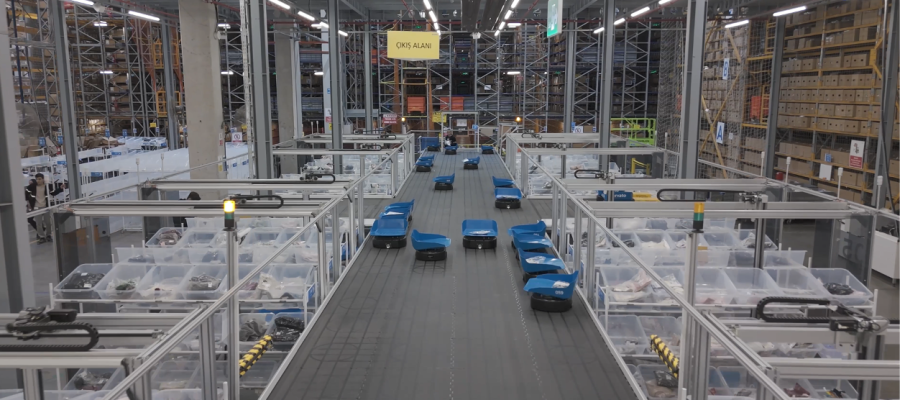
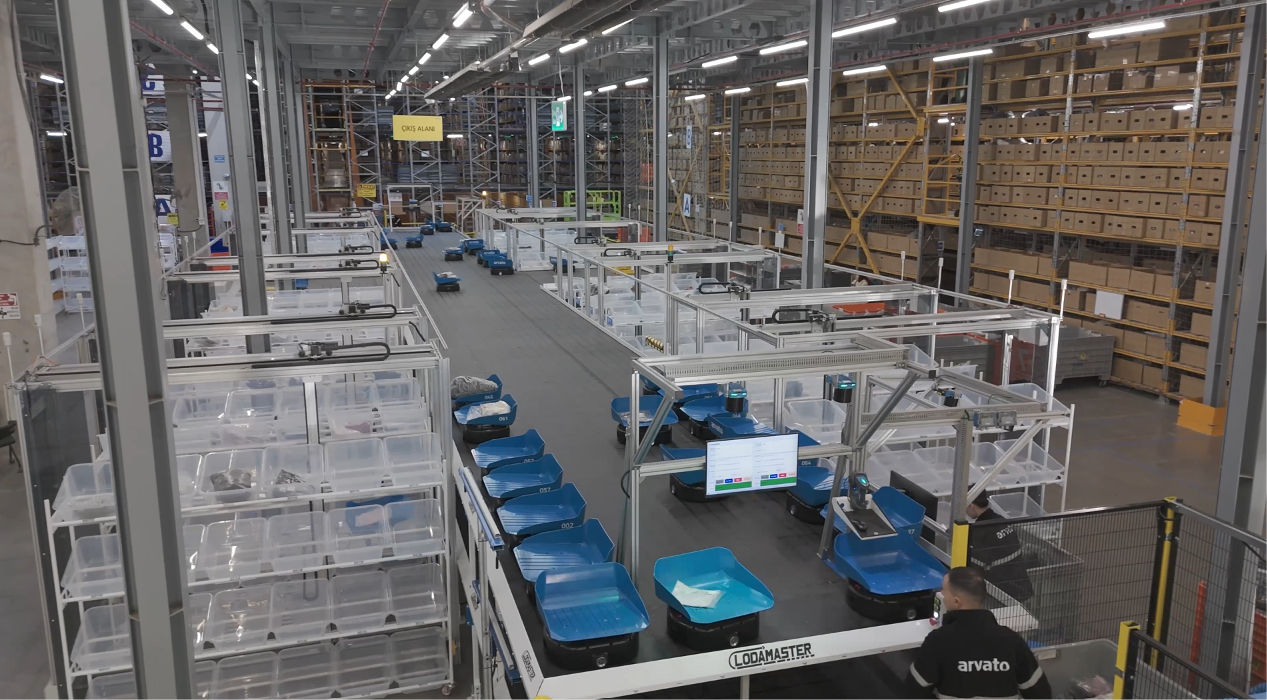
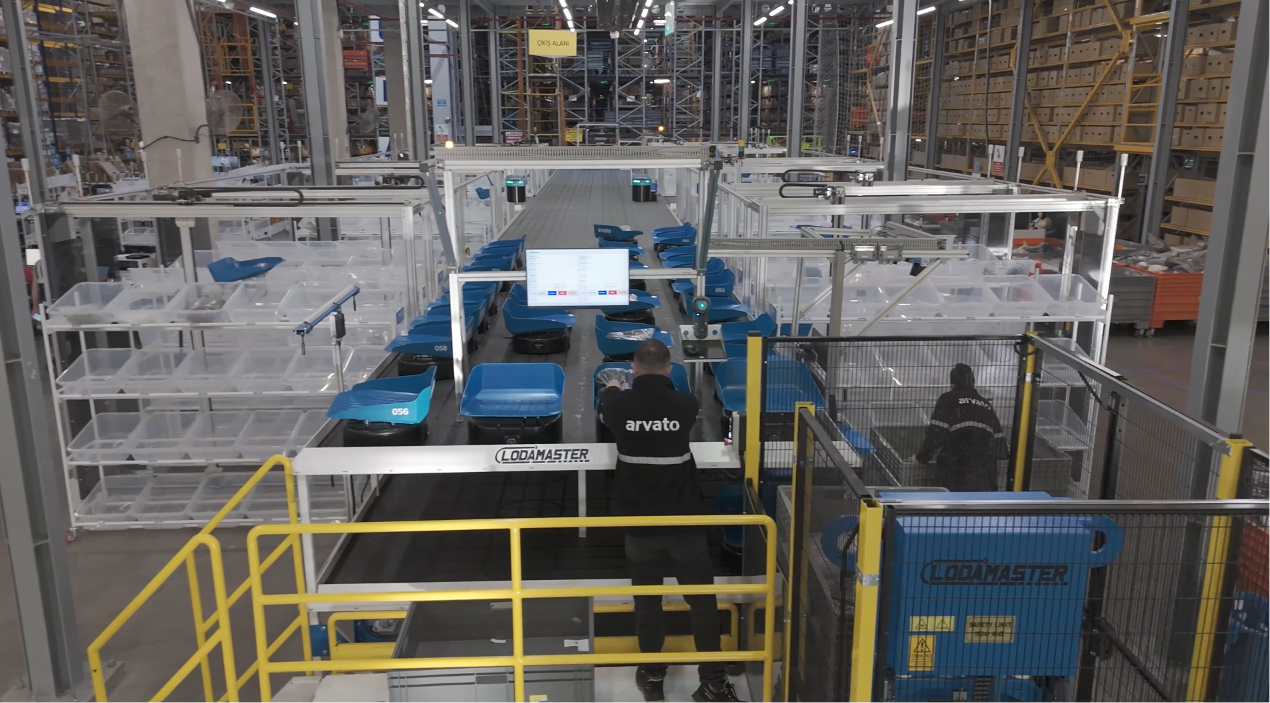
The installation comprises 66 autonomous sorting robots operating across a compact modular sorting grid, supported by 14 shuttle induction stations with the capacity to process up to 3,700 items per hour. The system can allocate products to 672 sorting destinations, providing the performance needed to manage large SKU counts, frequent order fluctuations and demanding service levels that characterise fashion ecommerce. Operating simultaneously across the grid, the robots independently transport items to their designated destinations, enabling thousands of products to be sorted every hour without the complexity of a conventional conveyor network.
For Arvato, the objective was not simply to increase sorting capacity, but to introduce an automation platform capable of supporting increasing ecommerce volumes without the disruption and cost associated with conventional conveyor systems.
Libiao’s 3D Sorter uses fleets of its distinctive autonomous robots to transport products to their required destinations. The approach reduces the need for permanent conveyor infrastructure while making future expansion considerably easier.
Designed Around the DC
The system has also been designed to accommodate the diverse product mix typical of fashion retail, handling everything from lightweight apparel to bulkier garments while maintaining high throughput throughout the facility. During implementation, the robotic system was configured to match Arvato Türkiye’s warehouse processes and physical layout, ensuring the technology complemented existing workflows rather than requiring them to be redesigned.
For Arvato Türkiye, the benefits extend well beyond increased sorting capacity. By automating the sortation process, it can increase picking batch sizes while reducing operator walking distances, minimise manual handling, improve warehouse flow and accelerate order fulfilment. Together, these improvements create a faster, more efficient fulfilment process capable of responding to fluctuating order volumes and seasonal peaks.
Equally significant was the speed of deployment. From the initial project concept through to full go-live took approximately six months, with the installation achieving its target throughput only three weeks after integration testing had been completed. The rapid implementation demonstrated how modular robotic automation can be introduced quickly while minimising disruption to ongoing warehouse activities.
Competitive Advantage
“Logistics providers today are under pressure from every direction,” said Ronan Shen, VP of Global Sales at Libiao Robotics.
“Order volumes continue to grow, customers expect faster delivery and greater accuracy, while warehouse operators are simultaneously facing rising labour costs, recruitment challenges and tighter margins. Success increasingly depends on investing in automation that not only delivers immediate productivity gains but also provides the flexibility to support future expansion without repeated investment in fixed infrastructure. This project perfectly demonstrates that philosophy. Arvato Türkiye has invested in a solution that can evolve alongside its business, providing the scalability to accommodate future volume growth and seasonal peaks while maintaining the speed and efficiency demanded by modern e-commerce operations. This project demonstrates how intelligent robotics can become a genuine competitive advantage, particularly in today’s uncertain economic climate.”
Building for the Future
Fashion fulfilment places unique demands on warehouses. High SKU counts, frequent returns and constantly changing order profiles require sortation systems that can deliver consistently high performance while adapting quickly as workflow requirements change. Increasingly, logistics providers are looking beyond conventional conveyor systems in favour of robotic technologies that can be expanded as business needs evolve.
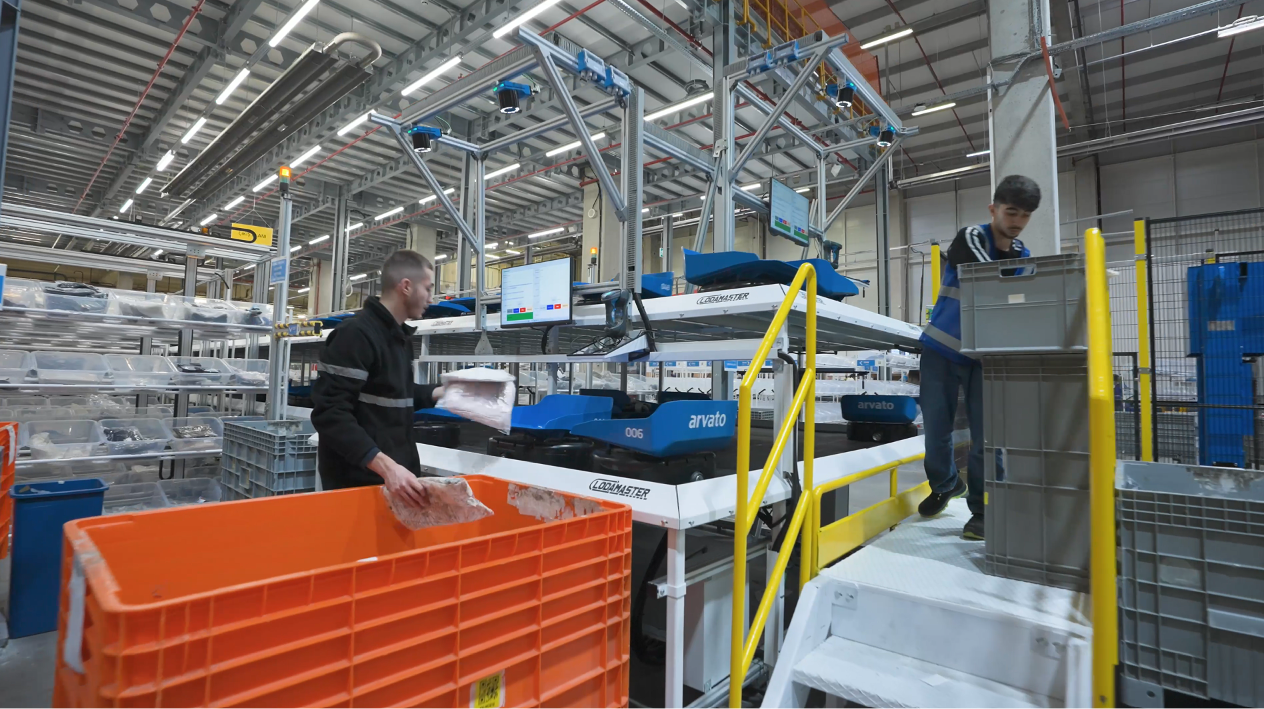
Libiao Robotics developed its 3D Sorter specifically for these dynamic warehouse environments. Its modular architecture enables operators to increase automation incrementally without replacing existing infrastructure, allowing investment to be aligned with changing business requirements. Today, Libiao’s robotic sorting solutions are deployed across e-commerce, retail, parcel logistics, pharmaceuticals and manufacturing facilities worldwide, helping customers improve productivity while building more resilient and responsive warehouse operations.
Arvato Türkiye’s first investment in warehouse automation illustrates how robotic sortation can deliver immediate productivity gains while creating a foundation for future growth. Rather than investing in conventional conveyor infrastructure, the company has adopted a modular automation strategy that can evolve alongside changing business requirements.