Agentic AI for Retail Stockouts and Returns

Blue Yonder has announced new retail innovations as part of its ‘Cognitive Solutions’ portfolio, designed to help hardlines and softlines retailers move from insight to action with agentic AI and connected retail decisioning. The latest enhancements create tighter alignment across forecasting, inventory planning, fulfilment, customer service and returns on the Blue Yonder Platform. Retailers can now respond faster to changing demand, improve inventory productivity and recover more value across the retail lifecycle. Rather than optimising individual retail functions in isolation, Blue Yonder connects decisions across planning and execution, so what a retailer learns about demand shapes both how they fulfil and how they manage returns.

“Many retailers can already see what’s happening. The hard part is acting on it before the moment passes,” said Gurdip Singh, chief product officer at Blue Yonder.

“With this release, we’re putting agentic AI into the flow of retail decisions. Forecasting, inventory, fulfilment and returns start working as one system instead of a chain of handoffs. That’s how you turn insight into action at the speed retail demands, with the precision to protect margins while you improve the customer experience.”

Smarter fulfilment and inventory visibility

Poor availability is expensive. Out-of-stocks cost retailers roughly $1.2 trillion a year in lost sales. The release adds predictive fulfilment intelligence and inventory network visibility in Order Management. This helps teams improve fill rates, service levels and fulfilment efficiency by identifying risks, bottlenecks and optimisation opportunities across inventory, sourcing, fulfilment and network operations. For retailers, that means better availability, fewer missed promises and smarter fulfilment decisions across stores, distribution centres and digital channels.

Unified workspace for service and selling

A new unified customer service and assisted selling workspace streamlines customer identification, product discovery, inventory visibility, pricing, fulfilment options, payment capture and order management. Customer service and store teams can respond faster, improve conversion and resolve issues with better context.

Recovering more value from returns

Returns are among retail’s costliest problems. U.S. consumers were expected to return nearly $850 billion in merchandise in 2025, about 15.8% of sales, according to the National Retail Federation. The new functionality includes:

Personalised returns experiences
Customer-specific returns policies
Configurable store credit strategies
Returns order receiving and receipt control
Smart Disposition and configuration
Test and Grade workflows
Unit-level simulation of disposition outcomes

Together, these capabilities target the same problems: reduce returns leakage, improve resale and recovery, cut fraud risk and keep shoppers satisfied. With Blue Yonder Returns Management, retailers move returned items back to sellable stock about 25% faster on average, improving in-stock levels and even reducing overall inventory levels.

“For most retailers, a return is a cost to absorb. I’d argue it’s a chance to reimagine the customer experience, save the sale and optimise inventory,” Singh said. “Now, the system doesn’t just initiate and process the return. It recommends the best decision for that item and allows users to act on it, from routing to receipt to resale. That’s an agent that does the work and helps recover more margin without adding headcount.”

AI-guided workflows

Blue Yonder enhances Orchestrator as the unified interaction and orchestration layer for workflows, insights, AI-powered guidance and actions. A new navigation experience combines traditional navigation with a prompt-driven, AI-first experience, so people move from decision to action faster across planning, execution and network operations.

Transport Operations Shifted Amid Driver Shortage

Girteka is shifting part of its transport operations to Riga (Latvia) and Oradea (Romania), establishing local entities as the company adapts its European operating model to changing labour market conditions and the continued shortage of professional drivers.

In Latvia, Girteka is already approaching the milestone of 100 locally registered trucks, with the fleet operating on the road. In Romania, the team is preparing to receive its first trucks and drivers. The new operations will include locally registered fleets, driver employment and transport management, with local administrative teams developing in line with operational needs.

Our focus is to be the best-performing logistics partner for temperature-controlled and high-value cargo. Customers in these segments expect reliability, consistent capacity and a high level of operational control. As labour availability, regulation and costs change across Europe, we need to make sure our operating model continues to support that promise and allows us to deliver at scale

says Pavel Kveten, CEO of Girteka Logistics.

Adapting to Europe’s driver shortage

Professional driver availability remains one of the biggest challenges for European road transport. According to the International Road Transport Union, around 502,000 truck driver positions were unfilled in Europe in 2025, representing approximately 13% of the workforce required by the sector.

The pressure is expected to increase further. IRU estimates that around 20% of Europe’s current truck driver workforce will retire within the next five years, adding further pressure to an already constrained labour market.

For an asset-based transport company such as Girteka, access to professional drivers is directly linked to the capacity it can provide to customers. The company delivers around 800,000 full truckloads annually for more than 5,000 customers across Europe, making the ability to attract, employ and support a stable driver workforce a core part of its operating model. By diversifying where its fleet and workforce are based, Girteka gains greater flexibility to secure the resources needed to serve customers reliably across Europe.

European operating network

Girteka already operates through multiple locations across Europe. In Poland alone, the company manages a fleet of around 3,000 trucks, supported by local driver recruitment, transport management and operational capabilities. The new entities in Latvia and Romania continue this approach, allowing Girteka to position its operations where they can best support both customer needs and access to professional drivers.

This is a necessary step to ensure the continuity and efficiency of our transport operations. The availability of professional drivers remains a key constraint, and we need greater flexibility to recruit at the scale our fleet requires… Establishing operations in Latvia and Romania gives us additional options to attract and employ drivers, organise our fleet more effectively and maintain the capacity our customers rely on.

says Mindaugas Paulauskas, CEO of Girteka Transport.

Developing local operations

The new entities will be fully integrated into Girteka’s European operations, providing the local framework for fleet registration, driver employment and transport management.

The company is already building local teams, with recruitment under way for transport operations and management roles in Riga. The company is looking for experienced professionals who can help establish processes, support fleet growth and build local teams as the operation develops. Recruitment in Romania will develop alongside the launch and growth of the local operation.

As the operations scale, Girteka will assess the need for additional local roles and functions in both countries. The aim is to create a sustainable operating setup that supports fleet performance, driver availability and reliable capacity for customers across Europe.

Fashioning the Future of Automation

A flexible robotic sorting system from Libiao Robotics enables Arvato to expand its fashion ecommerce fulfilment, writes Peter MacLeod.

The continued growth of online fashion retail is placing increasing pressure on fulfilment operations, where large product ranges, rapidly changing order profiles, high levels of returns, and seasonal peaks demand increasingly agile warehouse processes. For Arvato, a leading logistics provider supporting global retail brands, the priority is to increase throughput while retaining the agility needed to respond quickly to changing customer demand.

Against this backdrop, Arvato Türkiye looked to expand its ecommerce fulfilment operation on behalf of a leading global fashion retailer at its Platform S distribution centre in Istanbul. Rather than investing in a traditional conveyor-based sortation system, the company selected Libiao Robotics’ modular 3D Sorter, making its first significant investment in warehouse automation and laying the groundwork for further automation across its operation.

Flexible Approach

Working with local systems integration partner Lodamaster, Libiao Robotics designed, supplied and commissioned a robotic sorting solution tailored specifically to the requirements of a high-volume fashion fulfilment centre.

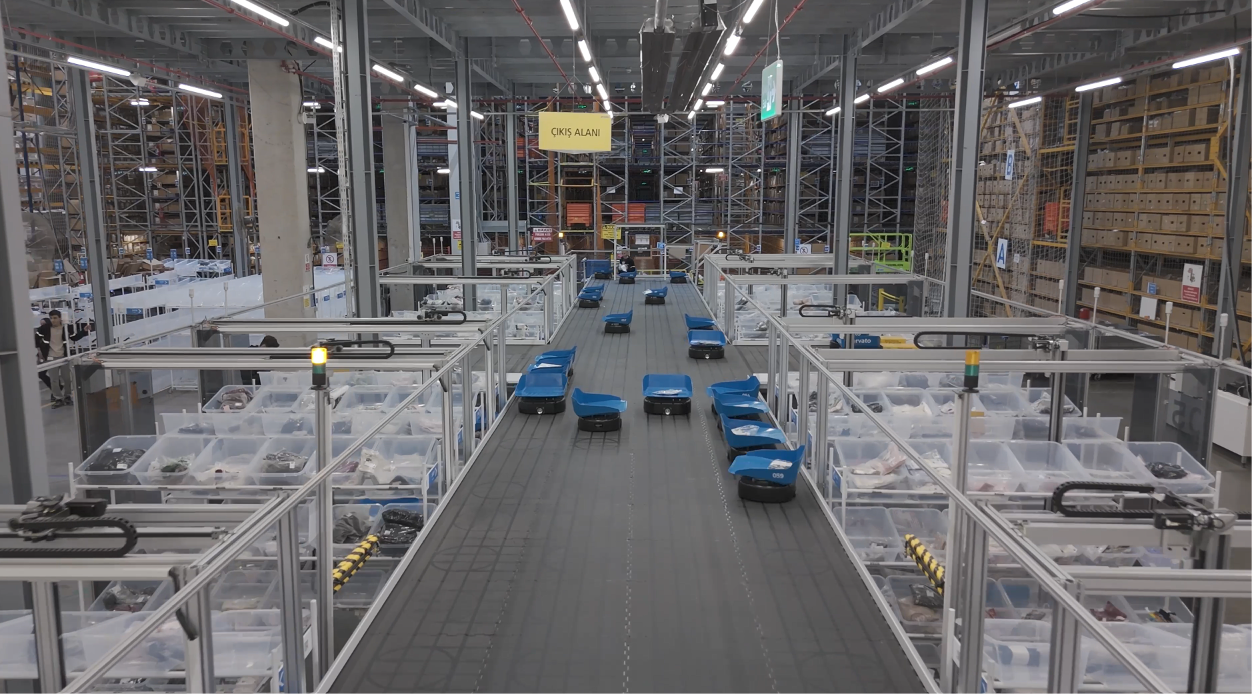
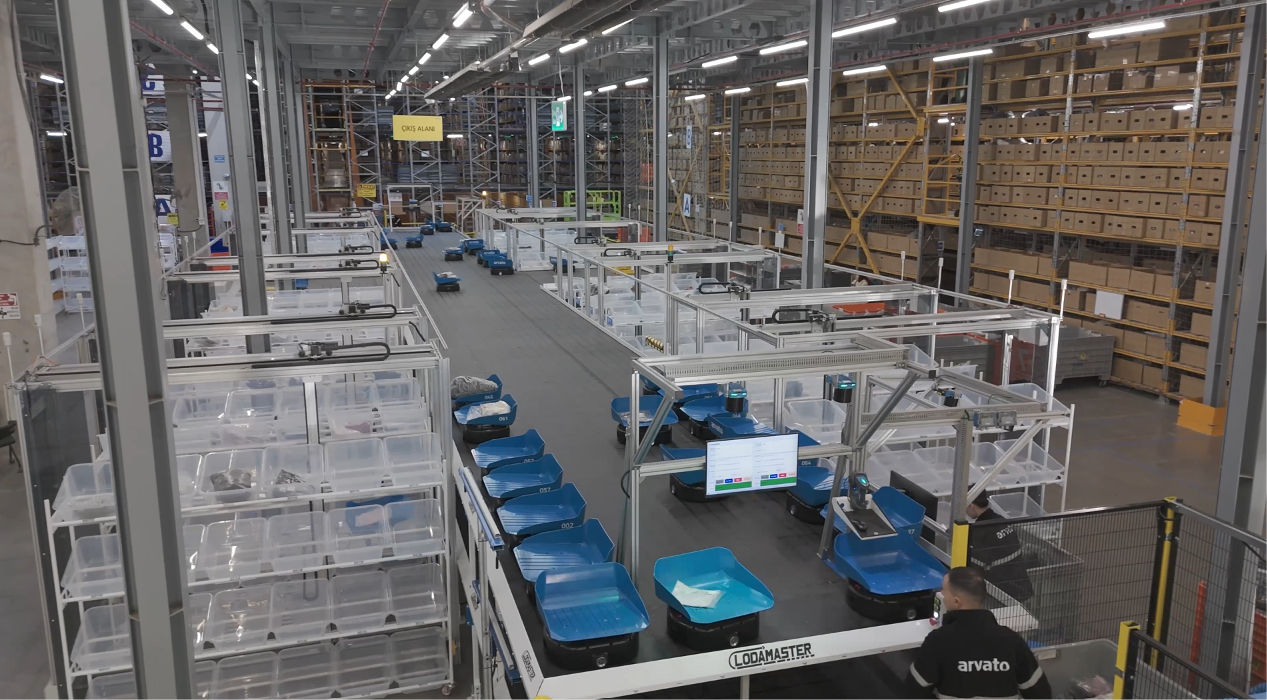
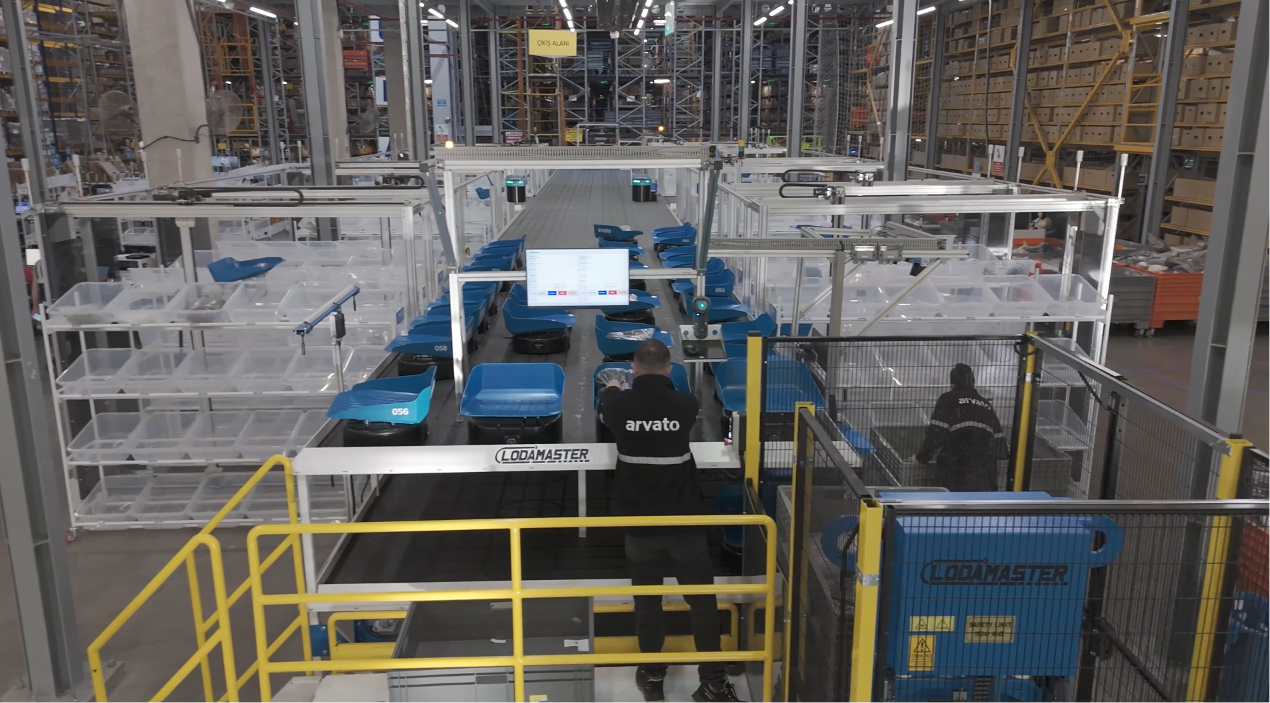
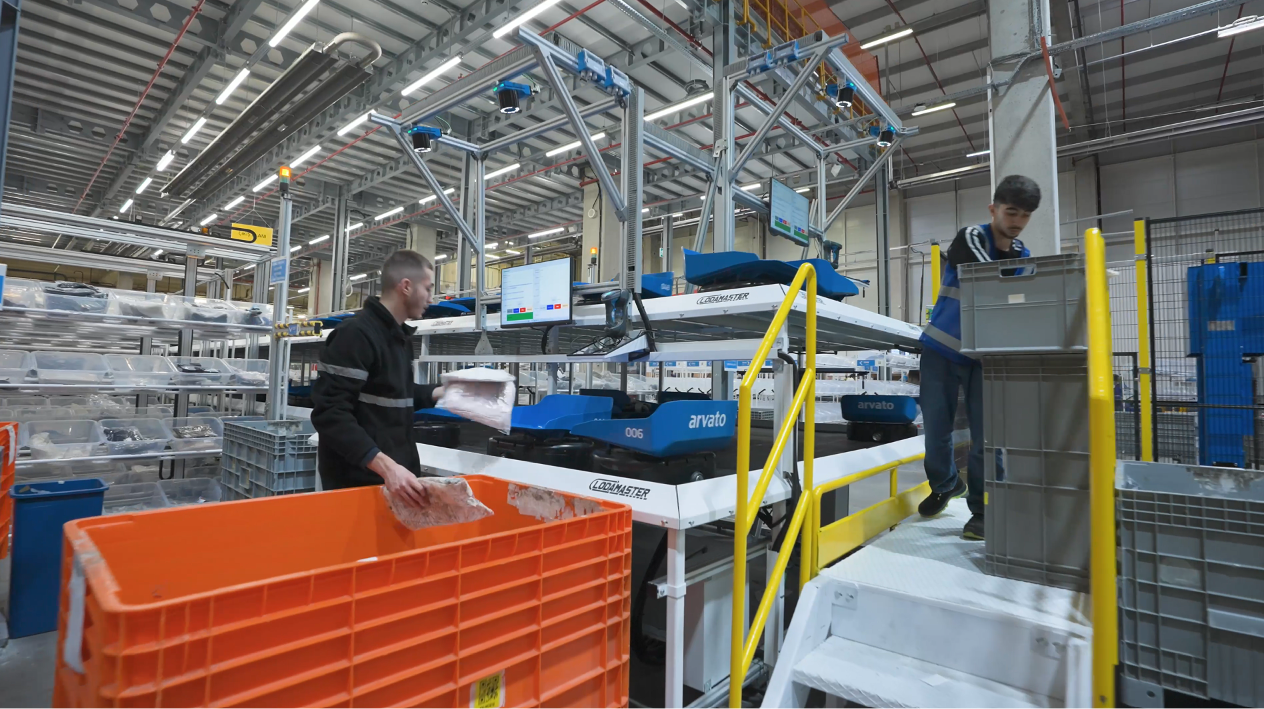
The installation comprises 66 autonomous sorting robots operating across a compact modular sorting grid, supported by 14 shuttle induction stations with the capacity to process up to 3,700 items per hour. The system can allocate products to 672 sorting destinations, providing the performance needed to manage large SKU counts, frequent order fluctuations and demanding service levels that characterise fashion ecommerce. Operating simultaneously across the grid, the robots independently transport items to their designated destinations, enabling thousands of products to be sorted every hour without the complexity of a conventional conveyor network.

For Arvato, the objective was not simply to increase sorting capacity, but to introduce an automation platform capable of supporting increasing ecommerce volumes without the disruption and cost associated with conventional conveyor systems.
Libiao’s 3D Sorter uses fleets of its distinctive autonomous robots to transport products to their required destinations. The approach reduces the need for permanent conveyor infrastructure while making future expansion considerably easier.

Designed Around the DC

The system has also been designed to accommodate the diverse product mix typical of fashion retail, handling everything from lightweight apparel to bulkier garments while maintaining high throughput throughout the facility. During implementation, the robotic system was configured to match Arvato Türkiye’s warehouse processes and physical layout, ensuring the technology complemented existing workflows rather than requiring them to be redesigned.

For Arvato Türkiye, the benefits extend well beyond increased sorting capacity. By automating the sortation process, it can increase picking batch sizes while reducing operator walking distances, minimise manual handling, improve warehouse flow and accelerate order fulfilment. Together, these improvements create a faster, more efficient fulfilment process capable of responding to fluctuating order volumes and seasonal peaks.

Equally significant was the speed of deployment. From the initial project concept through to full go-live took approximately six months, with the installation achieving its target throughput only three weeks after integration testing had been completed. The rapid implementation demonstrated how modular robotic automation can be introduced quickly while minimising disruption to ongoing warehouse activities.

Competitive Advantage

“Logistics providers today are under pressure from every direction,” said Ronan Shen, VP of Global Sales at Libiao Robotics.

“Order volumes continue to grow, customers expect faster delivery and greater accuracy, while warehouse operators are simultaneously facing rising labour costs, recruitment challenges and tighter margins. Success increasingly depends on investing in automation that not only delivers immediate productivity gains but also provides the flexibility to support future expansion without repeated investment in fixed infrastructure. This project perfectly demonstrates that philosophy. Arvato Türkiye has invested in a solution that can evolve alongside its business, providing the scalability to accommodate future volume growth and seasonal peaks while maintaining the speed and efficiency demanded by modern e-commerce operations. This project demonstrates how intelligent robotics can become a genuine competitive advantage, particularly in today’s uncertain economic climate.”

Building for the Future

Fashion fulfilment places unique demands on warehouses. High SKU counts, frequent returns and constantly changing order profiles require sortation systems that can deliver consistently high performance while adapting quickly as workflow requirements change. Increasingly, logistics providers are looking beyond conventional conveyor systems in favour of robotic technologies that can be expanded as business needs evolve.

Libiao Robotics developed its 3D Sorter specifically for these dynamic warehouse environments. Its modular architecture enables operators to increase automation incrementally without replacing existing infrastructure, allowing investment to be aligned with changing business requirements. Today, Libiao’s robotic sorting solutions are deployed across e-commerce, retail, parcel logistics, pharmaceuticals and manufacturing facilities worldwide, helping customers improve productivity while building more resilient and responsive warehouse operations.

Arvato Türkiye’s first investment in warehouse automation illustrates how robotic sortation can deliver immediate productivity gains while creating a foundation for future growth. Rather than investing in conventional conveyor infrastructure, the company has adopted a modular automation strategy that can evolve alongside changing business requirements.

Subscribe

Get notified about New Episodes of our Podcast, New Magazine Issues and stay updated with our Weekly Newsletter.