Outbound management at the loading bay of a busy distribution centre can be a harsh and disorganised environment, inbound too. David Priestman spoke to Wouter Satijn, Chief Revenue Officer, Joloda Hydraroll, who says we must embrace automated loading and unloading.
At many distribution centres the transport equipment, trucks and trailers are not owned by the warehouse operator itself, but third-party transport and logistics businesses. This makes controlling the dock area more complex as vehicles and trailers are not standardised. “We are coming from trailers, that’s where our heritage is – from the 1960s. We supply a lot to trailer builders. We have a lot of clients who are transport companies,” Satijn tells me. “We know that trailers are never the same. They are damp, dirty, dark.”
AGV Integration
Many AGV suppliers, like Linde, Still and Agillox are now offering trailer loading solutions. Does that competition worry Joloda? “I only find that very good, I don’t see this as competition. I think it’s very good that we’re all addressing those loading bays,” Satijn says. “Trailers are not fantastic environments for robots though. Unfortunately, the loads that they’re trying to carry in, the pallets, sometimes overhang. Pallets also have differing quality, whatever the load that’s on them. I fear that many applications for AGVs, especially given the tolerance inside those trailers, the non-standardization, will cause big problems for a lot of the bots. We’d love to work together with those bots with our new ‘LoadMatic Lite’ system.”
Drop-off Zones
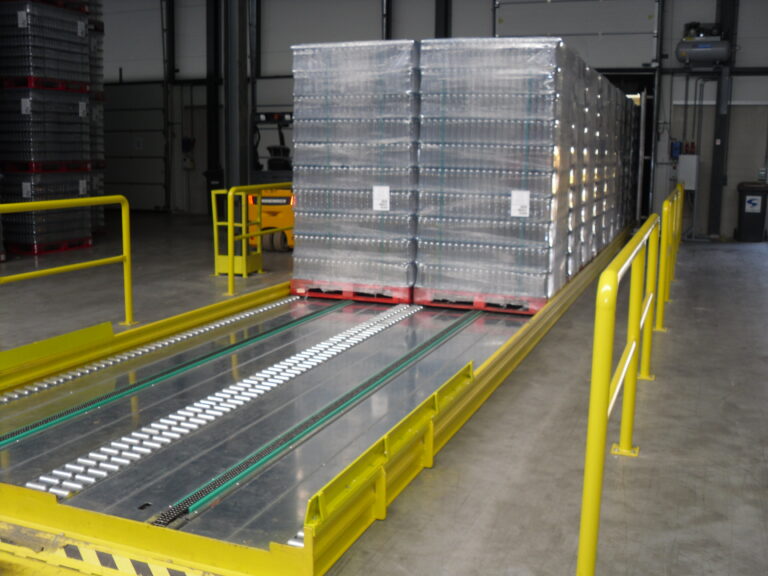
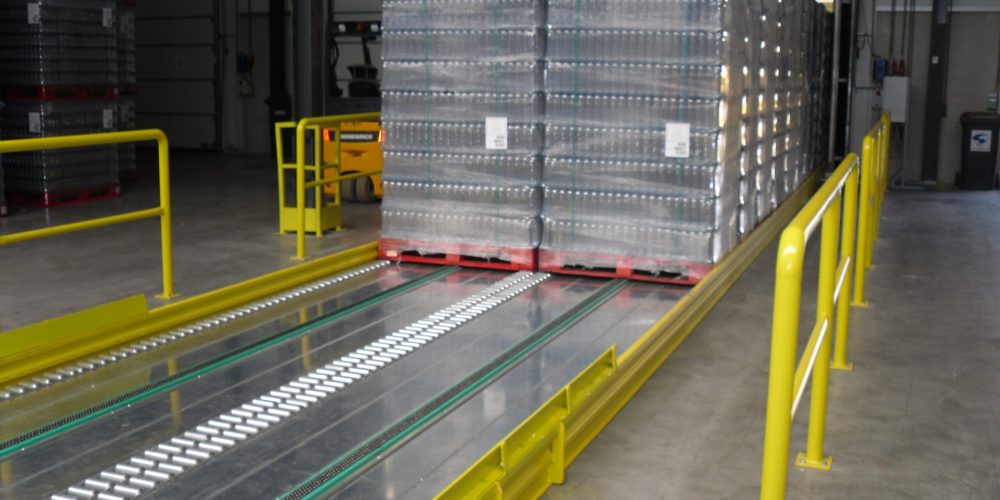
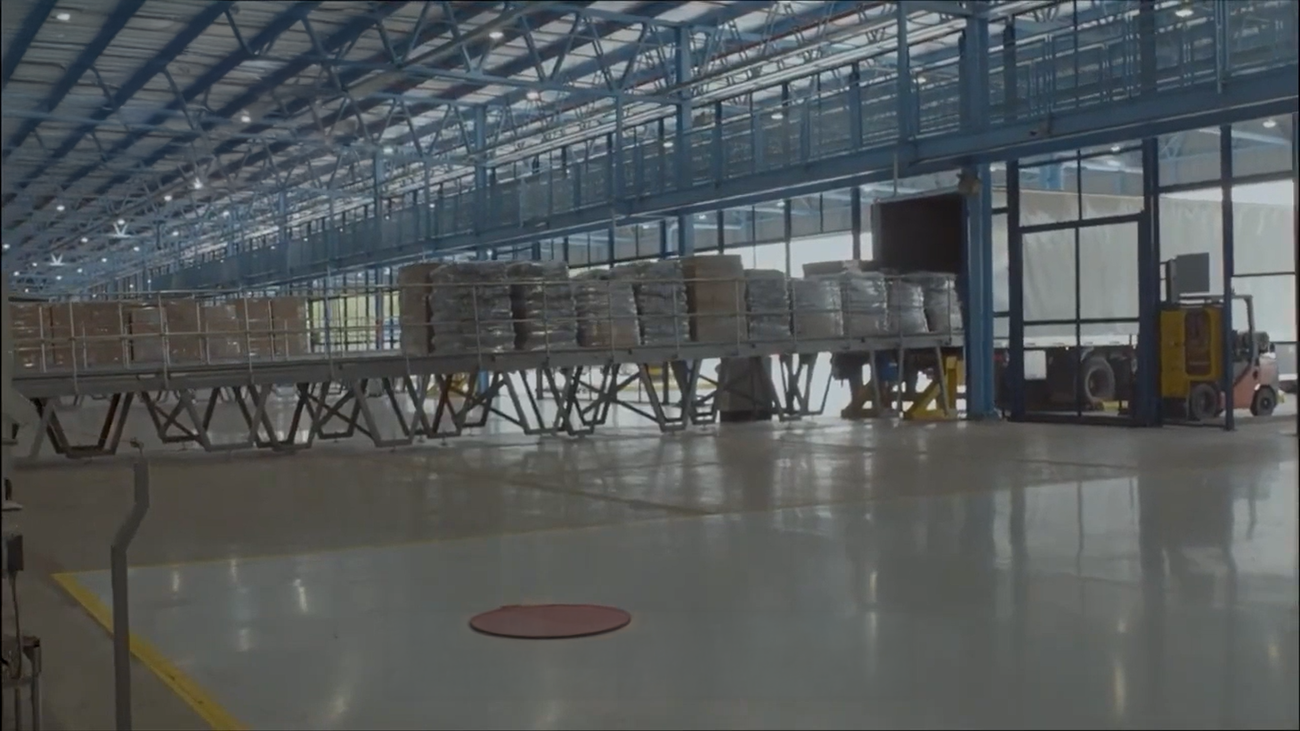
“AGVs are fantastic. If they drop the pallet on the back of our LoadMatic Lite, we can load any non-modified trailer, which is by far the largest market. We already this kind of partnership with traditional loader products like shuttle trailers, where we modify the trailers and they go back and forth. Now the integration with AGVs and LoadMatic Lite for any non-modified trailer, any container, I really feel that that’s the ideal case, because we’re keeping the AGVs out of the trailer itself.”
Loading the trailer is much faster this way, he claims. “We do one-shot loading, so we load in under 10 minutes, whereas 2 expensive AGVs will do within maybe 45 minutes.” This is because AGVs gradually bring items to the outbound loading area, rather than all at once. Joloda expect to collaborate non-exclusively with AGV suppliers on this integration.
Blockbuster Combination
Satijn and his teams have a passion for anything that loads and unloads, whether that be manual, hybrid or automated. Thanks to the acquisition of Actiw from Finland a few years ago non-modified trailers are not a problem.
“It’s serious technology and expertise that you need to have for loading non-modified trailers, because every trailer is different every time. Trailers can be parked a little bit off-centre, so the tech needs to be really smart in order to load it in the correct way. Actiw has more than 200 machines out in the market, so that’s why we bought them.”
Joloda sells a lot of systems to the Petrochem sector, as it has high output volumes and demands automation. “We’re growing big time now, also in FMCG and beverage. Anywhere where there’s high volumes.” The company has a new demo system for LoadMatic Lite at its Liverpool factory. It is an entry-level piece of kit that can be integrated at a brownfield site.
“We really think it’s going to be a blockbuster around the loading bay. We’re doing demo days and customer visits with existing and new clients from all over the world, visiting our headquarters. Some people want to test it, so they bring products such as bottled beers or water. Then we test it and video it. I expect a lot from that product and from those from those demos and tests. Send your goods in, we’ll show you how we can load a non-modified trailer.”
The company is present in 34 countries now, with 350 employees and a turnover that has doubled to £60m over just the last three years. Satijn forecasts it to double again within five years, with another acquisition also a possibility. Transport operators are being hurt by high diesel prices, so perhaps they will increase investment in EVs, together with automation. “The addressable market is big and only getting bigger due to the labour shortages, the need for increased safety, and for space reduction. Forklifts require a lot of space. We don’t require that because we want short loads – two or three times on the same door per hour. That’s a very efficient use of space.”
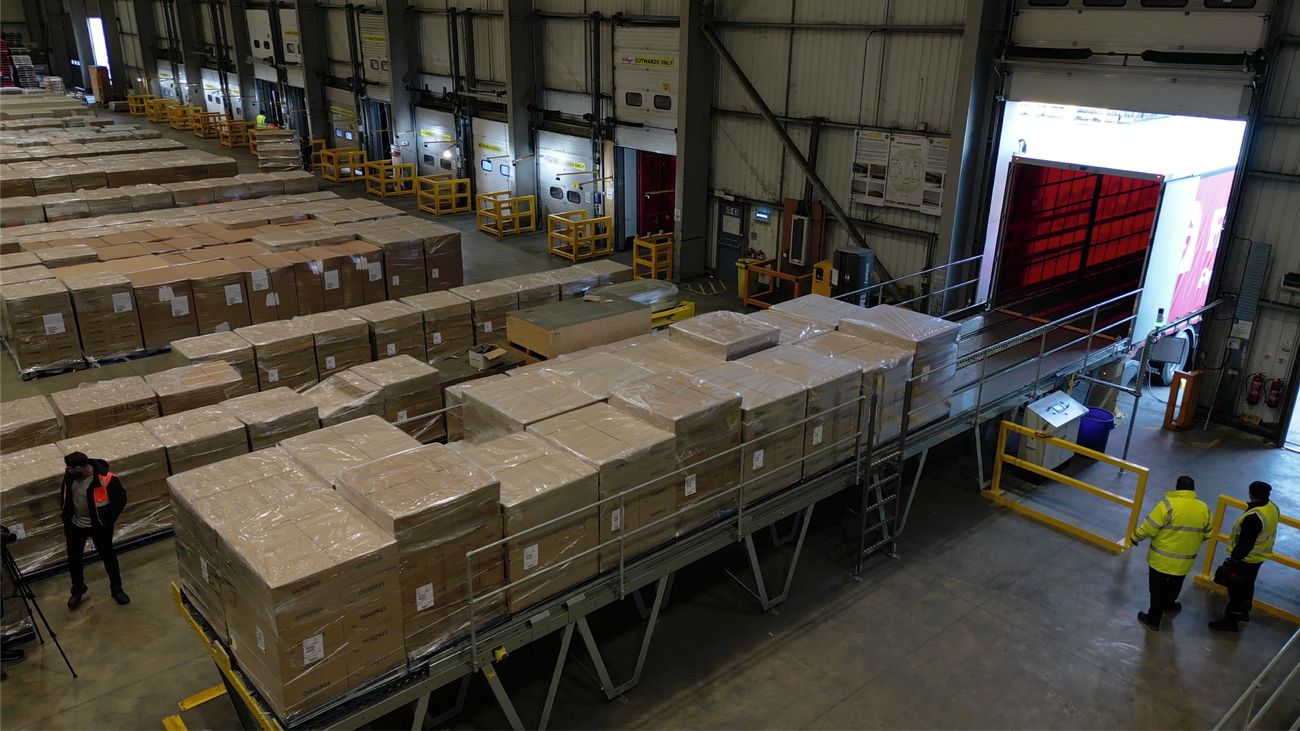
I asked Satijn what the company’s best project was in the last year, that the company is particularly proud of. “Taking irregular, heavy pallet loads of flooring products and restraining them for secure transport with a netting from the company NWE. You press a button and it automatically comes down and load secures within two minutes.” Another new market project was for Nestle in Guatemala.
Bridging the Silos
Both manufacturing and logistics processes have been transformed through automation, with zero touch operations representing the pinnacle of efficiency. Organisations are working towards quicker innovation, adding new lines and short run promotions to exploit timely opportunities. Additional flexibility and improved control allow companies to respond to regulatory demands for sustainable packaging and waste reduction, including deposit return schemes.
The point at which these super-efficient manufacturing and logistics processes meet remains not only a bottleneck but one that is adding risk and cost. At the loading bay, continued reliance upon manual loading and unloading processes, including the use of forklift trucks, could be an anachronism. Replacing manual processes with automation enables organisations to reduce unload and load times.
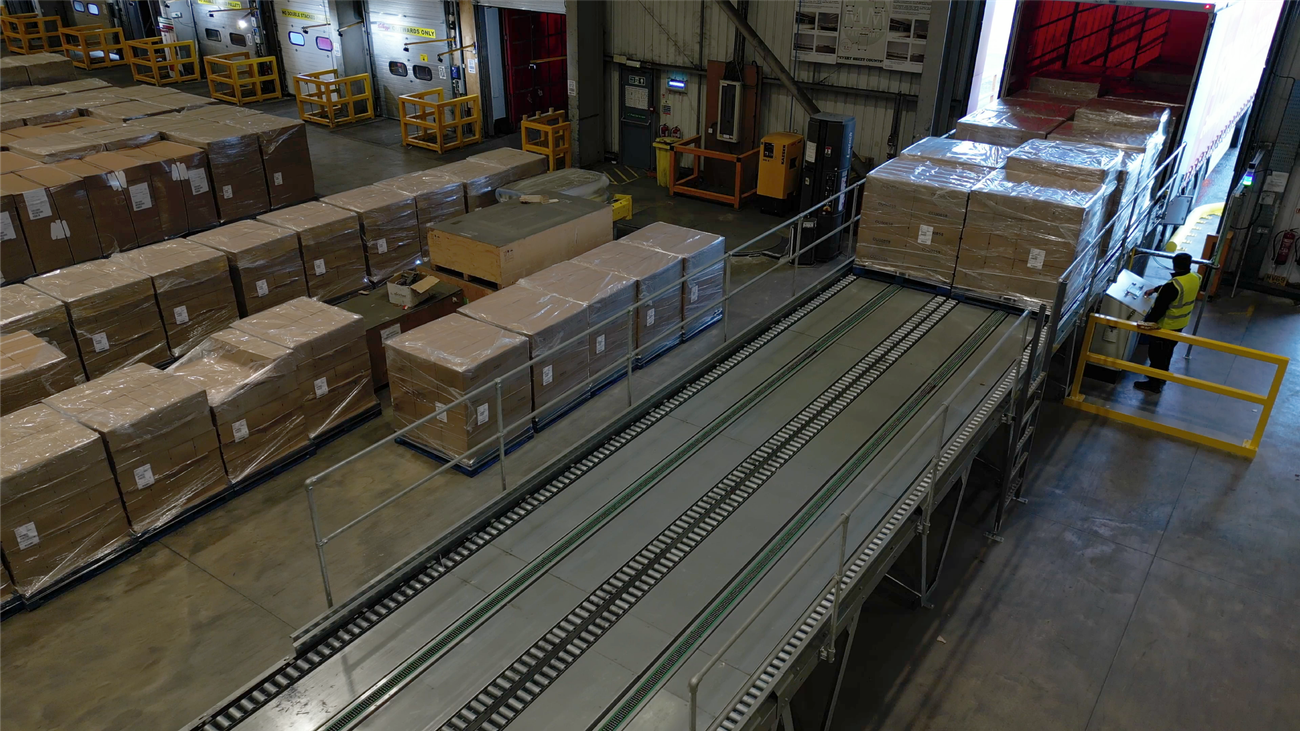
Critically, it provides organisations with a chance to join up the manufacturing and logistics silos to create end-to-end operational visibility. Automated trailer and container loading systems enable the real-time data capture within loading bays. Using IoT and RFID to track the progress of pallets from the end of manufacture through to warehouse and distribution enables companies to better understand processes and drive new efficiencies.
Pipeline Growth
“I was talking to a good customer from Cargill,” Satijn states.
“He literally said, ‘listen, we’ve done a lot of automation in the factories (silo one), end-of-line automation of course, all the production machines, but also the packaging and the palletizing and the wrapping and all of that conveying up to where it needs to be. And then silo two had a lot of attention’. The warehouse might be connected to the factory or outsourced, or in a different building. A lot of ASRS has gone in the last 15+ years. But it is those two silos that have been really done well – layer picking, the whole shooting match. But what’s in between the factory and the warehouse inbound and outbound, the loading bays, that’s really what they’re addressing more now. We see that in our growth and we see that in the number of leads and opportunities we get in our pipeline.”
Adding cameras to loading docks also provides information about pallet shape and damage which, combined with AI, can be used to automatically send pallets to the correct location. Ensuring damaged goods are flagged for further assessment rather than being delivered, not only improves customer satisfaction but also removes the additional costs associated with managing product returns.
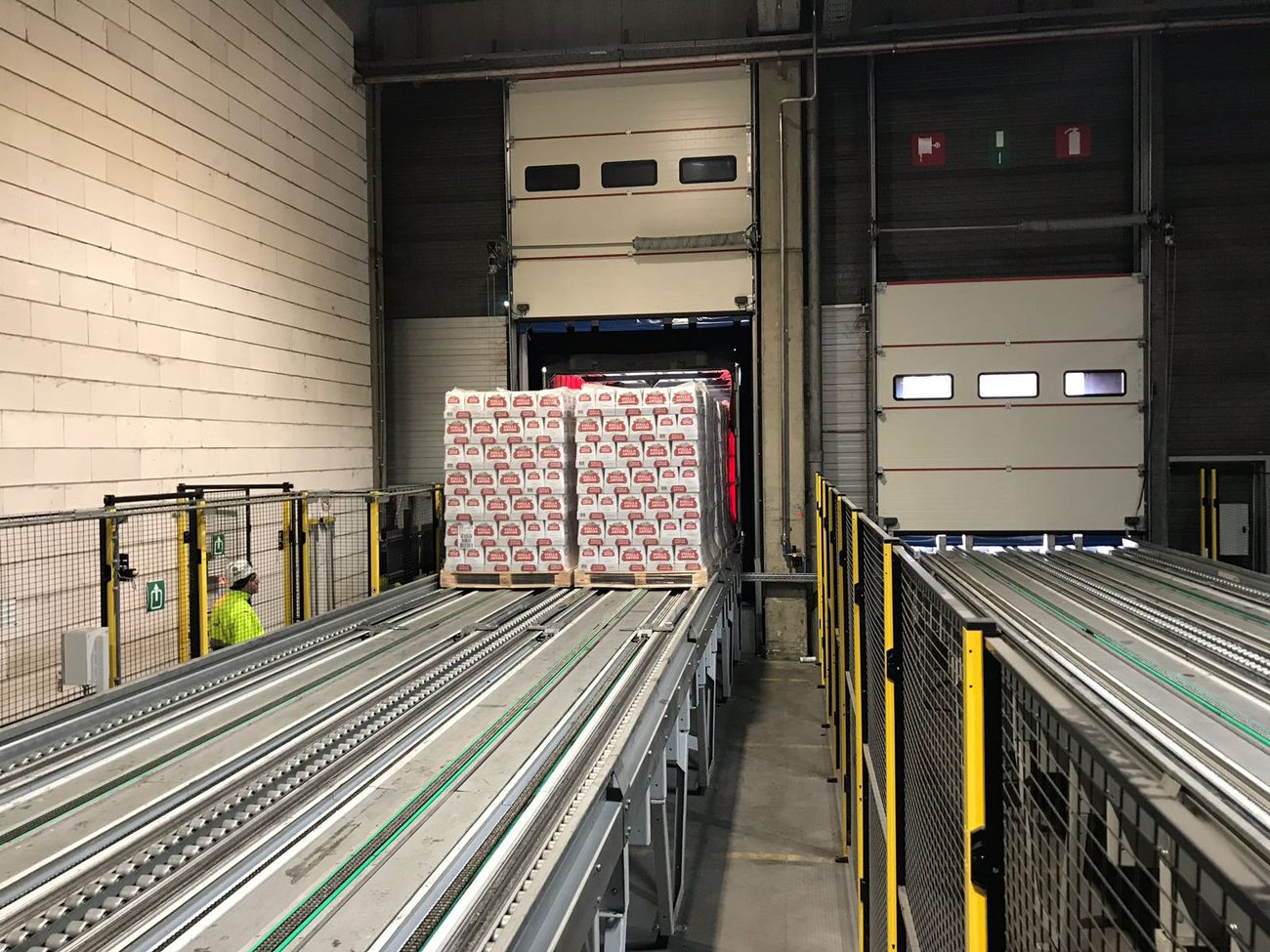
What about the ecommerce and parcel fulfilment sector? Could that benefit from automatic loading and unloading? “Loose loads are the stupidest thing! Unify your load,” exclaims Satijn, “put it in a trolley, a dolly, on a pallet or a ULD. We’re not going to move into that market. Automating the unloading of them has been a holy grail because you’ve got do many varied SKUs.”
“Siloed operations are outdated, inefficient and an increasing liability in a world of increasingly connected and AI-enabled operations,” concludes Satijn. “Joining up effective manufacturing and distribution operations through automated loading and unloading unlocks opportunities to transform end-to-end operations. Add in the use of Gen AI with predictive insights and operational optimisation and organisations have the chance to reduce costs, improve efficiency and, critically, respond rapidly to disruption.”