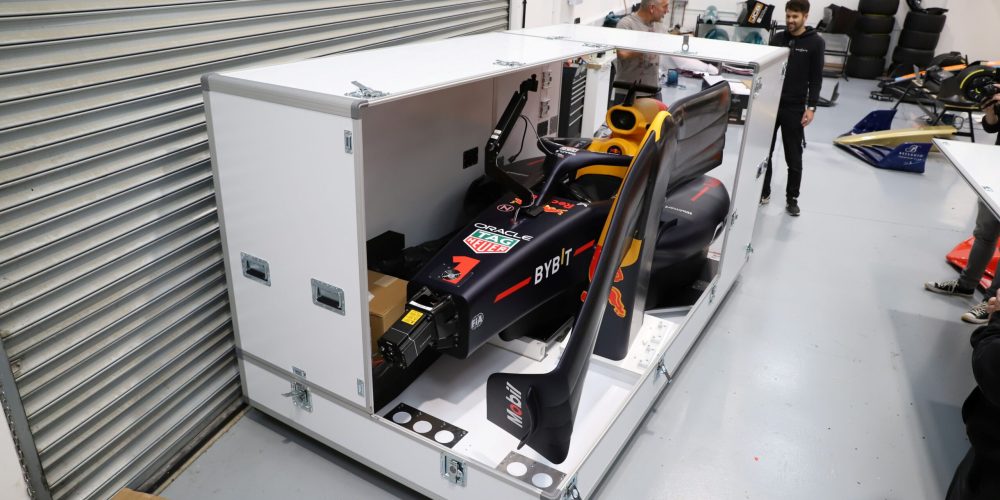
For most manufacturers, a product leaving the factory marks the end of the production process. For Memento Exclusives, it begins another highly specialised operation: the delivery to the end destination, and a happy customer.
Best known as the official licensed provider of full-scale F1® Show Cars and the operator of F1® Authentics, Memento Exclusives has been manufacturing innovative items at scale for years. As the products evolve so too does the logistical requirements of providing them to Formula 1’s eco-system of teams, partners and fans. Advanced motion simulators have joined Show Cars among the brand’s flagship products, bringing the world of elite motorsport to events and locations across the world, as well as into the homes and collections of customers. They are complex, high-value pieces that demand the same attention to detail during transportation as they receive during the in-house, bespoke manufacturing process. Whether travelling across the UK or being delivered to a customer on another continent, there is little room for error.
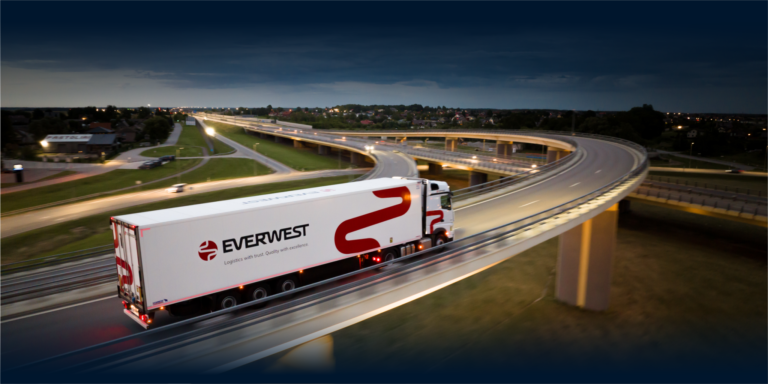
That makes logistics an important part of the customer journey. Planning begins before a Show Car has even been completed. As the build approaches its final stages, Memento Exclusives contacts one of its specialist logistics partners to arrange transportation, establishing where the product needs to go, when it needs to arrive and which mode of transport offers the best combination of speed, security and cost.
For international deliveries, that planning also includes the customs requirements associated with the destination country. Every product the company ships has its own Harmonised System (HS) code, which classifies the overall product for customs purposes and determines the duties and taxes that may apply when it enters a particular market.
Those costs can vary considerably between countries. In the US, for example, applicable import charges can be around 10 per cent, while shipments entering parts of Europe can face VAT of approximately 21 per cent alongside duties that may be in the region of 12-13 per cent, depending on the product classification and destination. For business customers, some taxes may subsequently be recoverable.
Bespoke Logistics
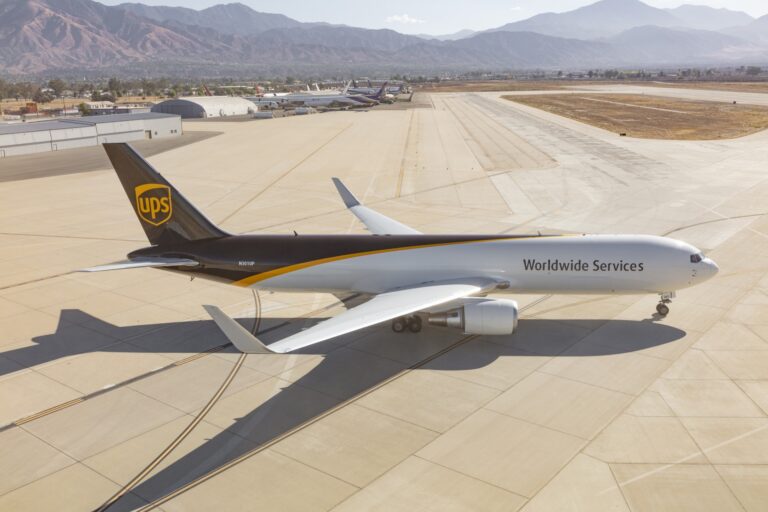
For international deliveries, the logistics specialist uses both air and sea freight. Where speed is the priority, air freight offers the more predictable option and can substantially reduce time. However, when there is flexibility around the delivery date, sea freight can cut transportation costs by around 50 per cent. Shipping within Europe can cost around £5,000, while transporting a Show Car or simulator further afield can cost more than double that.
The trade-off is predictability. Sea freight introduces more variables, from adverse weather and port congestion to the availability of unloading capacity at the destination. Customs processes add another layer of complexity as specialist products must be correctly classified and supported with the appropriate documentation before they can be cleared.
That is why Memento Exclusives builds the customs process around the customer as well as the shipment. For private customers, the company can provide a quotation that incorporates the relevant import charges, allowing them to pay those costs upfront. Alternatively, depending on the arrangements in place, the charges can be settled once the car has reached its destination or while it is in transit.
Damn Brexit
The wider geopolitical environment has also become a consideration. The business has found that recent disruption has generally had a greater impact on its inbound supply chain than on outbound deliveries, but the broader pressures affecting global shipping remain relevant.
Brexit added another layer – where movements between the UK and European markets could previously take place without the same duties and taxes, cross-border deliveries now require additional administration and can incur charges not previously part of the process. For a business routinely shipping high-value, specialist products internationally, accurate documentation is crucial.
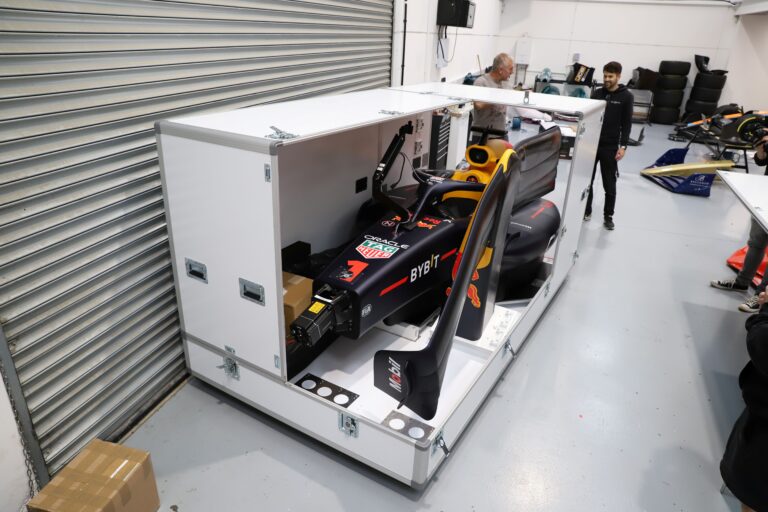
Long before an item leaves, Memento Exclusives considers how the product can be protected. A Show Car transported within the UK will typically be loaded into an enclosed trailer. The wheels are strapped down, and the front wing is removed – a simple but important precaution for one of the most exposed areas, making it particularly vulnerable during loading, unloading and transit. For international shipments, the car is also protectively wrapped. The objective is to prevent movement, protect vulnerable surfaces and ensure the car arrives looking exactly as it did when it left the facility.
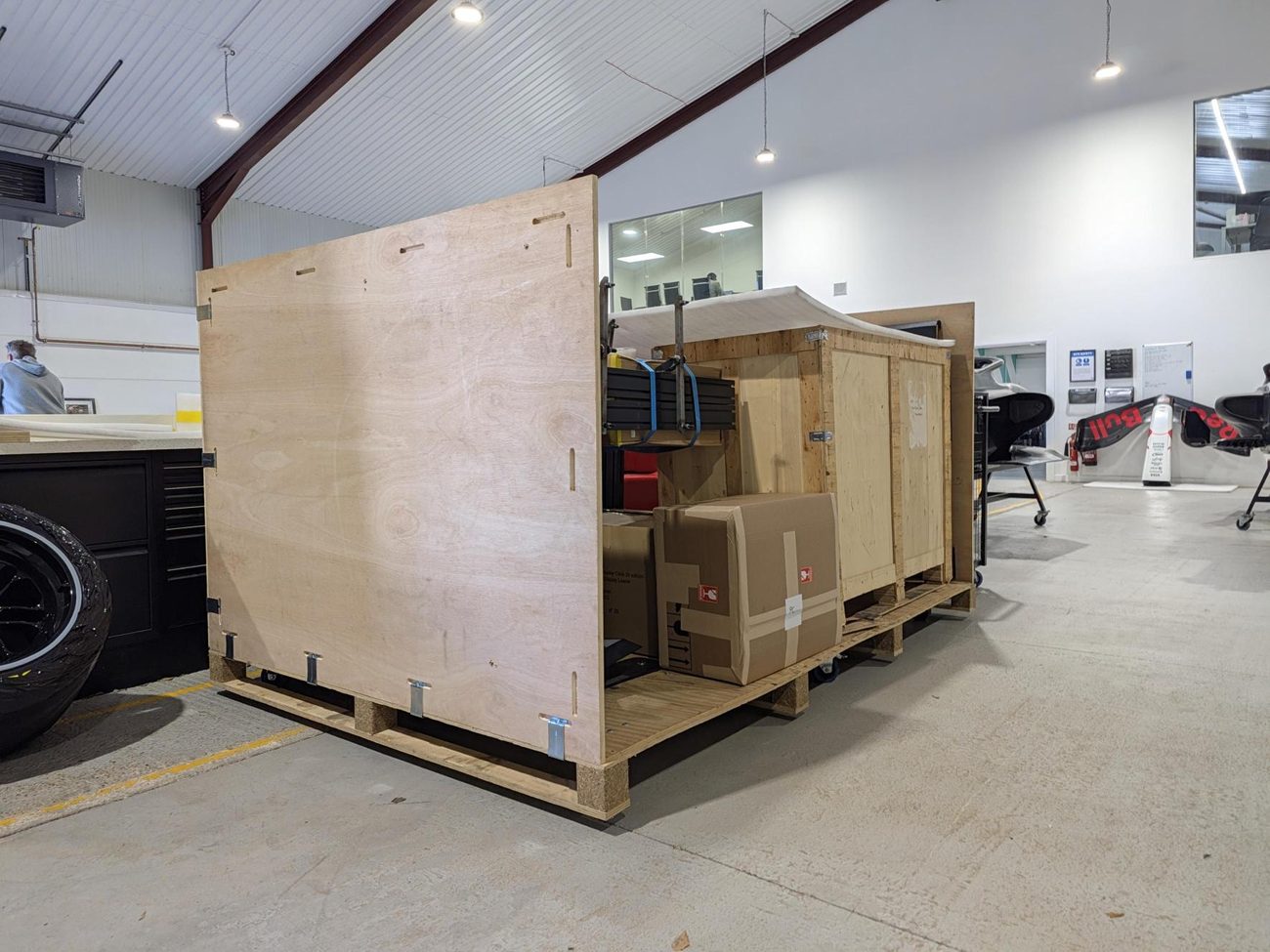
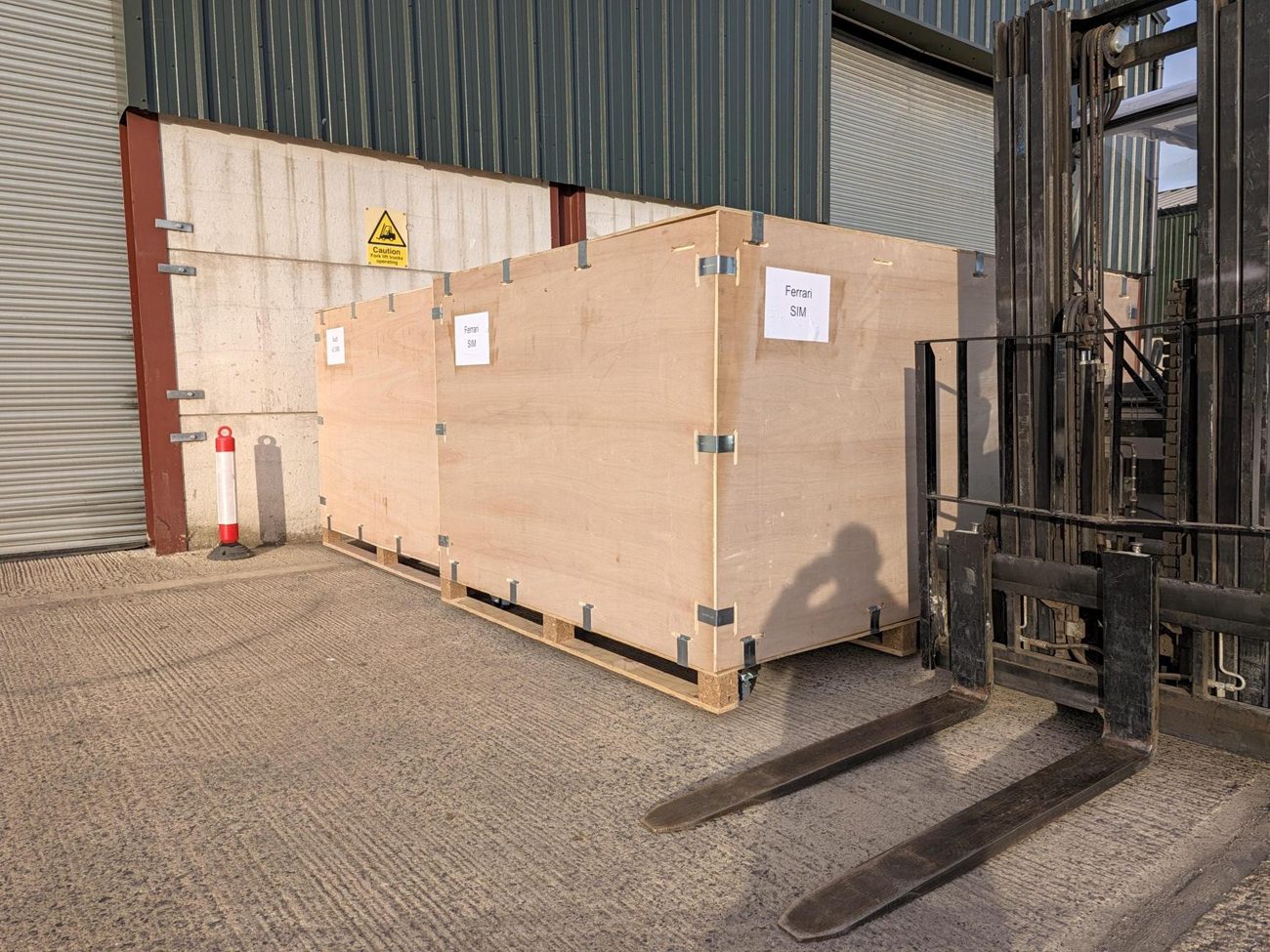
Advanced motion simulators present an entirely different logistics challenge. Their combination of weight, dimensions and sophisticated mechanical and electronic components means they cannot simply be treated as conventional freight. Memento Exclusives has designed its own dedicated simulator transportation crate, building the packaging around the requirements of the product rather than attempting to fit the simulator into an existing logistics solution.
The crate incorporates wheels to make movement easier during loading and positioning. It also includes multiple forklift access points, allowing handling equipment to approach the crate from different directions. That seemingly modest design decision has practical benefits throughout the logistics chain: the crate does not need to be positioned in one precise orientation before the simulator can be moved or unloaded.
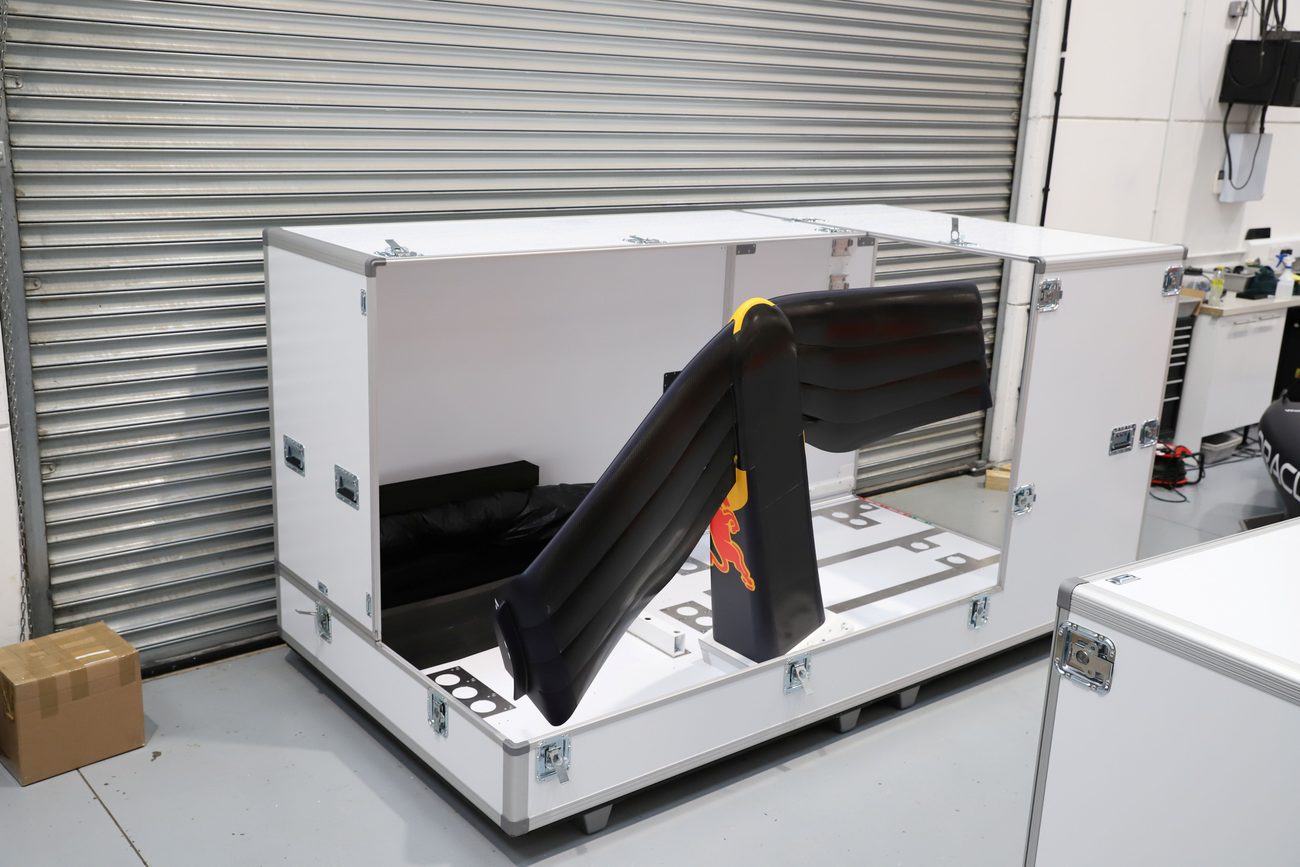
Inside, bespoke securing points accommodate the simulator’s particular dimensions and weight distribution. This is especially important for a product whose mass is not necessarily distributed evenly across its footprint. The securing system is designed to hold the unit correctly throughout transportation, reducing the risk of movement or stress being placed on the wrong areas of the simulator. Rather than something considered once a product is ready for dispatch, this simulator crate has been designed as an extension of the product itself, addressing the realities of forklifts, freight terminals, containers and last-mile handling.
Once an overseas shipment reaches its destination country, one of the company’s logistics partners takes responsibility for the next stage, liaising directly with the customer to arrange final delivery. That responsibility also extends to customs clearance. The partner will contact HQ or the customer for any information required to complete the process, but by the time the product is in transit, the relevant classification, paperwork and customer information will already be in place.
Working through established partners provides both local knowledge and continuity. International transportation can involve multiple handovers, operators and unfamiliar customs or requirements. Having a partner take ownership of the destination leg reduces the number of logistics details the customer must manage themselves. It is an important consideration because these are not products that can simply be left at the kerbside.
In many respects, the logistics operation mirrors the philosophy behind Memento Exclusive’s products. Precision matters. A few millimetres and weight distribution can make all the difference. The challenge is not simply transporting something large from one point to another. It is choosing between cost and speed without compromising security, understanding the customs and tax implications of each destination, anticipating the risks, designing packaging around the product and ensuring responsibility transfers smoothly.
For the customer, the ideal outcome is that most of this complexity remains invisible. A Show Car or Motion Simulator arrives safely, securely and ready to become the centrepiece it was designed to be. Behind that seemingly simple delivery is a carefully planned logistics operation stretching from the race bays to destinations around the world.