Grupa Żywiec has reduced trailer unloading times from 30 minutes to two minutes at its distribution centre in Elbląg, Poland, following the introduction of an automated unloading system from Joloda Hydraroll. The project, led by logistics operator GXO, has also reduced product and pallet damage by 95-98%, while lowering labour and equipment requirements.
Part of The Heineken Company, Grupa Żywiec operates a brewery and distribution network that moves palletised beer over a five-kilometre shuttle route between its brewery and the Elbląg distribution centre, which is operated by GXO.
Previously, unloading relied on pallet trucks operating inside semi-trailers, with forklifts used to receive goods and supply production lines. As volumes increased, GXO identified an opportunity to improve the process, reducing manual handling, vehicle movements and the risk of damage while maintaining throughput.
GXO leads the operational redesign
GXO analysed the operation and established the requirements for a solution that would improve unloading speed and consistency, reduce dependence on pallet trucks, and limit interaction between people and equipment. The technology also needed to fit the existing shuttle operation without disrupting throughput.
Following a review of established installations and consultation with site stakeholders, GXO worked with Grupa Żywiec and Joloda Hydraroll to develop an approach suited to the site’s operating conditions.
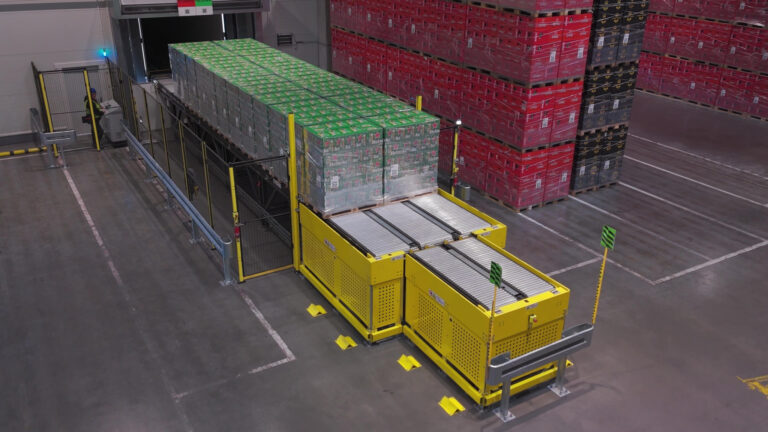
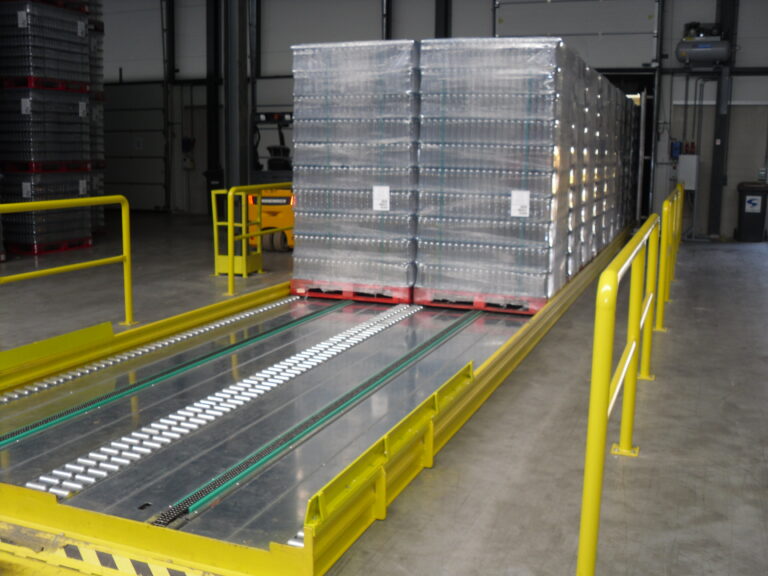
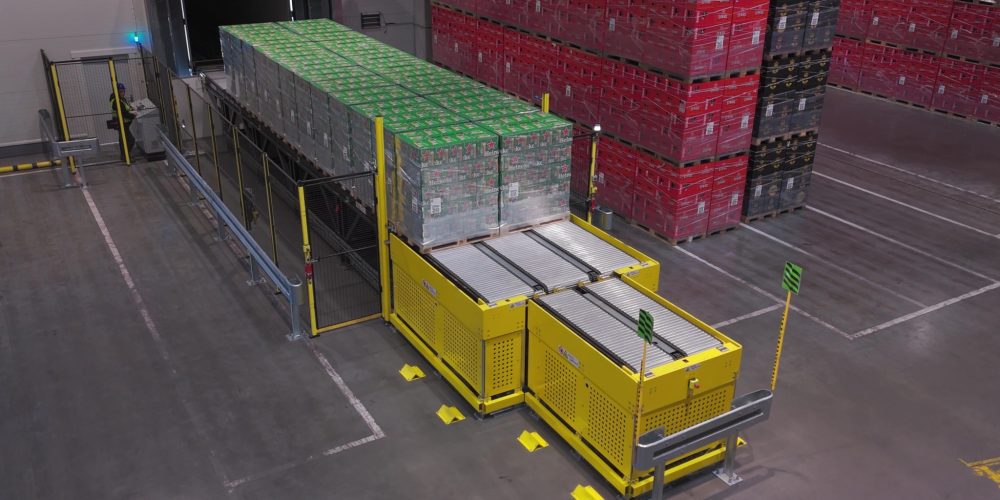
The partners installed Joloda Hydraroll’s Moving Floor Automated Trailer Unloading System, comprising one unloading dock, two purpose-built Moving Floor semi-trailers and an unloading table.
The system transfers palletised beer automatically from the trailer to the unloading table, removing the need for pallet truck operations inside the vehicle. The two dedicated trailers were designed to work with the system and retain the existing brewery-to-distribution-centre shuttle model.
Faster, safer and less damaging
The most immediate improvement has been the reduction in unloading time, from 30 minutes to just two. The automated process also provides more controlled and repeatable load movement, reducing manual intervention and the need for equipment to operate inside the trailer.
According to the project results, product and pallet damage has fallen by 95-98%. Reduced use of pallet trucks has also lowered wear on key drive components, helping to minimise maintenance requirements.
By limiting interaction between people, pallet trucks and forklifts during unloading, the system has improved safety and reduced the potential for incidents and collisions. The operation has also lowered its reliance on pallet trucks and forklifts.
The project illustrates how operational analysis and specialist automation can address specific bottlenecks in an established logistics process. GXO identified the opportunity and led the transformation, Grupa Żywiec ensured the solution met the needs of its brewery operation, and Joloda Hydraroll adapted its technology to the site’s requirements, providing technical and after-sales support.
The result is a faster and more consistent unloading process, with reduced handling, equipment dependency and product damage.