

Artificial intelligence is becoming one of the biggest talking points in logistics, with technology providers promising smarter decision-making, greater efficiency and increasingly autonomous warehouse operations.
But there is a fundamental problem: AI can only make good decisions if the data behind those decisions accurately reflects what is happening on the warehouse floor.
In the latest episode of Logistics Business Conversations, host Peter MacLeod is joined by Oana Jinga, Chief Commercial and Product Officer at Dexory, to explore why accurate physical data could be the missing ingredient in many warehouse AI strategies.
The discussion looks at the gap that can exist between what a Warehouse Management System says is happening and the physical reality inside the building. Jinga explains that warehouse data accuracy can sometimes be significantly lower than operators believe, creating problems that can ripple through picking, fulfilment, productivity and customer service.
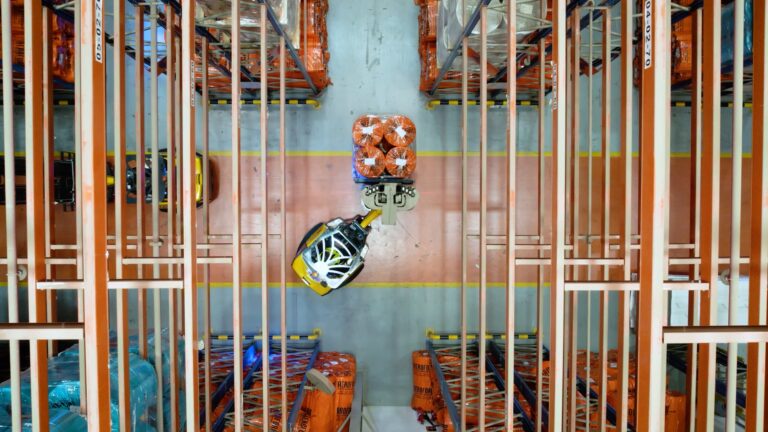
Inventory accuracy is only part of the picture. Effective AI also needs to understand the physical environment around the stock — including warehouse space, rack structures, movement, machinery and the shape and size of goods. It is this combination of digital and physical information that is helping drive the development of Physical AI in logistics.
The episode also explores whether AI could eventually capture the instinctive knowledge of experienced warehouse managers. While technology is becoming increasingly capable of analysing complex datasets and making recommendations, Jinga argues that human experience and operational understanding still have an important role to play.
There are significant commercial implications too. Even relatively small inventory inaccuracies can result in wasted picking time, stock investigations, incomplete orders and disrupted production. Jinga discusses how improving and continuously maintaining inventory accuracy can therefore affect not only productivity, but also wider KPIs, customer service and profitability.
Looking ahead, the conversation considers how increasingly connected data, robotics and AI could create warehouses that are not simply more automated, but far better informed — enabling faster and increasingly sophisticated operational decisions.
Ultimately, however, the message is not to adopt technology simply because it is available. Businesses should first identify the operational problems they need to solve, understand the quality of the data they already have and then find the technology capable of addressing those challenges.
Listen to the full episode of Logistics Business Conversations below to discover why the future of warehouse AI may depend on getting the basics right first.