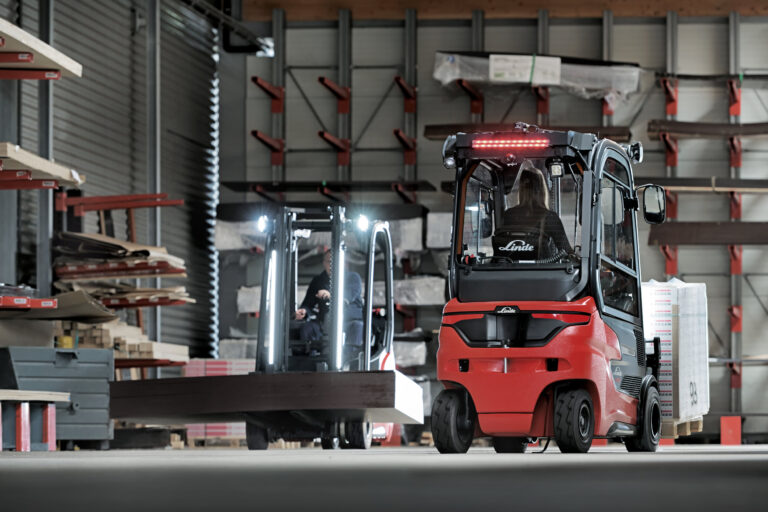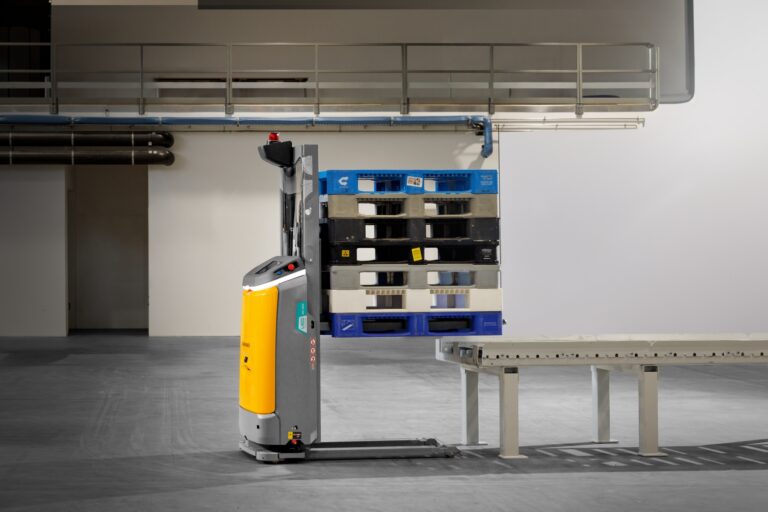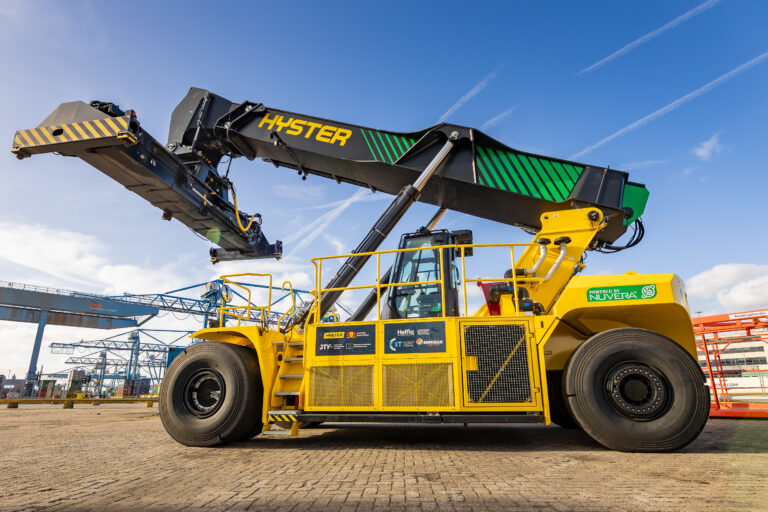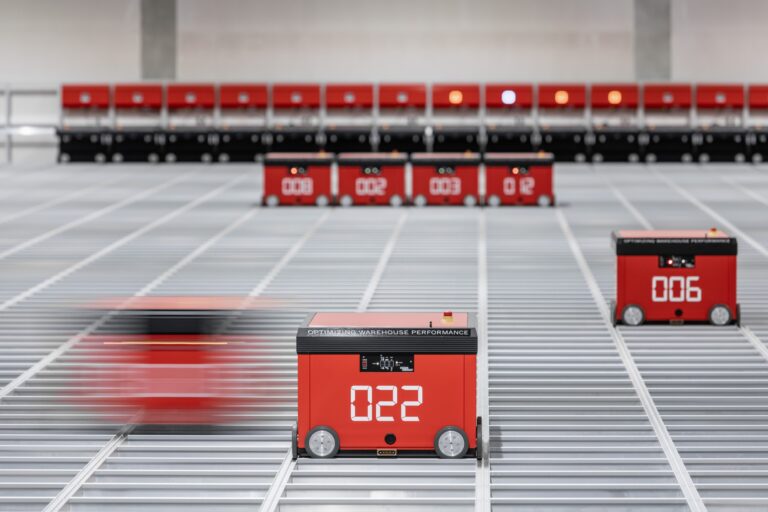
The days when a customised forklift solution necessarily meant a trip back to the workshop may be numbered. Linde Material Handling (MH) is increasingly using software rather than hardware to tailor its industrial trucks to individual customer requirements – potentially allowing new functions to be added throughout a vehicle’s working life.
Linde MH refers to these customer-specific adaptations as Customized Options. While traditionally delivered through physical modifications and specialist components, a growing proportion can now be implemented digitally. That shift has an important implication for fleet operators: a truck purchased today does not necessarily have to remain technically fixed to the specification with which it left the factory.
“Is it possible to comprehensively predict future in-house material flow requirements and the technical options that will be available at that time? Certainly not,” says Stefan Prokosch, Senior Vice President Customized Solutions at Linde Material Handling.
The company believes the answer lies in giving industrial trucks the ability to evolve. Linde MH’s latest electrical/electronic vehicle architecture, combined with a digital twin linked to the physical truck from the point of manufacture, provides the platform for this approach. New functions can be downloaded over the air, while vehicle parameters can be adapted to accommodate specific operational requirements.
For customers, the attraction is clear: greater flexibility and potentially longer useful lives for existing equipment, without having to replace a truck simply because operational requirements have changed.
From specialist hardware to digital functionality
Customisation is already an important part of the industrial truck market. Linde MH says more than a third of its trucks are delivered with at least one Customized Option as standard. Many of these are repeat solutions that, having been developed for one application, subsequently prove relevant to other customers.
The range of traditional mechanical adaptations illustrates just how diverse these requirements can be. They include stainless-steel pallet trucks for food production, specialist controls for operators with physical limitations, bespoke forks for handling flat furniture pallets and heat-resistant wooden joysticks for foundry applications.
At the more unusual end of the spectrum is a reach truck fitted with a ‘Pinocchio nose’ – a specialist load-handling attachment designed to move multi-tonne paper rolls with minimal damage.
Digitalisation opens up a different set of possibilities
One customer-specific function automatically reduces the truck’s radio volume when reversing, helping the operator concentrate during a manoeuvre. Other digital functions can support safety by using vehicle conditions to trigger responses. One system, for example, activates a speed reduction to 2 km/h when a load exceeds a defined weight and/or the forks are raised beyond a specified height.
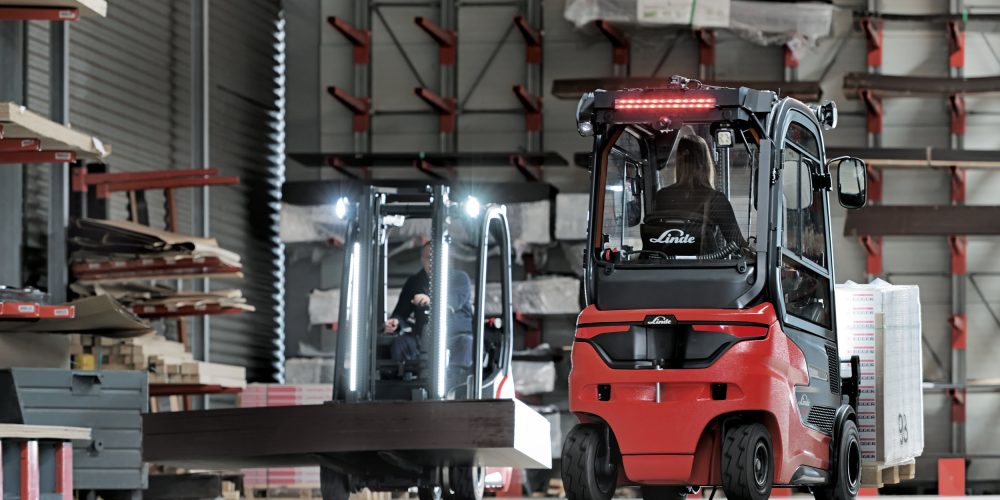
A further application uses a rotating beacon on the overhead guard to indicate whether the operator has fastened their seatbelt.
A more adaptable truck
The significance of these developments extends beyond individual features. For fleet managers, the ability to introduce new functionality after a vehicle has entered service could become increasingly important as warehouses become more automated, connected and data-driven.
Linde MH says a global, interdisciplinary team is responsible for developing and implementing its Customized Options. A graphical editor is also being used to accelerate the creation of digital functions and the transfer of parameter files to individual vehicles.
The broader message is that forklift customisation is moving away from the traditional model of designing a machine around a fixed set of requirements. As software assumes a greater role in vehicle control, the industrial truck itself becomes a more adaptable asset – capable of responding to changing material-flow demands without necessarily requiring a new machine.
For operators facing uncertain requirements over the lifetime of a fleet, that flexibility could prove just as valuable as the original specification.