FIATA Meeting to be held at SIL 2027

Barcelona will strengthen its position as one a logistics city with the hosting of the FIATA-REU Field Meeting (International Federation of Freight Forwarders Associations) in June 2027. The announcement was made today by FIATA Director General Stéphane Graber during the FIATA World Congress 2026, taking place in Milan, coinciding with the celebrations marking the organisation’s 100th anniversary.

The Consorci de la Zona Franca de Barcelona (CZFB) has secured the organisation of this prestigious international event, which will be held alongside the International Logistics Exhibition (SIL Barcelona). From 9 to 11 June 2027, the congress will see the Catalan capital be Europe’s leading meeting point for freight forwarders, logistics operators, cargo agents, shippers, ports, airports and companies linked to the global supply chain.

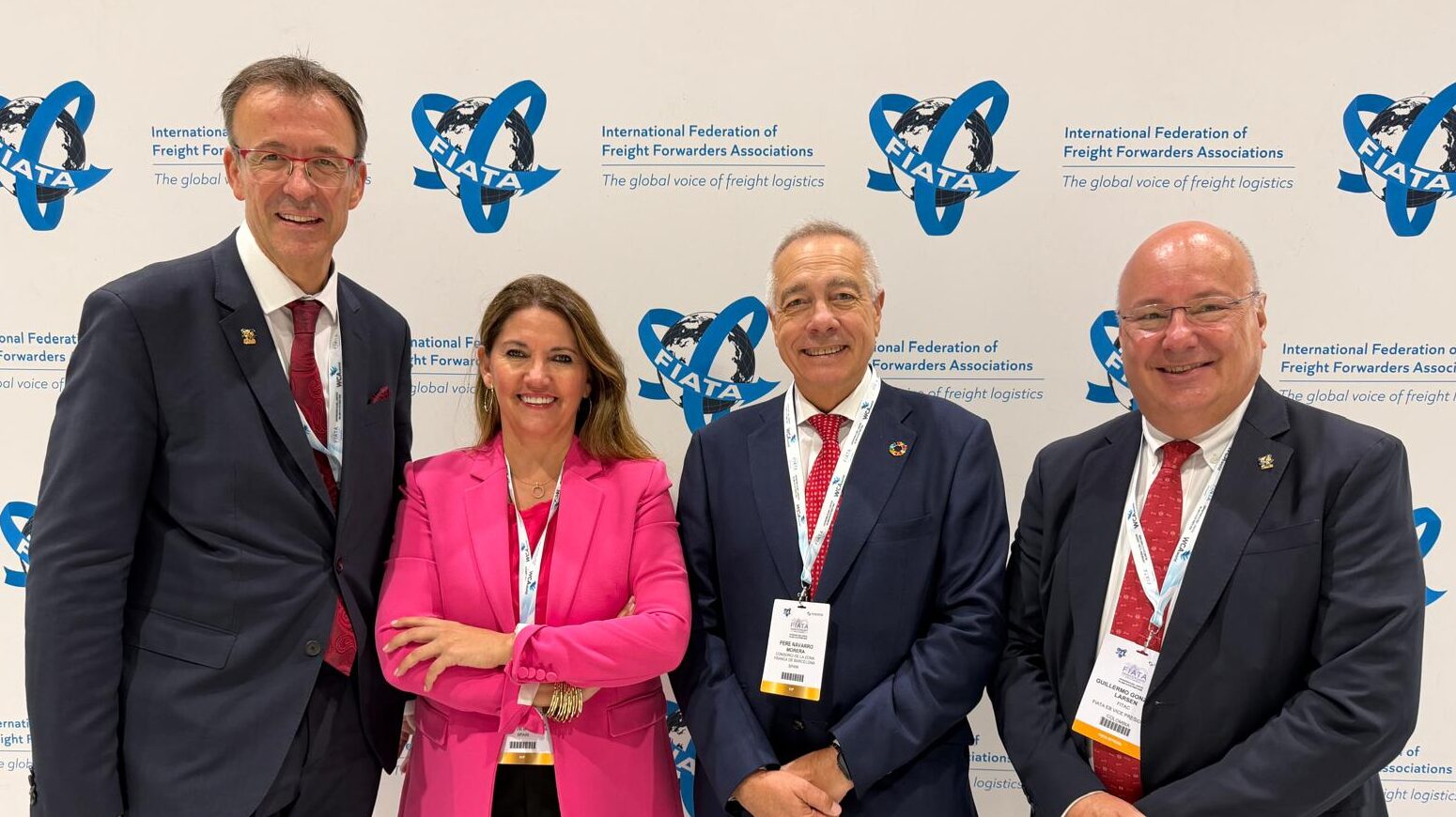
The designation of Barcelona as the host city for the FIATA European Congress represents significant recognition of the city’s international leadership in logistics, mobility and international trade, as well as of the importance of SIL Barcelona as one of the world’s leading logistics events. The Executive President of CZFB, Pere Navarro, accompanied by the CZFB’s General Director, Blanca Sorigué (in pink), took part in the FIATA World Congress in Milan.

The Executive President of the CZFB, Pere Navarro, welcomed Barcelona’s appointment as the venue for the FIATA European Congress, stating that:

“The selection of Barcelona to host the FIATA European Congress is an international recognition of the strength of our logistics ecosystem and of the work carried out over many years to position the city as one of the world’s leading logistics hubs. Holding the congress alongside SIL Barcelona will bring together the foremost representatives of the international logistics industry in Barcelona and create new opportunities for collaboration and business development across the sector.”

For her part, the General Director of the CZFB, Blanca Sorigué, highlighted that:

“The hosting of the FIATA European Congress will attract talent, knowledge and high-value international connections to Barcelona. It will be an exceptional opportunity to showcase to the world the innovative capacity of our logistics ecosystem and to further strengthen the global profile of SIL Barcelona as a leading platform for innovation in logistics and supply chain management.”

Boost for Barcelona

The fact that the FIATA European Congress and SIL Barcelona 2027 will be held at the same time and location will significantly increase the international impact of both events, placing Barcelona at the centre of the discussions that will shape the future of global supply chains for an entire week. The joint celebration of these two events will also strengthen Barcelona’s role as the logistics gateway to Southern Europe and as a strategic hub connecting Europe with the Mediterranean region, Africa, Asia and Latin America.

Global voice of transport and logistics

Founded in Vienna in 1926 and headquartered in Geneva, Switzerland, FIATA is considered the world’s leading organization representing freight forwarders, logistics operators, and cargo agents. The federation brings together 106 national associations from nearly 150 countries, represents the interests of more than 50,000 companies in the sector, and has over 4700 individual members, acting as the international voice of the freight transport and logistics industry.

The organization works closely with leading international bodies such as the World Trade Organization (WTO), the International Air Transport Association (IATA), and other global institutions to promote common standards, facilitate international trade, and advance the professionalization of the logistics sector. Its main areas of activity include the development of rules and standards for the international transportation of goods, the promotion of digitalization across the logistics supply chain, specialized training for industry professionals, the development of internationally recognized documentation, and the representation of the industry before regulatory authorities and international forums.

Software at the Heart of Customised Forklifts

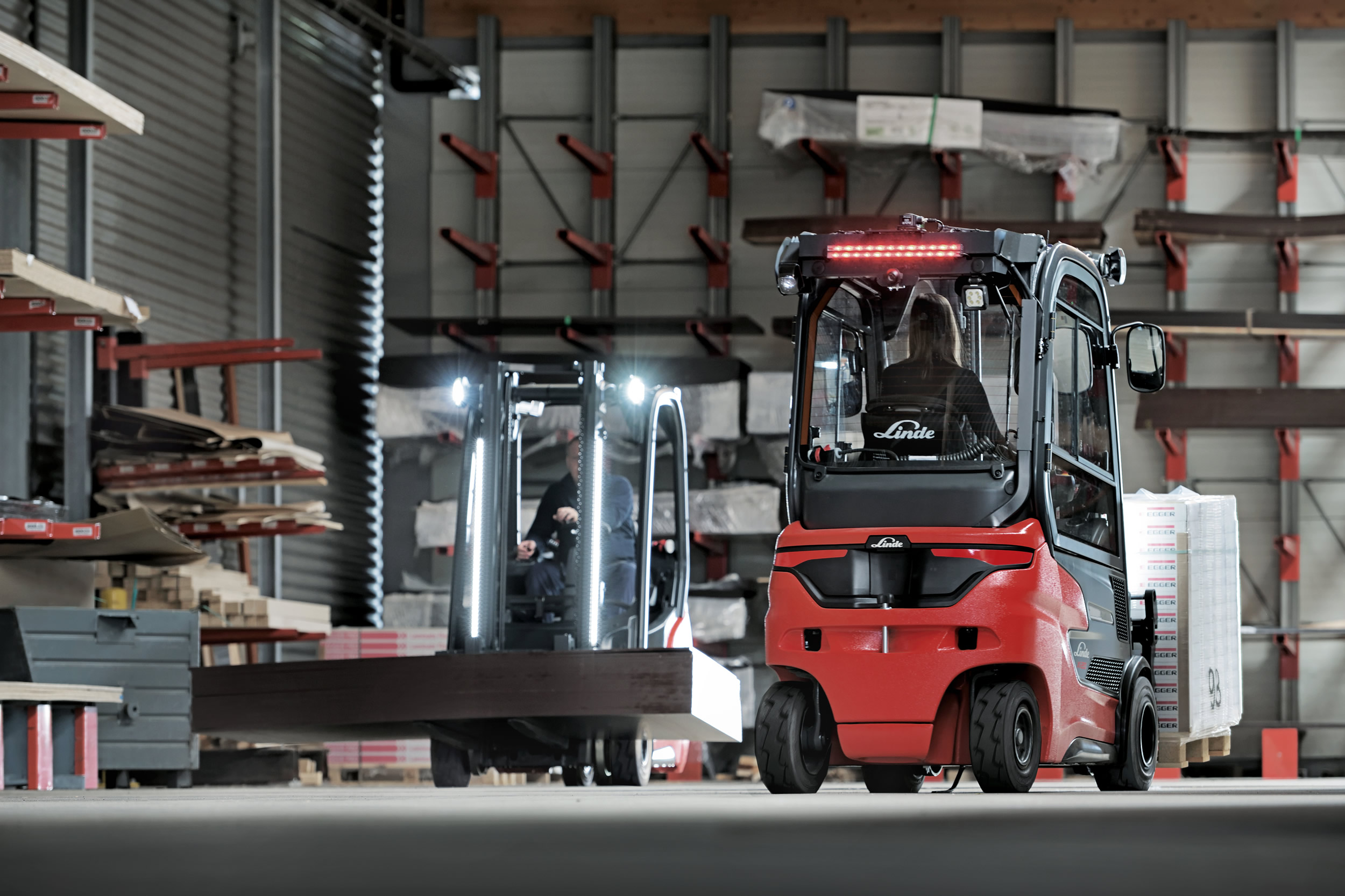
The days when a customised forklift solution necessarily meant a trip back to the workshop may be numbered. Linde Material Handling (MH) is increasingly using software rather than hardware to tailor its industrial trucks to individual customer requirements – potentially allowing new functions to be added throughout a vehicle’s working life.

Linde MH refers to these customer-specific adaptations as Customized Options. While traditionally delivered through physical modifications and specialist components, a growing proportion can now be implemented digitally. That shift has an important implication for fleet operators: a truck purchased today does not necessarily have to remain technically fixed to the specification with which it left the factory.

“Is it possible to comprehensively predict future in-house material flow requirements and the technical options that will be available at that time? Certainly not,” says Stefan Prokosch, Senior Vice President Customized Solutions at Linde Material Handling.

The company believes the answer lies in giving industrial trucks the ability to evolve. Linde MH’s latest electrical/electronic vehicle architecture, combined with a digital twin linked to the physical truck from the point of manufacture, provides the platform for this approach. New functions can be downloaded over the air, while vehicle parameters can be adapted to accommodate specific operational requirements.

For customers, the attraction is clear: greater flexibility and potentially longer useful lives for existing equipment, without having to replace a truck simply because operational requirements have changed.

From specialist hardware to digital functionality

Customisation is already an important part of the industrial truck market. Linde MH says more than a third of its trucks are delivered with at least one Customized Option as standard. Many of these are repeat solutions that, having been developed for one application, subsequently prove relevant to other customers.

The range of traditional mechanical adaptations illustrates just how diverse these requirements can be. They include stainless-steel pallet trucks for food production, specialist controls for operators with physical limitations, bespoke forks for handling flat furniture pallets and heat-resistant wooden joysticks for foundry applications.

At the more unusual end of the spectrum is a reach truck fitted with a ‘Pinocchio nose’ – a specialist load-handling attachment designed to move multi-tonne paper rolls with minimal damage.

Digitalisation opens up a different set of possibilities

One customer-specific function automatically reduces the truck’s radio volume when reversing, helping the operator concentrate during a manoeuvre. Other digital functions can support safety by using vehicle conditions to trigger responses. One system, for example, activates a speed reduction to 2 km/h when a load exceeds a defined weight and/or the forks are raised beyond a specified height.

A further application uses a rotating beacon on the overhead guard to indicate whether the operator has fastened their seatbelt.

A more adaptable truck

The significance of these developments extends beyond individual features. For fleet managers, the ability to introduce new functionality after a vehicle has entered service could become increasingly important as warehouses become more automated, connected and data-driven.

Linde MH says a global, interdisciplinary team is responsible for developing and implementing its Customized Options. A graphical editor is also being used to accelerate the creation of digital functions and the transfer of parameter files to individual vehicles.

The broader message is that forklift customisation is moving away from the traditional model of designing a machine around a fixed set of requirements. As software assumes a greater role in vehicle control, the industrial truck itself becomes a more adaptable asset – capable of responding to changing material-flow demands without necessarily requiring a new machine.

For operators facing uncertain requirements over the lifetime of a fleet, that flexibility could prove just as valuable as the original specification.

GPS Tracking Tackles Lost Roll Cages and Totes

3PL Neovia Logistics has eliminated up to £800,000 of annual asset exposure through the implementation of Sensolus technology, delivered by IoT solutions specialist Peak Technologies. The solution was deployed at one of BMW Group UK’s logistics operations, where Neovia operates as the contract logistics provider.

With approximately 40% of its returnable asset fleet, worth an estimated £320,000, at risk of disappearing into an untracked supply chain, Neovia moved from barcodes to GPS enabled asset tracking following a mandate to implement best-in-class asset management. The result is full visibility across a 230-plus dealership network, a significant recovery of previously lost assets, and a supply chain that now holds itself fully accountable.

Movement of high value parts

Neovia manages the movement of vehicle parts to dealerships across the UK and Ireland, with components travelling in reusable roll cages and tote boxes. Each roll cage carries a replacement value of between £350 to £500, and with roughly 40% of the fleet disappearing from the returns cycle each year, the scale of the problem was significant.

The root cause was invisible. In this circumstance Neovia does not operate its own delivery fleet, instead assets move via third-party carriers and once an asset left a Neovia facility, it effectively ceased to exist in any Neovia controlled system. Barcodes logged departures but gave no information about what happened next. When assets went missing, there were few measures in place to identify and return them. Nobody had the evidence to establish accountability.

BMW Group UK’s decision to mandate GPS-based asset tracking as a condition of contract renewal gave Neovia the impetus to act. Following a formal tender process that began in December 2025, Neovia selected the Sensolus platform, deployed by Peak Technologies, Sensolus’s first ever UK channel partner.

Justin Collingwood, General Manager, Neovia, said: “The loss and misplacement of returnable assets has been a longstanding challenge across the supply chain industry. While our barcode systems could confirm when assets left our warehouse, they provided little visibility beyond that point. We needed a solution that would close the information gap, deliver real-time visibility, and give us the data needed to effectively manage our supply chain. The Peak Sensolus solution achieved exactly that without requiring us to redesign our processes or infrastructure.”

Today, we have complete control and visibility of our assets across the entire network, enabling us to significantly reduce losses, improve operational efficiency, and enhance service quality. In addition, the solution has delivered meaningful environmental benefits by reducing unnecessary asset replacement and cardboard waste. What began as an asset tracking project has evolved into a powerful tool for driving delivery performance, cost savings, and sustainability across our supply chain

Stick and track: a deployment without disruption

The Sensolus 1110 tracker is compact enough to fit the narrow face of a standard roll cage and is fixed using a foam sticky pad, drilled and riveted, with no modification required to existing sortation systems. Peak Technologies delivered the complete solution: hardware, the Sensolus cloud platform, installation and managed services as a single package. Implementation reached full operational status within four months. When a subsequent batch of 3,500 tote boxes and 1,500 roll cages arrived in a revised specification, the fleet was profiled and tracking-ready within four to five weeks.

Each tracker is configured with its own asset profile, including orientation monitoring that alerts Neovia immediately if a cage tips in transit, a relevant and valuable feature when the contents are high-value vehicle parts. Geofenced locations across the dealership estate record arrival and departure times for every asset. Smart tracker configurations are updated over the air, and geolocations can be toggled off when assets are in active service.

Anthony Fulgoni, Solution Consultant, Automation Intelligence Solutions Europe, Peak Technologies, said: “The stick-and-track approach is deliberately straightforward. There’s no infrastructure to install, no complex integration project, and no disruption to existing operations.”

For Neovia, that meant going from decision to fully operational in under four months across a 5,000-asset fleet. When the next batch of tote boxes came through, it was a matter of weeks to have them profiled and tracking. That scalability is what makes this model work in fast-moving logistics environments

Accountability improvements

The impact has extended well beyond location tracking. Once the asset estate became trackable, habits across the supply chain changed. Numerous roll cages previously lost to the network have since been returned, driven not by active retrieval, but by the knowledge that assets could be found. Timestamped GPS records have ensured factual evidence of every asset movement.

The platform is also generating operational intelligence that Neovia did not previously have access to, such as site dwell times, dock throughput, warehouse efficiency data and heat maps of asset movement across the network. The team reports finding actionable insights on an ongoing basis, feeding into logistics planning well beyond the original brief.

Farid Khadir, Sensolus Channel Manager UK, Sensolus, said:

The Neovia deployment illustrates something we see consistently: the smart tracker gets you in the door, but the platform is where the value lives. Neovia came to us with a specific problem, recovering a vanishing asset fleet. What they’ve ended up with is a real-time operational picture of their entire supply chain that they simply didn’t have before. The intelligence the data generates tends to go well beyond the original brief, and that’s where the long-term return on investment is

New Ride-On Scrubber for Warehouses

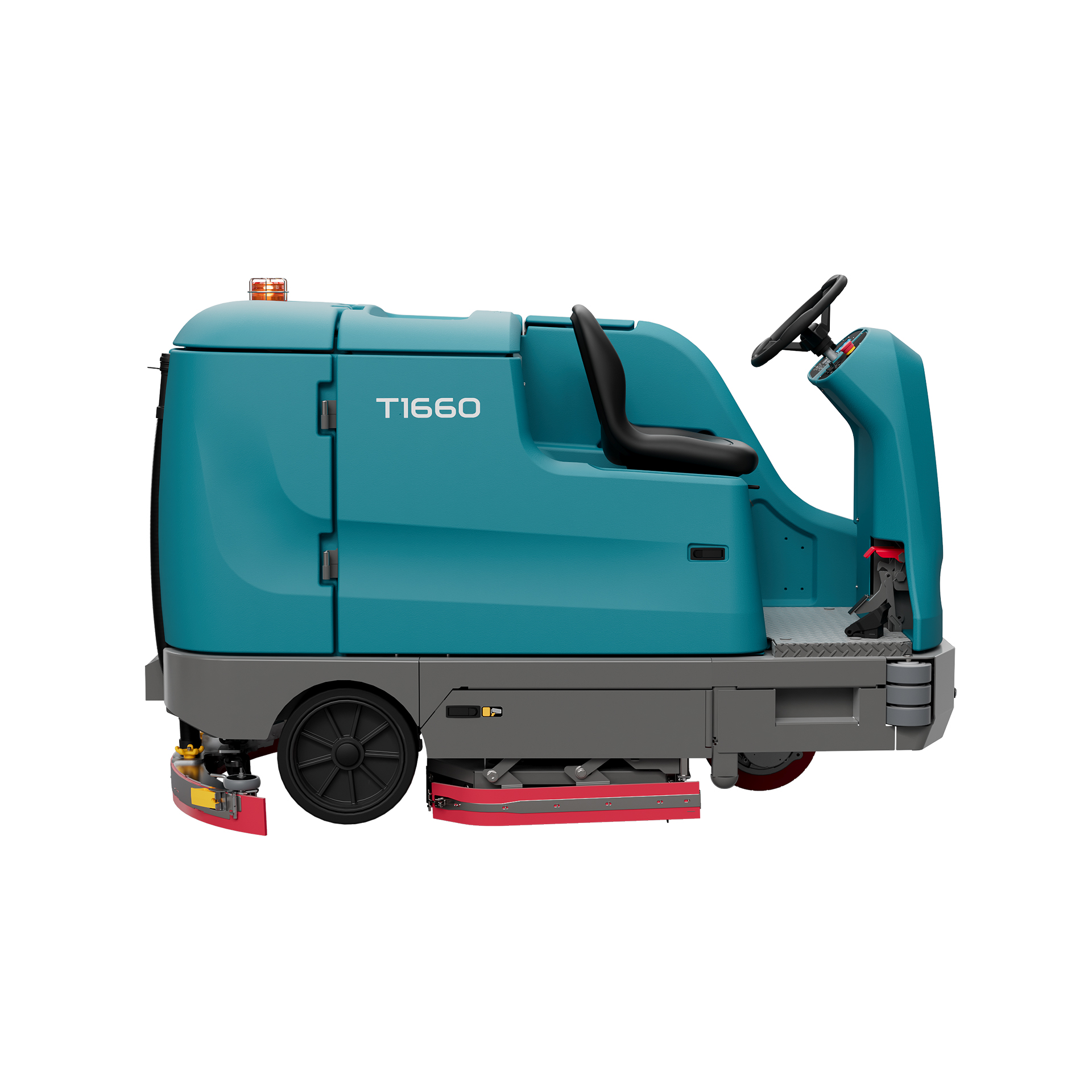
Tennant Company has launched the T1660 Ride-On Scrubber across Europe, the Middle East, and Africa (EMEA). Designed for warehouses, manufacturing facilities, logistics centres, and light industrial applications, the T1660 delivers reliable cleaning performance, simple operation, and streamlined maintenance to help facilities clean more efficiently every day.

The battery-powered T1660 provides the essential Tennant cleaning experience with a wide cleaning path, large tank capacity, and intuitive controls that help operators maximise productivity while minimising complexity. Built for everyday industrial cleaning, the machine combines dependable performance with features that support minimal training requirements and simplified machine ownership.

The T1660 delivers everything our Industrial customers love in a Tennant product… It provides excellent cleaning performance, the intuitive controls make it easy to use for the operator and it has the reliability and durability our customers expect from a Tennant machine

said Bill Patton, Vice President, Integrated Brand Marketing at Tennant Company.

The T1660 offers productive cleaning performance with up to a 1,320 mm cleaning path when equipped with a cylindrical scrub head and dual side sweep brushes and delivers an estimated productivity rate of up to 8,400 m²/hr. Large solution and recovery tanks help operators spend more time cleaning and less time stopping for refills and tank cleanouts.

In addition to productive cleaning capabilities, the T1660 is designed to support efficient daily operations with:

Intuitive operation: Straightforward controls and an operator-focused layout help reduce training time and enable operators to get to work quickly.
Simplified maintenance: Yellow maintenance touchpoints, instructional labels, and an accessible recovery tank make routine maintenance easy and efficient.
Consistent cleaning performance: Adjustable scrub head down pressure helps maintain a uniform clean across a variety of floor applications.
Excellent water recovery: Dual vacuum fans and a parabolic squeegee design help reduce residual moisture on the floor.
Versatile cleaning configurations: Optional disk or cylindrical scrub heads, dual side sweep brushes, detergent metering, overhead guard, and squeegee protection kits allow customers to tailor the machine to their application needs.

We built the T1660 so that customers who count on Tennant for their toughest applications now have a reliable, accessible option for their simpler everyday cleaning needs — without ever compromising on the performance our customers have come to expect

said Dennis Collins, Product Portfolio Director at Tennant Company.

The T1660 also supports safe and comfortable operation with an ergonomic operator station, clear sightlines, standard headlights and blue safety lights, and a seat switch that disables machine propulsion when no operator is seated. Battery-powered operation provides quieter cleaning, making the T1660 well suited for indoor industrial environments.

Subscribe

Get notified about New Episodes of our Podcast, New Magazine Issues and stay updated with our Weekly Newsletter.