The North East Automotive Alliance (NEAA), alongside the Port of Tyne, Oxa, and a consortium of leading industry and academic partners, has successfully delivered the P-CAL (Port Connected and Automated Logistics) project, marking a major milestone in the region’s journey to become a leader in Connected and Automated Mobility (CAM).
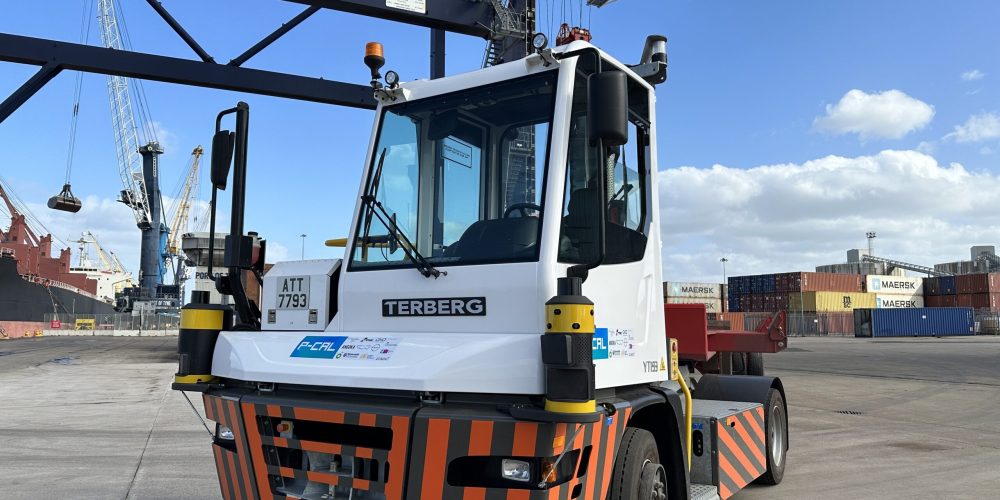
Delivered through the UK Government CAM Pathfinder programme, P-CAL was designed to push the boundaries of autonomous logistics by deploying and validating a fully autonomous terminal tractor within a live port environment. Building on the North East’s earlier 5G CAL and V CAL initiatives, the project moved autonomous technology from proof of concept trials into a complex, safety critical, real world operational setting.
Paul Butler, CEO of the NEAA, said:
P-CAL represents a defining moment in the North East’s journey from pilot projects to real world autonomous operations. This project has demonstrated not only technical capability, but the strength of collaboration across industry, academia and government. The learning gained here will shape future CAM deployment and reinforces the region’s position as a national leader in connected and automated mobility.
Over the course of the project, the consortium successfully designed, integrated and tested an autonomous container transport solution capable of operating on a busy quayside. The scope of work included the deployment of a fully autonomous terminal tractor supported by a secure, resilient mesh communication network, the capability to integrate with terminal operating systems, real time co-ordination with live crane movements, and the implementation of a robust cybersecurity framework to enable safe, remote and automated operations.
Critically, the system was developed and tested within a newly defined and highly complex ‘Operational Design Domain’, reflecting the realities of a working port environment where traffic density, variable conditions and human interaction present unique challenges.
Graeme Hardie, Operations Director at the Port of Tyne, said: “Delivering autonomous logistics in a live port environment has been a major step forward for the sector. P-CAL has shown what’s possible when innovation is applied to real operational challenges, improving safety, efficiency and sustainability. The Port of Tyne is proud to have played a leading role in a project that will influence how ports across the UK and beyond approach automation.”
The project was delivered by a strong regional and national partnership led by the NEAA, bringing together the Port of Tyne, Oxa, Nissan, Newcastle University, Angoka, Logisteed UK Limited (formerly Vantec Europe) and Womble Bond Dickinson. This collaboration combined deep expertise across autonomous systems, logistics, cybersecurity, academia, legal compliance and industrial operations, demonstrating the strength and maturity of the North East’s CAM ecosystem.
Paul Newman, Founder and CEO at Oxa, said: “The success of P-CAL proves how autonomy will enable the future of resilient logistics operations. Through the project, we’ve demonstrated that existing work vehicles can be turned into a digital workforce – successfully completing autonomous container movements in a dynamic quayside environment, while providing worksite intelligence necessary for real-time industrial optimisation.
P-CAL provides a blueprint for how ports and industrial hubs worldwide can deploy autonomous technology to drive productivity, efficiency and safety.
Cyber resilience was a fundamental requirement of the project, ensuring that connected systems could operate safely and securely within critical infrastructure.
Shadi AR, CTO at ANGOKA, said: “Cyber resilience has been fundamental to the success of P CAL. The project has demonstrated how secure, purpose built digital infrastructure can enable safe and trusted autonomous operations in critical industrial environments. This work sets an important example for the future of connected logistics and industrial automation.”
P-CAL demonstrated that autonomous movements can be carried out safely and reliably in a controlled area of the port and strengthens the case for a much larger deployment. The next phase must examine how the system performs across broader port operations, including the added pressures of multiple vehicles working alongside people, equipment and live commercial activity.
The project has generated valuable technical, operational and regulatory insight that will inform future deployment of CAM solutions across ports, logistics hubs and industrial sites nationwide. It also highlights how autonomy can be put to work for people. By augmenting the capability of the existing workforce, autonomous systems can take on repetitive or more hazardous tasks, allowing skilled workers to focus on higher-value roles. This is particularly vital for the North East, ensuring the region remains at the forefront of industrial evolution while creating a more resilient and tech-enabled labour market.
Mark Cracknell, Programme Director at Zenzic, said:
P-CAL is a strong example of how government and industry can work together to accelerate the commercial readiness of CAM technologies. Projects like this are vital in turning innovation into deployment, creating high value jobs and ensuring the UK remains globally competitive in connected and automated mobility.
As the project closes, the outcomes and learning from P-CAL will continue to shape future CAM initiatives, investment opportunities and policy development, both regionally and nationally. By progressing from controlled trials to live operational deployment, the North East aims to have reinforced its position at the forefront of the UK’s CAM landscape.