

Retail supply chains may take 3-5 months to recover from the Iran war, meaning shoppers could face paying higher prices this Christmas, even if peace talks clear a safe passage through the Strait of Hormuz in April.
According to logistics company Advanced Supply Chain (ASC), it could take until at least mid-July for transportation costs to start trending down toward levels seen before the start of the Middle East conflict in February 2026. By this time, most retailers will have ordered Christmas stock and absorbed supply chain costs inflated by the Iran war.
Stuart Greenfield, UK and European Sales Director at ASC, explains:
Recent disruptions show that supply chains usually undergo a two-phase adjustment. They initially stabilise to absorb the immediate shock of an event such as a war, before entering a longer period of rebalancing and some form of normalisation.
The invasion of Ukraine in 2022 and Houthi attacks in the Rea Sea in 2023, indicate that it takes around 3-5 months for this first phase, while the second phase can be much more prolonged. There are many different factors in play in terms of the disruption caused by the Iran war, however, it’s reasonable to think that it will take a similar amount of time for retail supply chains to start rebounding.
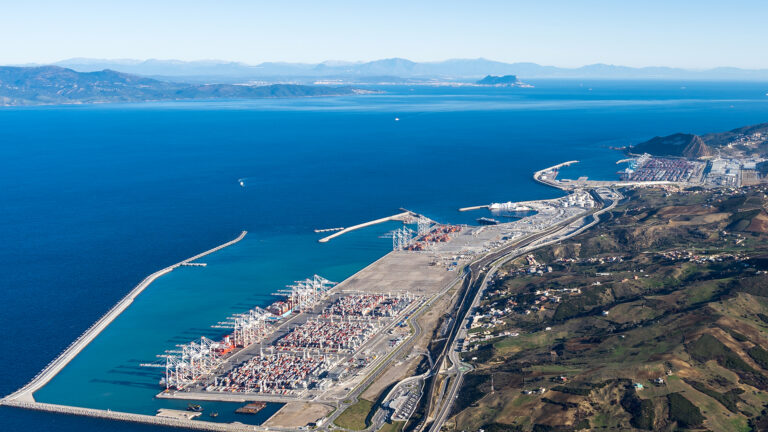
Reopening the Strait of Hormuz will create a trickle-down effect, which starts with clearing oil tankers and vessels stranded in the Strait, and then dealing with the backlog of other delayed and suspended shipping schedules. This overlaps with retailers typically placing festive orders throughout June to September. Seasonal demand could intensify the heightened pressures and costs already being felt throughout supply chains.
Impact of previous supply chain shocks:
- Russia’s invasion of the Ukraine in February 2022 contributed to the highest crude oil prices (inflation adjusted) in March that year, since 2014. Prices started to decline around three months later in June 2022.
- The Freightos Baltic Index shows month-by-month container freight prices from 2023 – 2024 started to stabilise during March – May 2024, after a period of volatility following Houthi attacks on vessels in the Red Sea, which started in October 2023.
Supply chain shocks caused by the Iran war:
- The International Energy Agency (IEA) reports that around 390 vessels, including 210 laden tankers, were trapped in the Strait of Hormuz when the Iran war started on 28 February.
- Transpacific shipping container rates to the West Coast have climbed $700 for a forty-foot equivalent unit (FEU) container and nearly 40% since just before the war to more than $2,400/FEU, with Asia – N. Europe rates up 20% and $500/FEU to $2,900/FEU.
- Oil prices have topped $100 per barrel during the Iran war, rising from approximately $72 per barrel at the start of the conflict.
Greenfield concludes:
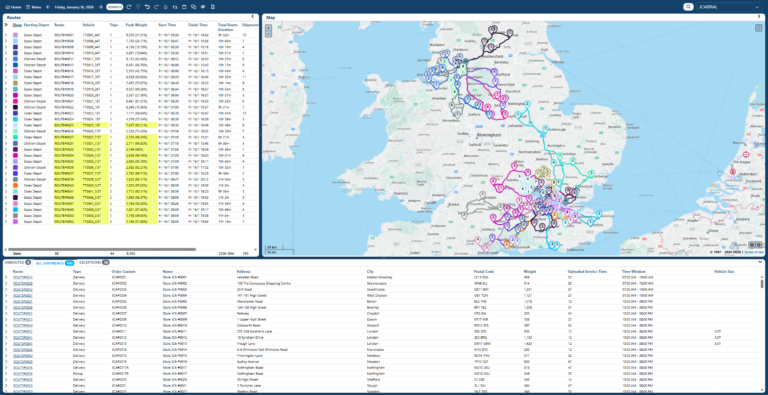
There’s a lot of focus on scenario modelling and forecast planning in retail supply chains to accelerate adjustments to the shocks caused by the Iran war. Emphasis is on finding ways to mitigate rising costs, such as alternative route planning, improving loading to maximise transportation capacity, and eliminating any inefficiencies and wastage. It’s clear there are wide-ranging efforts to avoid the impacts of the Iran war pushing up retail selling prices for shoppers this Christmas.