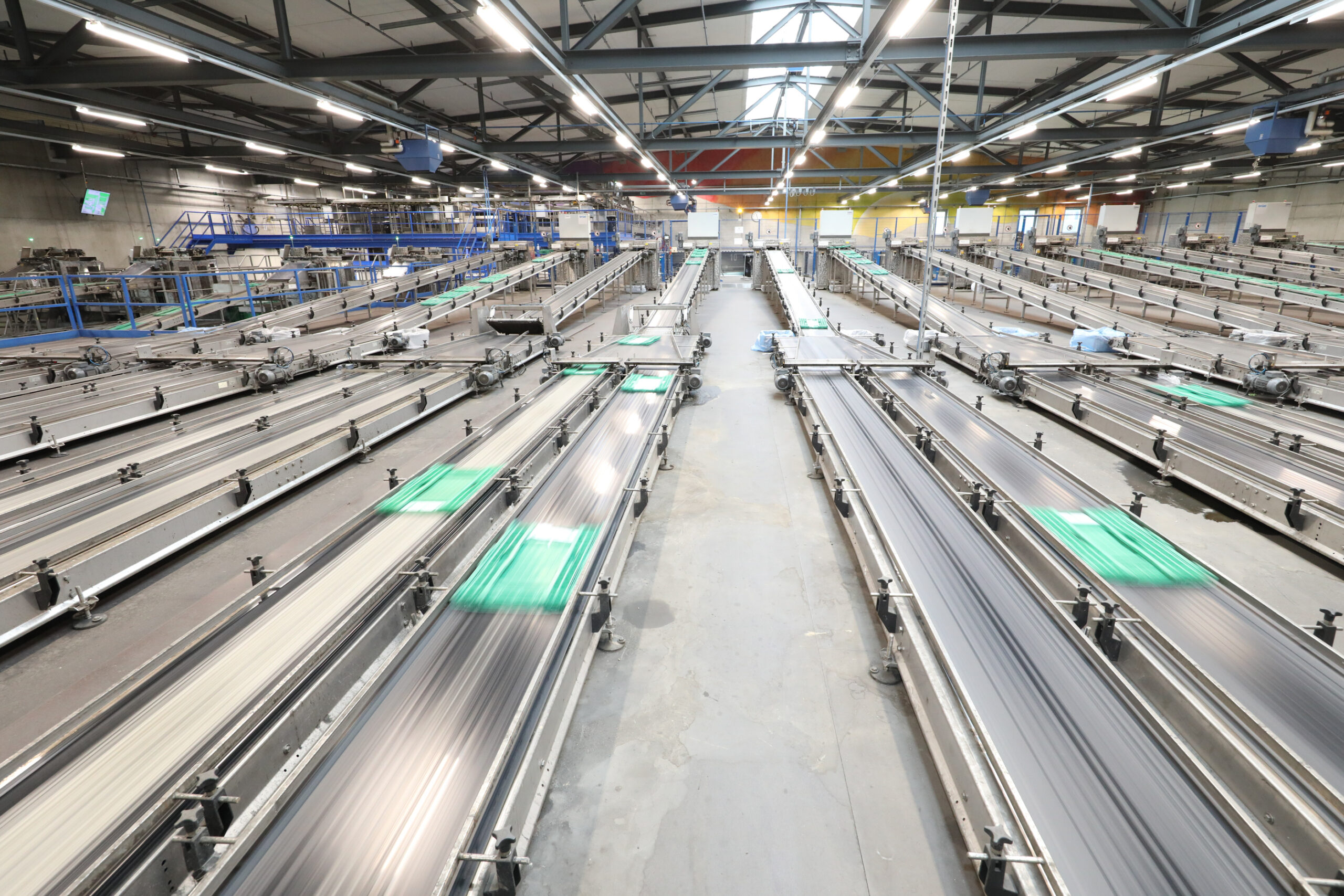
As companies across the globe intensify efforts to reduce carbon emissions, intralogistics operations are coming into sharper focus, writes Sascha Goly, Global Segment Manager Logistics & Sports of Forbo.
While sustainability initiatives have often concentrated on transport and buildings, conveyor systems in warehouses and distribution centres represent a significant, and often underestimated, opportunity for energy savings.
Running continuously and forming the backbone of material flow, they offer clear potential to improve both environmental and operational performance. With increasing pressure from regulatory frameworks and corporate sustainability targets, even incremental efficiency gains are becoming more relevant.
The energy consumption of belt conveyor systems depends on multiple factors, including the design and condition of mechanical and electrical components. Drive systems, control strategies, and maintenance practices all play a role. However, one of the most influential contributors is friction – specifically between the conveyor belt’s underside and the slider bed. In many applications, this contact accounts for a substantial proportion of the total energy required.
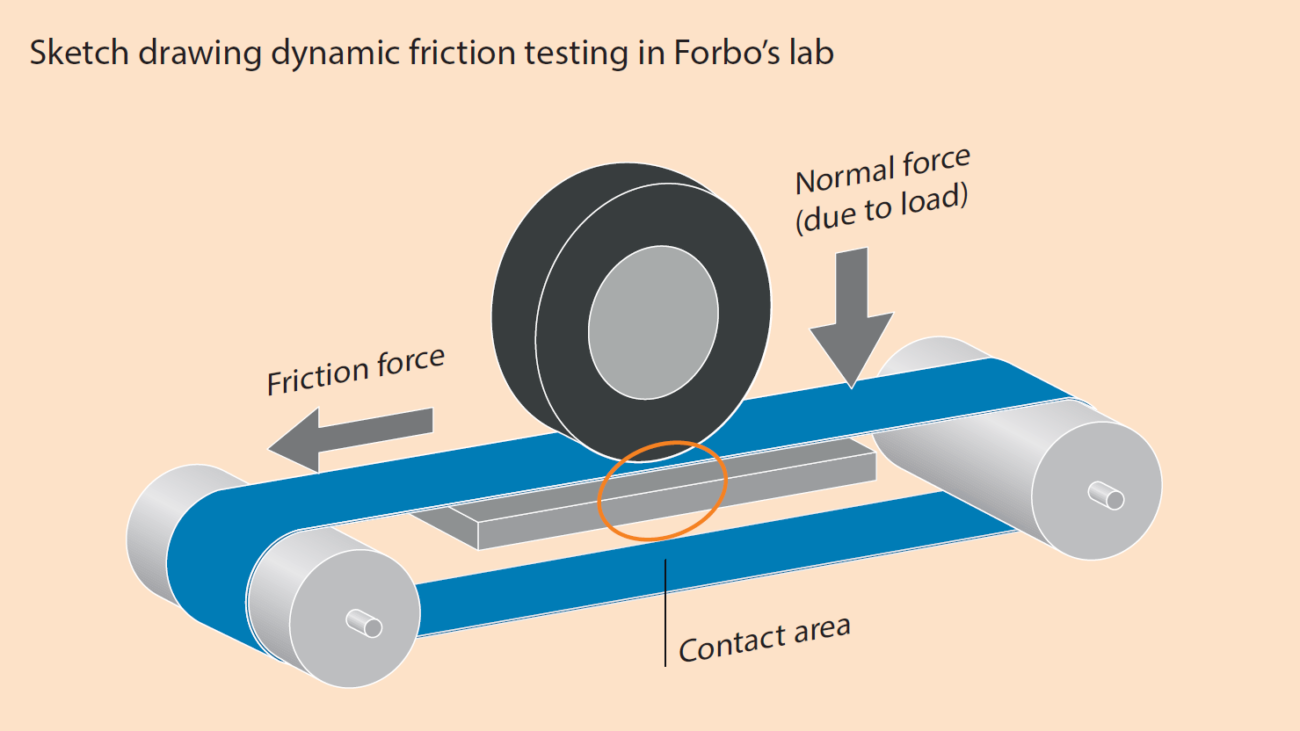
Reducing this friction is therefore a direct and effective way to lower energy demand. By optimizing the belt underside, the friction coefficient can be significantly decreased, reducing the required drive power. Importantly, such improvements can typically be implemented without modifying the conveyor system itself. In many cases, replacing belts is sufficient to realize measurable efficiency gains, making this a cost-effective optimization approach for existing installations.
In long conveyor systems or applications with heavy loads – common in large distribution centres – energy savings of up to 50% can be achieved under optimized conditions. At the same time, reduced resistance enables smoother operation and can allow for higher belt speeds, supporting increased throughput. This combination of lower energy consumption and improved performance is particularly relevant in high-volume logistics environments.
Reduce Friction
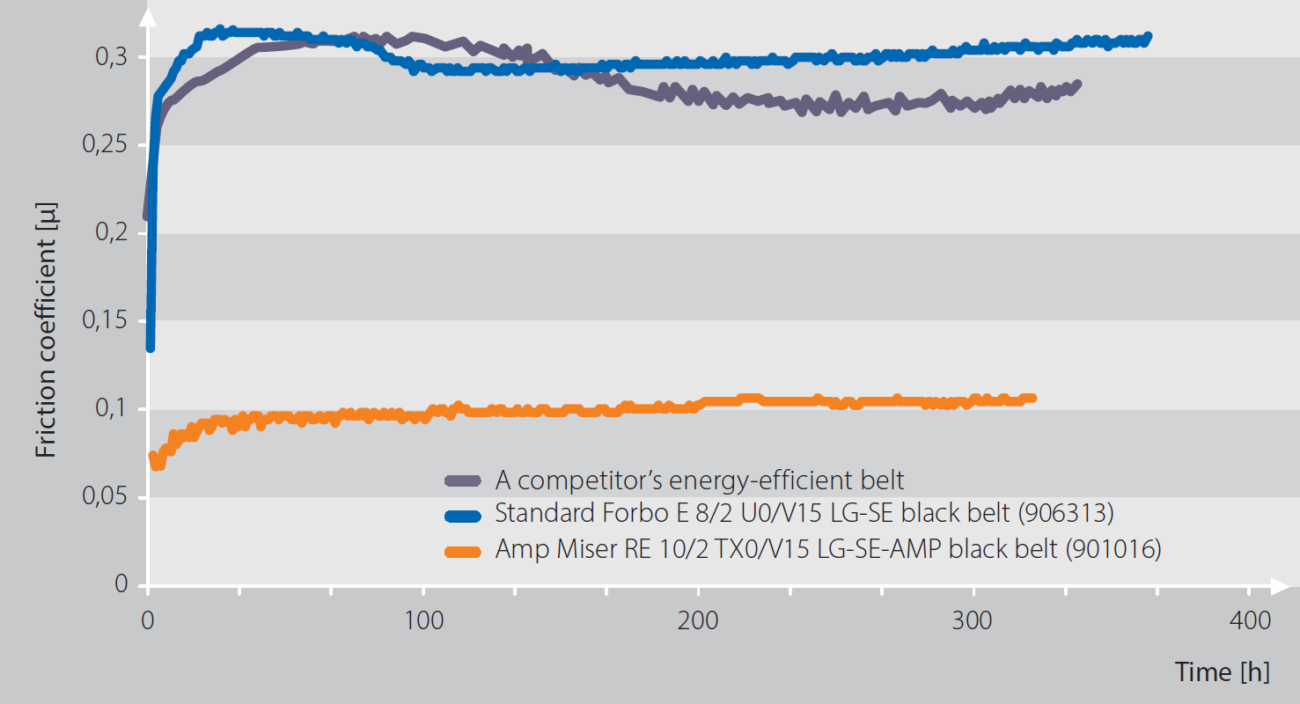
Under standardized test conditions, the conventional conveyor belts of belting solutions provider Forbo Movement Systems show friction coefficients comparable to those of competitors’ energy-saving belts. This indicates that a relatively high level of efficiency can already be achieved with standard belt designs, providing a solid baseline for further optimization.
For further reduction of friction, technologies such as Texglide are applied on Forbo’s energy-saving belts. Texglide is a compound embedded directly into the underside fabric of the belt, designed to create a smooth, low-resistance surface. As it is integrated into the belt structure, its effect is maintained over time, ensuring consistently low friction between the belt and the slider bed.
Such solutions are already in use in large-scale logistics environments with high throughput requirements, including major e-commerce companies and leading parcel and postal service providers. In these operations, even small efficiency improvements can result in significant energy and cost savings over time.
Lower friction also has secondary technical effects. Reduced resistance can lead to lower heat generation in motors, bearings, and other drive components. This decreases mechanical stress and can contribute to longer service life for key system elements. In turn, maintenance intervals may be extended, and the risk of unplanned downtime reduced. From a total cost of ownership perspective, these factors are highly relevant, particularly in operations that depend on continuous system availability.
In addition, improved efficiency can support higher throughput. Smoother belt operation and the potential for increased speeds allow more goods to be transported within the same timeframe. This is especially important in sectors such as e-commerce and parcel logistics, where throughput requirements continue to rise and system performance directly impacts service levels.
Overall, optimizing conveyor belt friction represents a practical and scalable approach to improving energy efficiency in warehouse and logistics systems. It enables measurable reductions in energy consumption while supporting performance and system longevity – without requiring extensive infrastructure changes.