
Bimbo’s High-Velocity Warehouse gets Automated

Grupo Bimbo stands as one of the world’s largest baking companies, operating across 39 countries and four continents, with 249 bakeries and more than 100 brands. Consistently recognized for its corporate responsibility, the company has ranked among Mexico’s most responsible organizations for over a decade.

As Grupo Bimbo continued its global expansion, it faced increasing pressure to modernize its logistics infrastructure, particularly within high-velocity distribution environments where speed, accuracy, and freshness are critical.

The Challenge

Grupo Bimbo‘s rapid growth brought significant operational challenges:
● High-velocity distribution demands: Fresh baked goods require rapid throughput and precise timing to maintain quality and shelf life.
● Increasing SKU and order complexity: A broad and growing product portfolio created strain on traditional warehouse operations.
● Rising logistics costs: Inefficiencies in transport and order fulfillment led to unnecessary delivery trips and higher cost per case.
● Inventory management pressure: Ensuring optimal product rotation while minimizing waste and expiration required greater precision.
● Scalability concerns: Existing infrastructure risked becoming a bottleneck as demand continued to grow.
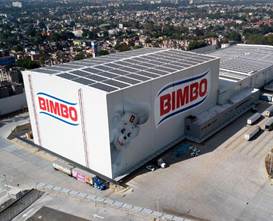
Bimbo warehouse

To maintain its leadership position, Grupo Bimbo needed a logistics transformation that could support both current demands and future expansion. The company selected Stoecklin Logistics based on several key strengths:
● End-to-end automation expertise: Proven ability to deliver fully integrated, high-performance warehouse solutions.
● General contracting and planning capabilities: A single partner to manage complex project phases from design through execution.
● Data-driven approach: Detailed planning grounded in robust data analysis ensured alignment with operational realities.
● Flexibility and ROI focus: Solutions designed to deliver measurable returns while adapting to evolving business needs.
● Collaborative ecosystem: Strong partnerships across all project phases ensured seamless implementation.

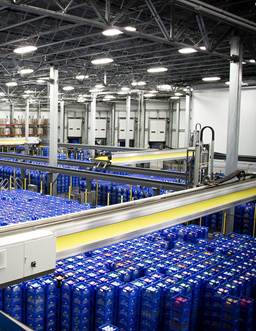
This combination positioned Stoecklin as a strategic partner capable of executing a transformation at scale. The Solution: Fully Automated High-Throughput Warehouse. Stoecklin logistics implemented a fully automated warehouse solution tailored to Grupo Bimbo’s high-velocity environment. Key components included:
● End-to-end automation: Integration of automated storage, retrieval, and material handling systems to streamline operations.
● Optimized throughput design: Systems engineered to handle rapid product flow while maintaining accuracy and consistency.
● Advanced inventory control: Improved visibility and rotation to reduce waste and ensure product freshness.
● Efficient order fulfillment: Automation enabled faster picking and packing, reducing lead times and errors.
● Scalable architecture: A platform designed to accommodate future growth without requiring additional distribution centres.

The solution created a highly synchronized operation, aligning production, storage, and distribution in real time.
Measurable Operational Gains


The implementation delivered significant, quantifiable benefits:

● Increased throughput and speed: Automated systems enabled faster order processing and fulfillment.
● Improved accuracy: Reduced manual intervention led to fewer errors and higher service levels.
● Lower logistics costs: Fewer delivery trips and optimized loads reduced cost per case.
● Enhanced inventory rotation: Better product flow minimized waste, returns, and expiration.
● Scalable growth platform: The automated system supports expansion without the need for multiple smaller facilities.
● Competitive advantage: Faster, more reliable, and cost-efficient distribution strengthened Grupo Bimbo’s market position.

Lessons Learned

Beyond measurable performance gains, the project also delivered valuable strategic insights that can guide future automation initiatives, both for Grupo Bimbo and other organizations navigating similar high-velocity supply chain environments. These lessons highlight the importance of aligning technology, data, and partnerships to achieve long-term success:
● Data-driven planning is critical: Accurate forecasting and robust data analysis form the foundation of any successful automation project, ensuring systems are designed to meet real operational demands.
● End-to-end integration delivers the most value: While incremental improvements can provide short-term relief, fully connected, end-to-end systems unlock significantly greater efficiency, visibility, and performance.
● Scalability must be built in from the start: Designing infrastructure with future growth in mind prevents costly retrofits and enables seamless expansion as demand evolves.
● Strong partnerships accelerate success: Close collaboration between all stakeholders, from technology providers to operational teams, ensures smoother implementation, faster problem-solving, and better overall outcomes.

By partnering with Stoecklin Logistics, Grupo Bimbo successfully transformed its warehouse operations into a fully automated, high-performance distribution hub. The project not only addressed immediate operational challenges but also established a scalable foundation for continued global growth.


War Risk Insurance for Cargo Offered

DP World has launched what is says is a first-of-its-kind cargo war risk insurance solution to help businesses navigate disruption across Middle East trade routes, where traditional insurance has become fragmented, costly and often unavailable.

The solution provides continuous coverage across the entire supply chain, from ocean or air transit through port storage and inland delivery, closing critical gaps left by conventional insurance policies, which typically insure a single leg of the journey. By leveraging its scale and relationships across global insurance markets, DP World has also secured pricing that is significantly more competitive than standard war risk premiums.

“This is about solving a real, immediate problem for global trade,” said Yuvraj Narayan, Group CEO, DP World. “Supply chains don’t stop at the port or the shoreline, and neither should insurance. For the first time, cargo owners can access a single policy that protects goods across the entire journey, even in high-risk environments, helping keep trade moving when it matters most.”

The solution covers physical loss or damage caused by war-related risks, including conflict, civil unrest, seizure and derelict weapons, with all valid claims settled with zero deductible.

Available to all companies trading in or through the Middle East, the programme is designed to maintain supply chain continuity across key trade corridors, including the Arabian Gulf, the Red Sea and surrounding inland routes. The programme offers a range of options, including:

• End-to-end protection from ocean or air transit through to inland delivery.
• Standalone ocean, air or land transit policies.
• Automatic port storage cover for up to 14 days.
• High coverage limits, including up to $400 million per shipment and $1 million per inland movement.

This flexibility enables cargo owners to adapt quickly to changing routes and operational realities.

How it Works

For example, with a shipment from Asia to the Middle East, cargo travels by sea into Jebel Ali, where it is stored at port for several days before clearance, then transported by truck to its final inland destination.

With traditional insurance coverage typically applies only during ocean transit, leaving gaps during port storage and inland transport. With DP World’s solution a single policy provides continuous protection across the entire journey, from entry into the war risk zone through to final delivery.

Why this matters:
· Traditional cargo insurance typically excludes war risk or requires separate cover
· Coverage often ends at discharge, leaving gaps during port handling and inland transport
· Carriers do not cover war-related losses, as these fall outside their liability

DP World’s solution closes these gaps with continuous, end-to-end protection.

Logistics Business Magazine – May 2026

The latest issue of Logistics Business arrives at a pivotal moment for the supply chain sector, as companies across freight, warehousing and transport face mounting pressure to become faster, smarter and more resilient. Inside the May 2026 edition, readers will discover how the industry is moving beyond technology hype and into a new era where AI, automation and intelligent software are delivering measurable operational advantage.

A major focus of this issue is the growing role of AI and visibility technologies across logistics operations. From embedded AI agents helping supply chain teams move from insight to action, to advanced LiDAR systems improving warehouse safety and automation, the magazine explores how digital intelligence is becoming the invisible engine behind modern logistics performance. Exclusive interviews with leaders from Infios, MicroVision and Ocado Intelligent Automation reveal how software, data and automation are reshaping fulfilment, warehouse execution and operational decision-making.

The issue also examines the evolving dynamics of global freight and customs. Readers can explore how Trans.eu is rethinking the freight exchange model around trust, payment security and intelligent automation, while an in-depth customs feature reveals why forwarders are increasingly turning compliance expertise into a competitive commercial weapon. Elsewhere, an exclusive feature on cross-border e-commerce returns challenges common perceptions around post-Brexit trade and highlights why the UK market may represent a bigger opportunity than many retailers realise.

Warehouse and intralogistics innovation remains central throughout the edition. From robotic picking systems and warehouse gamification to high-density storage strategies and automated fresh food distribution, the issue showcases the technologies and operational thinking redefining fulfilment efficiency. Readers are also taken inside advanced logistics facilities and multimodal operations that demonstrate how leading companies are combining automation, flexibility and sustainability to meet rising customer expectations.

Packed with expert interviews, strategic analysis and real-world case studies, the May 2026 issue of Logistics Business offers essential reading for logistics professionals looking to understand not just where the industry is today – but where it is heading next.

Our digital issues can be read or listened to in any language. Simply click on the ‘Freeflow reader’ graphic near the top right corner of each editorial page. To browse all our recent issues click here.

6,000 Pallet Cold Store Adds Frozen Capacity

UK and Ireland specialist in temperature controlled logistics and supply chain solutions, Oakland International, has announced the construction of a new 6,000 pallet capacity frozen cold store at its Bardon site, marking a significant investment in its long term infrastructure strategy.

The development will increase Oakland International’s total frozen capacity across its network by approximately 30%, reinforcing its ability to support long term customer growth while further enhancing its range of value added services, including tempering solutions, at a time of continued growth and evolving requirements across retail and food supply chains, where resilience, flexibility and efficiency are increasingly critical.

Regional Director Jamie Robinson commented:

“This investment reflects our ongoing commitment to our customers and to building infrastructure that delivers resilience, flexibility and real operational value. Expanding frozen capacity at Bardon is a major step in strengthening our network and future proofing our service offering.”

By expanding frozen capacity at Bardon, Oakland International is responding directly to customer demand for scalable, strategically located storage that can support both current volumes and future expansion, while enabling a single depot, multi temperature solution that simplifies supply chains and improves operational efficiency.

Bringing frozen, chilled and ambient services together at one location reduces complexity, streamlines handling and supports faster, more cost effective distribution, particularly for customers supplying major retailers.

This investment forms a key phase in Oakland International’s long term vision to develop Bardon into a fully integrated, multi temperature logistics hub and, once complete, the site will offer customers a comprehensive, end to end supply chain solution within a single, strategically positioned location, increasing flexibility and strengthening service continuity.

Robinson added:

“Our ambition at Bardon is to create a logistics environment that doesn’t just keep pace with our customers’ businesses, but actively enables their next phase of growth. By bringing greater frozen capacity together with multi temperature capability under one roof, we are building a smarter, more connected supply chain that gives customers confidence, choice and long term flexibility.”

Infios Named a Leader in 2026 Magic Quadrant

Infios has announced that it has been recognized as a Leader in the 2026 Gartner Magic Quadrant for Warehouse Management Systems (WMS) for the eighth consecutive year.

Infios was also recently acknowledged in the 2025 Gartner Peer Insights Voice of the Customer for Warehouse Management Systems. The ‘Voice of the Customer’ report, which aggregates user reviews into actionable insights, highlighted Infios with an average rating of 4.5 out of 5 based on 32 reviews as of 31st August 2025. Placed in the upper-right corner of the ‘Voice of the Customer’ grid, Infios was recognized as a Gartner Peer Insights Customers’ Choice. Infios (formerly Körber Supply Chain Software) also received this recognition in 2023.

“We believe being named a Leader in the Gartner Magic Quadrant for Warehouse Management Systems and the only WMS provider recognized as a Gartner Peer Insights Customers’ Choice underscores Infios’s commitment to delivering real outcomes for our customers through a relentless focus on execution and purposeful innovation,” said Ed Auriemma, CEO of Infios.

“Our WMS spans entry to enterprise, orchestrating people, processes, robotics and automation in a single, scalable system. This is how we power the next generation of connected intelligent supply chain execution.”

Infios’s WMS brings together real-time inventory visibility, advanced slotting, labour management, automation and embedded AI to enable intelligent orchestration across workflows. The result is faster decisions, less rework and more reliable execution helping organizations improve efficiency, accelerate decision making and build more resilient supply chain operations.

“With Infios, we’ve moved beyond simply managing warehouse operations to running a far more connected, intelligent supply chain. We were able to scale through our largest peak on record, exceeding forecast by 170%, while nearly doubling throughput without adding labour, all while improving inventory accuracy and operational control,” commented Jeff Durham, CEO of Durham Brands.

“What stands out is not just the performance gains, but the ability to adapt quickly, make better decisions in real time, and continuously improve how we operate. It’s had a lasting impact across the business.”

View a complimentary copy of the 2026 Gartner Magic Quadrant for Warehouse Management Systems (WMS) report here.

Subscribe

Get notified about New Episodes of our Podcast, New Magazine Issues and stay updated with our Weekly Newsletter.