
Warehouse space is not just about storing and moving products. Making every square metre and every process perform under pressure is what matters. This pressure is increasing.
E-commerce is growing, labour costs are rising, and global uncertainty and tariffs are making operations less predictable. Customer expectations are climbing too. 56% of online shoppers aged 18–34 expect same-day delivery. 71% are willing to pay extra for next-day delivery. Warehouse space is also getting more expensive. In the U.S., average costs rose from $7.96 per-square-foot in 2022 to $8.31 in 2024.
Planning and staying competitive through all this is challenging without complete, real-time data and agile decision-making. Inaccurate information is costly. In environments with frequent peaks and volatile demand, it leads to higher costs, slower processes, fines, and a poor customer experience.
New level of visibility
Retail warehouses operate in highly dynamic environments. During Black Friday 2024, e-commerce shipments nearly doubled compared to a normal day. In the days after Christmas, returns increased by up to 50%. That gap hits the bottom line fast. Imagine a product that goes viral on TikTok. If you think you have $10 million of stock but only have $7 million, the revenue impact is immediate.
Having products in stock is not enough on its own. Teams need to know exactly where each product is. In fast-moving retail warehouses, not having the right stock in the right place at the right time creates a cascade of problems. Instead of a 2-3 minute pick, teams must log the issue. Then pull a forklift driver off another task, locate the pallet, and replenish the position. That’s ‘rework’ – activity that generates no revenue.

Manual inventory scanning and ‘partial automation’ solutions are no longer enough. Barcodes and RFID tags can’t keep up with the demands of modern retail warehouses. These traditional tools have served the industry for decades. They rely heavily on human input and are prone to errors. Over time data decays – becomes outdated, incomplete, or inconsistent.
On the other hand, automation, AI, and robotics are enabling real-time visibility. Teams can now move toward fully data-driven operations.
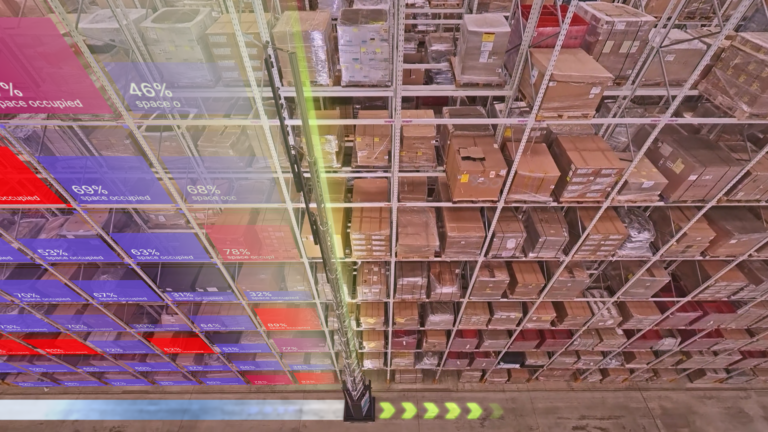
Dexory’s autonomous robot operates at heights of up to 18 metres. It moves through the warehouse constantly scanning its surroundings, processing up to 10,000 pallets per hour, day or night. It gathers thousands of data points. DexoryView processes them through an AI-powered platform that creates a live digital twin of the warehouse.
This replica reflects real-time conditions. Teams can monitor inventory, track space use, and identify bottlenecks – without interrupting daily operations.
From visibility to warehouse intelligence
Real-time visibility is only the first step. The next stage is warehouse intelligence. That means using high-quality data and AI-driven insights to make faster, data-driven decisions across the entire business.

With access to continuous, reliable data, teams can move from reactive problem-solving to proactive operations. Instead of identifying issues after they impact performance, they can detect and resolve them as they emerge. Real-time data is valuable across the whole organisation. It gives floor teams, demand forecasting, procurement, and analysts actionable insights to identify trends.
This is especially critical during peak periods, when demand spikes, order volumes increase, and returns add further complexity. Better data and insights means better decisions. Teams can focus on fast-moving SKUs, optimise picking paths, and keep high-demand products in the right place.
The result is better planning, fewer investigations, lower waste costs, and smoother workflows across the warehouse.