A good third-party logistics provider (3PL) can be the backbone of a growing business. But as a supply chain expands across markets, carriers and systems, the problem may no longer be the performance of the 3PL. It may be that the logistics model itself has reached its limits.
That is the argument made by Paul Lockwood, UK and Ireland Group Managing Director at SEKO Logistics, who identifies four signs that a business may have outgrown its existing 3PL model.
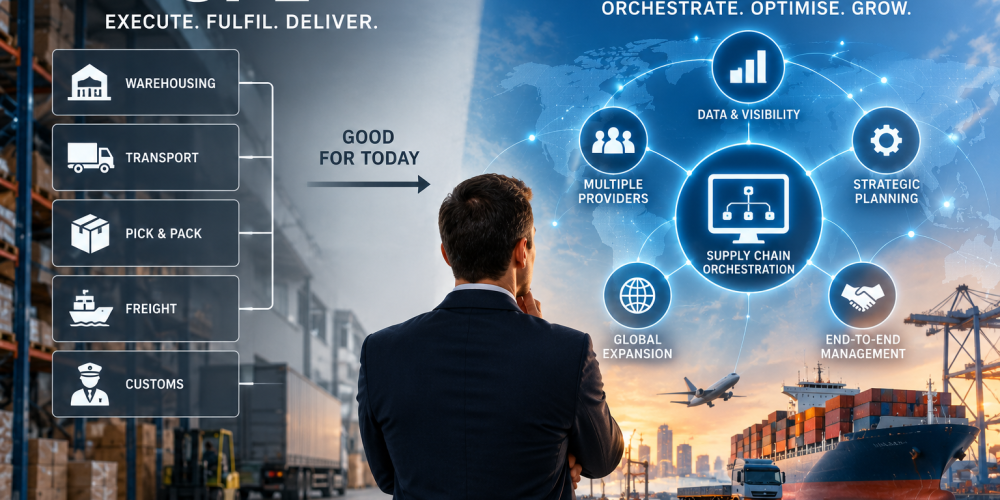
The distinction is important. A 3PL manages one or more logistics services, while a fourth-party logistics provider, or 4PL, manages multiple logistics providers and takes on a broader orchestration role.
The visibility gap widens
Growth can bring new markets, carriers and regional partners, each with different systems, service levels and reporting formats. Individual providers may perform well, but the business can lose its ability to see inventory, orders and performance across the network as a whole.
The 2026 30th Annual Third-Party Logistics Study found that 90% of shippers consider technological capabilities critical when selecting a 3PL, while only 57% say they are satisfied with their provider’s technology capabilities. Lockwood said:
“There’s a real gap between what businesses expect from technology and what they’re getting. Selecting a provider on technology capability is one thing; actually being satisfied with it once you’re in the relationship is another.”
Growth outpaces the network
A provider that works well in one region may not have the network needed when its customer expands into new markets.
According to the study, half of shippers and 62% of 3PLs report that shippers are actively consolidating the number of 3PL partners they use.
“We’re seeing this consolidation play out with our own clients,” Lockwood said. “Once a business is managing four or five separate provider relationships across different markets, adding another one rarely solves the problem.”
Instead, the requirement may become one of network-level management, with a single party coordinating multiple providers.
The relationship becomes strategic
As a business grows, the role expected of its logistics partner can change. What starts with reliable execution can develop into questions around inventory strategy, landed costs, resilience and market entry.
The 2026 study found that 81% of shippers cite supply chain disruption and complexity, while 76% cite cost optimisation through collaboration, among their reasons for pursuing more strategic logistics partnerships.
That does not necessarily mean moving to a 4PL model. It does, however, suggest that logistics relationships can evolve beyond straightforward execution.
Systems stop talking
Multiple logistics providers can also create multiple WMS, TMS and EDI environments. Data that should flow through the supply chain can instead become fragmented across different systems, requiring separate reconciliation and management.
A 4PL model can address this by providing an orchestration layer across multiple providers and systems.
Not every business needs a 4PL
Moving to 4PL is not automatically the answer. It can mean greater transfer of control, a more involved transition and a different cost structure.
For a business still operating within one or two markets, strengthening its existing 3PL relationship may be more appropriate than adding another layer of management.
Lockwood concluded:
“None of this means a business’s 3PL has failed. Outgrowing a model is usually a sign of success.”
The key question, therefore, is not whether 4PL is the next inevitable step. It is whether the complexity of the supply chain has reached the point where managing individual logistics providers is itself becoming a problem.