Logistics Verification with RFID COS Tunnel

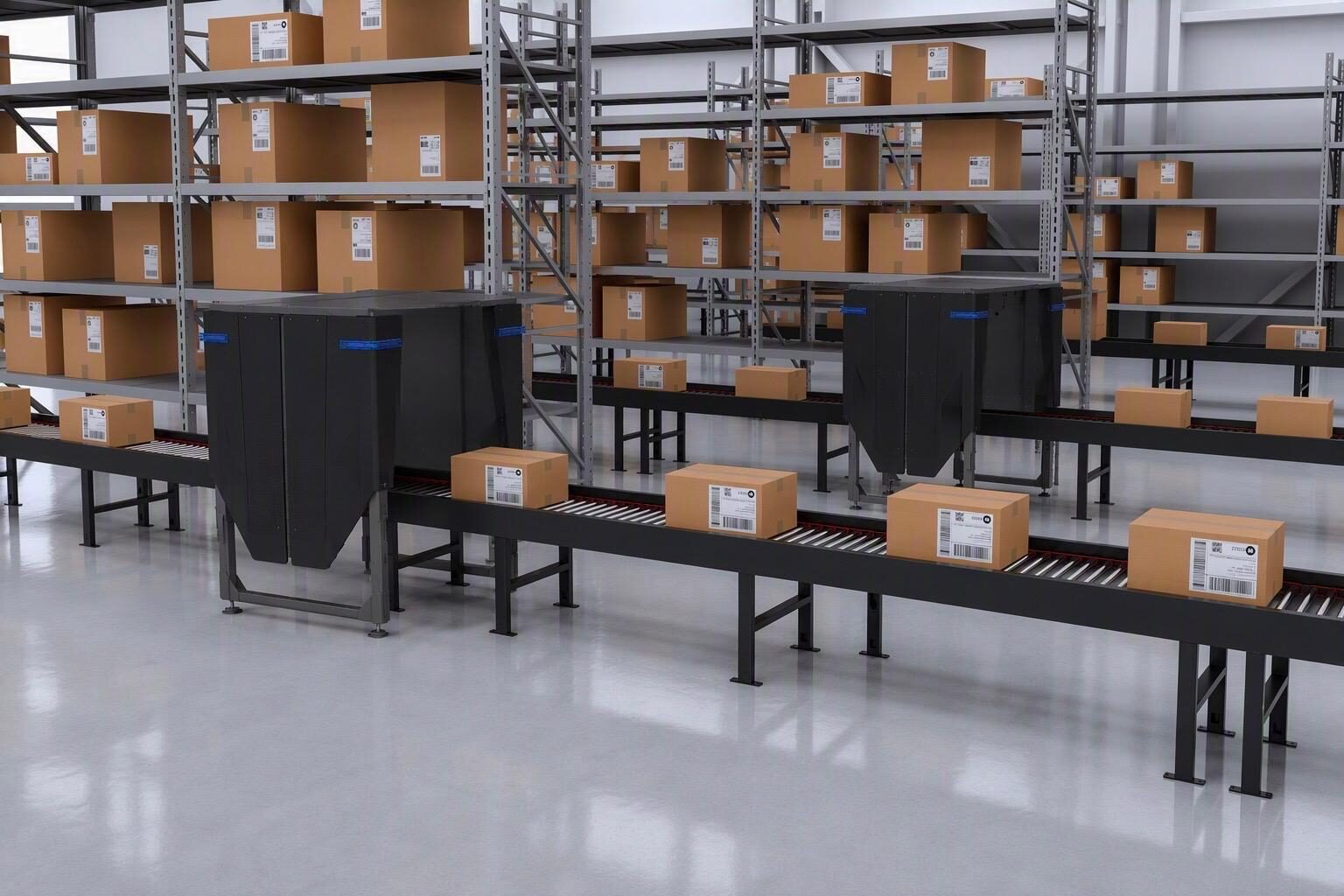
Clustag, specialists in RFID, has introduced COS Tunnel, a new open-architecture RFID tunnel designed for integration over existing conveyors, enabling the automatic verification of boxes, bags and parcels in real-world logistics environments.

With this addition, Clustag strengthens its portfolio of RFID solutions for distribution centres, offering an alternative for projects where adapting the technology to the existing installation, minimising the required modifications and accelerating time to value are the main priorities. The company officially unveiled COS Tunnel at RAIN in Action Madrid 2026, an international event dedicated to RAIN RFID technology.

“The challenge was not to launch a simpler version of our existing solutions, but to complete our device portfolio with a different proposition: COS Tunnel is designed for projects where flexibility, rapid integration and minimal impact on infrastructure are the deciding factors,” says Manolo Reguart, CEO of Clustag.

COS Tunnel has been conceived as an over-conveyor solution, configurable in width, height and operating layout. It incorporates an innovative RFID wave emission and reading-zone control system developed by Clustag’s R&D team. This system concentrates reads within the parcel transit area, improving process reliability in real-world logistics environments, while connecting the data to the customer’s WMS, ERP, WCS or WES systems through the ZENTUP data capture platform.

The solution is particularly suited to goods receiving (inbound), shipment validation (outbound), ecommerce order preparation, as well as projects in existing facilities (brownfield) where avoiding conveyor shutdowns or major line modifications is essential. Its performance is configured according to the actual variables of each application, including conveyor speed, parcel density, spacing between boxes and working environment conditions.

Maximum accuracy with MOT Station

“COS Tunnel does not replace MOT Station. Each solution addresses a different operational priority: COS excels where flexibility and rapid deployment are decisive, while MOT Station remains the benchmark when maximum accuracy, a controlled RFID environment and validation in critical scenarios are the priority,” adds Reguart.

This approach enables Clustag to support its customers both in applications with demanding technical requirements and the highest levels of reliability, and in operations seeking to introduce RFID progressively, with a lower investment barrier and more agile integration into existing infrastructure.

5-year Cost of Humanoids in Warehousing

When considering humanoid robots in the warehouse users need to weight readiness against a five-year total ownership cost, says Jonathan Sp, co-founder, RobixOne.

Warehouse and 3PL operators are hearing more about humanoids on the docks than ever. Demos are polished. Press releases promise labour relief. The harder question is not whether a bipedal robot can pick a tote — it is what that robot costs to own for five years, and whether the unit economics beat the alternatives you already run.

Sticker price is not the decision

Industrial and near-industrial humanoid platforms marketed into logistics still carry list prices that look like CapEx events, not gadgets. Treat the purchase price as the deposit, not the total. Across consumer and light commercial humanoids we have modelled independently at RobixOne, five-year ownership routinely lands near 1.6× list at the mid tier — once you add multi-year service, extended coverage, a spare battery or pack, out-of-warranty actuators, insurance, and energy. Entry hardware looks cheap on the P.O. and expensive in the model, because repair and service floors do not scale down with the sticker.

For a DC, that same pattern matters more, not less. Downtime is not an inconvenience; it is a throughput line. An actuator failure on a supervised humanoid is labour plus lost picks. If your vendor will not put five-year service, renewal pricing, and out-of-warranty part lists in writing before you pilot, you do not have a cost model — you have a demo.

Readiness is still supervised

The useful frame for logistics leaders is readiness, not hype. Most humanoids shipping into real environments in 2026 remain supervised assistants: they need mapping, task scoping, charging discipline, and clear failure modes. That is closer to a new class of mobile automation with a training curve than to a drop-in associate. If your business case assumes day-one autonomy across mixed SKUs and changing layouts, the spreadsheet will fail before the robot does.

Where humanoids can earn a place is narrow, repeatable work with stable geometry — and only when you price the full stack: robot, docking, spare power, authorized labour, software support, and the people who keep the cell running. Breadth of tasks is the long-term bet. Quality on a single task still usually favours purpose-built AMRs, cobots, or human labour.

Unit economics vs labour and fleets

Compare honestly. A mid-tier ownership number in the low tens of thousands of dollars over five years can look competitive against weekly labour on a narrow job — until you add supervision, changeovers, and the fact that a specialist machine often does that one job better. Humanoids win when presence and task flexibility matter more than peak performance on one motion. They lose when you needed a conveyor, an AMR, or another associate and bought a generalist instead.

Ask three questions before CapEx: What is the five-year all-in including service renewal after any launch promo? What does a critical joint or hand replacement cost out of warranty? What is the measured pick or cycle rate on your SKUs, not the booth demo? If those answers are soft, the pilot should stay a pilot.

Bottom line

Humanoids are entering the warehousing conversation for real reasons — labour tightness, Physical AI, and vendor momentum. Treat them like any other plant asset: model five-year cost, demand part and service transparency, and judge readiness by supervised throughput on your floor, not by the press cycle. The shiny demo is optional. The ownership math is not.

CH Robinson to acquire RXO in $5.8bn logistics deal

CH Robinson has agreed to acquire freight brokerage business RXO in a transaction valued at approximately $5.8bn, creating a larger logistics operation focused on freight brokerage, expedited transport and last-mile delivery.

Under the terms announced on October 5, RXO shareholders will receive $17.25 in cash and 0.0856 CH Robinson shares for each RXO share. The implied value is $30.25 per share, representing a 29% premium to RXO’s closing price on October 2.

The transaction is expected to close in the first half of 2027, subject to customary conditions. RXO shareholders are expected to own approximately 11% of the combined company once the deal is completed.

Why the deal matters

The acquisition comes as freight markets face cost pressure and difficult operating conditions. CH Robinson said the deal would diversify its business and add RXO’s capabilities in expedited and last-mile delivery, areas that are increasingly important as shippers seek more flexible transport options and tighter delivery windows.

The combined business also plans to use artificial intelligence to improve operations and is targeting $300m in cost savings within two years. For logistics professionals, the deal highlights the continuing focus on scale, automation and network efficiency across freight brokerage and managed transportation.

The cash element will be funded through new debt financing, including a fully underwritten bridge facility. That financing structure will add leverage considerations as the businesses are integrated, while the promised savings will depend on the successful alignment of systems, teams and carrier networks.

Although the transaction is centred on the US market, it will be relevant to European logistics providers and shippers with international freight requirements. A larger CH Robinson organisation could strengthen its ability to offer connected transport services across modes and geographies, while the deal may also add to wider consolidation pressure among logistics intermediaries.

Solar Puts Warehouse Rooftop to Work

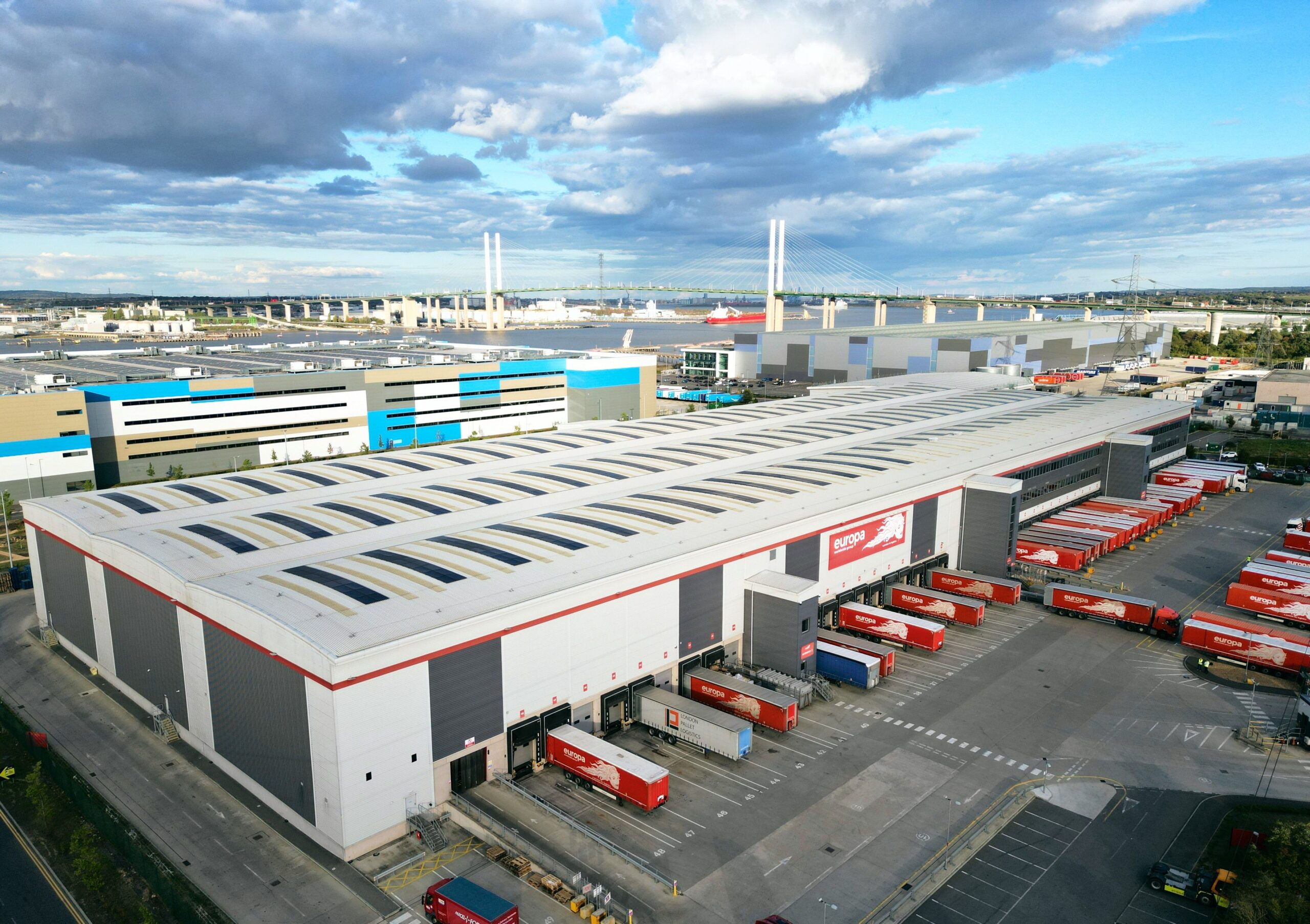
Independent logistics operator Europa Worldwide Group (EWG) has partnered with its landlord, Prologis, to install a 600 kWp rooftop solar photovoltaic (PV) system at its £30 million Dartford site. Expected to generate 541,800 kWh of renewable electricity annually, it is Europa’s first rooftop solar installation and could save the business approximately £80,000 in the first year, based on current electricity rates. In its first month of operation, over 40 per cent of the site’s consumption came from solar energy.

The project shows what landlords and occupiers can achieve when they work together, while highlighting the practical barriers that must be overcome for rooftop solar to be adopted more widely across the UK warehouse sector.

At a time when the UK must increase renewable energy generation while managing growing pressure on land, warehouse rooftops offer an opportunity to make better use of existing commercial buildings. Around 140 large-scale solar farm schemes were reported to be under construction across the UK in August, with further projects competing for land.

Warehouse rooftops offer untapped capacity

Analysis by the UK Warehousing Association (UKWA) suggests that existing warehouse rooftops could provide 17.3 GW of solar generating capacity. However, research examining more than 300 warehouse rooftops found that just five per cent had solar installed.

Europa has explored opportunities to install solar at Dartford for several years. The site is its European road freight hub and is also home to the company’s specialist 3PL services, creating substantial daytime energy demand. However, the number of parties involved, and the complexity of the process presented significant barriers.

UKWA has identified grid connection delays, structural considerations, insurance requirements, lease restrictions and a lack of alignment between landlords and tenants as persistent obstacles.

Tom Jenkins, Central Services Director at Europa Worldwide Group, said: “We have wanted to utilise solar panels on our Dartford headquarters and transit hub for a long time. The environmental and commercial case is compelling, particularly for a large logistics facility with substantial daytime energy demand, but there are way too many barriers.

“Warehouse occupiers may not own their buildings, while landlords, energy providers, network operators and legal teams all need to be involved. The process can quickly become lengthy and difficult to navigate, even when every party supports the principle of renewable energy. Our partnership with Prologis has enabled us to overcome those challenges. It shows what can be achieved when landlords and occupiers work closely together, but the wider process needs to become much easier if rooftop solar is to reach its full potential across the logistics sector.”

Partnership removes cost and contractual barriers

The installation was led by Jon Margetts, Head of Health & Safety and Facilities, at Europa – and delivered through a 30-year Power Purchase Agreement with Prologis. This removes the upfront capital expenditure that would otherwise have been required and allows Europa to purchase renewable electricity generated at the site.

Through Prologis Essentials, the property company has provided a turnkey solution, with its energy specialists managing each stage of the project. This has included assessing the site’s energy profile, determining the appropriate system size and overseeing design, approvals, procurement, installation and commissioning.

The agreement runs alongside Europa’s property lease and does not create dilapidation or exit charges should the company leave the building before the solar term ends, removing two potential barriers for the occupier.

Paul Weston, Regional Head of Prologis UK, said: “This project demonstrates how landlords can play a practical role in helping customers progress their sustainability ambitions. By removing the upfront investment and managing the technical, contractual and delivery process, we have helped make renewable energy commercially and operationally accessible to Europa.

“Through Prologis Essentials, we are investing in solutions that help our customers improve energy resilience, reduce emissions and unlock the value of renewable energy across our logistics portfolio.”

As Prologis’ 48th rooftop solar installation in the UK, the project supports the company’s wider environmental, social and governance commitments to increase on-site renewable energy generation.

Clare Bottle, CEO of the UKWA, said “Europa’s experience chimes with what we hear from other UKWA members. The appetite to invest in rooftop solar exists, and the potential commercial, environmental and energy-security benefits are clear, but there are still too many practical and contractual barriers.”

“The Europa and Prologis partnership is a strong example of how a landlord-led model can remove some of those obstacles. We need to see more collaboration of this kind, alongside solar-ready new warehouse developments, faster grid connections and tax incentives for connection fees”

Europa’s 26,368 square metre Dartford site opened in 2015 on the former site of Littlebrook Power Station, which was decommissioned the same year. The solar PV system is expected to provide locally generated renewable electricity for the next 30 years, supporting Europa’s efforts to reduce its environmental impact.

Subscribe

Get notified about New Episodes of our Podcast, New Magazine Issues and stay updated with our Weekly Newsletter.