Peter MacLeod hears how Ocado is reshaping fulfilment through software, data and lived experience.
For decades, the material handling industry has been defined by what you can see. Bigger systems, faster conveyors, taller cranes – it’s this tangible spectacle of automation that has long dominated both exhibitions and editorial coverage. But as I discovered in conversation with Jamie Spencer of Ocado Intelligent Automation, the centre of gravity has shifted decisively away from the visible and into something far more powerful and less tangible.
It’s clear that the starting point has changed. Customers don’t always know what they want, but they do know their challenges. That distinction is increasingly important as retailers and logistics operators move away from prescribing specific technologies and instead seek partners capable of diagnosing complex operational problems.
Over the past 12 to 18 months, Ocado Intelligent Automation has seen a marked shift in how organisations approach automation. Rather than asking for a specific system – a grid, a robot, a particular piece of kit – customers are increasingly focused on outcomes. They want solutions that can evolve alongside their business, flex across different fulfilment models and, crucially, deliver measurable returns.
That shift is opening the door to a broader conversation. It may lead to robotics, automation, in-store fulfilment, or a combination of all three. In many cases, it leads to something more fundamental: a rethinking of how fulfilment itself is structured.
The Invisible Layer
If hardware once dominated the conversation, software and data now define it. Trade shows still showcase the physical – the “metal” – but Spencer (pictured, below) argues that the real differentiation lies behind the scenes. “You can see hardware. You can’t see software,” he says. “But that’s where the real value is being created.”

The pace of change is accelerating. Businesses are becoming more data-driven in their decision-making, reshaping how they evaluate automation partners. It is no longer enough to offer the fastest or tallest system. The critical question is who truly understands the customer’s operation and can prove it using data.
OIA’s heritage plays a central role. Born out of a pure-play online grocery business, it operates in an environment where decisions are driven by data. That DNA now informs how it approaches external customers. Every solution, from manual store picking optimisation through to highly automated fulfilment centres, is underpinned by software architecture designed to integrate across multiple mission types.
This integration is increasingly what customers are looking for. Rather than standalone systems, they want partners capable of influencing the entire operation, from e-commerce strategy to last-mile execution. In Spencer’s words, it is about becoming “a fully integrated partner”, not simply a supplier of automation.
Experience as a Differentiator
Yet for all the focus on technology, Spencer returns to a more human point. The most important interface in any project is still between people. Recruitment challenges remain acute, particularly at warehouse level, where labour scarcity and rising expectations are reshaping the workforce.
Ocado’s approach is rooted in its own operational experience. Unlike many providers, it runs large-scale fulfilment operations itself. Its teams – from engineers to solutions specialists – have lived the same challenges as their customers.
“There’s a level of empathy that comes from having experienced it,” Spencer explains.
This internal-external alignment is central to its positioning. Its first customer remains its own retail business, acting as a proving ground for new technologies. Solutions are developed, tested, scaled internally and only then taken to market, creating a level of trust that is difficult to replicate.
Beyond Grocery
While grocery remains core, growth is increasingly driven by other sectors. Fashion & apparel is one of the fastest-growing areas. The rise of fast fashion, coupled with the complexity of returns, is creating significant demand for automation. Labour constraints are acute, not because companies want to replace people, but because they cannot recruit fast enough to sustain growth.
Pharmaceutical distribution is another key area. Parallels with grocery – particularly basket size and order complexity – make the technology transferable, while additional requirements around accuracy, temperature control and regulation place greater emphasis on software and data.
Alongside these verticals, the company is also seeing strong interest in direct-to-consumer e-commerce operations. The common thread is the need for precision, scalability and resilience in the face of labour shortages.
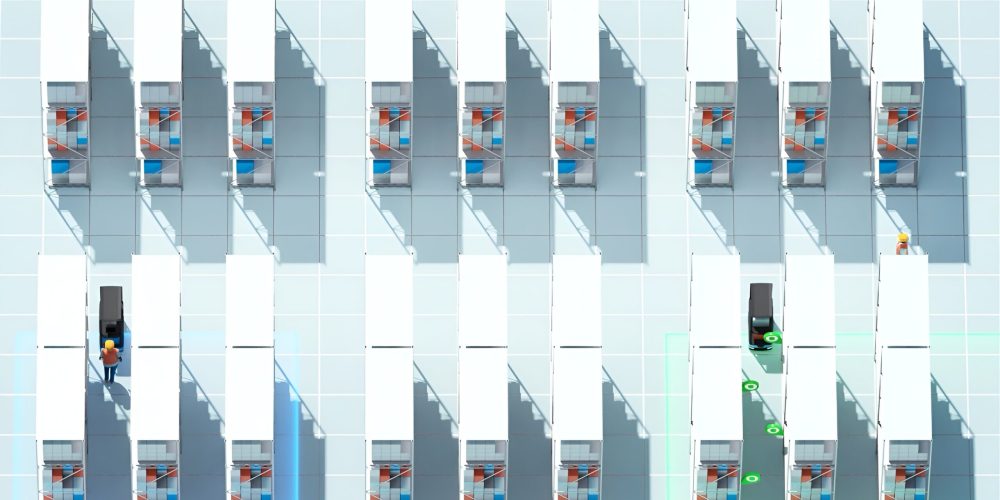
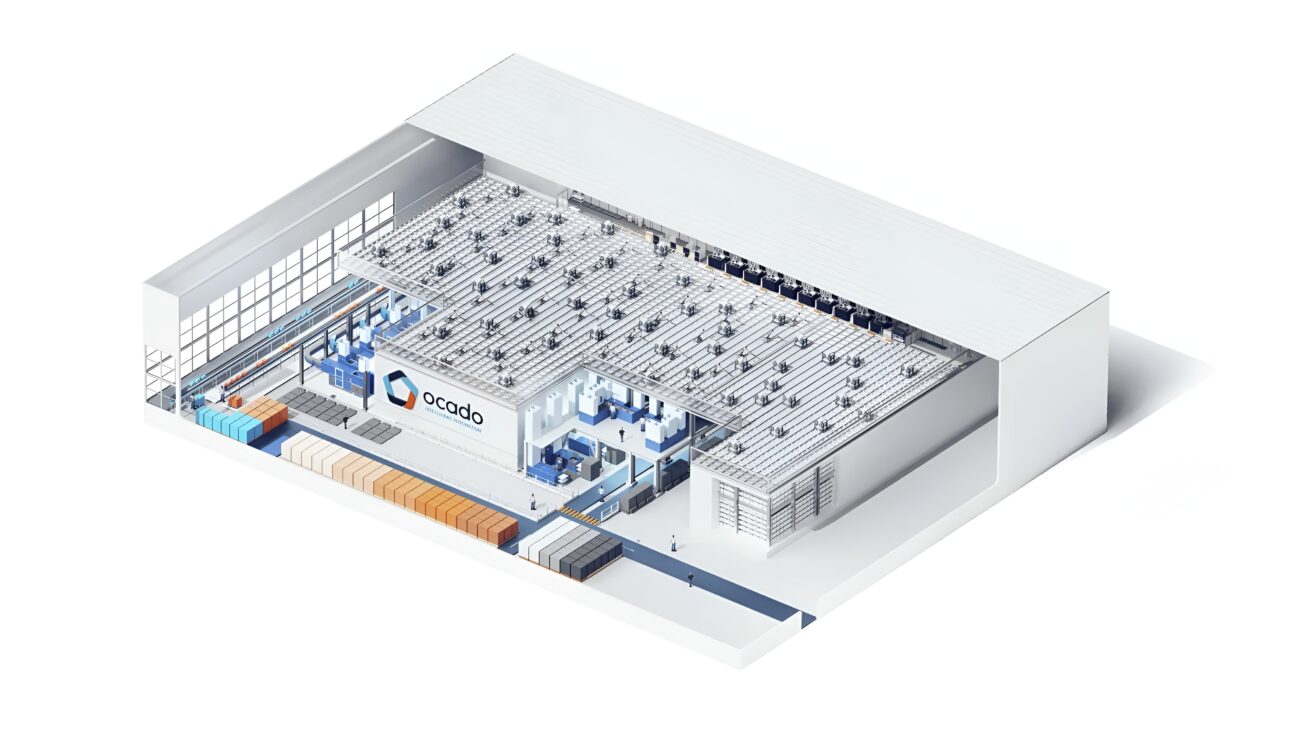
Perhaps the most significant development is the expansion of Ocado’s solution stack across multiple fulfilment models. Where once it was primarily associated with large automated fulfilment centres, it now offers a continuum from manual in-store operations through to full automation. This includes store-based fulfilment, micro-fulfilment within existing retail spaces and local performance centres supporting rapid delivery.
This reflects a broader shift. Retailers are no longer looking for a single, monolithic solution, but systems that support multiple fulfilment propositions within the same network. The ability to scale technology up or down is a critical differentiator.
Automated Picking
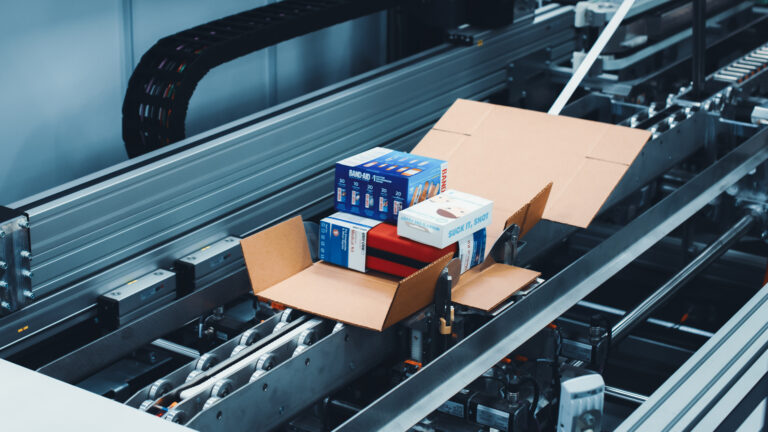
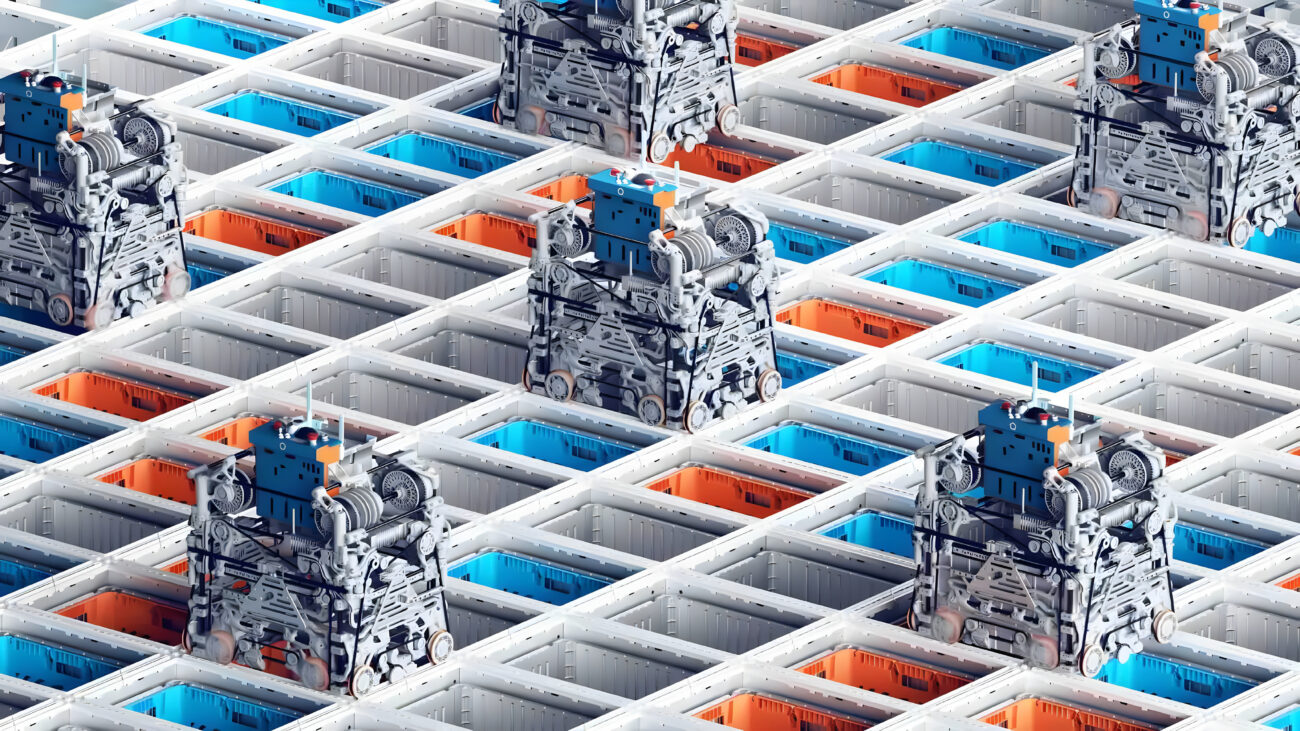
Robotic picking remains one of the most closely watched areas. While progress has been significant, Spencer is candid about the complexity. The goal of fully automated picking – “true life-style fulfilment” – remains aspirational. Different products and packaging mean no single end effector – effectively the business end of the picking arm – can solve every problem.
Instead, Ocado is developing a portfolio of picking technologies for different use cases. Around 50% automated picking by volume has already been achieved in some operations, with higher levels targeted over time. As elsewhere, everything is tested internally before market release. Technologies are developed, validated, deployed at small scale, and then rolled out. Reliability, not novelty, determines success.
Automation as Augmentation
Spencer is keen to challenge the idea that automation replaces people. In practice, it often complements them. The greatest gains come from addressing tasks that are difficult, undesirable or constrained by regulation.
In some cases, the objective is to enable processes to function more effectively. In others, it is about increasing output per labour hour or ensuring continuity despite workforce shortages. The result is a more nuanced view of automation – one that positions technology as a complement to human labour.
Looking to the future, Spencer highlights a structural shift that could prove as significant as any technological advance. In several key markets, exclusivity agreements that previously limited Ocado’s ability to work with certain retailers are coming to an end, reopening those markets.
At the same time, the technology platform has evolved. Investments in robotics, software and acquisitions have expanded capabilities, while advances in simulation and digital twin technology enable more sophisticated planning. Together, these developments point to a business entering a new phase.
Software-Defined Future
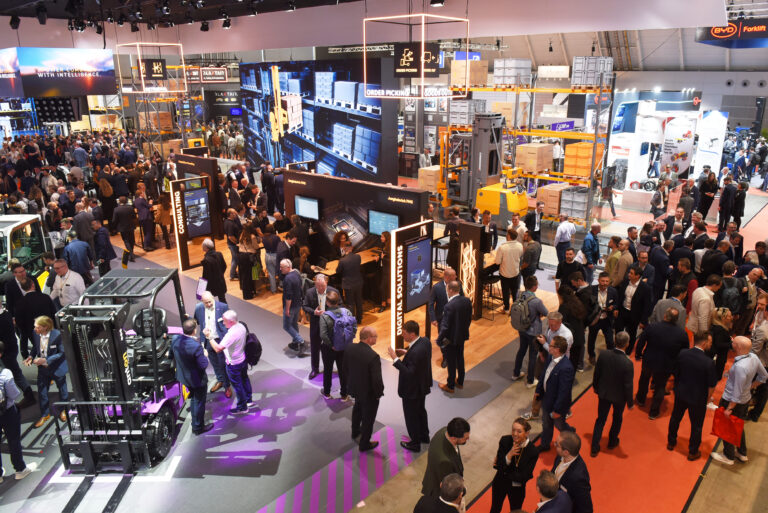
With MODEX now behind us, and new platforms and capabilities unveiled, the direction of travel is increasingly clear. Fulfilment is no longer defined by the machinery on the floor, but by the intelligence that orchestrates it.
For Ocado, that means bringing together tasks, teams, tools and technologies into a single, data-driven ecosystem, a theme reinforced by its latest software-led developments. For its customers, it means moving beyond what to buy and focusing on how to operate.
For an industry long captivated by the visible, it marks a decisive shift towards the invisible, which is where the real competitive advantage now seems to lie.