Pedestrian Detection Dashboard Launches to Enhances Safety

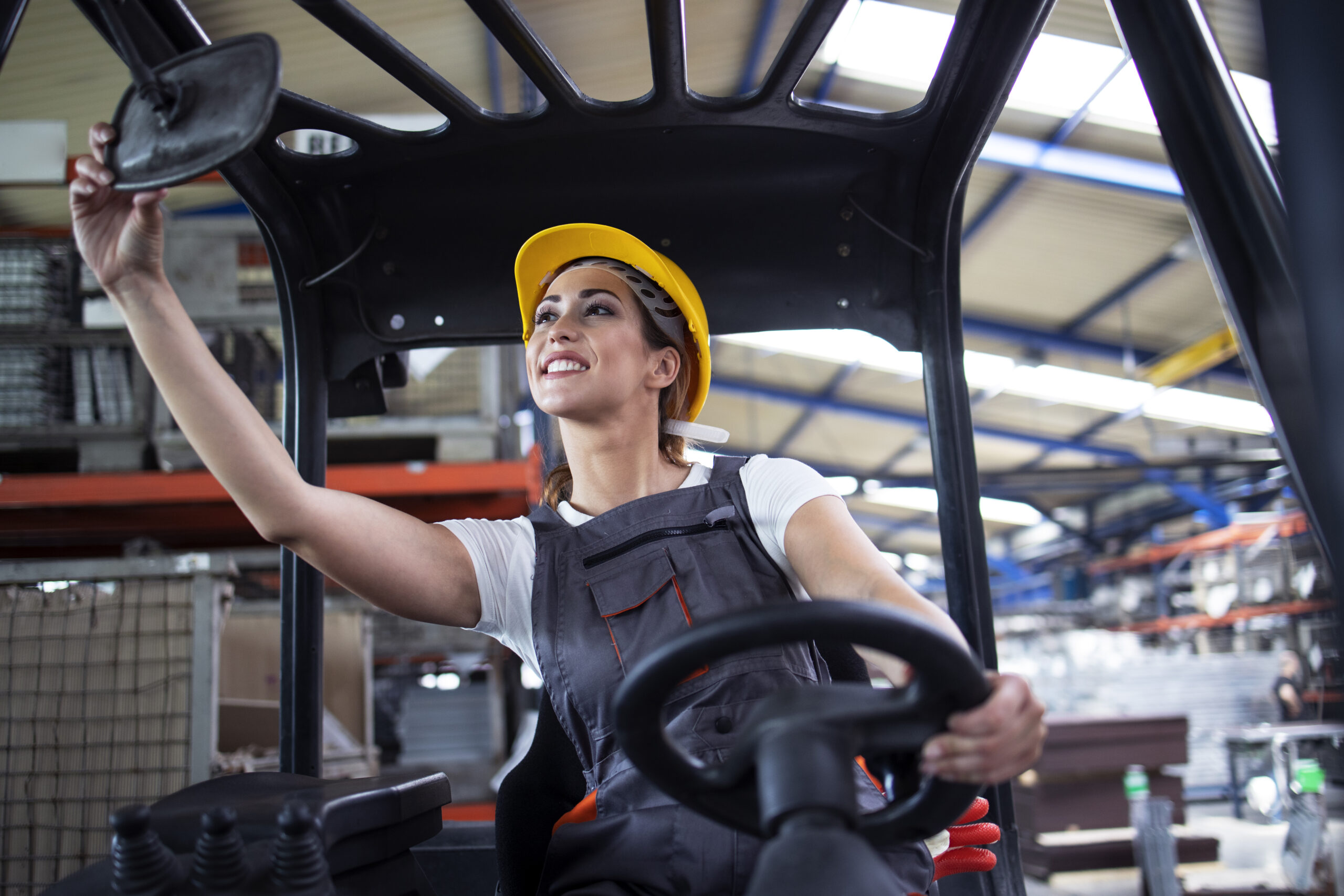
As warehouses and industrial sites face increasing pressure to improve workplace/ warehouse safety, technology suppliers are expanding the use of monitoring and analytics tools aimed at reducing interactions between pedestrians and materials handling equipment. Companies including Hyster are continuing to invest in systems that provide fleet managers with greater visibility into pedestrian activity around lift trucks and other warehouse vehicles. Hyster’s latest launch is a pedestrian detection event dashboard that uses data captured through its Hyster Reaction™ pedestrian awareness camera system and Hyster Tracker™ telemetry platform to help operations identify high-risk areas, monitor operator behaviour and analyse pedestrian proximity events.

The pedestrian detection event dashboard tracks pedestrians at ranges up to 5 metres from a lift truck. This information enables operations to reduce the risk of pedestrian- and lift truck-related accidents by adjusting pedestrian boundaries, having discussions with operators, or taking other actions.

The camera system was developed using extensive real-world photographic data and adapts to various lighting and environmental conditions to track for physical human features, increasing tracking accuracy and allowing the system to catalogue the total and average number of detection events per day and per truck, how close pedestrians get to the truck, and the number and location of events. It also captures the quantity of events that occurred when the truck was moving or stationery, as well as the date and time of each event.

Demanding materials handling applications are already characterised by harsh conditions and businesses can’t afford the added safety risk of improper operator behaviour… This dashboard equips operations with the information they need to address safety concerns, keep teams moving and deliver the high efficiency and productivity they require day in and day out.

said Clay Hendricks, Global Telemetry Product Manager, Hyster.

The pedestrian awareness camera solution, which collects the data for the dashboard, can accurately identify pedestrians at ranges up to 5 metres through a 110-degree field of view and provides automatic alerts to the lift truck operator when a pedestrian is detected. Operations can choose a camera system with audible and visual alerts only, or with optional traction alerts. The audible and visual alerts use a tone sequence to communicate pedestrian proximity and a light to indicate which zone the pedestrian is in on the truck-mounted operator remote. Optional traction alerts automatically and gradually slow down the lift truck, encouraging lift truck operators to take action to avoid the detected pedestrian by slowing down, steering away or both.

Hooked on Labour

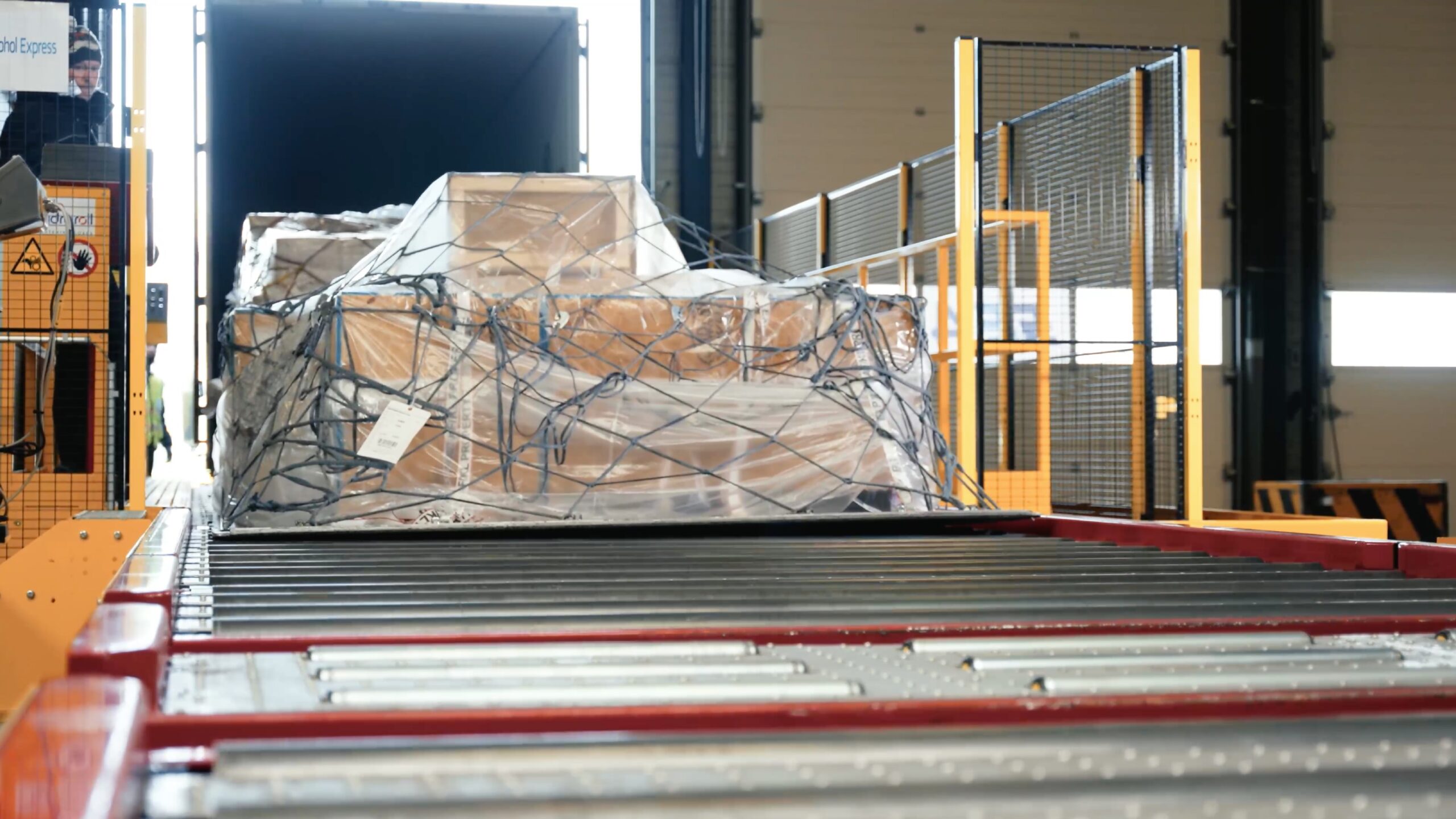
Global supply chains must break their dependence on manual loading. With global instability limiting mobility and reinforcing labour shortages, Wouter Satijn, Chief Revenue Officer, Joloda Hydraroll, explains why loading automation is now vital to improve safety, increase speed and eliminate supply chain bottlenecks.

Global labour pressures, including rising wages and tighter workforce safety requirements, have accelerated supply chain automation. And yet there is one critical area that remains heavily reliant on manual expertise: the loading area.

Unmanageable Demand for Resources

The war in the Middle East is creating global disruption, affecting shipping routes and leading to spiralling prices. But it is also highlighting the worldwide lack of staff willing and able to undertake high risk, high stress manual activity, most notably within the loading area. Organisations reliant upon large numbers of workers migrating in and out of affected countries to handle jobs such as the loading and unloading of goods from warehouses and production sites are facing a serious operational challenge.

Yet this problem has been emerging for years. Figures suggest the US economy alone required 4.6 million additional workers per year to maintain current levels of supply, demand and population balance. Shortages are endemic, from Germany to South Korea and China, and labour-intensive models are becoming increasingly difficult to maintain.

The issue is not simply a lack of resources. Economic changes globally have led to rising employment costs, while employee protection rules have also become far more stringent and consistent globally. It is simply not possible to rely on large numbers of workers to undertake manual activity, such as loading and unloading trucks.

Escalating Cost and Risk

The dangers associated with forklift trucks are well documented: forklift collisions with fixed objects cause 22% of workplace fatalities, while almost 35,000 non-fatal injuries occur annually due to forklift overturn. With incorrect load handling (35%), improper training (20%), and distracted operation (15%) as the leading operator error causes, it is inevitable that the risk of pedestrian collisions, tip overs and load falls rises when workers are under pressure, under-resourced or under-skilled. Plus, of course, many items, such as Electric Vehicle (EV) batteries are both inherently dangerous and heavy to handle.

Furthermore, the high level of automation across the supply chain in recent years, especially within warehouses and factories, has radically increased throughput and demand. With loading and unloading docks becoming a bottleneck, these highly manual locations are under ever increasing pressure to increase throughput, adding inevitable risk and stress to the workforce.

Loading Automation Imperative

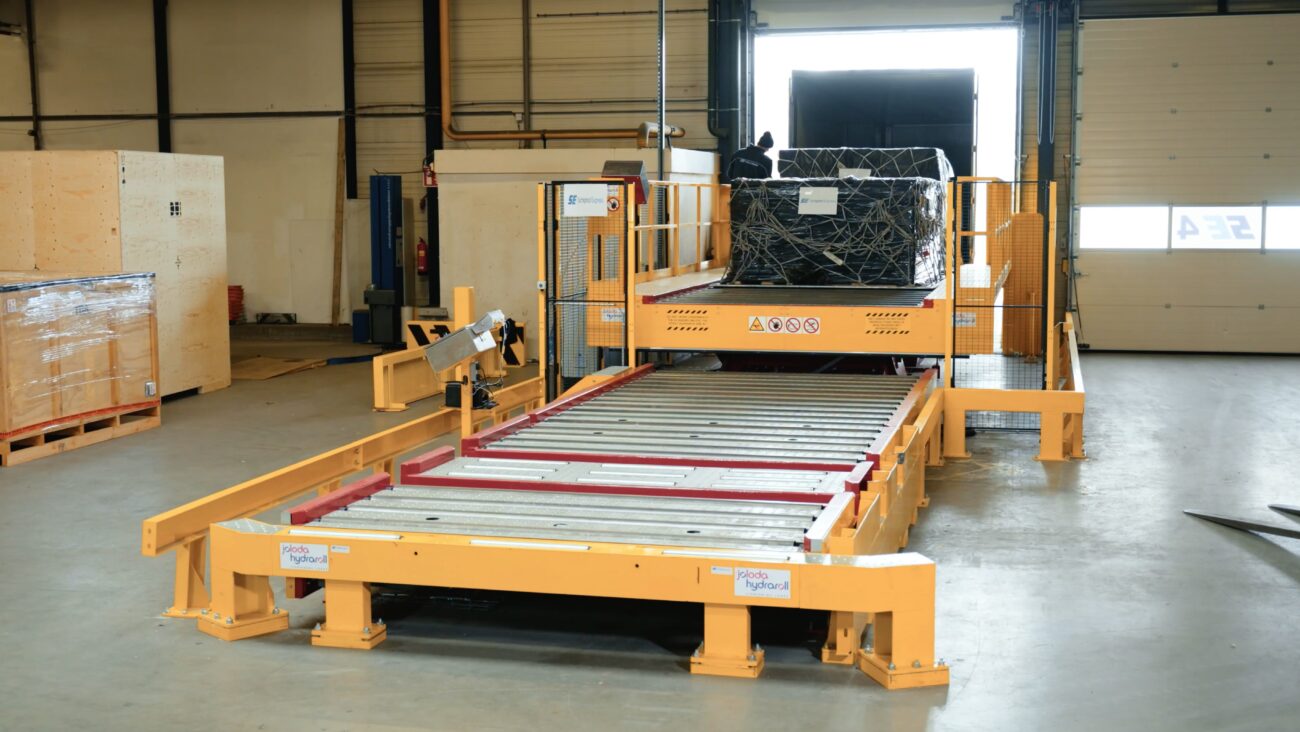
The imperative now is to achieve a far more efficient, faster and safer loading operation, which means less reliance on manual interventions. Automated loading systems, for example, remove the need for forklifts. Staff numbers are reduced and individuals undertake a lower risk, supervisory role rather than physically handling goods, further reducing the risks to employees associated with dangerous loads.

In addition, automated loading also significantly cuts the time required to load or unload a truck, typically from 45 minutes to less than 10 minutes. As a result, the loading bay is no longer a bottleneck, further reducing the pressure on staff working in this area. Indeed, creating a far more efficient loading operation also allows organisations to explore more agile production and logistics models in response to external events, without the constraints associated with over reliance on unavailable physical resources.

By focusing on automation in the loading dock, organisations can improve worker safety, ensuring all operations globally are in line with the highest level of employee protection requirements. They can achieve the agility and resilience required not only to weather the current geopolitical storm but to provide a foundation for achievable scale. And, critically, they can remove the corporate risk associated with an over reliance on a manual workforce that is simply no longer available.

New Integration Expands Mixed-Fleet AGV Interoperability

As warehouses and manufacturing facilities continue to adopt automation from multiple suppliers, the ability to coordinate autonomous vehicles through a single control system is becoming an increasing priority for operators. Demand is growing for Mixed-Fleet AGV Interoperability, particularly as companies seek to combine automated guided vehicles (AGVs), autonomous mobile robots (AMRs) and manually operated equipment within the same intralogistics environment.

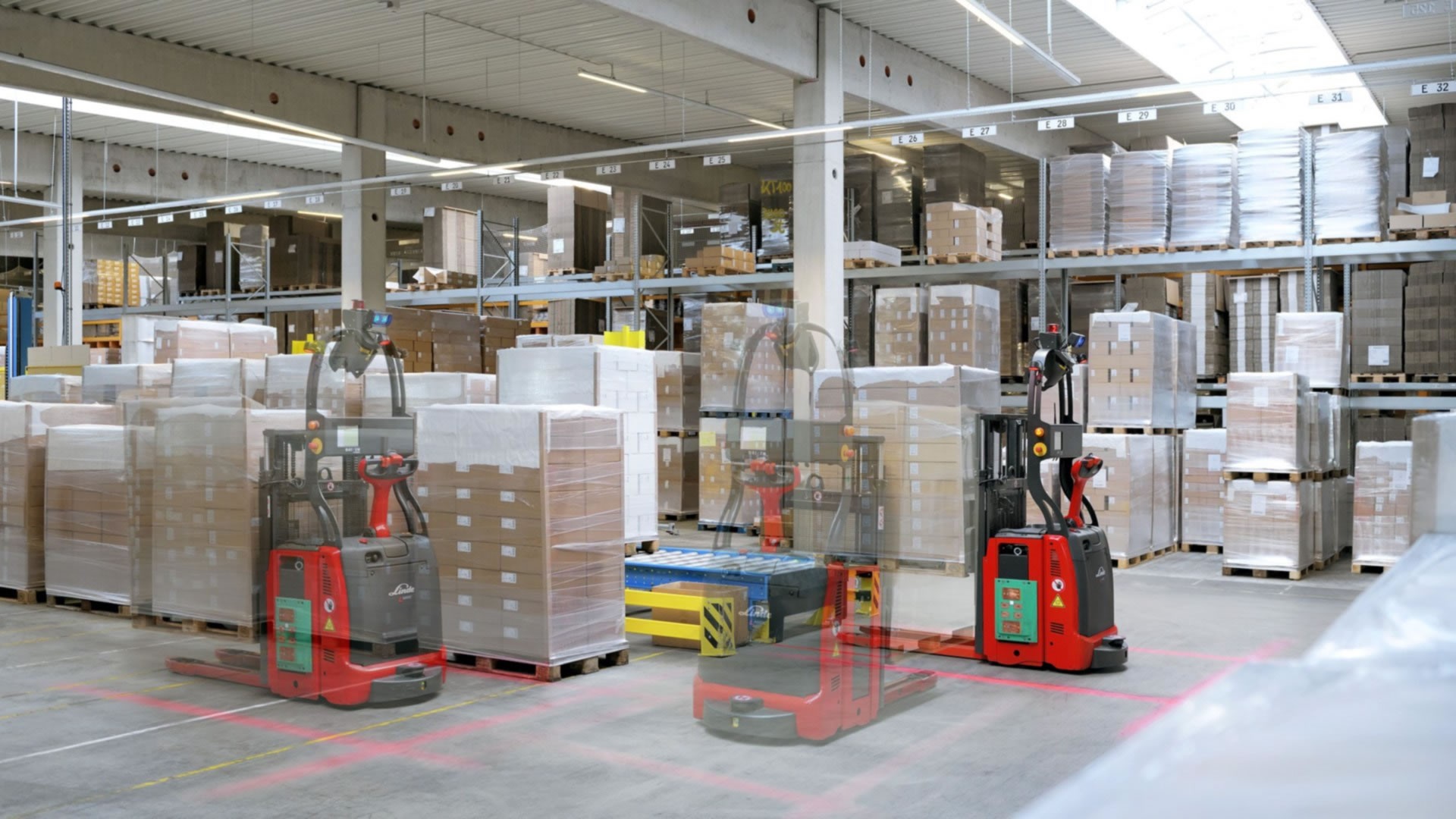
Against this backdrop, intralogistics software provider NAiSE has integrated a range of Linde Material Handling automated guided vehicles into its fleet orchestration platform, extending support for multi-brand automation fleets in warehouses and production facilities.

The integration includes Linde’s L-MATIC HD k, L-MATIC core, L-MATIC AC k and R-MATIC k vehicles, which can now operate through the NAiSE platform alongside other autonomous and manually operated equipment.

The companies said the collaboration is based on the VDA 5050 interoperability standard, which is increasingly being adopted across the intralogistics sector to allow AGVs and AMRs from different manufacturers to communicate through a common fleet management system.

According to NAiSE, the integration is aimed at helping operators manage more complex warehouse traffic flows while improving visibility and coordination across automated fleets. Features include real-time task management, fleet coordination and operational monitoring.

The integrated Linde vehicles cover payload capacities from 1.2 to 2.3 tonnes and lift heights of up to 10 metres, supporting a range of pallet transport and warehouse handling applications.

Louis Vieira, Head of Sales Automation & Intralogistics at Linde MH Germany, said the partnership provides customers with access to an “independent” fleet control option through the NAiSE platform.

From Metal to Mindset

Peter MacLeod hears how Ocado is reshaping fulfilment through software, data and lived experience.

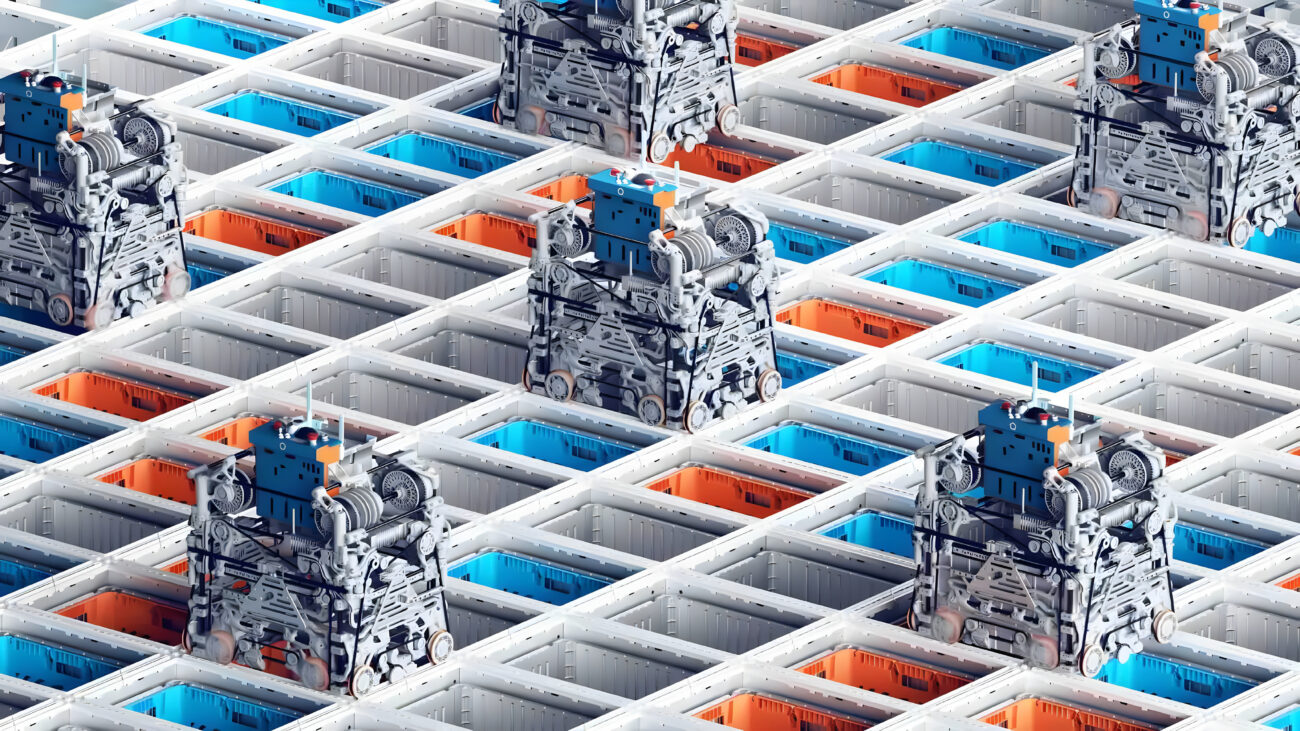
For decades, the material handling industry has been defined by what you can see. Bigger systems, faster conveyors, taller cranes – it’s this tangible spectacle of automation that has long dominated both exhibitions and editorial coverage. But as I discovered in conversation with Jamie Spencer of Ocado Intelligent Automation, the centre of gravity has shifted decisively away from the visible and into something far more powerful and less tangible.

It’s clear that the starting point has changed. Customers don’t always know what they want, but they do know their challenges. That distinction is increasingly important as retailers and logistics operators move away from prescribing specific technologies and instead seek partners capable of diagnosing complex operational problems.

Over the past 12 to 18 months, Ocado Intelligent Automation has seen a marked shift in how organisations approach automation. Rather than asking for a specific system – a grid, a robot, a particular piece of kit – customers are increasingly focused on outcomes. They want solutions that can evolve alongside their business, flex across different fulfilment models and, crucially, deliver measurable returns.

That shift is opening the door to a broader conversation. It may lead to robotics, automation, in-store fulfilment, or a combination of all three. In many cases, it leads to something more fundamental: a rethinking of how fulfilment itself is structured.

The Invisible Layer

If hardware once dominated the conversation, software and data now define it. Trade shows still showcase the physical – the “metal” – but Spencer (pictured, below) argues that the real differentiation lies behind the scenes. “You can see hardware. You can’t see software,” he says. “But that’s where the real value is being created.”

The pace of change is accelerating. Businesses are becoming more data-driven in their decision-making, reshaping how they evaluate automation partners. It is no longer enough to offer the fastest or tallest system. The critical question is who truly understands the customer’s operation and can prove it using data.

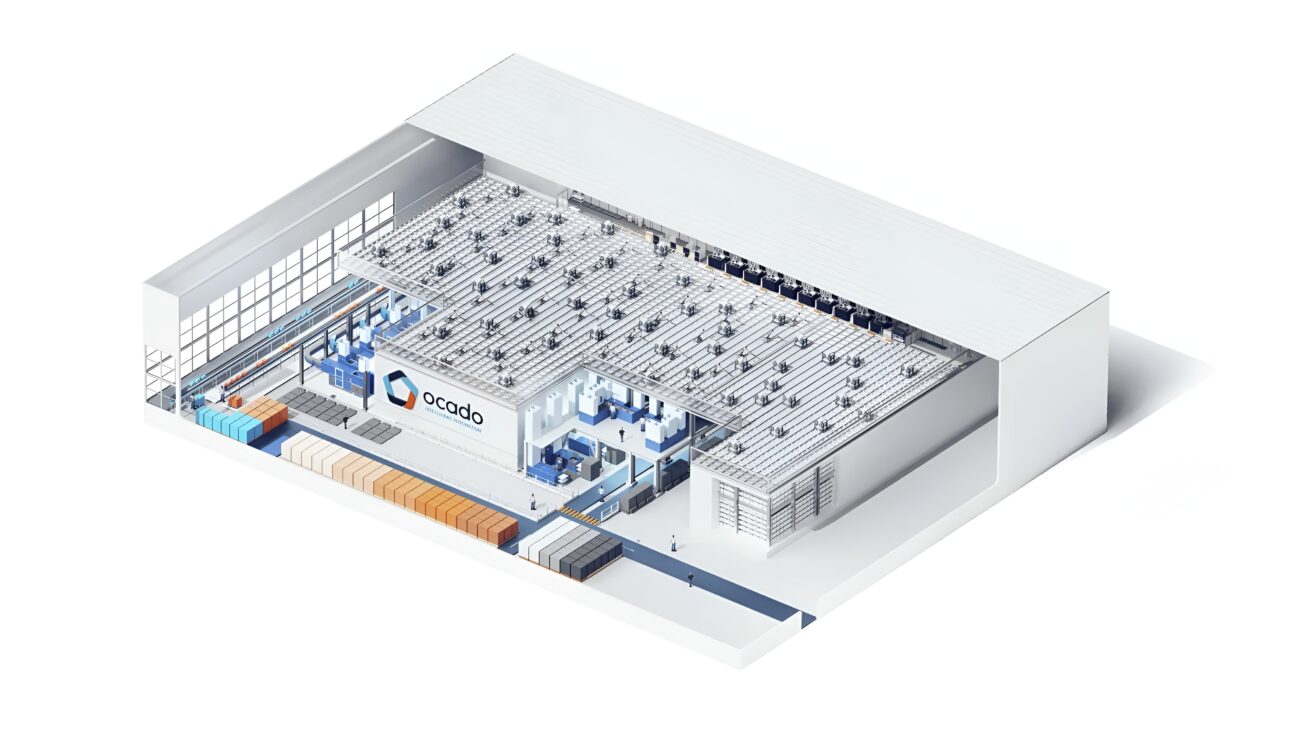
OIA’s heritage plays a central role. Born out of a pure-play online grocery business, it operates in an environment where decisions are driven by data. That DNA now informs how it approaches external customers. Every solution, from manual store picking optimisation through to highly automated fulfilment centres, is underpinned by software architecture designed to integrate across multiple mission types.

This integration is increasingly what customers are looking for. Rather than standalone systems, they want partners capable of influencing the entire operation, from e-commerce strategy to last-mile execution. In Spencer’s words, it is about becoming “a fully integrated partner”, not simply a supplier of automation.

Experience as a Differentiator

Yet for all the focus on technology, Spencer returns to a more human point. The most important interface in any project is still between people. Recruitment challenges remain acute, particularly at warehouse level, where labour scarcity and rising expectations are reshaping the workforce.

Ocado’s approach is rooted in its own operational experience. Unlike many providers, it runs large-scale fulfilment operations itself. Its teams – from engineers to solutions specialists – have lived the same challenges as their customers.

“There’s a level of empathy that comes from having experienced it,” Spencer explains.

This internal-external alignment is central to its positioning. Its first customer remains its own retail business, acting as a proving ground for new technologies. Solutions are developed, tested, scaled internally and only then taken to market, creating a level of trust that is difficult to replicate.

Beyond Grocery

While grocery remains core, growth is increasingly driven by other sectors. Fashion & apparel is one of the fastest-growing areas. The rise of fast fashion, coupled with the complexity of returns, is creating significant demand for automation. Labour constraints are acute, not because companies want to replace people, but because they cannot recruit fast enough to sustain growth.

Pharmaceutical distribution is another key area. Parallels with grocery – particularly basket size and order complexity – make the technology transferable, while additional requirements around accuracy, temperature control and regulation place greater emphasis on software and data.

Alongside these verticals, the company is also seeing strong interest in direct-to-consumer e-commerce operations. The common thread is the need for precision, scalability and resilience in the face of labour shortages.

Perhaps the most significant development is the expansion of Ocado’s solution stack across multiple fulfilment models. Where once it was primarily associated with large automated fulfilment centres, it now offers a continuum from manual in-store operations through to full automation. This includes store-based fulfilment, micro-fulfilment within existing retail spaces and local performance centres supporting rapid delivery.

This reflects a broader shift. Retailers are no longer looking for a single, monolithic solution, but systems that support multiple fulfilment propositions within the same network. The ability to scale technology up or down is a critical differentiator.

Automated Picking

Robotic picking remains one of the most closely watched areas. While progress has been significant, Spencer is candid about the complexity. The goal of fully automated picking – “true life-style fulfilment” – remains aspirational. Different products and packaging mean no single end effector – effectively the business end of the picking arm – can solve every problem.

Instead, Ocado is developing a portfolio of picking technologies for different use cases. Around 50% automated picking by volume has already been achieved in some operations, with higher levels targeted over time. As elsewhere, everything is tested internally before market release. Technologies are developed, validated, deployed at small scale, and then rolled out. Reliability, not novelty, determines success.

Automation as Augmentation

Spencer is keen to challenge the idea that automation replaces people. In practice, it often complements them. The greatest gains come from addressing tasks that are difficult, undesirable or constrained by regulation.

In some cases, the objective is to enable processes to function more effectively. In others, it is about increasing output per labour hour or ensuring continuity despite workforce shortages. The result is a more nuanced view of automation – one that positions technology as a complement to human labour.

Looking to the future, Spencer highlights a structural shift that could prove as significant as any technological advance. In several key markets, exclusivity agreements that previously limited Ocado’s ability to work with certain retailers are coming to an end, reopening those markets.

At the same time, the technology platform has evolved. Investments in robotics, software and acquisitions have expanded capabilities, while advances in simulation and digital twin technology enable more sophisticated planning. Together, these developments point to a business entering a new phase.

Software-Defined Future

With MODEX now behind us, and new platforms and capabilities unveiled, the direction of travel is increasingly clear. Fulfilment is no longer defined by the machinery on the floor, but by the intelligence that orchestrates it.

For Ocado, that means bringing together tasks, teams, tools and technologies into a single, data-driven ecosystem, a theme reinforced by its latest software-led developments. For its customers, it means moving beyond what to buy and focusing on how to operate.

For an industry long captivated by the visible, it marks a decisive shift towards the invisible, which is where the real competitive advantage now seems to lie.

Formula 1 Introduces Rail Freight

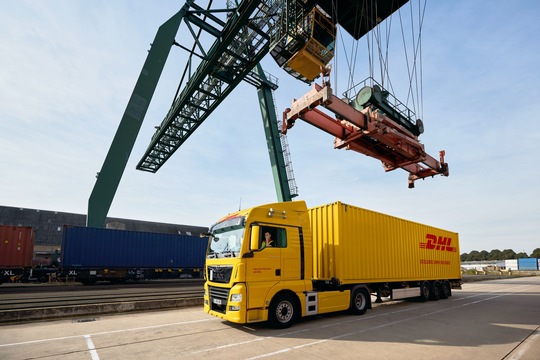
The Official Logistics Partner of Formula 1, has successfully completed its first-ever use of rail freight in Formula 1 logistics, marking a milestone pilot program in North America during the 2026 season. DHL Group moved approximately 50 containers, including 46 forty‑foot high‑cube units and four 20‑foot containers, of race equipment by rail from Miami, Florida, to Montreal, Canada, covering nearly 2,000 kilometers. Around 68% of the F1 freight handled by DHL for this leg that would typically be transported by road was instead moved by rail, reducing reliance on more carbon‑intensive transport while meeting Formula 1’s strict timelines.

Introducing rail into our race‑to‑race logistics mix shows how established transport modes can be applied in new ways to support sustainability in a highly time-critical environment… The successful delivery of all freight in this pilot demonstrates that rail can reliably support Formula 1’s demanding schedule while contributing to lower emissions. This reflects how DHL and Formula 1 continue to evolve logistics solutions to reduce the championship’s environmental footprint, while laying the groundwork to scale new approaches.

said Paul Fowler, Head of Global Motorsports Logistics at DHL Global Forwarding.

Throughout the journey, containers were equipped with tracking devices and shock sensors to monitor handling, transit times, and cargo integrity, ensuring the safe and punctual delivery of race equipment. The collected data is now being used to assess key operational criteria and sustainability performance as DHL and Formula 1 explore opportunities to further reduce greenhouse gas emissions in the series.

Building on a long-standing partnership focused on decarbonization

DHL’s pilot of rail freight builds on more than 20 years of partnership between DHL and Formula 1, supporting Formula 1’s Net Zero goal for 2030 and DHL Group’s Net Zero greenhouse gas emissions target by 2050.

Rail now complements DHL’s broader multimodal logistics strategy, alongside other emissions-reduced solutions deployed across the Formula 1 calendar, including:

  • The use of Sustainable Aviation Fuel (SAF) for selected air‑freight operations via book‑and‑claim mechanisms, delivering up to 80% lifecycle greenhouse‑gas emissions reduction compared to conventional jet fuel.
  • More than 50 biofuel-powered trucks supporting European road transport, achieving on average an 83% reduction in greenhouse‑gas emissions compared to traditional diesel trucks.
  • Optimized route planning based on F1’s increased regionalization of race logistics to reduce transport distances and improve efficiency across the season.

The Miami–Montreal rail pilot successfully demonstrates the potential of rail freight as part of Formula 1’s logistics network and represents a foundation for future expansion, with DHL and Formula 1 jointly evaluating opportunities to scale rail usage in North America from the 2027 season onward, subject to calendar structure, operational feasibility, and performance results from the 2026 trial.

Subscribe

Get notified about New Episodes of our Podcast, New Magazine Issues and stay updated with our Weekly Newsletter.