New DC for Frozen Bakery Products

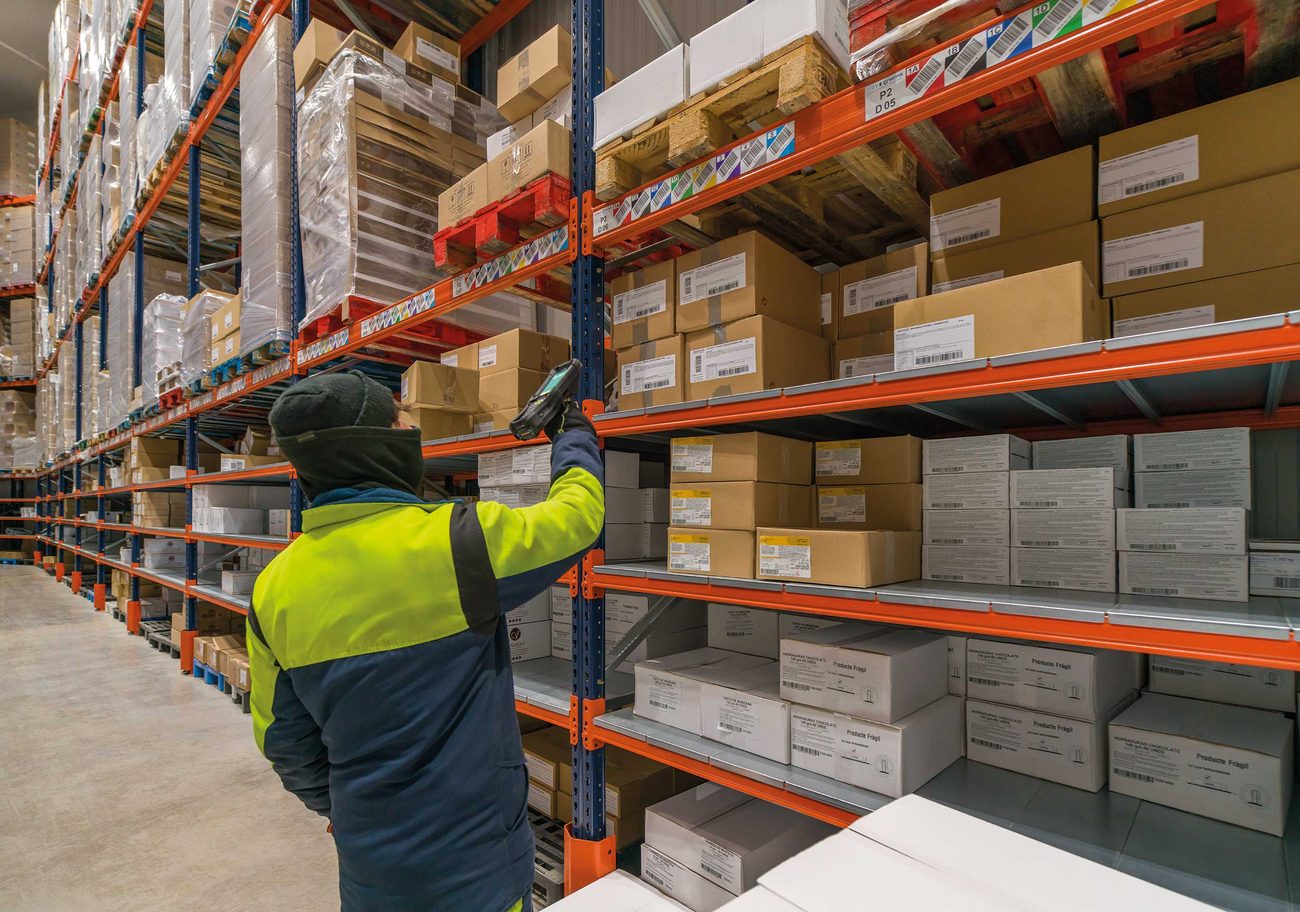
Frozen food company Panabad has opened a new logistics centre in Sant Quirze del Vallès (near Barcelona) to support its future growth. The 2,500 m² facility incorporates Mecalux’s Easy WMS warehouse management system, which oversees more than 200 SKUs of pre-cooked frozen bread products, as well as high-density storage solutions.

We opened a new logistics centre because our business volume has continued to grow… We currently process over 7,000 tonnes of flour a year to manufacture products distributed to more than 2,000 clients. This growth pushed us to take the next step: we needed a better-organised logistics setup, more precise traceability control and more efficient product distribution

says Julián Martín, General Manager of Panabad

At Panabad’s logistics centre, Easy WMS comprehensively monitors the facility’s 200-plus SKUs. The software records every pallet received at the warehouse and assigns it a location based on product turnover and volume. One of Panabad’s goals for its new warehouse was to accommodate the largest possible number of goods. Mecalux installed two high-density solutions with a capacity for more than 3,000 pallets.

The warehouse operates at -20 °C, making it essential to minimise the amount of time employees spend inside the facility. “Each operator receives a pick path on their RF terminal designed to eliminate unnecessary travel. By following instructions from Easy WMS, they fill orders faster and reduce their exposure to low temperatures,” says Martín.

By commissioning its new logistics centre and digitalising its operations, Panabad has established a more organised operating model to continue meeting market demands.

Korean Innovation Aims to Eliminate Stretch Wrap

A South Korean packaging innovator is making its European debut with a reusable pallet packaging system that promises to permanently replace single-use stretch wrap across logistics and distribution operations — at a price point that delivers return on investment within weeks, not years.

Ecobundle™, manufactured by Jooyeong P&S Corporation and distributed internationally by CHEMPEOPLE CO., LTD., is a durable belt-and-cover system made from high-tenacity PVCcoated polyester fabric. It wraps standard pallets (950–1,100mm, ±20% cargo volume flexibility) in 1–2 minutes — no machinery, no training required — and replaces stretch film entirely on
every use.

The company says that the commercial case is compelling. Independent field testing and live deployment data confirm that a single Ecobundle unit recovers its full purchase cost after approximately 35 uses — equivalent to roughly 1.7 months of operation at 20 pallet cycles per month. Over a full 600-use lifecycle, the system delivers 93% net cost savings compared to single-use stretch wrap, even after accounting for a conservative 20% field loss and damage risk provision.

Environmental responsibility and ESG management are no longer optional — they are a matter of business survival. Ecobundle is a reusable replacement for disposable packaging that will drive genuine innovation across the logistics and transportation industry

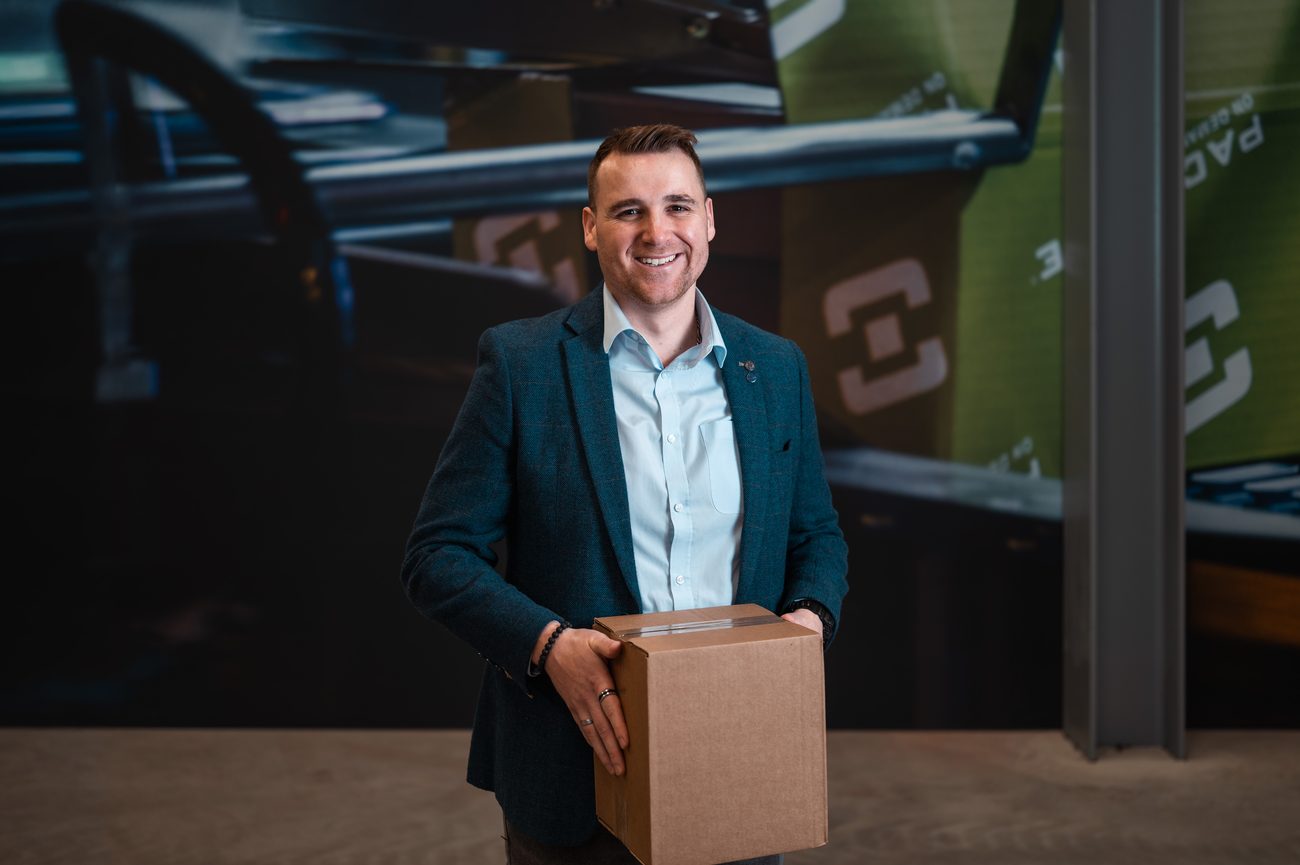
Park Jeong-gu (pictured), CEO — Jooyeong P&S Corp.

The sustainability credentials are equally significant. Compared to conventional stretch film, Ecobundle reduces CO₂ emissions by 95% over 365 uses and eliminates 650g of plastic waste per pallet per wrapping cycle. The system can withstand 1,000+ reuse cycles per unit, with a modular design allowing component-level replacement rather than whole-unit disposal.

For European logistics operators facing the tightening requirements of the EU Packaging and Packaging Waste Regulation (PPWR 2025/40) — which mandates that at least 40% of transport packaging must be reusable by 2030 — Ecobundle offers an immediately deployable solution with no capital investment in infrastructure or process redesign. The system’s new PP (Polypropylene) material variant, available in transparent and colour options, meets PPWR material compliance requirements applicable from August 2026.

Real-world performance has been validated at scale. Ilyang Logis, one of South Korea’s leading parcel delivery operators, deployed Ecobundle across its Okcheon Distribution Centre in 2023 and recorded a 30% cost reduction in its first year of operation, alongside a 97% reduction in packaging waste over a two-year pilot. The centre was subsequently ranked number 1 in a
nationwide logistics centre evaluation by Ilyang Logis headquarters, with a corporate commendation awarded in 2024. Field staff — who initially resisted the change — now consistently report that Ecobundle is faster and easier to use than conventional stretch wrap.

The product is available in three variants to suit different cargo types: Standard (Tarpaulin) for general industrial and logistics use; Fixed/Pallet-Anchored with double hook and pin loop for maximum security in long-haul and international transport; and Mesh for fresh produce, frozen foods, and ventilation-sensitive cargo. Custom logo printing, colour options, and identification label holders are available across all variants.

Supply Chain AI to Solve Regulatory Complexity

UK supply chain professionals are turning to AI to manage regulatory complexity at a much faster rate than the global average, with Brexit likely a key driver. This is one of several findings from independent research by IDC, commissioned by supply chain orchestration leader Kinaxis.

The survey uncovered that more than a quarter of UK supply chain professionals say the complexity of regulations across global markets is the single biggest reason their organisation is speeding up its adoption of AI in supply chain decisions.

It’s the second most-cited driver in the UK overall, behind only inflation. The figures are significantly higher than the global average, which sits at 16%. In Germany, just 10% of supply chain professionals point to regulatory complexity as their top driver, and the stability of intra-EU trading rules may help explain why the figure is so much lower than in the UK.

Since the UK formally left the EU in 2020, British supply chain professionals are contending with a more complicated regulatory landscape than many of their European neighbours. More of them are now using AI to keep up.

The findings sit within a wider global IDC InfoBrief called ‘Making Supply Chain AI Accountable’, which surveyed more than 2,000 supply chain leaders across nine markets. The global study found that while AI adoption is now close to universal, with only 2% of organisations having no AI capabilities in place, many companies still have reservations about its use. Just 12% of those surveyed consider themselves AI leaders, and only 12% say governance for AI-driven decisions is fully embedded. Trust remains the biggest barrier to faster adoption, with 52% of respondents worldwide citing it as the key reason for slow take-up rates.

“AI adoption isn’t the question anymore,” said Justin King, Field CTO at Kinaxis.

Whether AI delivers trusted decisions, measurable value and governed autonomy is the real question, especially with 52% of leaders telling IDC that trust is what’s holding them back. We built Maestro to answer that question. Every AI-driven recommendation is explainable and auditable before it acts, so accountability happens at the decision, not just the policy

Even as adoption moves forward, UK supply chain professionals remain cautious about where they stand globally. Nearly a quarter of UK companies (23%) say their AI maturity is either early-stage or still uncertain, compared with 16% in the US and India. That confidence gap hasn’t closed, even as adoption speeds up.

Right-Sizing, Right Choice

Custom-fit on-demand packaging induces cost and efficiency gains as well as sustainability wins. Paul Hamblin spoke to Chris More of Packsize.

A cardboard box is just a box, right? Yes, but only up to a point. The quest for greater efficiency in production, distribution and delivery of goods, and the ever-spiralling demands of e-commerce customers, in addition to increasingly strict sustainability legislation, have made packaging far more than an afterthought in the intralogistics challenge.

The growth of Packsize illustrates the point perfectly. Founded in 2002, the business quickly established a presence in both the United States and Europe, based on the premise of reducing packaging waste and driving process efficiency. Its core aim was to eliminate oversized packaging, and it achieved this through creating technology that cuts and folds corrugated material on-demand to produce a right-sized box for each order.

The industry loved it. After establishing its European operations in Herford, Germany, Packsize expanded through a network of hubs across the continent, and more recently, the business has strategically relocated its European headquarters to Amsterdam. Growth has accelerated further through the acquisition of Sparck Technologies in 2025, and now, the announcement in June of the planned purchase of Panotec’s packaging business in Italy underscores the company’s ambitions.

Chris More (pictured, below) is Sales Director for the UK and Ireland. He says: “Together, these developments give Packsize what we believe is an unmatched breadth of technologies for efficiently right-sizing packaging in three dimensions, both within Europe and potentially worldwide.”

Sizing Matters

So, what are the benefits that come from using right-sized boxing solutions? He expains: “Exact size boxing has a direct impact in saving costs, on people resource allocation, on processes and on environmental requirements and footprint. We’re using less material to make that box, we can therefore put more boxes on a truck, and that means we can put fewer trucks on the road. Right-sizing brings only advantages across the board.”

There appear to be significant opportunities for businesses to benefit from the technology, particularly in the ecommerce sector, but right-sizing as a concept is still relatively unknown. That means many businesses are still leaving significant potential untapped.

Right-sizing packaging in all three dimensions is still not widely understood. Many businesses are familiar with two-dimensional optimisation, which reduces the height of a standard box, while its length and width remain fixed. Although this can reduce some void space, three-dimensional optimisation creates a package around the exact size of its contents, delivering a significantly better fill rate, using less material and reducing both void space and the risk of product damage.

According to Packsize, across their solutions customers see average corrugated material savings of around 30%, package volume reductions of up to 40% while approximately 80% less void fill is used. Fully automated systems can also commonly deliver the equivalent output of around 20 manual packing stations, creating significant labour efficiencies. Although the company points out that these results vary depending on the customer’s products, order profile and their existing operation.

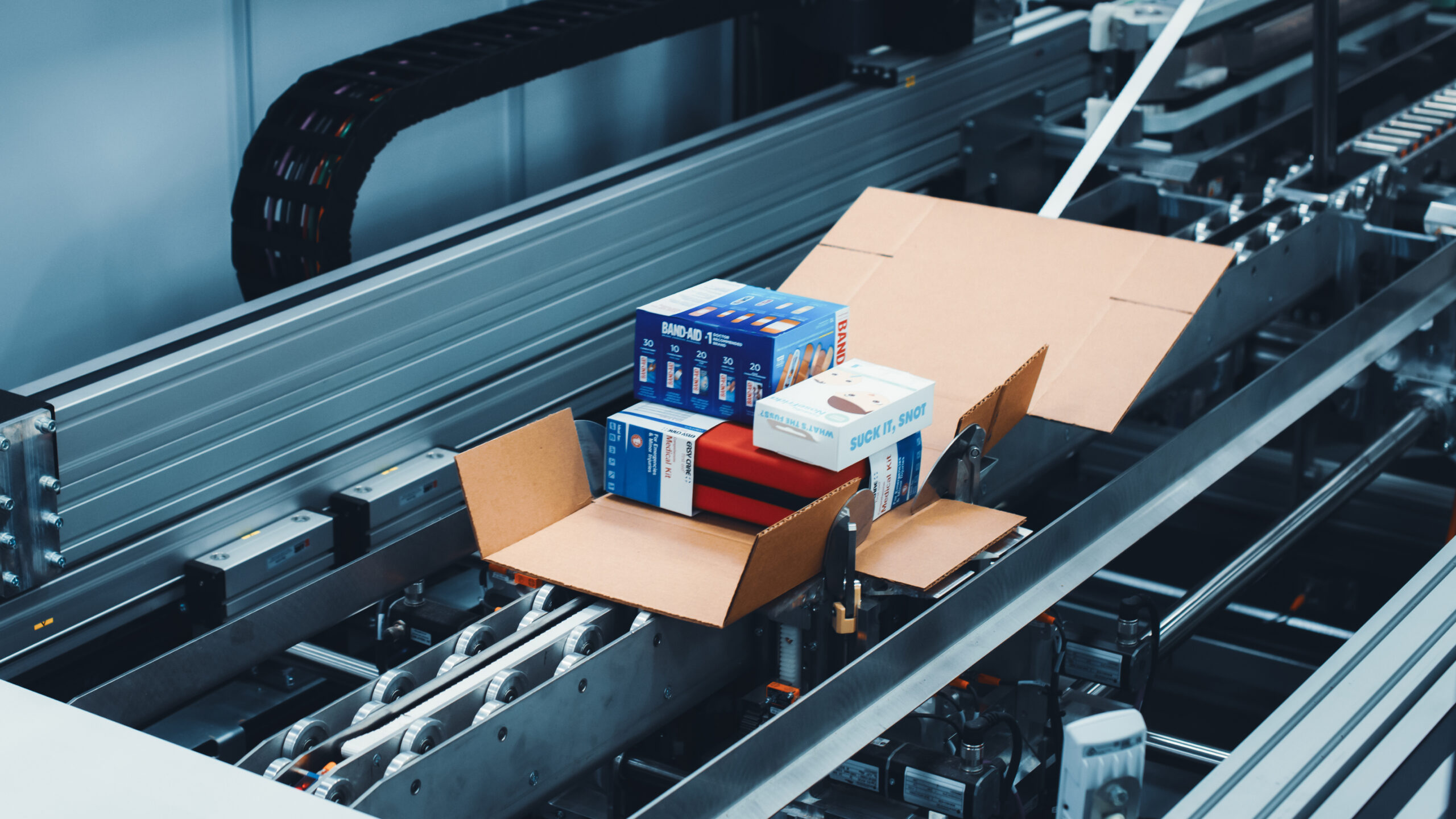
Packsize solutions are about machinery and have been since the beginning, offering an array of box-first and box-last solutions. With box-first, a right-sized box is produced before the products are packed into it; with box-last, the products are inducted onto a conveyor and the packaging is formed around them.

On Demand

Packsize offers both approaches through semi-automated and fully automated solutions to suit different products, order profiles and throughput requirements. The efficiency benefit is that the correct package dimensions can be received from the customer’s WMS or determined from the inducted products, removing the need for an operator to select from multiple pre-made box sizes and reducing manual decision-making throughout the packing process.

On-Demand packaging means what it says, including products that enhance the end-user ‘unboxing’ experience, such as personalised, printed boxes containing unique images or messages.

We can be very highly customised… There might be a run of 500 boxes, each with an individual print and all at different sizes. Or consider a 3PL client who might be running fulfilment for three clients in three sectors, such as beauty, hair and electronics goods – the template can be loaded into the machine to suit each customer… In some cases we have seen customers take the opportunity to boost revenue by printing customised ad’s or by providing an enhanced unboxing experience.

Packsize works with small, medium and large customer accounts. One SME client with a throughput of only 1200 parcels a day enabled the redistribution of eight people after adopting Packsize technology and is projected to make an ROI in two years (two to five years for ROI is typical, he says); larger clients in the UK include Smyths Toys and household names such as Boots.

Packsize supports both brownfield and greenfield projects. The company is highly proficient at integrating solutions into existing infrastructure and warehouse processes, and when engaging in a greenfield project, involving Packsize early on allows packaging to be considered as part of the overall system design – creating greater opportunities to optimise the complete material flow and overall efficiency of the operation.

Subscribe

Get notified about New Episodes of our Podcast, New Magazine Issues and stay updated with our Weekly Newsletter.