Racking and warehouse automation specialist stow Group has exciting global ambitions for its automation brand. Paul Hamblin met new Movu Robotics CEO Christophe Coulongeat at LogiMAT.
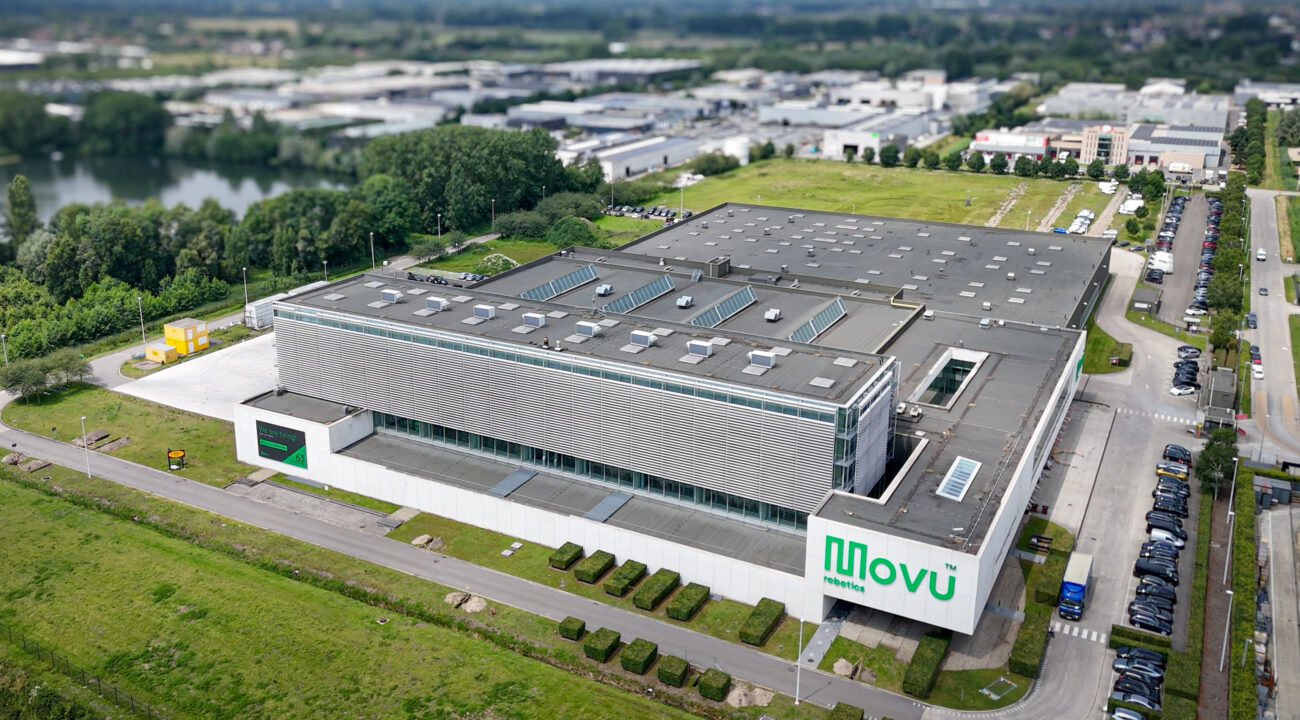
Under the multi-decade entrepreneurial vision of Jos de Vuyst, stow Group (the small ’s’ is deliberate) is best known as a prime player in industrial racking. Automation has played an important role in its growth, so it made sense to develop a robotics unit, stow Robotics, which in 2023 was rolled out as an entirely new brand. Movu Robotics offers a combination of hardware robotics and software layers to meet a broad range of customer needs in Europe and, increasingly, North America.
Christophe Coulongeat was appointed CEO of Movu Robotics in May 2025. An industrial technology specialist with over 20 years of experience at Sidel and Stäubli – focusing on high-end niche-market robotics at the latter – he was identified by Jos de Vuyst as the perfect choice to bring premium robotics solutions to the intralogistics industry.
With 450+ staff, Movu is about combining racking, robots and software layers in a potent mix of efficiency, capability and analytics to enable performance enhancements for customers.
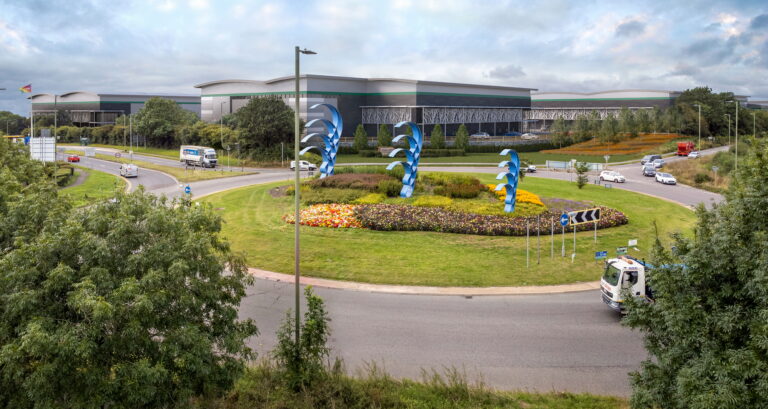
It was Christophe Coulongeat’s first LogiMAT with Movu, a week after stow Group’s announcement that he is also now president of Movu US, a significant pointer to its ambitions for its technologies in North America. “We already have many major customers in the US, we’re close to 30 projects already there and our plan is for the US to comprise 50% of our business,” he reveals. “Our base is in Lokeren, Belgium, and we began by converting existing stow customers in the Benelux countries to automation. We started selling to the US two years later.”
LogiMAT – and MODEX a month later – were both about delivering proof of the company’s capabilities and achievements. A large interactive screen displays each of the company’s global installations, all searchable via region and country.
“We’re showcasing our references here at LogiMAT,” he explains. “With more than 200 systems sold, our story is about delivering proof, rather than snappy marketing messages. Of those 200 projects, about half are currently in execution, in either the engineering, rack installation, or commissioning phase. The best message we can give is to show this map of the world directly to interested parties.”
He is enthusiastic about the progress of both stow Group and Movu.
“Today, the stow business is about €800M revenue, Movu was €200M in 2025, and this year we will beat €300M, so that’s 50%+ growth year-on-year,” he says.
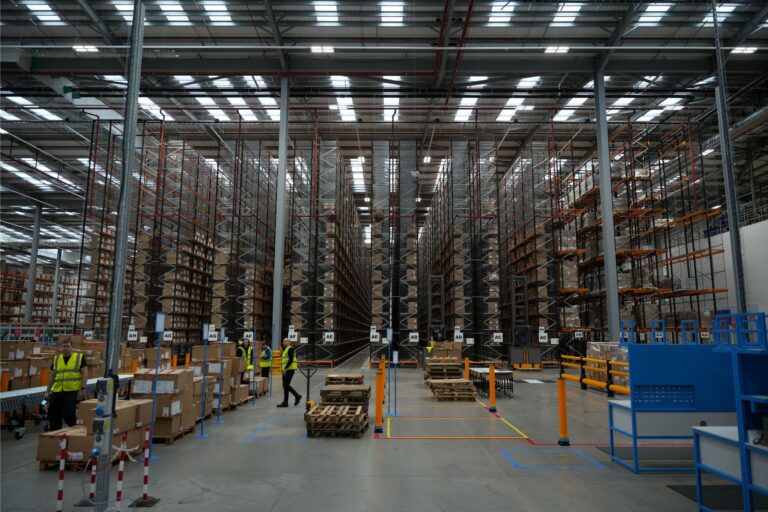
He traces Movu’s development, paying tribute to Jos de Vuyst. “The stow DNA is the racking business,” he says. “From static to mobile, all the conventional styles, up to one-dimension automation, when the machine goes back and forth in a single line. This all developed over four decades under Jos’s leadership. In 2018 Blackstone became our PE partner and Jos started stow Robotics with a view to exploiting the potential for further automation in the racking sector. He identified that the necessity was there in the market, driven by scarcity of labour as well as the growing need for scalability. In the conventional storage world, there is also the issue of exploiting unused space – traditional technology such as stacker cranes can create unused empty spaces in warehouses. That’s a big constraint in territories where there is a premium on available land, such as Benelux.
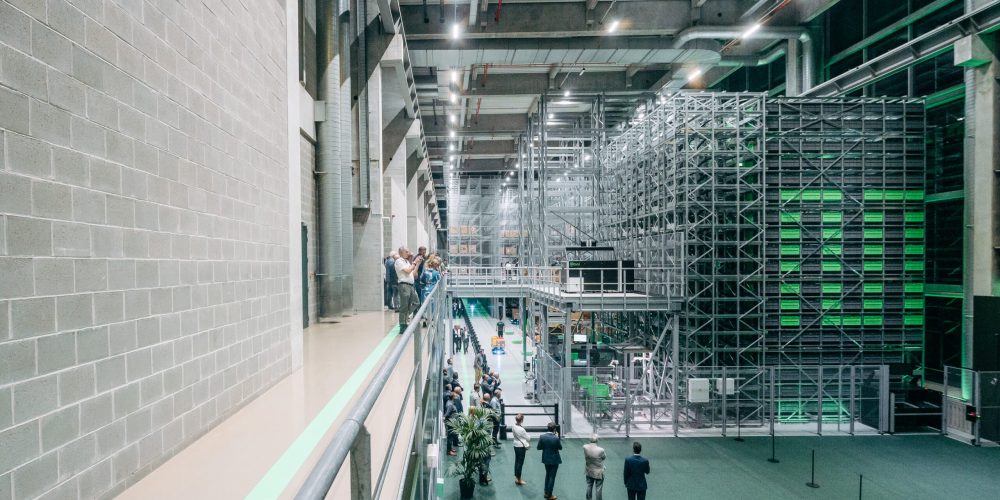
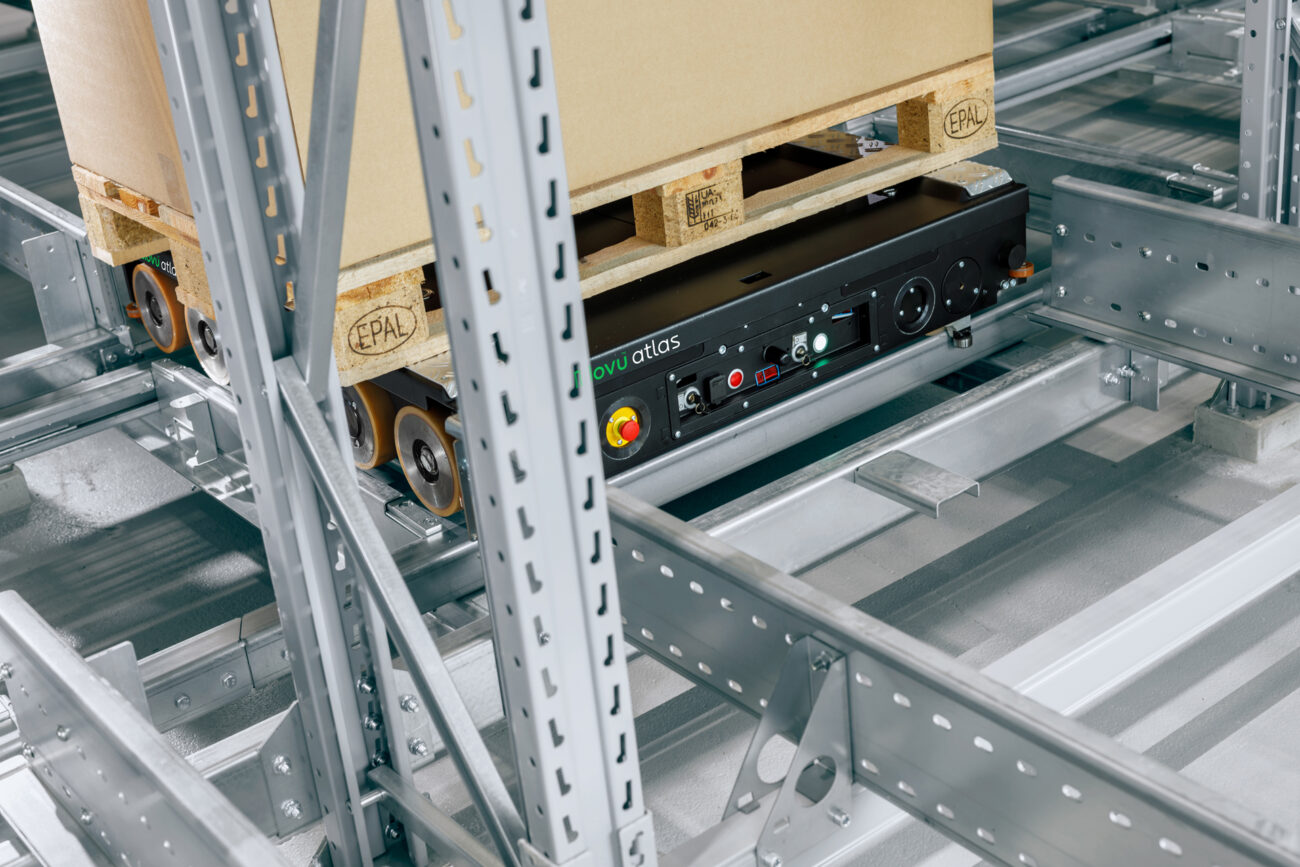
“Jos and his team realised that if you could design a new robot, a four-way shuttle robot, which could navigate through what we might call a chessboard, level by level, optimising the space, then you would gain a lot of space as the robot navigates each level. It enables you to gain density in unconventionally shaped areas not conforming to traditional squares or rectangles. It creates an opportunity for density, for high flow and also for redundancy – if one robot is down, others can do the work. That’s the story behind Jos’s vision for automation in racking.”
He mentioned the importance of the US. What does he see as the biggest difference in the two markets?
“In the US projects are much bigger. An average project in Europe might be €3M-€5M whereas in US you could easily reach €10M, €20M, €30M. They work exclusively with integrator partners in the US with very large fulfilment centres, which suit the verticals we specialise in within the consumer market – FMCG, cold chain, food, 3PL, ambient and temperature-controlled environments. Our robots can work in temperatures as low as -25°C.”
What are the competitive advantages Movu Robotics can bring to the table for customers?
“First mover advantage is important. We have deployed over 200 four-way pallet shuttle systems to the market, that’s the most in the world. When I talk about the power of references, if you deliver successful projects, customers talk about it,” he asserts.
A core strength is the breadth of capability that derives from being part of the stow Group and the expertise that accompanies it.
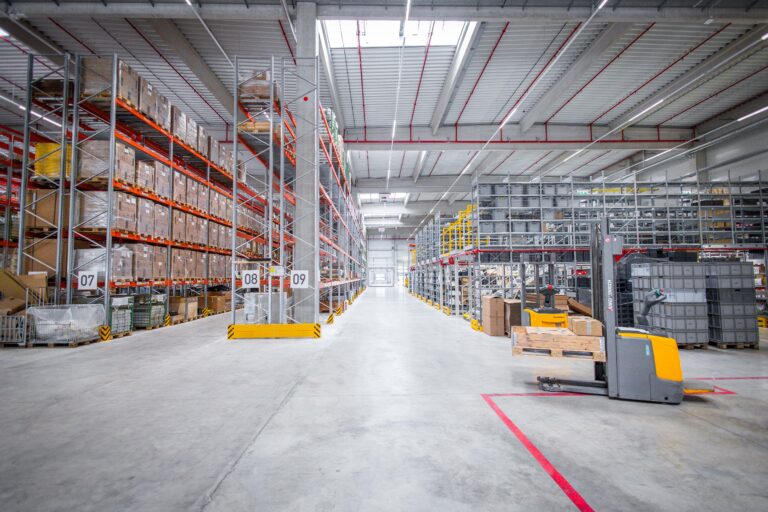
“We control all the core strengths of delivering a four-way shuttle system. Let’s start with the racking – in the conventional market, you could view racking as a rather commoditised product in a mature market in which you are fighting on cost and price. In reality, the racking for automated systems is very sensitive, thanks to the know-how required for the design and installation. Take high seismicity factors. Think of the West Coast of the US, you need to know your game, to deploy a system with the ability to withstand seismic conditions. So, those decades of expertise from the stow Group are a huge asset, as well as the ability to quote to customers very quickly, because our sister company is so local in Belgium. Indeed, in the US, both companies are based in the same office.”
Manufacturing capability is another part of the success story. The Group has nine factories in Europe for the racking, while its first factory in the US is due to open soon near Atlanta. “We foresee more to come,” he predicts. “In the US, it’s important to be close to the market, and that’s the aim of the first factory, which will serve both Movu as a customer and also stow itself to serve OEMs and distributors.” This was a key strand of the Group’s MODEX displays in April.
Coulongeat (pictured, below) can point proudly to the fact that all of the company’s robotics products are proprietary, made in Europe, with a new generation, featuring greater flexibility and innovation now coming on stream. Focus for 2026 remains the Movu atlas four-way pallet shuttle system.

He points to the importance of software in providing the traffic management capability to meet the flexibility required by today’s fast-moving warehouses, in which SKUs and clients can be prone to short-term change.
“We hear more and more about dynamic storage, key words are flexibility, and seasonal changes. It is often volume driven, so we can embed more shuttles.”
System flexibility means projects can vary, from a dozen robots in a system, to over 100. “That’s why traffic management is so important, you need to have the power to execute the traffic, but also to manage the complexity,” he advises.
“The latest algorithm developments to manage complexity are very exciting,” he says, highlighting also a decision which he is at pains to point out was taken before his time. “Developing our own WCS was one of the best decisions of the company, because it enables us to really master the whole flow of information from the availability of the system all the way down to the lowest level of the system, all to tune and improve the availability. From our Smart box, we’re building the platform for the analytics and performance enhancements that our customers are demanding to give them the flexibility they need. Embedded layers will provide the information and intelligence to enable precise, data-led decision making.”