
Where does ATEX (from the French term ATmosphères EXplosibles) come into play in logistics? Gido van Tienhoven, Technical Director at Ex-Machinery, specialists in explosion protection and hazardous-area equipment, discusses the issues.
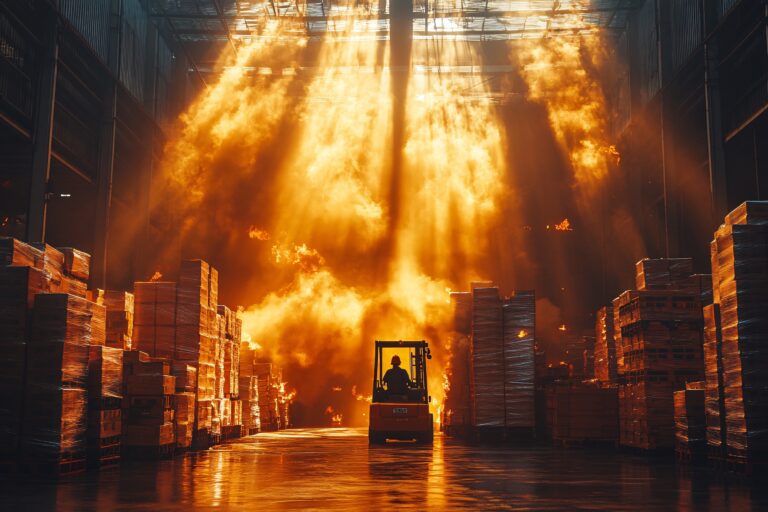
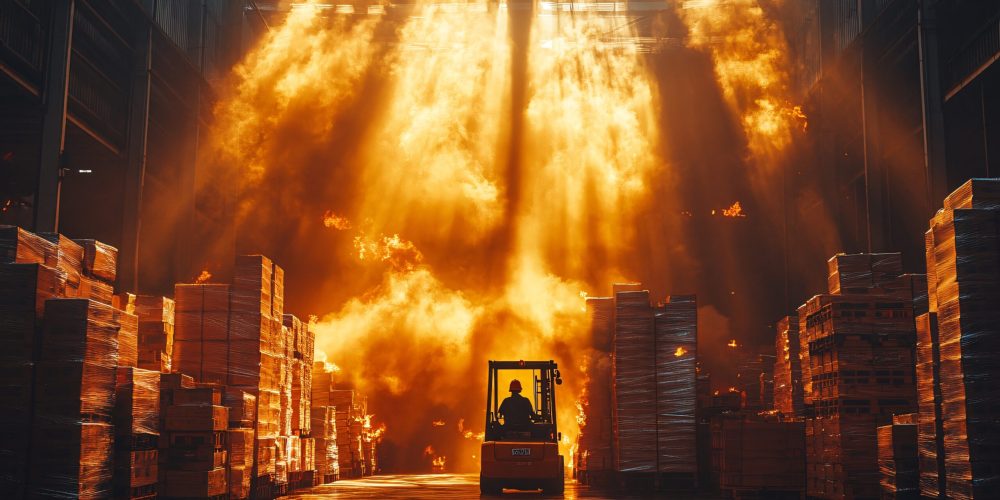
In July 2016 two workers at a waste-handling warehouse near Bedford (UK) were caught in a fireball. They had been tipping drums of discarded aerosol cans into an industrial shredder when a spark from their forklift ignited the cloud of flammable gas the cans had released. One of the men spent ten days in an induced coma with severe burns, and the company was later prosecuted under the regulations covering explosive atmospheres.
It is the sort of incident most people associate with refineries and chemical plants rather than a warehouse. Yet the conditions behind it, a flammable substance, air and a source of ignition, occur across a good deal of ordinary logistics. The rules that govern them are known as ATEX, and a warehouse manager is more likely to meet them than the term’s heavy-industry reputation suggests.
Where explosive atmospheres occur
An explosive atmosphere is simply a flammable substance mixed with air in a concentration that can ignite. In logistics it tends to take one of two forms: flammable gases and vapours, or combustible dust.
Gases and vapours are easy to overlook. Aerosols are a common source, since a damaged can releases flammable propellant and a large distribution centre may hold many thousands of them. Stored paints and solvents give off vapour in the same way. So does the forklift charging bay, where traditional lead-acid batteries release hydrogen as they charge. Hydrogen ignites readily and, being lighter than air, collects near the ceiling, which is why HSE guidance treats the space immediately around a battery on charge as a hazardous area in its own right.
Dust is the second form, and it appears wherever powders are handled in bulk. Flour, sugar, milk powder and animal feed all throw off fine dust that settles on beams and machinery, and once it is disturbed into a cloud it can ignite with considerable force. The explosion that destroyed a wood flour mill at Bosley in Cheshire in 2015, killing four people, is the best-known British example of how serious a dust explosion can be.
What provides the ignition
A flammable atmosphere on its own is not enough; it needs something to set it off, and in a busy warehouse the candidates are everywhere. A spark from a forklift, a hot motor or exhaust, electrical equipment, a build-up of static, or hot work such as grinding and welding can all do it. The Bedford fire began with nothing more than a spark from a truck going about its ordinary work. This is why controlling sources of ignition sits at the heart of explosive-atmosphere safety, and why the equipment used in a risk area matters so much.
How ATEX zones work
Where a genuine risk exists, the area around it is divided into zones according to how often, and for how long, an explosive atmosphere is likely to be present. Gases and vapours are graded as zones 0, 1 and 2; dusts as zones 20, 21 and 22, with the lowest number marking the most persistent hazard.
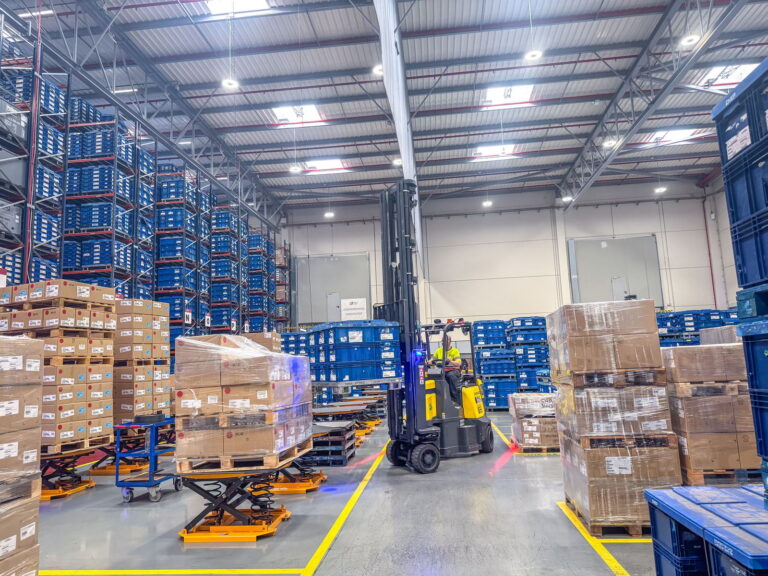
The zone is not a paperwork exercise. It sets the standard that every piece of equipment in that space has to meet, from lighting and ventilation fans to the forklift itself, all of which must be built so they cannot become a source of ignition. A food producer, a third-party logistics operator, a recycler or a busy charging room can each contain a zoned area, and the equipment within it has to be rated to match. The work is methodical rather than mysterious: establish where an explosive atmosphere can form, ventilate and control it, and use equipment certified for the zone. Handled that way, it becomes one more familiar part of running a safe site.