The retail DC has never faced a bigger challenge than that of warehouse data. Advice from Oana Jinga, Co-Founder & Chief Commercial & Product Officer at Dexory, on why retail warehouses cannot afford to operate in the dark.
Rising customer expectations, razor-thin margins, and the pace of eCommerce mean fulfilment operations must be faster, more accurate, and more cost-efficient than ever. Yet many retailers are quietly losing money through a problem hiding in plain sight: they don’t know what’s happening inside their own warehouses.
The gap between what a WMS says is on a shelf and what is actually there rarely announces itself. Instead, it erodes margin through picking errors, delayed replenishment, inflated safety stock, and customer experience failures that don’t surface until the damage is done. Across the industry, inventory distortion (out-of-stocks and overstock combined) runs at roughly 6.5% of global retail sales.
The root cause is consistent: teams are running on stale data. Without continuous visibility, every downstream decision is built on assumption.
When data goes stale, costs compound
Picking errors are rarely the result of poor process design or undertrained staff, rather they stem from inaccurate location data. When a picker is directed to a bay holding something different from what the system expects, errors are almost inevitable. More training doesn’t fix a data problem… better visibility does.
Research shows 71% of shoppers are less likely to return after a poor fulfilment experience. And when inventory data can’t be trusted, the natural response is to over-order, driving higher carrying costs, wasted space, and capital tied up in stock that reliable data would make unnecessary.
The intelligence gap has a solution
The periodic manual stocktake is simply not keeping pace. Thousands of SKUs, fast-moving pick faces, and constant re-slotting create a moving target that manual counts cannot reliably hit. What retail operations need is continuous intelligence: a real-time picture of what is on the floor, reconciled against the WMS before pick tasks are generated.
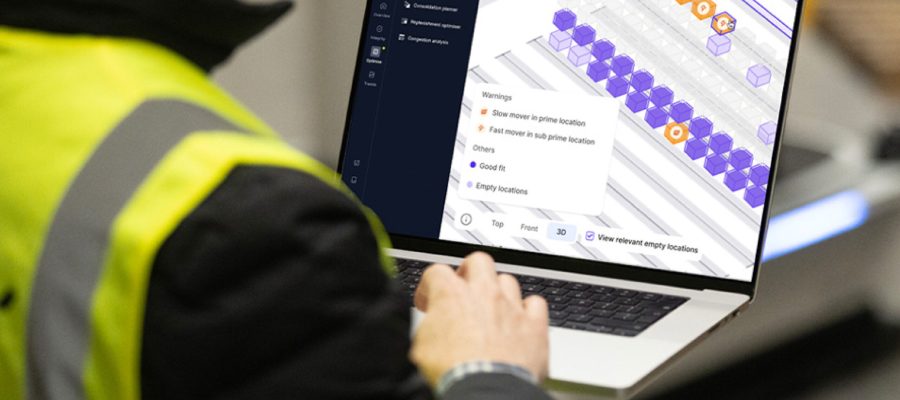
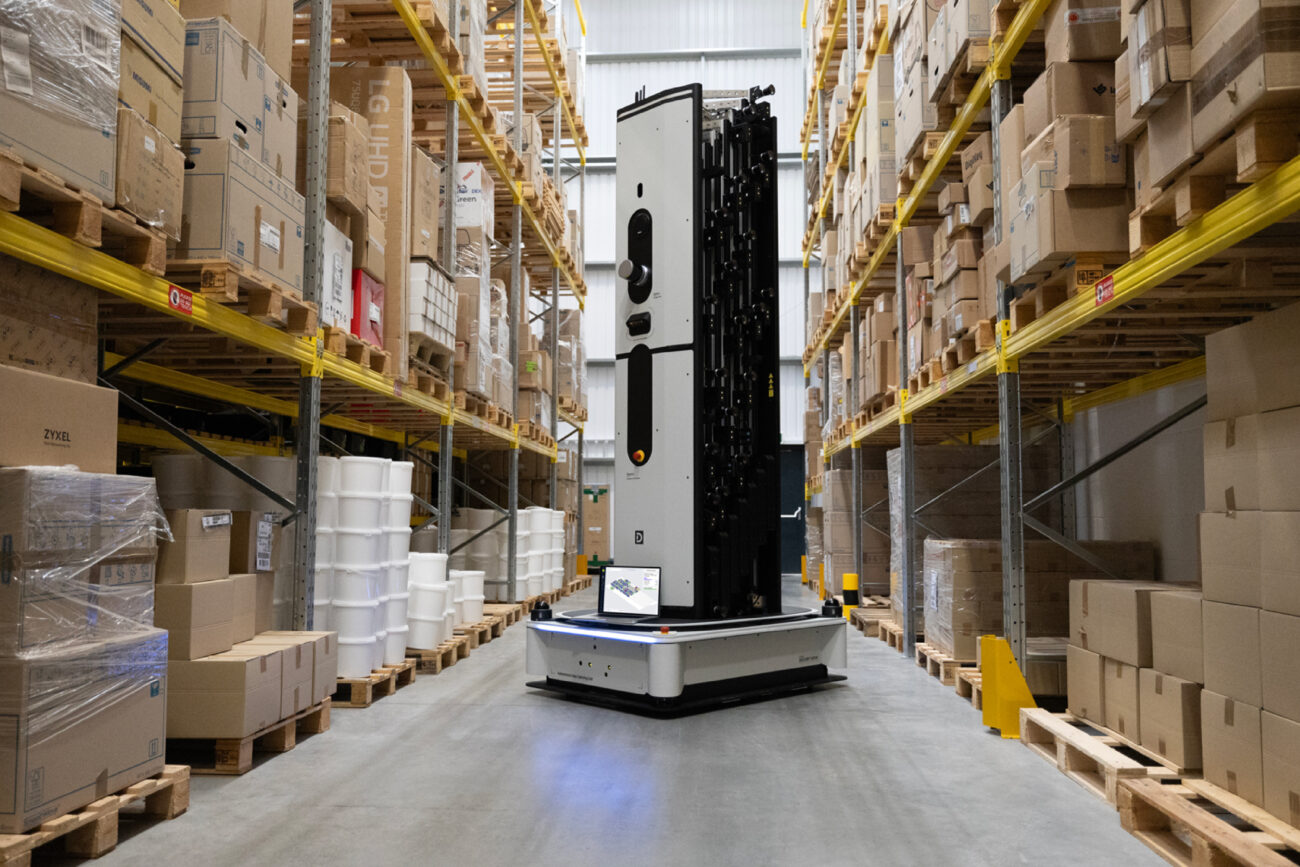
This is what Dexory delivers. Autonomous mobile robots scan over 10,000 locations per hour, around the clock, without disrupting live operations. That data feeds DexoryView, a real-time digital twin that surfaces discrepancies as prioritised exceptions, so teams resolve the issues that will cost an order first.
What it looks like in practice
Few examples illustrate the impact more clearly than Vente-unique.com, an online furniture and home décor retailer. Operating across an 80,000 m³ warehouse, the business had trialled drone-based solutions that fell short on accuracy and real-time insight.
As Cyrille Mazal, Supply Chain and Customer Service Director, explains:
“Errors and delays can result in reduced customer experience, which can impact profitability. We needed a solution that provided real-time data without disrupting operations.”
With Dexory, inventory accuracy rose from 92% to 98% within three days, with up to 99.9% consistently maintained thereafter. Stock shortages fell by 74% and inventory costs dropped by 30%. As Mazal puts it:
“We have not only achieved exceptional inventory accuracy but also optimised our ability to perform full inventories several times per week.”
That cadence of daily visibility rather than a periodic snapshot, transforms replenishment from a reactive scramble into a confident, data-led process.
Visibility is no longer optional
Every shift run on outdated data widens the gap between what systems show and what is on the floor. The retailers pulling ahead are not auditing more frequently or hiring more people. They are closing the gap between assumption and reality and finding the return faster and larger than most expected.
The question is no longer whether retail warehouses need real-time inventory intelligence. It’s how long they keep operating without it.