
Right-size is Transforming Transit Packaging

Until fairly recently, the way retail goods were packed for shipment had little impact on business costs and performance, merchandise was simply bulk-packed for store replenishment. That was, until the boom in internet sales and the supercharged use of transit packaging for direct-to-consumer orders.

Fulfilling thousands of individual small orders a day, all of varying sizes and each requiring appropriately sized protective packaging, has changed the dynamics and relative costs of transit packaging, impacting margins. For many years the high costs of labour-intensive packing lines, using a fixed range of box-sizes, were seen by many businesses as ‘absorbable’, but now as online order volumes continue to grow an inflexion point has been reached where companies are now eagerly looking for ways to radically trim costs and boost performance.

According to the ONS Retail Sales Index, online sales consistently captured 27.4% of all UK retail spending across 2025, rising to 29.9% in Q4 2025. And giving an idea of what this means in terms of volume of packages carried, Ofcom’s 2025 Annual Parcel Report found that 4.2 billion parcels were sent and received by UK consumers in 2024.

Businesses faced with this significant shift to ecommerce orders have been challenged by the need to find efficient processes for picking, packing and dispatching orders of single and small-number items at great speed, creating as little material wastage as possible, all within the major constraints of scarce labour availability, rising labour costs and the fast-paced introduction of environmental legislation that has significant implications for process, material usage and costs.

What has become clear is that the most obvious way to minimise material usage and cost is to make sure that each box used to protect an order during transit is exactly the right size needed for that particular order – and this needs to be repeated for each and every order processed for dispatch. This is why automated right-size boxing solutions are being adopted by both large and smaller enterprises worldwide.

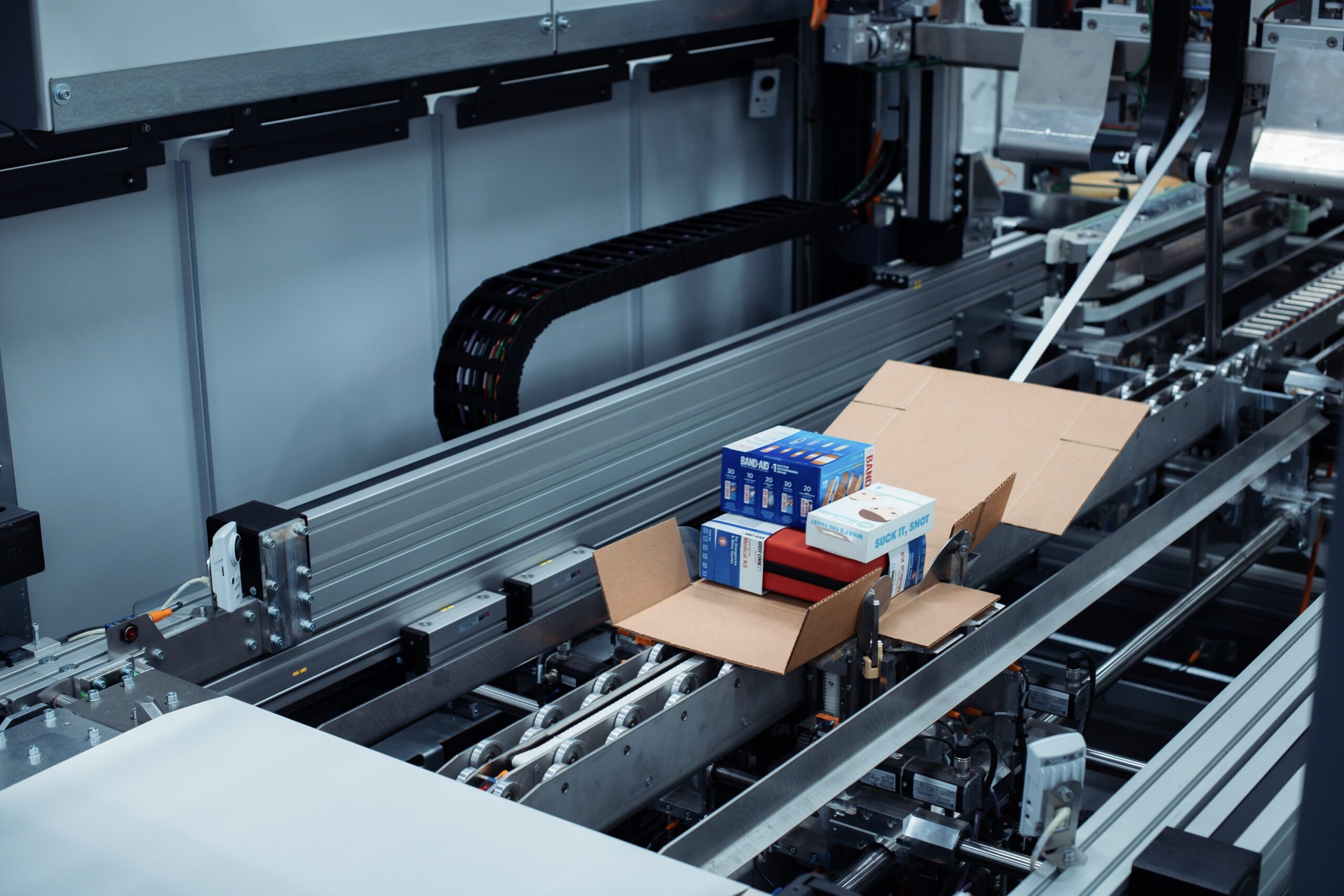
The business leading the ‘right size’ revolution is Packsize. The company has built an international reputation for cutting-edge ‘right-size’ technology, offering a complete range of fully- and semi-automated on-demand packaging solutions, capable of producing robust and sustainable corrugated boxes for transit, each tailored to be exactly the ‘right-size’ for the product or order – saving an average of 40% of empty space per package.

Scalable solutions are available to suit every size of business, from those with low volume needs – and yet with a wide diversity of product sizes and shapes – to fast-moving, high-volume ecommerce brands with a requirement to cope with strong peaks and fast throughput of a wide profile of goods, as well as single and multi-item orders. Versatility, speed and precision are brought together in automated systems capable of producing perfectly formed and sealed right-size boxes at speeds of up to 1300 packages per hour.

Packsize’s innovative technology can also provide a continuous, integrated solution for picking and fulfilment operations, with box-first or box-last formats – and even flexing between both on the fly. Creating a right-size tray for each order, then picking to the tray and lidding after, eliminates the need for plastic pick-totes and offers complete flexibility for multi-functional picking and packing operations.

According to Packsize, across their solutions customers see average corrugated material savings of around 30%, package volume reductions of up to 40% and approximately 80% less void fill is used. Fully automated systems can also commonly deliver the equivalent output of around 20 manual packing stations, creating significant labour efficiencies. These results vary depending on the customer’s products, order profile and their existing operation.

As average box size reductions of 40% are regularly experienced by customers, it’s possible to load many more packages onto a single vehicle, offering a potential to reduce the number of vehicles used, saving fuel and carbon emissions – all, important, cost saving factors with significant environmental gains.

When it comes to installation, Packsize supports both brownfield and greenfield projects. The company is highly proficient at integrating solutions into existing infrastructure and warehouse processes, and when engaging in a greenfield project, involving Packsize early on allows packaging to be considered as part of the overall system design – creating greater opportunities to optimise the complete material flow and overall efficiency of the operation.

Although the company’s top-end systems are highly sophisticated, they are essentially plug-and-play, with straightforward integration into existing warehouse operations and seamless connectivity to the customer’s WMS.
AI App Builder Added to Warehouse Platform

AutoScheduler.AI has announced the ‘AI App Builder’, a new capability within its Warehouse AI Platform. The AI App Builder lets warehouse planners, supervisors, and site leaders create, deploy, and use AI-powered applications tailored to their operations in days, without waiting on IT or a software vendor’s roadmap.

AI App Builder marks AutoScheduler.AI’s evolution from warehouse orchestration pioneer to the Warehouse AI Platform: one platform that orchestrates everything inside the building and now empowers site teams to solve the problems that fall between the cracks of their systems of record, including warehouse management, labour management, yard management, and automation systems.

“Warehouses run on massive systems that are expensive and slow to customize, so operators fill the gaps with spreadsheets, business intelligence tools, homegrown tools, and tribal knowledge,” said Keith Moore, AutoScheduler.AI CEO.

“The AutoScheduler AI App Builder closes that gap. The people who see the problems every day can now fix them, building applications on live warehouse data, backed by real optimization math, in days. We still orchestrate all the systems inside the building; now we also hand the floor the tools to solve everything in between.”

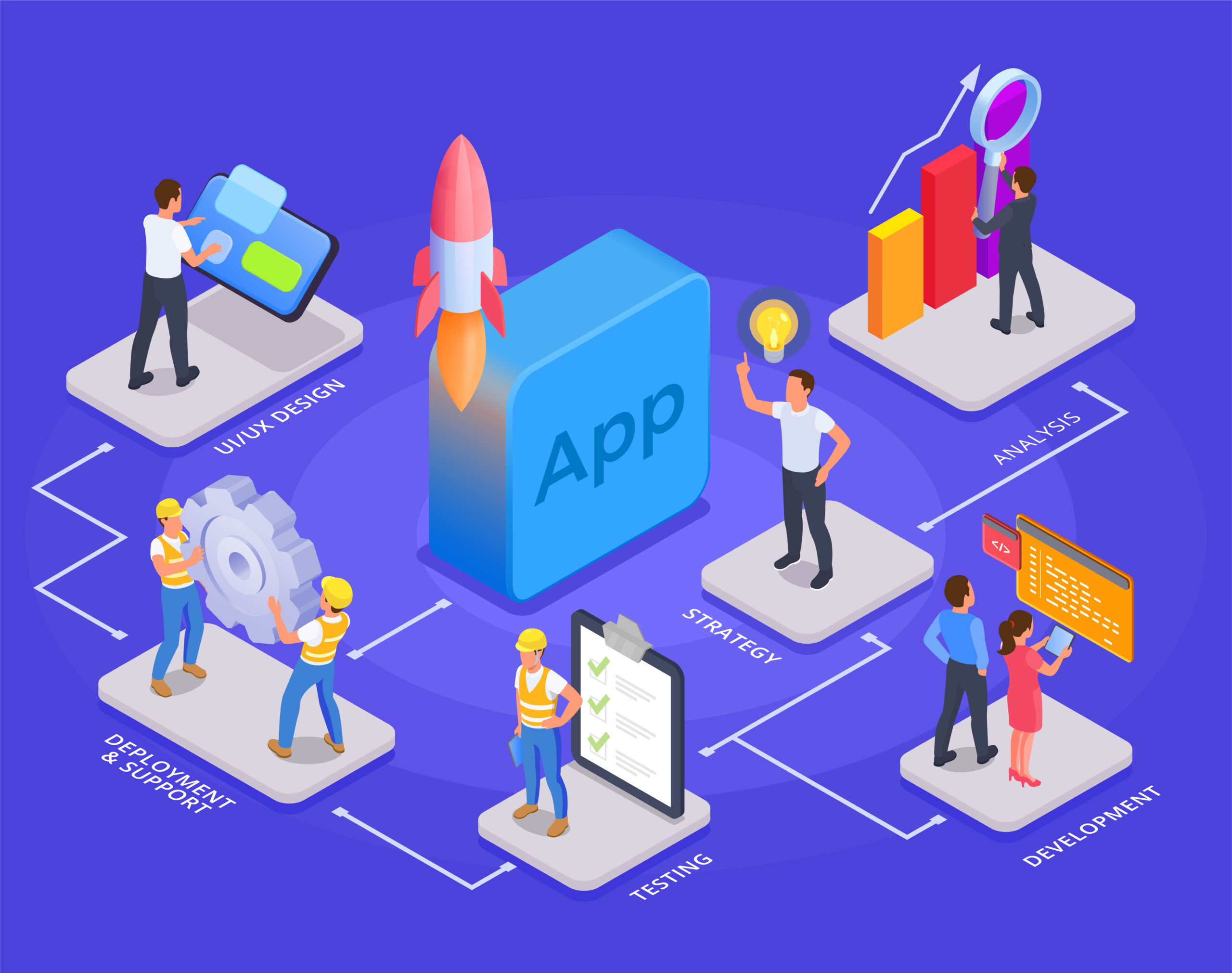
The AI App Builder runs on AutoScheduler.AI’s semantic layer of warehouse knowledge, live warehouse data, and a library of production-grade optimization algorithms. Users describe what they need in plain language, and the AI App Builder creates an application that can inform, monitor, and automate the process.

From warehouse orchestration to Warehouse AI

AutoScheduler.AI remains the orchestration layer that sits above a warehouse’s existing systems of record. The AI App Builder extends that same platform, letting teams address site-specific needs that fall outside their core software’s capabilities.

Applications already built and deployed by AutoScheduler customers include: Labour forecasting and planning; OTIF predictive monitoring; Replenishment monitoring; Gamification; Wave and workflow optimization; Inventory-flow analysis and tracking; Production planning; Inbound Crossdock Prioritization; Dock Door Schedule Compliance; Site-specific operational dashboards and alerts.

Unlike generic AI or low-code application builders, AI App Builder is purpose-built for warehouse operations. Six years of experience across nearly 100 sites has created a semantic layer that understands warehouse data across connected systems, paired with a library of warehouse-specific optimization solvers. Applications built with it draw on normalized warehouse data and optimization math developed for real-world warehouse operations, not generic AI-generated logic.

“Anyone can point AI at a warehouse,” said Kunj Pandya, Head of Product and Customer Success at AutoScheduler.AI.

“The difference is that our semantic layer already knows what the data means across the WMS, ERP, and labor systems, and every app built can call on optimization solvers proven across nearly 100 sites.”

Apps built in days, not months

Instead of filing a request with IT or waiting on a vendor’s roadmap, warehouse teams build the applications themselves. In a recent customer’s working session, an application was stood up in less than 15 minutes. Existing customer sites are already building multiple applications on their own, evidence the capability is built for production use, not as a beta or prototype.

In another case, a site planner discovered AI App Builder independently and built a replenishment-monitoring application. The savings were large enough that the site budgeted six figures for it annually. The build, deployment, validation and savings commitment all happened within two weeks.

A planner at a global food and beverage company described the experience this way:

“The AutoScheduler App Builder feature is one of the best integrations of software and AI that I’ve seen so far. It helps bridge one of the biggest challenges in software development: the gap between understanding a business problem and turning that knowledge into a practical digital solution. Using the App Builder, we’ve been able to bring important data directly into our decision-making venues, change workflows, close information gaps, and significantly speed up the flow of information between different stakeholders.”

AI App Builder runs on the same integration that powers AutoScheduler.AI’s orchestration, so customers do not need separate data infrastructure for each application. Applications live inside the existing AutoScheduler.AI platform alongside tools such as Daily Plan, Wave Planner, Network Scoreboard, and Warehouse AI Agent. Where appropriate, they can write tasks back into the WMS for execution on the warehouse floor.

Included in the AutoScheduler Warehouse AI Platform

AI App Builder is generally available now as part of the AutoScheduler Warehouse AI Platform, available to customers who want a warehouse-ready AI toolbox, or who want AutoScheduler’s forward-deployed experts to help guide them while building their first applications.

The result is a new model for warehouse technology: AI that runs the warehouse and AI that lets the people running the warehouse build what they need next.

“AutoScheduler.AI was the first to fully orchestrate all labor, resources, and inventory in the warehouse six years ago,” said Moore. “We created the category. Our expertise as AI leaders, along with our access to normalized warehouse data and our unique optimization algorithms, led to the creation of the AI App Builder for warehouse floor leaders to build and deploy solutions that meet their specific needs.”

Subscribe

Get notified about New Episodes of our Podcast, New Magazine Issues and stay updated with our Weekly Newsletter.