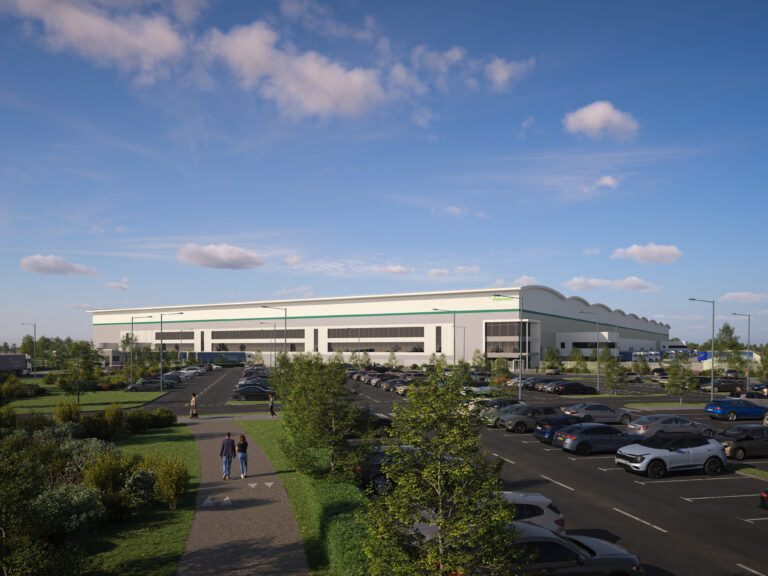


For the warehousing sector, the pressure to decarbonise to meet stricter energy efficiency and sustainability standards has undoubtedly been building over the past 12 months. Heading into a new year offers a chance to take stock and look at the options to make purposeful changes. David Woon (pictured, below), head of net zero engineering and operations at Ennovus Solutions, offers an insightful roundup of the year’s most significant developments and a look ahead into 2026, exploring the next frontiers in achieving net zero for warehousing businesses.
2025 has been a landmark year for renewable energy, with solar and wind surpassing coal as the world’s top source of electricity generation for the first time. In the UK specifically, more impactful plans were put in place by the government to help the country achieve net zero, such as the hotly anticipated Planning and Infrastructure Bill, which became law in December. However, it has also been a year of increased challenges for many sectors.
The convergence of rising operational costs, grid instability and pressure from supply chains on top of new government mandates, are all forcing warehousing and logistics operators to redefine their relationship with energy. In 2026, there is arguably more potential than ever for a smart warehouse to act as its own power plant. Your roof isn’t just a cover; it’s your greatest untapped financial asset.
A look back on the year’s defining moments
2025 has left us with a lasting sense of political uncertainty, which has resulted in an overwhelming feeling that, as a business, we must move away from long-term goals and support more businesses in taking action now.
Perhaps most importantly, this year has proved above all that the move towards sustainable operations and harnessing renewables is fundamental to protecting the bottom line. The 2025 B Lab UK data released in November, shows B Corps saw 20% turnover growth vs. 3% for standard SMEs, proving that sustainability is now a marker of high-performing, resilient companies.

As businesses face the reality of high capital costs and the long-term nature of energy transitions, the emphasis has shifted to data-driven audits that ensure financial viability for the future. This financial wariness is operating against a backdrop of unprecedented grid strain; the explosive growth of AI and data centres has transformed energy demand from a steady climb into a steep surge. This pressure is acting as a catalyst, forcing many organisations to consider on-site renewables, even as they navigate the high initial price tag of energy independence.
Despite political rhetoric, it has been positive to see that the global momentum for sustainability remains resilient. Locally, the publication of government solar and wind roadmaps has provided a much-needed, if imperfect, sense of direction, reinforcing green building mandates that are now standard in many sectors. Ultimately, 2025 has been the year in which climate awareness moved from a global concern to a local risk, pushing partners and supply chains to integrate mandatory renewables as a matter of basic business resilience rather than just corporate social responsibility.
Shifting up a gear for 2026
Looking ahead, we hope to see more decentralised resilience, with the warehousing sector shifting toward energy independence. Large-footprint sites are a perfect scenario for holistic, renewable technology, combining roof-mounted solar and wind turbines. This could likely be supercharged by a massive drop in battery storage prices, making it economically viable for warehouses with low base loads but high physical space to store excess generation for peak use. The strategic value of feasibility studies and audits will therefore be more important, as businesses move away from trial-and-error toward data-backed models that identify the exact mix of technologies needed to avoid price volatility and supply chain fragility.
The regulatory and political landscape does present a complex push-pull dynamic for investors. On the positive side, the National Energy System Operator has finally broken the gridlock by clearing the connections queue and issuing new offers, which will trigger a surge in renewable construction across the country. However, this momentum is shadowed by political instability. The rise of alternative movements with virtually non-existent net-zero policies, or that actively reject the concept of net zero, has created a climate of caution. However, many firms are now framing their energy investments primarily through a cost and resilience lens rather than a purely environmental one – something that will certainly continue into the new year.
The cost of doing nothing
The UK warehousing sector is ripe for the renewable switch, but the window for early-mover advantage is closing fast. As we look toward 2026, the transition has shifted from a sustainability nice-to-have to a fundamental pillar of operational resilience. Businesses that wait to explore renewable opportunities risk facing exponentially higher grid costs, increasingly punitive mandates and a total loss of competitive edge against B-Corp-aligned peers who have already secured their energy independence. In an era of political and infrastructure instability, the choice is simple.