As global supply chains face increasing complexity, demand is growing for integrated logistics models. As global supply chains face mounting pressure from geopolitical uncertainty, shifting trade flows and rising customer expectations, logistics providers are increasingly being called upon to deliver more integrated, flexible solutions. The ability to combine multiple transport modes under a single, coordinated strategy is becoming a key differentiator, particularly for businesses moving complex or time-sensitive cargo across international markets.
Against this backdrop, multimodal logistics and 4PL models are gaining traction, enabling companies to streamline operations, improve visibility and reduce inefficiencies across the end-to-end supply chain. For operators with both global reach and in-house capabilities, this approach offers a way to balance control with adaptability.
Logistics Business spoke with a spokesperson from Spain-based logistics operator and shipowner Suardiaz Group to understand how the company is evolving its multimodal capabilities to meet these changing demands.
With more than 75 years in the industry, Suardiaz has grown into a global operator offering a wide range of services across maritime, air, rail and road transport, alongside customs, project cargo, warehousing and chartering. Backed by more than 1,000 employees and over over 30 offices across Europe, Africa and the Americas (Spain, France, UK, Morocco, Mexico, Peru, Dominican Republic), the company supports international operations through a combination of in-house expertise and a worldwide partner network.
A key focus for the group is door-to-door multimodal transport. As the spokesperson explained, this model places responsibility for the entire shipment, from origin to final destination, under a single operator, even when multiple transport modes are involved. By coordinating road, sea, air and rail movements within one contract, the company is able to offer customers greater visibility and control. “We provide this service globally,” they said.
coordinating international networks and partners to ensure seamless, efficient, and fully integrated transport solutions worldwide.
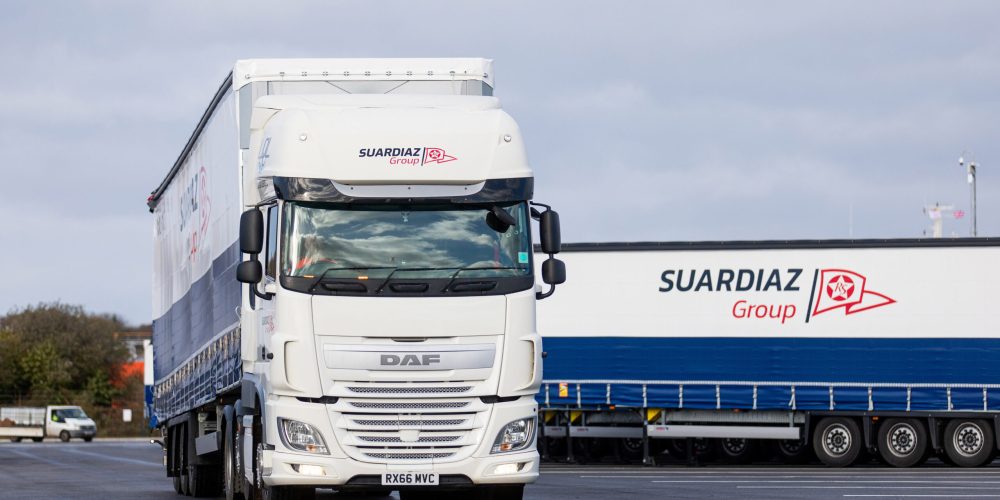
Suardiaz has also developed its role as a fourth-party logistics provider, combining brokerage with owned assets. While ocean and air freight are managed through strategic partnerships, the company retains direct control over its road fleet and a substantial warehousing footprint of more than 150,000 square metres. This hybrid approach allows it to balance flexibility with operational oversight across the supply chain.
The discussion also highlighted the group’s experience in project cargo, particularly in the renewable energy sector. Handling large, heavy components such as power transformers requires careful planning at every stage. According to the spokesperson, a detailed understanding of dimensions, weight distribution and handling requirements is essential, with transport drawings playing a critical role in ensuring safe loading, movement and installation, especially where the centre of gravity is offset.
Suardiaz works across a broad mix of industries, supporting businesses ranging from smaller enterprises to global manufacturers. Automotive, food and perishables, retail and renewable energy stand out as key sectors, although the company is equally active in infrastructure and industrial projects where tailored logistics solutions are essential. Flexibility, the spokesperson noted, is central to meeting these varied demands while maintaining efficiency and reliability.
When it comes to route planning, the company takes a consultative approach. While international sea and air corridors are well established, the emphasis is on selecting the right partners and combining transport modes in the most effective way. By doing so, Suardiaz aims to optimise both cost and transit time, ensuring each logistics operation is completed as efficiently as possible.
As supply chains continue to evolve, the company’s integrated model reflects a broader industry shift towards end-to-end logistics solutions that prioritise resilience, efficiency and global connectivity.