Fleet Standardisation at MODEX 2026

Autonomous navigation and fleet management leader BlueBotics will highlight fleet manager standardisation, obstacle avoidance, and vehicle navigation at MODEX 2026, taking place April 13–16 in Atlanta, Georgia, through on-stand educational sessions, expert discussions, and a joint seminar with Kohler focused on unified fleet management.

At booth C13394, BlueBotics will present its ANT navigation and fleet management technology, including SmartPass, a new innovation that enables automated guided vehicles (AGVs) and autonomous mobile robots (AMRs) to overcome path obstructions efficiently while maintaining the structured, predictable behavior required in industrial environments.

“Industrial users don’t just need autonomous vehicles — they need systems that remain predictable, coordinated, and scalable as operations grow,” said Dr. Nicola Tomatis, CEO of BlueBotics. “At MODEX, we look forward to discussing how bounded autonomy allows fleets to handle obstacles more intelligently while maintaining smooth, predictable operations.”

Fleet manager standardisation seminar with Kohler

BlueBotics will place fleet manager standardisation at the center of its MODEX presence through a joint seminar with kitchen and bath leader Kohler titled The Power of One: Unlocking AGV/AMR Efficiency Through Unified Fleet Management. The session will take place on Tuesday, April 14, from 12:30 PM to 1:15 PM at the Supply Chain Resiliency Theater.

During the session, BlueBotics CEO Dr. Nicola Tomatis and Brian Gruzdis, Senior Staff Engineer – Warehouse Automation Lead at Kohler, will discuss the benefits of standardising an AGV/AMR fleet manager, the potential risks involved, and best practices for selecting a fleet manager partner and deploying fleet management enterprise-wide.

Drawing on real-world experience, Gruzdis will explain how standardising Kohler’s AGV software platform has supported the company’s global AGV and AMR operations by accelerating deployments, reducing integration risk, and enabling greater flexibility in deploying different vehicle types across multiple production sites.

On-stand expertise and live knowledge sharing

Throughout the show, BlueBotics’ experts will host short on-stand educational sessions, offering visitors practical insights into key automation challenges and solutions. Topics will include the pros and cons of obstacle avoidance, mobile robot interoperability, fleet manager standardisation, and best practices for integrating automated vehicles into complex industrial environments.

Visitors will also have the opportunity to discuss their specific automation projects with the BlueBotics team, from vehicle development to system integration and fleet manager standardisation.

Driving efficient, scalable fleet operations

By combining structured navigation with controlled obstacle avoidance, BlueBotics enables fleets to maintain efficient material flow while minimizing disruption and reducing the risk of deadlocks. Its ecosystem of “ANT driven” vehicles spans a wide range of vehicle types, all of which can be managed through a unified fleet management platform based on BlueBotics’ ANT server fleet manager.

This approach reflects a growing industry focus on system-level performance, where predictability, interoperability and centralized control are essential to scaling automation successfully across sites and applications.

Microsoft Joins Push for Supply Chain of The Future

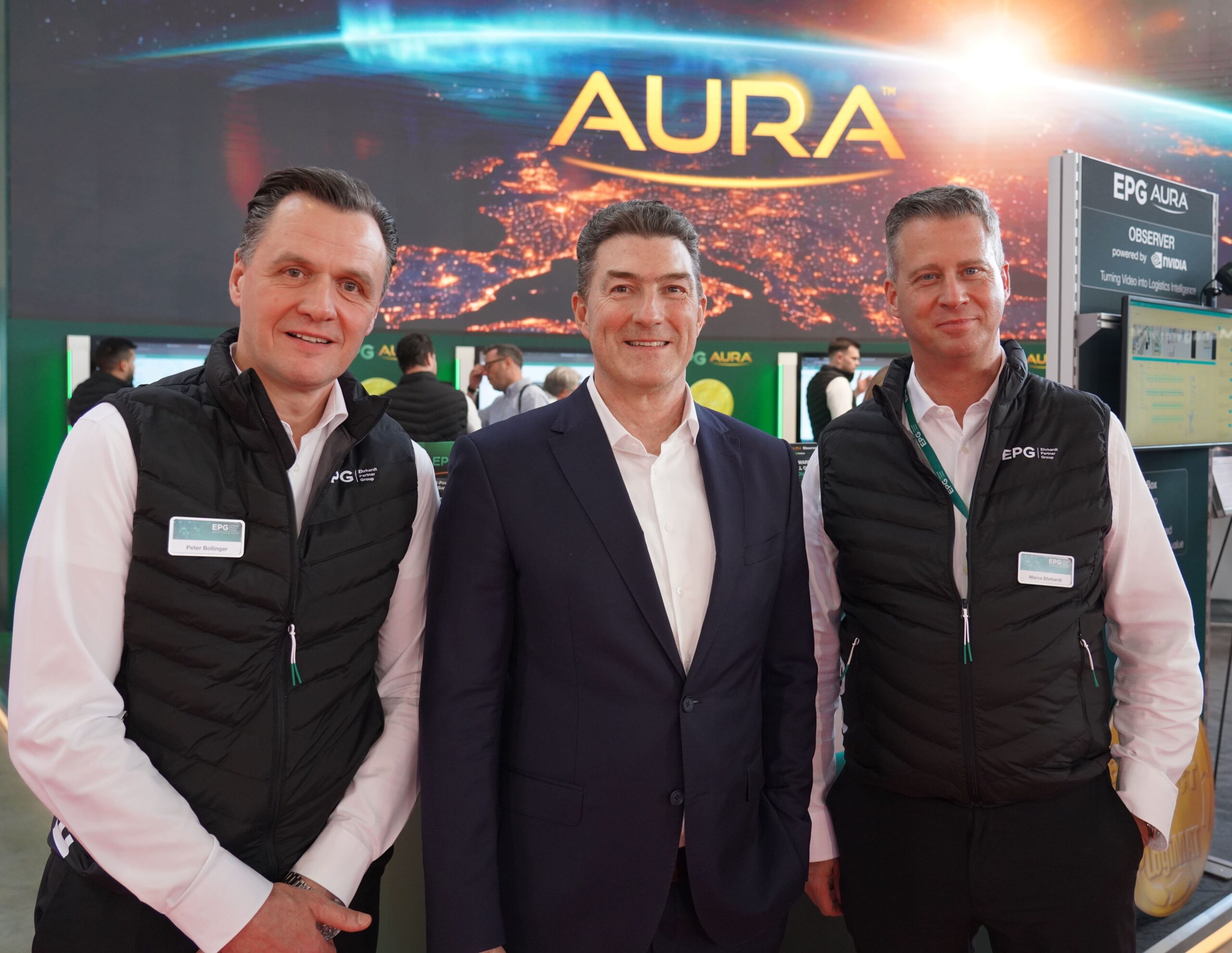
EPG (Ehrhardt Partner Group) is working with Microsoft to establish the next era of AI-driven supply chain technology worldwide. At the heart of this collaboration is the AI-native environment EPG AURA, which will be delivered globally via the highly scalable cloud platform Microsoft Azure. This creates a new technological foundation for the intelligent, data-driven management of complex supply chains. As one of the first Microsoft partner companies in the field of Supply Chain Execution, EPG combines its leading logistics expertise with cutting-edge AI technology. This underscores EPG’s ambition to play a pioneering role in shaping the next generation of AI-native supply chain platforms and to position itself at the forefront of this development as an AI frontier company. With Microsoft Azure, EPG also offers its customers an additional cloud hosting option alongside its own EPX (Ehrhardt Partner Xtended) hosting.

At the center is the AI-native platform EPG AURA, which will in future be made available globally via the highly scalable cloud platform Microsoft Azure. This establishes a new technological foundation for the intelligent, data-driven control of complex supply chains.

Two strong partners, one shared goal

As a global leader, Microsoft contributes an established cloud and platform infrastructure, while EPG, as one of the leading specialists in Supply Chain Execution, draws on over 35 years of logistics expertise as well as the comprehensive EPG ONE Supply Chain Execution Suite. The aim of this collaboration is to deliver significantly greater value to customers-through faster implementations, scalable architectures, and flexible, future-proof operating models.

Companies benefit from global availability, high scalability, and a powerful security architecture with geo-redundant backups. At the same time, Azure integration enables seamless integration into existing IT landscapes and accelerates the implementation of innovations-particularly in the area of AI-driven applications.

In addition to its established private cloud solution, EPX hosting, EPG is expanding its portfolio with SaaS services on Microsoft Azure. This gives customers maximum flexibility, allowing them to optimally meet their individual requirements in terms of compliance, performance, and scalability.

Seamless integration: Microsoft Dynamics and voice technology

Another key component of the collaboration is a standardized interface to Microsoft Dynamics, including MCP (Model Context Protocol). Preconfigured interfaces enable fast, secure, and efficient integration between ERP systems and the EPG ONE Suite. This reduces system discontinuities, harmonizes data flows, and significantly accelerates implementation projects.

In addition, EPG Voice Solutions – particularly LYDIA Voice and the Communicator – will be connected to Microsoft Dynamics solutions. Voice-guided processes, for example in picking operations, can thus be directly linked with existing systems. This leads to higher productivity, lower error rates, and more intuitive operation in day-to-day logistics.

Integration into Microsoft 365 and global collaboration

The collaboration also includes the integration of EPG AURA into the Microsoft 365 ecosystem, particularly Microsoft Teams. Supply chain-relevant information is thereby embedded directly into users’ working environments. Decisions can be made more quickly, and collaborative workflows across the entire supply chain can be designed more efficiently.

In addition, the partnership is globally oriented: Microsoft and EPG will collaborate on key accounts worldwide. International customers benefit from standardized solution architectures across countries and regions, as well as coordinated support from both partners.

EPG as a frontier AI company

The collaboration highlights EPG’s positioning as an AI frontier company in the field of Supply Chain Execution. With deep process expertise in warehouse, transport, and workforce management, international project experience, and innovative solutions for real-time monitoring, optimization, and automation, EPG brings critical capabilities to the partnership.

Together, EPG and Microsoft can develop market-leading, AI-powered supply chain solutions. “Our collaboration goes far beyond performance and global availability,” says Peter Bollinger, CEO of EPG. “It creates a scalable foundation for the use of operational AI-particularly in the areas of generative and agentic AI—in supply chain execution, providing our customers with a powerful and secure basis for the next generation of intelligent logistics solutions.”

Michael Locher-Tjoa, Head of Microsoft’s SME business in the DACH region, adds: “EPG is one of the AI frontier companies that not only use AI, but actively shape the next stage of AI-driven solutions in logistics. With EPG AURA, EPG demonstrates impressively how AI is already being applied in practice today and how it measurably contributes to process optimization.”

Fuel Volatility Puts Supply Chain Resilience in Focus

Fuel volatility in logistics is placing renewed pressure on supply chain performance, forcing organisations to rethink how quickly they can respond to changing cost conditions. From transport planning to production scheduling, fluctuating energy prices are exposing gaps in supply chain resilience and operational agility.

Dag Calafell, Director of Technology Innovation at MCA Connect, argues that the issue is less about volatility itself and more about responsiveness. Businesses that can adjust plans quickly are far better positioned to protect margins and maintain service levels.

“Results depend on how quickly plans can change,” he says, emphasising the need for operating models built around continuous adjustment rather than fixed, long-term planning.

A key challenge lies in decision timelines. Freight modes, shipment schedules and production plans are often locked in too far in advance, limiting the ability to react to fuel price shifts. Shortening planning horizons and introducing clear triggers for replanning can help align operations with real-time cost movements – a critical step in strengthening supply chain resilience.

Scenario planning is also becoming essential. By defining response strategies in advance, organisations can react more consistently when fuel costs rise. This includes pre-selecting operational levers such as switching transport modes or adjusting production schedules, and assigning clear ownership to ensure swift execution.

On the shop floor, energy-intensive processes are increasingly under scrutiny. Even efficient operations can see margins eroded by rising fuel and energy costs. Improving flexibility in production sequencing, while reducing unplanned downtime, enables businesses to better manage cost pressures without disrupting throughput.

Closing the gap between cost signals and operational action is another priority. Greater visibility across fuel costs, transport rates and supplier pricing must be directly linked to decision-making. Regular cross-functional reviews are helping organisations act faster and avoid the delays that can turn volatility into financial loss.

As Calafell highlighted, the real risk is not volatility itself, but the delay in reacting to it – a gap that can quickly turn manageable cost increases into sustained margin pressure. Greater visibility across fuel costs, transport rates and supplier pricing must be directly linked to decision-making.

Flexibility across logistics networks is equally important. As fuel volatility feeds into carrier pricing and supplier costs, businesses are defining trigger points to shift volumes between carriers or locations. Contract strategies are also evolving, with more emphasis on sharing transport cost increases across the supply chain.

At the same time, rising costs are putting pressure on service levels. Without clear policies, businesses risk reactive surcharges or unplanned service erosion. Segmenting customers and defining service priorities allows organisations to protect key relationships while maintaining control over margins – an increasingly important aspect of supply chain resilience.

While fuel price fluctuations may stabilise, disruption across global supply chains is set to continue. Whether driven by geopolitics, regulation or demand shifts, the ability to respond quickly remains critical.

For logistics leaders, the message is clear: building supply chain resilience is not a one-off exercise. In an environment defined by fuel volatility in logistics, success depends on visibility, flexibility and the ability to act in real time.

AI Robotics & Automation Showcased at MODEX 2026

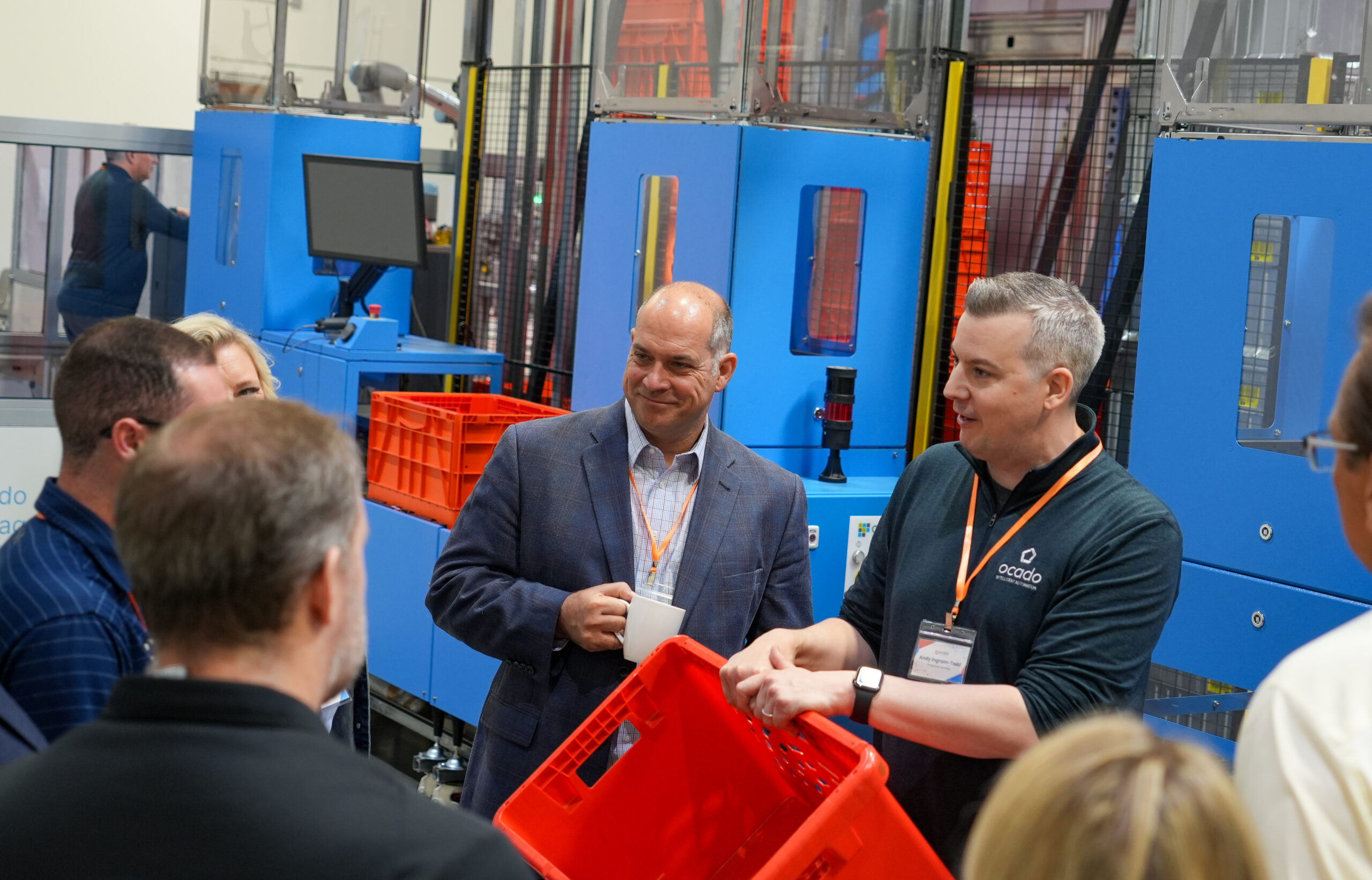
As warehouse operators face mounting pressure to boost throughput while managing labour constraints, artificial intelligence is emerging as the critical differentiator between efficient operations and costly bottlenecks. At MODEX 2026, Ocado Intelligent Automation (OIA) will unveil Ocado IQ, the cloud-based, AI-powered software that directs every pick, path, and priority from inbound to outbound. The system serves as the intelligence behind the company’s market-proven Chuck AMR (Autonomous Mobile Robot) and the pallet-moving Porter AMR, both of which will be on display at booths #B10119 and #B10719.

Unlike other robotic systems that lock facilities into a single pick mode, Ocado IQ’s artificial intelligence enables two intelligent pick modes – Sweep and TagTeam – to run concurrently across a site. This flexibility allows operations to optimize different zones based on product density, velocity, and layout, eliminating the inefficiencies of one-size-fits-all and swarm-style AMR approaches that can drag down productivity. At its MODEX booth, the OIA team will demonstrate both pick modes and show visitors how these options fit various fulfilment applications based on warehouse design and operational requirements.

Porter will also be on display with new design features. Porter automates pallet and cage handling, cross-docking, putaway, inventory moves, case picking, and piece picking. Designed for facilities with constrained layouts or mixed inventory profiles, Porter modernizes operations that have traditionally relied on manual forklifts and trolleys without major capital investment. The system will be available by the end of 2026.

Chuck AMR will be on the scene too. Retailers like Foot Locker, Lulus, CB2 and Paddywax are using these bots to lower costs and make warehouse work easier and more sustainable as they collaborate with associates to expedite daily fulfilment tasks such as putaway, picking, sortation and returns. Deployed in over 120 warehouses and distribution centres worldwide, Chuck AMR implementations deliver two to three times efficiency gains and 50% lower labour costs compared to manual pick operations.

MODEX attendees responsible for 5,000 order lines a day or more than 10,000 SKUs will want to stop by to see the Ocado Storage and Retrieval System (OSRS) – the fastest, densest cubic storage technology available for high-throughput fulfilment operations in the pharmaceutical, healthcare, retail apparel and third-party logistics sectors. Built on an ultra-light frame, a 12-by-12- by-12 cell grid with six OSRS Robots will be operating in real time.

Watch the robots pass each other at high velocity, thanks to Ocado’s patented, singlecell design. Bots move at high efficiency to fetch inventory totes and drop them at a pick station or at one of the On-Grid Robotic Pick Arms for order assembly.

AI Tools Tackle Parcel Shipping Costs & Complexity

The increasing complexity of parcel shipping, driven by fluctuating carrier pricing, evolving surcharges and ongoing margin pressures, is accelerating demand for more advanced data analysis tools across the logistics sector. Businesses reliant on high-volume shipping, including e-commerce and omnichannel retailers, are seeking faster and more transparent ways to interpret cost data and optimise operations.

Against this backdrop, shipping intelligence platform provider Reveel has launched Reveel IQ, an AI-powered solution designed to help organisations better understand and manage shipping spend using detailed shipment and invoice data.

The new tool enables users across finance, transportation and operations to query shipping data using natural language, returning responses that include visualisations, cost drivers and supporting calculations. The aim is to reduce reliance on manual reporting processes, SQL queries and specialist analysts, which can delay decision-making.

According to the company, the system has been developed specifically for parcel shipping environments, incorporating an understanding of carrier pricing structures, surcharge mechanisms and operational variables such as dimensional weight. This domain-specific approach is intended to provide more accurate and relevant insights than general-purpose analytics or AI tools.

Most AI tools today are little more than chat interfaces layered on top of general-purpose databases… Reveel IQ is fundamentally different. It’s built specifically for shipping, grounded in real shipment and invoice data, and designed to deliver answers you can trust and act on.

said Josh Dunham, CEO and co-founder of Reveel.

The platform is powered by package- and SKU-level data, enabling users to move from high-level trends to individual shipment detail without the need to build reports or navigate multiple dashboards. Each output includes a breakdown of cost drivers, alongside scenario modelling and suggested actions to support decision-making.

Reveel IQ is positioned as a cross-functional tool, supporting different user groups within an organisation. Finance teams can access cost visibility and forecasting insights, while supply chain and transportation teams can analyse carrier performance and identify optimisation opportunities. Operational users, meanwhile, can use the system to pinpoint exceptions and inefficiencies in execution.

By providing explainable outputs in plain language, the platform aims to make advanced shipping analytics more accessible while retaining the depth required for detailed investigation.

The launch reflects a broader shift within the logistics industry towards AI-enabled decision-making tools that can compress the time between data analysis and operational response, particularly in environments where cost control and agility are becoming increasingly critical.

Subscribe

Get notified about New Episodes of our Podcast, New Magazine Issues and stay updated with our Weekly Newsletter.