
Managing electronic consignment notes can be done with an eCMR platform, which works perfectly until a non-EU driver shows up, write Gustav Poola, CEO, and Mairi Kutberg (pictured, below), Co-Founder of IdentiGate.
If you are evaluating eCMR platforms right now, you are probably asking the right questions: does it integrate with our TMS? Is it eFTI-ready? How fast is the rollout? These are important questions. But there is one question that most logistics companies forget to ask — and it is the one that determines whether their digital freight documents will actually work on their busiest corridors.
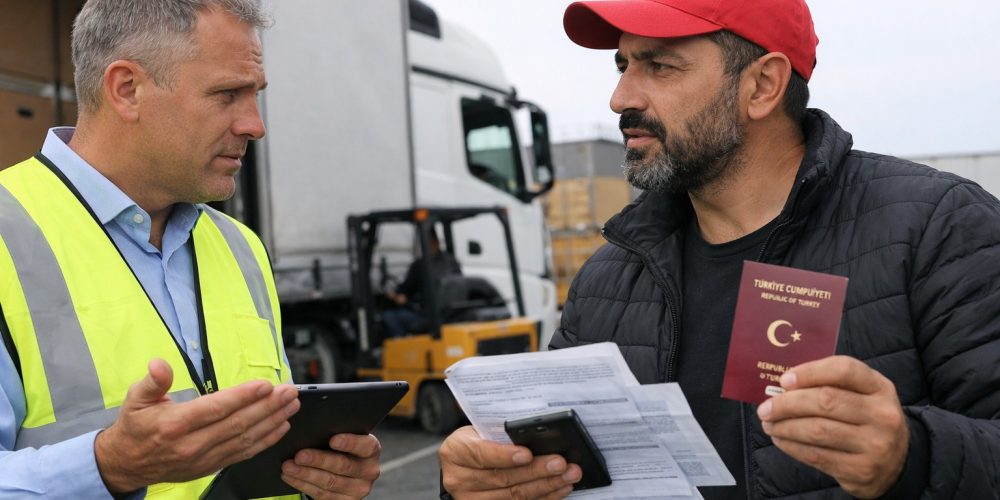
The question is simple: what happens when the driver is not an EU citizen? For most eCMR platforms on the market today, the honest answer is: nothing good. The workflow breaks. The driver cannot sign. And the shipment falls back to paper — or worse, to an unverified digital signature that carries no real identity assurance.
The cross-border reality check
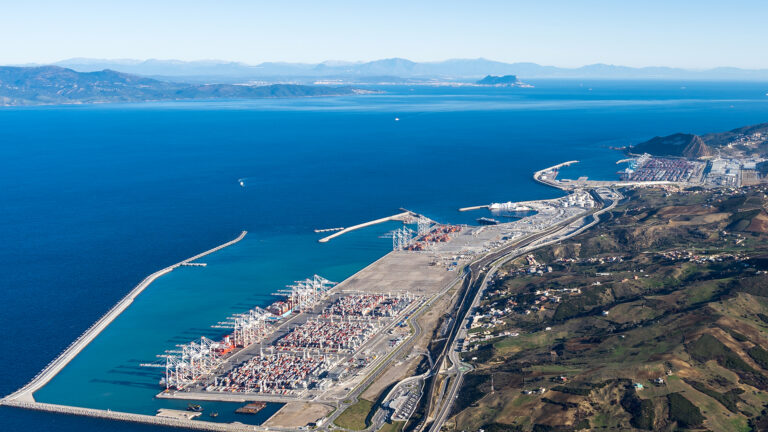
European road freight is fundamentally a cross-border operation. Eurostat data shows that approximately 37% of international road freight within the EU is carried by vehicles registered outside the Union. On some of Europe’s busiest trade corridors — Turkey to Germany, Ukraine to Poland, Morocco to Spain — the share is even higher.
These are not niche routes. They are the arteries of European manufacturing and retail supply chains. Automotive components, fresh produce, textiles, industrial equipment — a substantial volume of goods entering the EU every day is carried by drivers who hold a Turkish, Ukrainian, Serbian, or Moroccan passport.
Every one of these drivers will need to sign eCMR documents once the eFTI regulation takes full effect in July 2027. And every one of them falls outside the scope of the European Digital Identity (EUDI) wallet, which will cover EU citizens only.
This creates a practical gap that no amount of platform sophistication can paper over. You can build the most elegant eCMR workflow in the world, but if the person standing at the loading dock cannot digitally prove who they are, the chain breaks.

Why the signature level matters more than most people think
Part of the confusion stems from a widespread misunderstanding about what kind of signature an eCMR actually requires. Many logistics professionals assume they need a qualified electronic signature (QES) — the highest tier under the eIDAS regulation, requiring a certificate from an EU-based qualified trust service provider.
They do not. The eCMR protocol requires a signature that reliably identifies the signatory and ensures the integrity of the document. An advanced electronic signature (AdES) meets this standard. This is not a loophole or a shortcut — it is what the regulation specifies.
The practical difference is enormous. A QES demands an EU-issued certificate, a process that is expensive and time-consuming, and effectively inaccessible for a small haulier in Ankara or Casablanca. An AdES can be created using any reliably verified identity — including a government-issued biometric passport.
Every modern biometric passport contains an NFC chip with cryptographically signed data: name, date of birth, nationality, photograph, and fingerprint hashes. These passports are issued by 179 countries under ICAO standards. The data on the chip is signed by the issuing government and cannot be forged without breaking national cryptographic keys. For an advanced electronic signature, this level of identity assurance is more than sufficient.
Five questions to ask your eCMR platform provider
If you are selecting or already using an eCMR platform, here are the questions that will reveal whether your provider has solved the cross-border identity problem — or is hoping you will not ask about it.
- Can a non-EU driver onboard and sign within minutes? If the answer involves mailing documents, visiting an office, or a multi-day verification process, your platform is not built for the reality of international freight. A Turkish driver at a dock in Rotterdam cannot wait three days for identity approval.
- What identity documents does the platform accept? If the answer is limited to EU national eIDs or EUDI wallet credentials, you have a solution that works for domestic freight but fails on cross-border corridors. Look for platforms that verify biometric passports from non-EU countries.
- What signature level does the platform produce? If the answer is “qualified electronic signature only,” you are paying for a level of assurance that eCMR does not require — and excluding every driver who cannot obtain an EU-issued certificate. An advanced electronic signature is legally sufficient and practically achievable for any driver with a biometric passport.
- What is the fallback when digital signing fails? If the fallback is paper, then your eCMR platform is a fair-weather solution. It works when conditions are ideal and fails precisely when you need it most — on complex, multi-party, cross-border shipments.
- How does the platform prevent identity fraud? Phantom carriers — fictitious companies impersonating legitimate hauliers — accounted for a significant share of the €930 million in cargo crime losses reported by TAPA EMEA in 2024. If your platform accepts a digital signature without verifying the signer’s identity against a government-issued document, it is not preventing fraud. It is digitising it.

The 2026 preparation window
The eFTI mandate takes effect in July 2027, but the companies that wait until then to address the identity gap will find themselves in a difficult position. Testing cross-border eCMR workflows takes time. Onboarding non-EU partners takes coordination. And discovering that your platform cannot handle your actual freight corridors is not something you want to learn under regulatory pressure.
The companies moving now are using 2026 as their testing ground. They are running pilots on their busiest cross-border routes, identifying where identity verification breaks down, and selecting solutions that work for their entire network — not just the EU-domestic portion.
The eCMR transition promises real operational benefits: faster invoicing, lower document handling costs, better shipment visibility, and an end to the paper trail that has burdened European freight for decades. But those benefits only materialise when every party in the chain can participate. Ensuring that your platform works for all your drivers — not just the ones with EU passports — is not an edge case to solve later. It is the first thing to get right.
Gustav Poola (pictured, above) is CEO and Mairi Kutberg is co-founder of IdentiGate, an Estonian startup building cross-border digital identity and electronic signature infrastructure for the logistics sector. The company verifies biometric passports from 179 countries via a single API and is currently piloting cross-border eCMR signing.