One eHGV Could Save 1000 Tonnes of Carbon

Hitachi ZeroCarbon and GRIDSERVE have today published the fourth report from the Electric Freightway project, revealing that a single electric heavy goods vehicle (eHGV) could cut approximately 1,000 tonnes of carbon emissions by 2034, when compared with a diesel equivalent – an amount that would take 50,000 trees a year to absorb. The findings highlight the significant role electric trucks can play in decarbonising road freight, drawing on insights gathered from real-world operations across the UK.

The Electric Freightway project is part of the Zero Emission HGV and Infrastructure Demonstrator (ZEHID) programme, funded by the Department for Transport and delivered in partnership with Innovate UK. The project brings together more than 30 industry partners, led by GRIDSERVE, to accelerate the adoption of electric HGVs and the development of supporting charging infrastructure.

Moving through the gears

The fourth report highlights the progress made during the programme, with eHGVs now deployed across 25 hauliers and operating on real-world logistics routes across the UK. Participating fleets have collectively tracked over two million zero-emission kilometres, generating valuable insights into how electric trucks perform in day-to-day freight operations.

The report also explores the evolving business case for electric freight, showing that eHGVs can achieve cost parity – and potentially cost savings – in certain operating conditions, particularly where fleets operate high annual mileage and optimise charging between depot and en-route infrastructure.

Alongside these operational insights, the report also highlights growing driver confidence, with many reporting positive feedback on vehicle performance and drivability once they gain hands-on experience with electric trucks.

Commenting on their experience as part of the programme, Nick Day, Director of Distribution, UK at ADM Milling said: “As a business, we are constantly seeking more sustainable solutions to service our customers’ needs and have been exploring ways to improve energy efficiency and reduce GHG emissions in our manufacturing processes for many years now.

“Using electric trucks was the natural next step in this process and so we started engaging with a third-party haulier to introduce electric trucks and charging solutions into our fleet and then expanded this capability through the ZEHID scheme. While we still have more work to do to fully embed eHGVs within our operation, we are encouraged by the progress we’ve made so far and the ZEHID project has been a great opportunity for us to gain hands-on experience operating them.”

Meanwhile, Leon Clarke, Head of Operations and Delivery at Hitachi ZeroCarbon commented: “Electric Freightway demonstrates what can be achieved when industry partners come together with a shared ambition to decarbonise road freight. The collaboration between hauliers, infrastructure providers and technology specialists has been key to getting electric trucks on the road and generating real-world insights that will help the industry achieve its long-term net zero goals.”

With the initial deployment phase now complete and electric vehicles operating across multiple fleets, the Electric Freightway project will focus on collecting long-term operational data, refining charging strategies and continuing to support the transition to zero-emission freight transport.

Mike Biddle, Executive Director Net Zero at Innovate UK said: “Electric Freightway, led by GRIDSERVE in collaboration with principal partner Hitachi ZeroCarbon, has been instrumental in supporting the early efforts towards UK road freight decarbonisation, facilitated through the UK government’s Zero Emission HGV & Infrastructure Demonstrator (ZEHID) programme, delivered in partnership with Innovate UK. This report reflects on the project’s extensive findings as it moves beyond the earlier deployment efforts into large scale data collection in real world operations for the next five years.”

Insights from the project will help fleet operators, policymakers and industry stakeholders better understand how to scale eHGV adoption across the UK and build the right infrastructure to help transport and logistics achieve sustainable objectives.
Fully Automated Truck Loading Solution

Has one of the last big warehouse automation frontiers, that of the outbound materials handling between dock and truck, been solved?

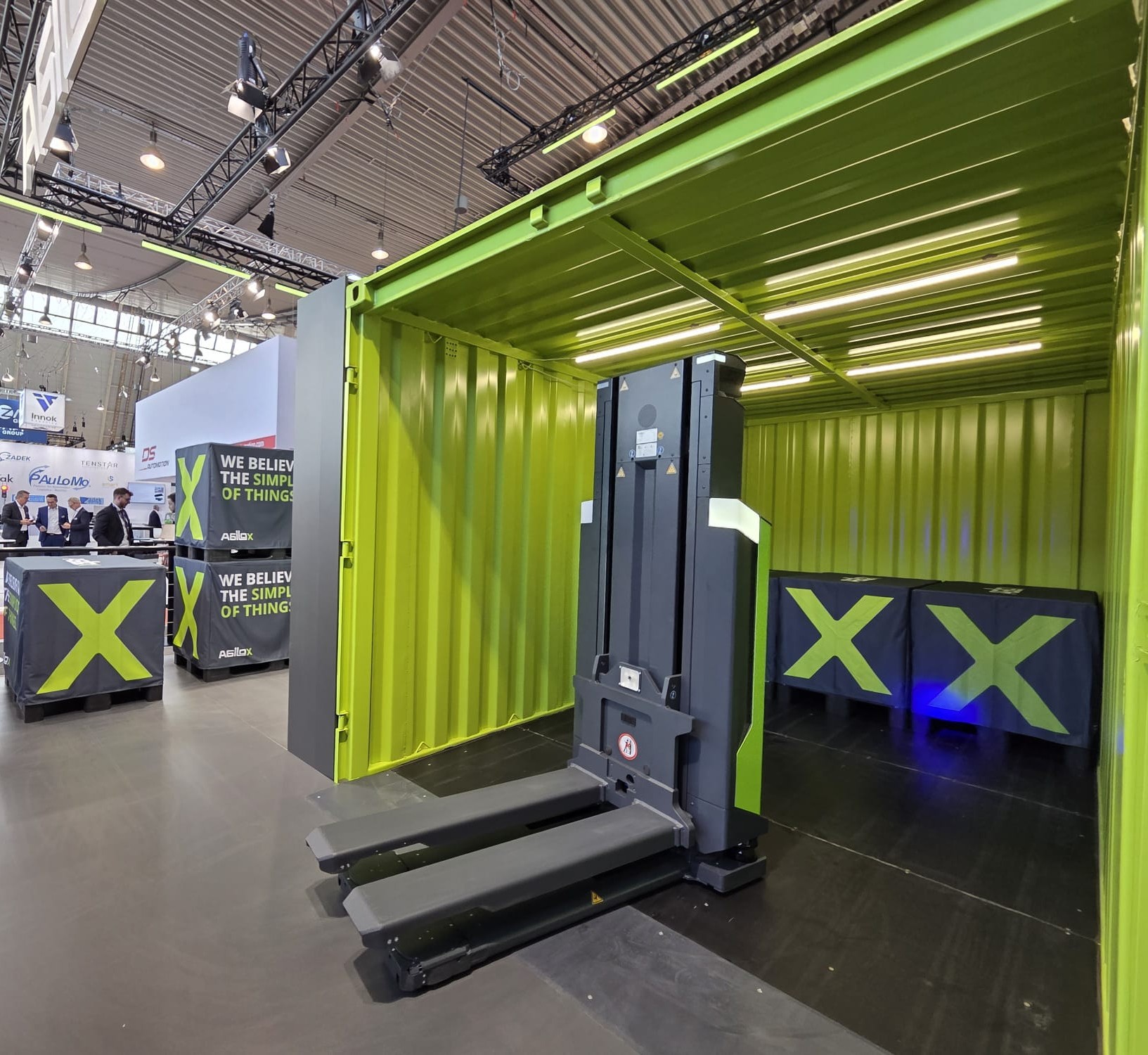
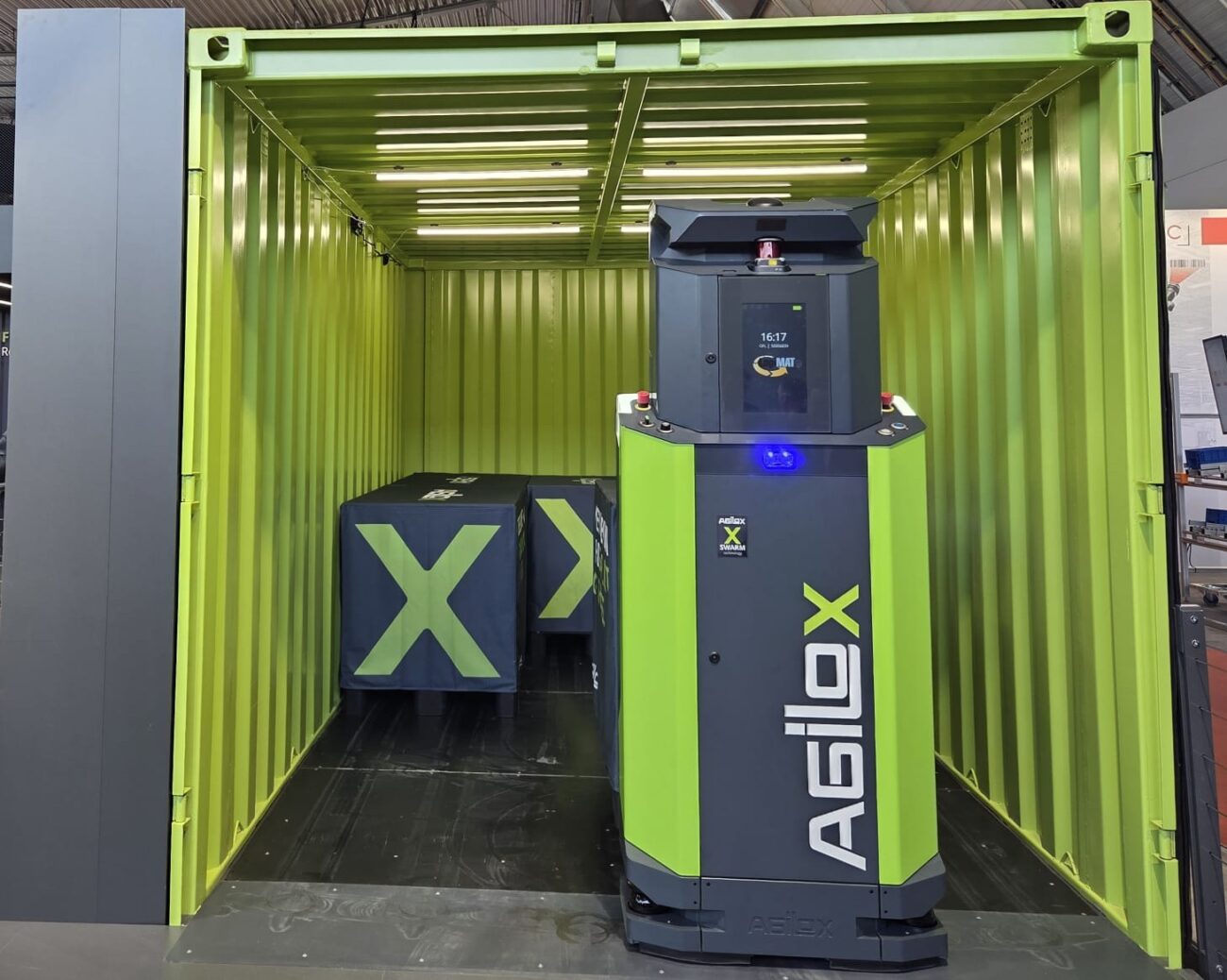
At LogiMAT Stuttgart last week Agilox unveiled an automated truck loading solution, aimed squarely at one of outbound logistics’ biggest challenges: moving large volumes of pallets inside trucks safely, efficiently and without reliance on manual labour.

Truck loading is a demanding application in which an autonomous mobile robot (AMR) can transport pallets from the warehouse directly into the trailer and positions them with high precision. In outbound logistics, where time pressure, tight schedules, and high throughput dominate daily operations, this final step is often a critical bottleneck. Agilox aims to addresses this challenge with a solution designed for efficiency, reliability, and industrial-grade safety.

What sets this system apart is its unique technological approach: the solution operates using a standard Agilox autonomous mobile robot with no additional sensors mounted on the robot itself. Unlike competing systems that rely on heavily customized hardware or sensor-equipped vehicles, Agilox achieves precise, automated truck loading using a standard ‘OFL’ or ‘ONE’ robot, not a tailor-made platform developed exclusively for this application.

This approach significantly reduces system complexity while ensuring robustness, scalability, and ease of deployment, making automated truck loading more accessible and practical for real-world industrial environments.

A controlled and secure loading environment is the foundation of the system. The truck loading area is equipped with dedicated safe positioning sensors, which can be installed on the floor or mounted on the ceiling of the warehouse. These sensors ensure that the designated Agilox vehicle is correctly positioned and that no unauthorized objects or personnel are in the loading area, allowing the robot to temporarily deactivate its onboard safety systems when conditions are verified as safe. At the same time, the loading ramps adapt dynamically to the situation; they should be flat, lifted, extended, in other words, adjusted to create a stable and seamless transition between the warehouse floor and the truck interior.

Safety is fully integrated into the process. The system can compensate for small misalignments of both the truck and the ramp, ensuring precise and reliable loading. If a person or object enters the protected area, the robot immediately reactivates its onboard safety systems and stops all movement until the safety zone is clear. This approach guarantees consistent protection for personnel, goods, and equipment, even in high-throughput outbound operations.

A key element of the solution is the reliable exchange of safety-critical signals between Agilox and the customer’s safety infrastructure, ensuring that all movements comply with the highest functional safety standards. The OFL autonomously approaches the truck, verifies all safety conditions, and then drives into the vehicle to load pallets precisely and repeatably.

Built for Efficient Outbound Logistics

The truck loading solution is purpose-built for outbound logistics, where efficiency, process stability, and scalability are key performance drivers. By automating the loading process, companies can eliminate manual handling and improve planning reliability, especially in operations that run beyond regular daytime, for example, night shifts.

Thanks to its robust and flexible design, this revolutionary solution is suitable for a broad range of industries, including logistics service providers and 3PL companies, automotive manufacturers and suppliers, fast-moving consumer goods (FMCG), retailers and supermarkets, post and parcel operators and many more.


PODCAST: Safer Smarter Warehouses with LiDAR

In the latest episode of Logistics Business Conversations, we delve into the transformative power of LiDAR technology in industrial automation. Join us as we explore how Microvision is leading the charge in integrating advanced LiDAR systems into warehouses and industrial vehicles, promising a future of enhanced safety and efficiency.

Why You Should Listen

This episode features an insightful discussion with Glenn DeVos, CEO of Microvision, who sheds light on the pivotal role of LiDAR technology in revolutionizing warehouse operations. Traditionally used in automotive applications, LiDAR is now being adapted for industrial use, offering precise 3D perception that is crucial for collision avoidance and navigation.

Key Takeaways:

  • Safety First: Learn how LiDAR’s advanced perception capabilities can drastically reduce workplace accidents by detecting obstacles and pedestrians in real-time.
  • Cost-Effective Innovation: Discover how solid-state LiDAR technology is becoming more affordable, enabling widespread adoption across various industrial settings.
  • Efficiency Boost: Understand the benefits of onboard processing, which allows for immediate decision-making and improved operational workflows.

Tune In for a Glimpse into the Future

As the logistics industry moves towards greater automation, LiDAR technology is set to play a crucial role in shaping safer and smarter warehouses. This episode of Logistics Business Conversations offers valuable insights for industry professionals looking to stay ahead of the curve.

Don’t miss out on this opportunity to learn from the experts and discover how LiDAR is transforming the landscape of industrial automation.

eCMR Platform Issues for Non-EU Drivers

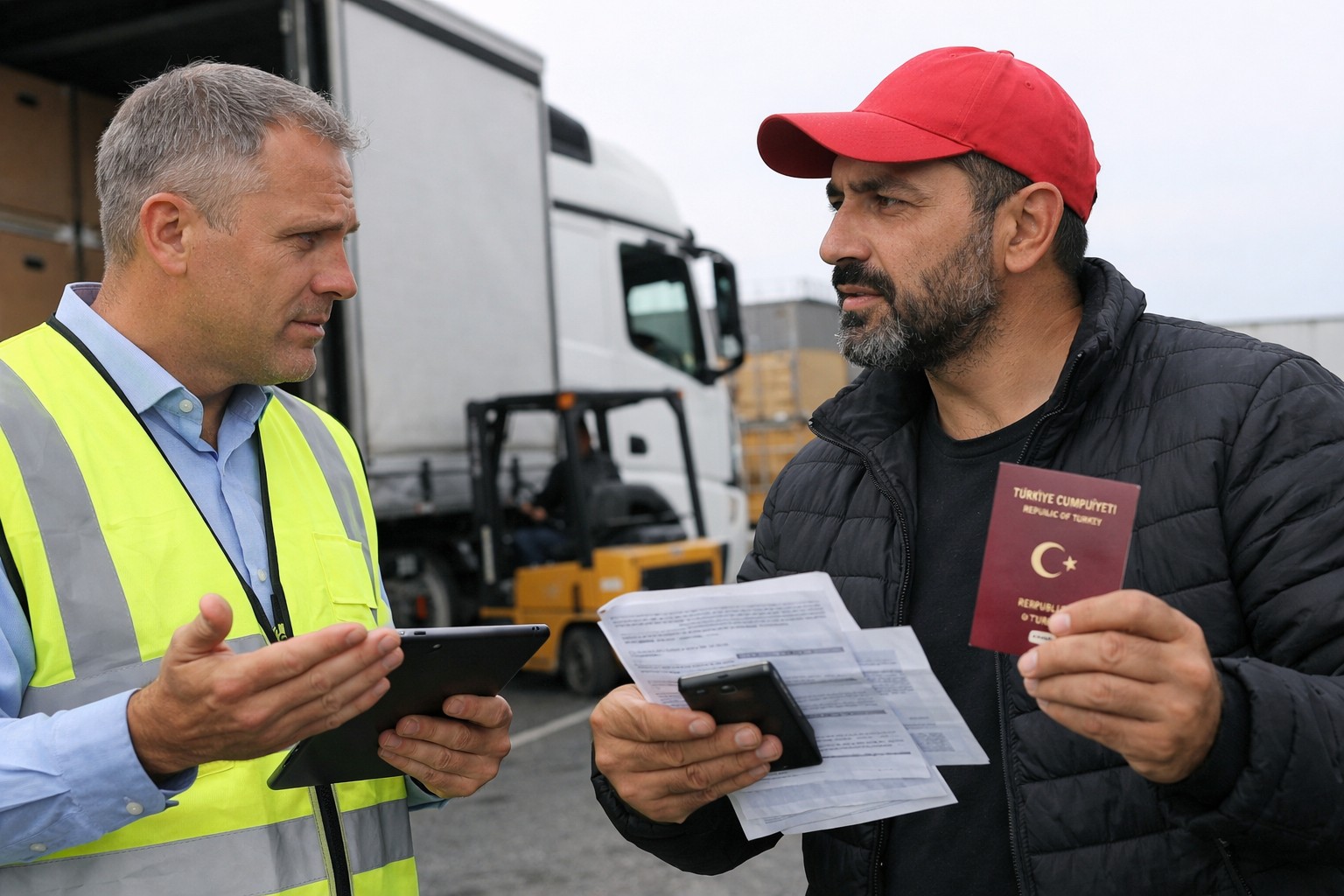
Managing electronic consignment notes can be done with an eCMR platform, which works perfectly until a non-EU driver shows up, write Gustav Poola, CEO, and Mairi Kutberg (pictured, below), Co-Founder of IdentiGate.

If you are evaluating eCMR platforms right now, you are probably asking the right questions: does it integrate with our TMS? Is it eFTI-ready? How fast is the rollout? These are important questions. But there is one question that most logistics companies forget to ask — and it is the one that determines whether their digital freight documents will actually work on their busiest corridors.

The question is simple: what happens when the driver is not an EU citizen? For most eCMR platforms on the market today, the honest answer is: nothing good. The workflow breaks. The driver cannot sign. And the shipment falls back to paper — or worse, to an unverified digital signature that carries no real identity assurance.

The cross-border reality check

European road freight is fundamentally a cross-border operation. Eurostat data shows that approximately 37% of international road freight within the EU is carried by vehicles registered outside the Union. On some of Europe’s busiest trade corridors — Turkey to Germany, Ukraine to Poland, Morocco to Spain — the share is even higher.

These are not niche routes. They are the arteries of European manufacturing and retail supply chains. Automotive components, fresh produce, textiles, industrial equipment — a substantial volume of goods entering the EU every day is carried by drivers who hold a Turkish, Ukrainian, Serbian, or Moroccan passport.

Every one of these drivers will need to sign eCMR documents once the eFTI regulation takes full effect in July 2027. And every one of them falls outside the scope of the European Digital Identity (EUDI) wallet, which will cover EU citizens only.

This creates a practical gap that no amount of platform sophistication can paper over. You can build the most elegant eCMR workflow in the world, but if the person standing at the loading dock cannot digitally prove who they are, the chain breaks.

Why the signature level matters more than most people think

Part of the confusion stems from a widespread misunderstanding about what kind of signature an eCMR actually requires. Many logistics professionals assume they need a qualified electronic signature (QES) — the highest tier under the eIDAS regulation, requiring a certificate from an EU-based qualified trust service provider.

They do not. The eCMR protocol requires a signature that reliably identifies the signatory and ensures the integrity of the document. An advanced electronic signature (AdES) meets this standard. This is not a loophole or a shortcut — it is what the regulation specifies.

The practical difference is enormous. A QES demands an EU-issued certificate, a process that is expensive and time-consuming, and effectively inaccessible for a small haulier in Ankara or Casablanca. An AdES can be created using any reliably verified identity — including a government-issued biometric passport.
Every modern biometric passport contains an NFC chip with cryptographically signed data: name, date of birth, nationality, photograph, and fingerprint hashes. These passports are issued by 179 countries under ICAO standards. The data on the chip is signed by the issuing government and cannot be forged without breaking national cryptographic keys. For an advanced electronic signature, this level of identity assurance is more than sufficient.

Five questions to ask your eCMR platform provider

If you are selecting or already using an eCMR platform, here are the questions that will reveal whether your provider has solved the cross-border identity problem — or is hoping you will not ask about it.

  1. Can a non-EU driver onboard and sign within minutes? If the answer involves mailing documents, visiting an office, or a multi-day verification process, your platform is not built for the reality of international freight. A Turkish driver at a dock in Rotterdam cannot wait three days for identity approval.
  2. What identity documents does the platform accept? If the answer is limited to EU national eIDs or EUDI wallet credentials, you have a solution that works for domestic freight but fails on cross-border corridors. Look for platforms that verify biometric passports from non-EU countries.
  3. What signature level does the platform produce? If the answer is “qualified electronic signature only,” you are paying for a level of assurance that eCMR does not require — and excluding every driver who cannot obtain an EU-issued certificate. An advanced electronic signature is legally sufficient and practically achievable for any driver with a biometric passport.
  4. What is the fallback when digital signing fails? If the fallback is paper, then your eCMR platform is a fair-weather solution. It works when conditions are ideal and fails precisely when you need it most — on complex, multi-party, cross-border shipments.
  5. How does the platform prevent identity fraud? Phantom carriers — fictitious companies impersonating legitimate hauliers — accounted for a significant share of the €930 million in cargo crime losses reported by TAPA EMEA in 2024. If your platform accepts a digital signature without verifying the signer’s identity against a government-issued document, it is not preventing fraud. It is digitising it.

The 2026 preparation window

The eFTI mandate takes effect in July 2027, but the companies that wait until then to address the identity gap will find themselves in a difficult position. Testing cross-border eCMR workflows takes time. Onboarding non-EU partners takes coordination. And discovering that your platform cannot handle your actual freight corridors is not something you want to learn under regulatory pressure.

The companies moving now are using 2026 as their testing ground. They are running pilots on their busiest cross-border routes, identifying where identity verification breaks down, and selecting solutions that work for their entire network — not just the EU-domestic portion.

The eCMR transition promises real operational benefits: faster invoicing, lower document handling costs, better shipment visibility, and an end to the paper trail that has burdened European freight for decades. But those benefits only materialise when every party in the chain can participate. Ensuring that your platform works for all your drivers — not just the ones with EU passports — is not an edge case to solve later. It is the first thing to get right.

Gustav Poola (pictured, above) is CEO and Mairi Kutberg is co-founder of IdentiGate, an Estonian startup building cross-border digital identity and electronic signature infrastructure for the logistics sector. The company verifies biometric passports from 179 countries via a single API and is currently piloting cross-border eCMR signing.

Subscribe

Get notified about New Episodes of our Podcast, New Magazine Issues and stay updated with our Weekly Newsletter.