How to Fix Fuel Supply Planning

With global fuel supply networks fragile and constantly shifting, you need modern logistics planning. That means continuous replanning, realistic constraints, and thorough scenario evaluation.

This article, by Dr. Debdeep Banerjee – Senior Presales Lead at DELMIA, Dassault Systèmes, explores the evolving nature of these networks and provides actionable steps to help you transform a chaotic process into a production-ready Minimum Viable Product (MVP) in just four weeks.

Planning Fuel Logistics During Endless Disruptions

Fuel supply networks operate in a vastly more exposed environment than they did just a few years ago. Recent disruptions across critical maritime energy corridors demonstrate exactly how quickly routing, inventory positions, freight economics and supply continuity break down when a single point of instability ripples across the wider network.

Consider that roughly one-fifth of global crude, refined products and Liquefied Natural Gas (LNG) trade normally passes through one such critical corridor. Recent disruptions there have sharply raised oil price forecasts, freight costs and insurance premiums. While this is clearly a geopolitical story, it’s equally a logistics planning problem.

Fuel operators now face an almost unlimited range of interacting variables. Vessel delays, demand swings, inventory constraints, charter cost inflation, labour rules and weather bottlenecks don’t arrive one at a time. They arrive together. You can’t build resilience by creating a single efficient plan and hoping conditions hold. Resilience comes from testing many scenarios, understanding trade-offs quickly and reworking your plan while operations are still moving.

A Highly Volatile Operating Model

The traditional planning model assumed a manageable amount of uncertainty. Transport plans were created in batches, dispatch windows remained relatively stable and dispatchers handled exceptions manually. That model is now breaking under immense strain.
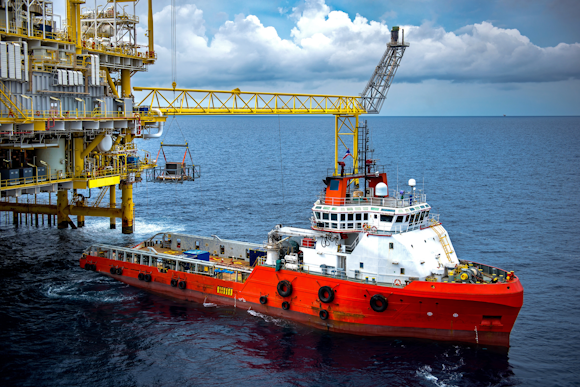
Recent events in key energy shipping lanes have forced insurers, charterers and traders to reprice risk rapidly. Hull war-risk premiums recently rose from about 0.25% to around 3%, translating into millions of dollars in additional costs per vessel. Freight rates for LNG tankers also jumped sharply as supply and routing patterns fractured.

For planners, the core issue goes beyond cost inflation. The real danger is how disruption propagates. A delay at sea shifts berth timing. That delay affects terminal throughput, which changes inventory availability. Planners must then make entirely different routing decisions inland, often under tighter service windows and with fewer usable resources. A localized disruption becomes a massive network problem in a matter of hours.

The Multiplier Effect of Possible Disruptions

Planners spend most of their time maintaining data rather than making decisions. When a disruption hits, the response is manual and slow. Scenarios are not evaluated, they are guessed. And because the plan lives in a file rather than a system, every handoff between teams introduces another opportunity for something to go wrong.

Take fuel distribution. It always involves complexity. However, the current challenge lies in the sheer volume of variable combinations you must consider before making a decision. You’re rarely dealing with a single isolated event.

A logistics planner might need to account for all the following factors simultaneously:
• Reduced flow through a major transit corridor
• Sudden jumps in freight or insurance costs
• Inventory dropping toward a minimum threshold at one depot while another holds excess
• Changes in customer priority or allocation rules
• Shortages in compatible trailers or certified drivers
• Strict labour and rest-hour compliance constraints
• Low-emission or access restrictions in final-mile delivery zones
• Weather or port congestion altering arrival times
• Geopolitical turmoil changing route viability overnight

I explore these disruption patterns and their operational impact in more detail in our latest e-Book on fuel logistics resilience. No single static model can capture all of this in advance. Success depends on your ability to generate, compare and refine many possible scenarios rapidly. Organizations that respond quickly to disruptions are not faster because they have better reflexes. They are faster because they have already modelled the disruption before it happened. When the event occurs, they are selecting from a set of pre-evaluated options, not starting an analysis from scratch.

Resilience Begins with Constraint Realism

In fuel logistics, planning quality directly depends on execution realism. A plan that ignores contamination rules, compartment constraints, driver-hour regulations or equipment compatibility isn’t resilient. It’s simply an incomplete plan.

Why Real-World Constraints Matter

Plans must account for real-world constraints like driver certifications, cross-docking, multi-stop routing and regulatory compliance. This matters even more during disrupted conditions. When product flows tighten, you have far less room to absorb planning errors.

If a tanker delay forces a different delivery sequence inland, that new sequence still must respect labour rules, asset compatibility, customer windows and available stock. Your system can’t treat these factors as secondary checks added after the fact. They must function as part of the core optimization engine. Resilience shows up in your operation as a plan that remains fully executable after the disruption has already started.

Buying Decision Speed with Scenario Planning

The most useful question a planner can ask is rarely, “What’s the best plan?” Instead, the better question is, “What happens if our primary assumption no longer holds?”

What if a major corridor stays constrained for another week? What if charter costs rise further? What if a terminal misses its unloading slot? What if you must source product from a completely different origin?
Organizations that model these possibilities in advance hold a distinct advantage when market conditions change. They don’t start from zero. They simply move from one pre-tested decision path to another. DELMIA emphasizes this heavily in our logistics and workforce planning solutions. By prioritizing what-if scenarios, tactical route creation and resource balancing, you shorten the critical time between a supply chain signal and your operational response.

From Chaos to Operational in One Month

One of the most common objections fuel organizations raise when evaluating planning platforms is the implementation timeline. Enterprise software projects with 12 to 18 month go-live windows are not attractive when the planning problem is urgent today.

The DELMIA Fuel Supply Optimizer (FSO) delivery model is structured around a different premise. The goal is not perfection at go-live. The goal is capability in four weeks.

Week 1: Demo Challenge:
The first week is not a sales demonstration. It is a working session. The client’s actual business rules, network structure and a representative sample of planning data are loaded into the platform. By the end of the week, the team has seen the system handle their specific constraints, not a generic example. Key pain points are identified and concrete evidence of how the system addresses them is documented. The 1-week challenge exists because the best way to evaluate a planning tool is to watch it plan a real network.

Weeks 2 to 4: MVP Build and Deploy:
Weeks 2 through 4 focus on moving from validated concept to production deployment. This covers ingestion of existing planning data from Excel-based workflows into a structured, integrated planning and scheduling environment, configuration of the full constraint set, user training, and parallel running against the current process. By the end of week 4, a production-ready system is in place and planners are using it to generate real plans. This is not a pilot. It is not a sandbox. It is a live operational capability. Further optimization, additional scenario models and expanded capability can be layered on after go-live, but the core planning function is running from day one.

Week 4 (end of week): Delivery:
Full fuel inventory visibility across the network. Vessel planning and scheduling connected to inventory. Distribution planning with live constraint validation. Scenario planning capability the team can use without specialist support. Compliance monitoring for minimum stock obligations.

Turning Visibility into Action

Many fuel organizations now possess more supply chain data than ever before. But data alone doesn’t create resilience. True resilience depends on visibility tied directly to planning logic. When new information enters your network, your plan must adapt instantly. DELMIA’s logistics execution solutions emphasize continuous, real-time monitoring, track-and-trace capabilities and immediate feedback loops from the field. Disruption rarely announces itself as a single catastrophic event. It reveals itself slowly through updated ETAs, missed connections, delayed loading and shifting inventory positions.
A connected planning environment allows these weak signals to trigger automatic recalculations instead of manual firefighting. This empowers your organization to move away from reactive recovery and step into controlled, strategic adjustment.

Take Control of Your Fuel Supply Network

The ongoing pressure on global energy supply routes serves as a stark reminder: you must plan fuel logistics for instability, not around it. Disruptions will continue to emerge from operational, commercial, regulatory and geopolitical sources. All of them will threaten the shape of your plan.

This is where advanced planning platforms, such as DELMIA Quintiq, prove structurally essential. Logistics planning centres on multiple demand scenarios, intelligent route creation by zone, resource balancing and dynamic what-if evaluations across complex transport networks. You can use this unified planning framework to test the impact of delayed arrivals, reduced capacity, changed sourcing points, emergency reallocations or the temporary loss of a major transport corridor.

Resilience means asking better questions earlier, testing more possibilities before committing resources and adjusting your plan while you still have time to protect your service, margins and supply continuity. This capability is no longer an optional upgrade. It’s the basic requirement for operating a successful fuel network in a volatile environment.

Freight Platform Sets Weekly Loads Record

European freight exchange Trans.eu has announced that it has reached a milestone in platform activity. In the final week of March 2026, the platform recorded a staggering 3.73 million load offers. This figure represents a 12% increase over the previous week and surpasses the long-standing peak from June 2025 by nearly 14%.

The surge comes during a period of significant geopolitical instability, particularly surrounding the Strait of Hormuz, which has driven increased volatility in global supply chains. Trans.eu’s data reflects this shift, with the Middle East market showing a notable 41.56% growth in previous weeks and continued high activity into late March. As maritime and trans-continental routes face disruption, the demand for flexible, secure road transport capacity within Europe has intensified.

While operational costs change weekly, sometimes daily, many contract rates remain behind. As margins tighten, more carriers are moving capacity to the spot market, where prices move closer to real-time conditions. This transition is driving a surge in available freight and increasing reliance on digital platforms like Trans.eu, that provide fast, secure matching.

The platform’s growth is led by key European hubs, with Poland recording a 37.4% increase over its four-week average (generating over 3.3 million loads), followed by the DACH region (+36.9%) and the Baltics (+25.4%).

At this moment of heightened volatility, with 35% of carriers operating under the risk of non-payment and operational costs peaking, Ewa Węgorkiewicz, Chief Commercial Officer at Trans.eu Group, emphasized the company’s responsibility to help close the industry’s trust gap.

Trust is the bridge between the cost of uncertainty and safe, mutually beneficial transactions for all parties,” Węgorkiewicz said. “We strive to become the place where transactions happen with confidence, making working outside the platform feel unnecessarily risky, by providing tools and guarantees, such as SafePay and our vetted network, that the outside world lacks.

The evolution is similar if we compare volumes seen for the entire month of March 2026 compared to previous month. As shown on the Trans.eu Freight Radar, an interactive map, both load volumes and spot rates have increased across nearly all of the 35 monitored countries. For example, volumes for Poland – Poland went up by nearly 85%, while volumes for the route of Poland to Germany increased by 10.5% March/February 2026. Germany domestic went up by 36%, Germany to Poland by 31.5% and Germany to France by 15.4%

In response to this increased pressure on supply chains, Trans.eu is accelerating its transition from a traditional freight exchange to an European Freight Platform, strengthening the heart of CEE road transport while seamlessly connecting freight capacity between Western and Eastern Europe.

Positioned as a safe haven for carriers, forwarders and shippers, the platform aims to secure freight execution without the risks of off-platform deals. It offers access to a rigorously verified community of over 40,000 European carriers, alongside SafePay, a payment guarantee ensuring carriers are paid for every load and helping forwarders gain instant credibility.

The Year of the Pallet Shuttle

Beth Marshall, Movu Sales Director for the UK looks at the take-aways from the big intralogistics shows in Europe and the USA.

Springtime sees the logistics Industry gathering at the hubs for intralogisics innovation and networking: LogiMAT in Stuttgart, Germany during March, closely followed in April by the US show MODEX in Atlanta. Both of these major events attracted enthusiastic crowds seeking solutions to their intralogistics challenges, generating a noticeably positive atmosphere. With Movu having a busy stand at both events, it presented the ideal opportunity to learn more about the technologies and innovations shaping the market.

Despite the current geopolitical turbulence, there was a real buzz about the shows – reflecting the optimism in the market. It was clear that investments are being made to gain efficient warehousing for the future, particularly for smaller projects, and retrofitting was another popular topic of conversation with companies seeking to make the most of their existing space rather than find a new building. Growing businesses not yet ready to make very large investments at the outset, want to increase the number of locations in their current space, negating the cost, complication and risk of a warehouse move.

Strong demand for pallet shuttles

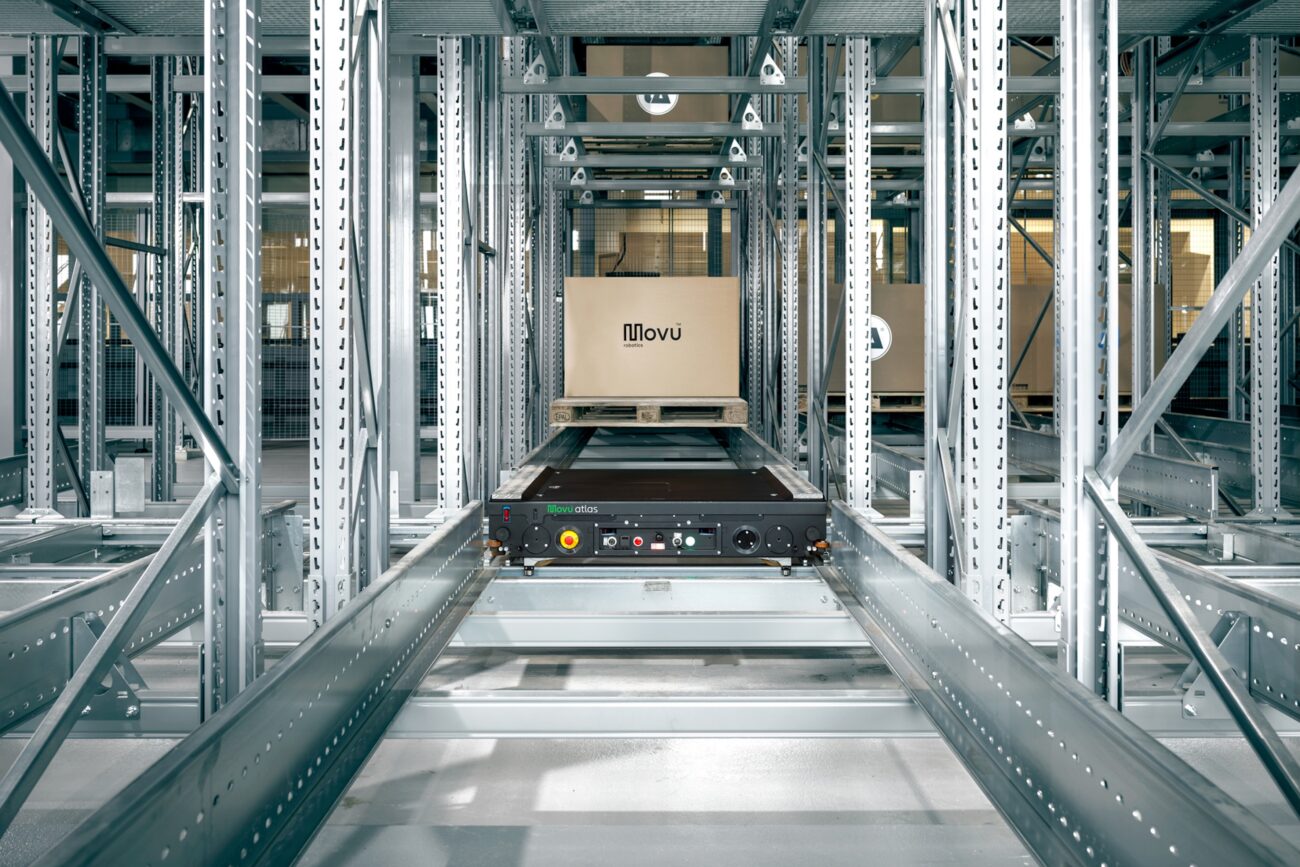
While just prior to the Covid pandemic there was a proliferation of Autonomous Mobile Robots (AMRs) at these exhibitions, 2026 was clearly the ‘year of the pallet shuttle’. Everywhere you looked, suppliers from all corners of the globe, were showing examples of the technology.

The strong increase in demand for pallet shuttles over the last several years is due first and foremost to the solution having no single point of failure, as is the case with stacker crane based automated storage and retrieval systems. A pallet shuttle solution can be scaled up whenever needed and is more cost efficient in terms of energy – obviously a vital contribution to increasingly important warehouse sustainability targets, in addition to helping to dampen the impact of unpredictable energy costs.

While it was interesting to see the influx of pallet shuttles to the market, it is easy to understand how perplexing this can be for customers. Our advice is: there is much more to a pallet shuttle supplier than the shuttle itself – focus on the whole solution.

The growing interest in pallet shuttle technology is not purely restricted to saving space compared to conventional pallet racking or stacker crane based systems in main storage areas of a warehouse. People are increasingly seeking to leverage the cube efficiency and operational benefits of the technology in wider applications, such as forward shipping buffers, where a rack can make use of marshalling area space to buffer goods for onward delivery. In a manufacturing facility, a buffer can hold goods pulled out of storage until they’re needed again on a manufacturing line.

Single source supply

Owned by stow Group, Movu’s unique position as a supplier of racking, shuttles and software enables the business to offer as a complete, integrated solution as a single source supplier, contributing to 200 projects sold globally since stow commenced its robotics business in 2021. These are solutions designed to ensure that no warehouse is left behind when it comes to adopting automation – from a small family-run business to a large corporate. In the UK, both ends of the scale are experiencing rapid growth: small companies starting out on automation and larger companies trying to consolidate their network into one large warehouse. Pallet shuttle technology is making a big contribution to a tangible shift to automation in the UK

In 2026 the UK is cited as one of the most important automated warehousing markets. This is quite a step change for a market that traditionally relied on manual picking and forklift truck operations. While recruitment for warehouse work is not the problem it once was, finding skilled people remains an issue. For example, a lack of people training to be a forklift truck driver is impacting costs so operations are looking to eliminate forklifts, relying on either electric pallet trucks, which do not necessarily require a skilled operator, or turning to automation.

Increase density to mitigate risk

Among the other drivers shifting warehouse operators towards automation is the need for greater storage density – allowing businesses to store more goods and mitigate supply chain risk in a turbulent world. Operations wanting to go higher to achieve density are struggling to get planning permission on high buildings. While warehouse availability generally isn’t as scarce as it used to be, there is a lack of smaller urban warehouses. This, in addition to the costs of running a network of smaller warehouses has led to the ‘close to consumer’ fulfilment trend reducing in significance.

The frozen market is doing very well boosted by a huge demand for frozen food, as well as pharma and ecommerce operations. Shuttle technology is perfect for these sectors. Third party Logistics (3pl) operators – particularly the new, up and coming brands – are seeing the modular scaleability, flexibility and reliability of automation provided by shuttle systems and reappraising their ROI models.

With its heritage as part of the stow Group, Movu stands out because it makes the racking in which shuttles operate in addition to manufacturing the atlas 4-way pallet shuttles themselves. What’s more, it has its own software and its own lift design.

As Movu is accountable for every part of the solution, customers can trust its plug and play pallet shuttle technology and know that it will be supported in the years to come. Offering scaleability for business growth, the modular nature of Movu’s 4-way shuttle system avoids the need for a large initial investment, with users being able to add more shuttles and racking as they continue to grow. And to handle peaks, Movu has a short-term rental fleet.

This technology isn’t an innovation for Movu, it is simply what the company does, as was demonstrated at LogiMAT and MODEX.

Prologis Signs Cainiao

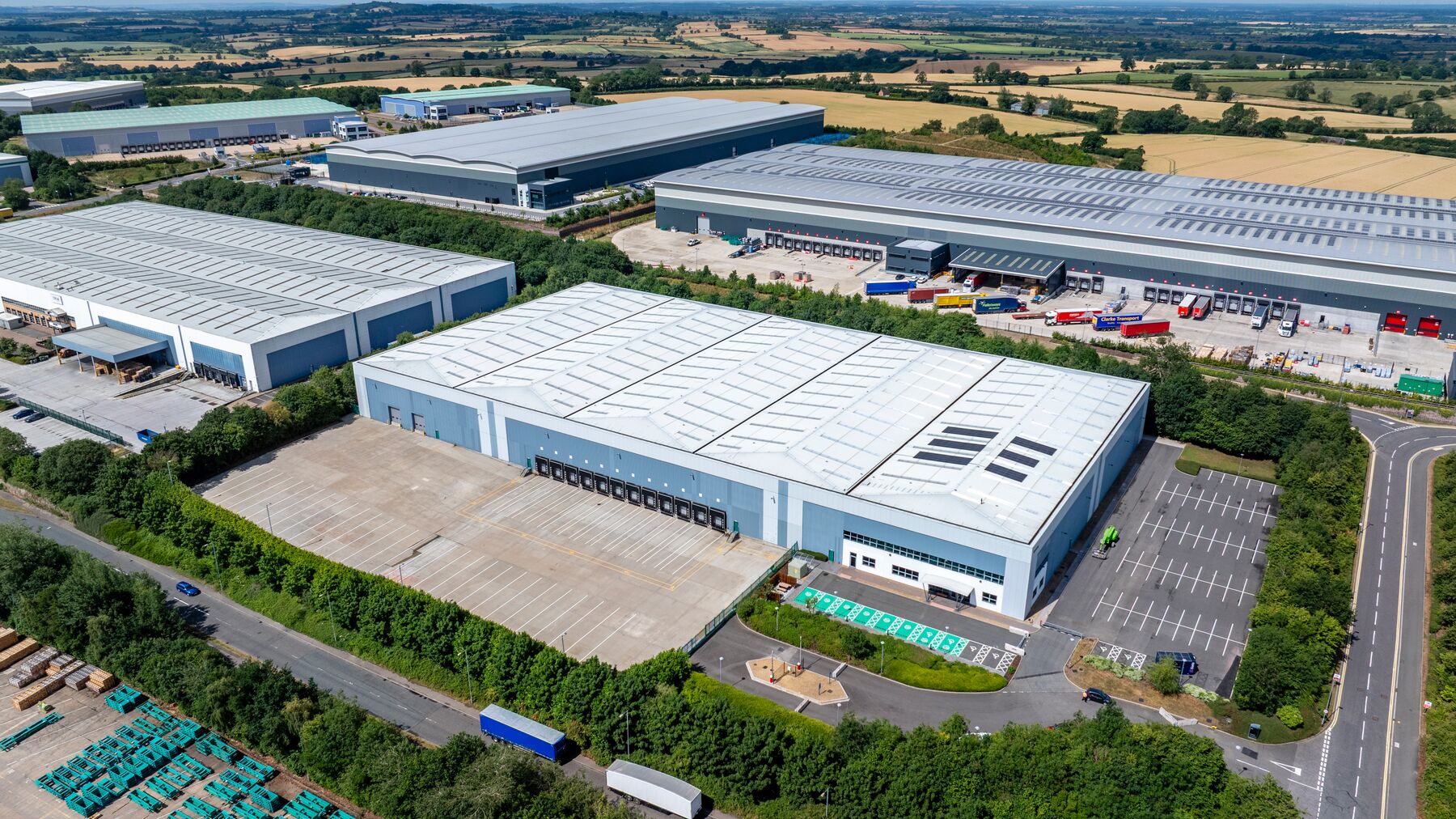
Prologis UK has secured a 10-year lease with global ecommerce logistics provider Cainiao, part of the Alibaba Group, marking a significant expansion of its UK operations.

Prologis Apex Park DC4’s recent refurbishment was delivered with a strong focus on sustainability, featuring advanced LED lighting, a solar PV array and EV charging infrastructure, resulting in an EPC A rating and supporting lower carbon operations.

The 150,911 sq ft DC4 enables rapid operational ramp-up with the installation, through Prologis Essentials, of wide aisle racking providing 20,028 pallet capacity. This allows Cainiao to move in quickly and handle high-volume operations from day one.

Sun Beibei, Vice President of Global Supply Chain at Cainiao, said:

“By signing a 10-year lease at Prologis Apex Park, we are making a clear, long-term commitment to the UK market. This significant investment reflects our confidence in continued growth and reinforces the stability and reliability of the logistics services we deliver to customers across the region.”

Prologis Apex Park offers the location, specification and flexibility we need to support our continued growth in the UK. The ability to move quickly through leasing and into a facility that is already optimised for high-volume operations was a key factor in our decision. We look forward to working with Prologis as we expand our network.”

Tom Price, Leasing Director at Prologis UK, said: “Cainiao’s decision to locate at Prologis Apex Park reflects the strength of the Midlands as a core logistics location, as well as continued investment from Chinese ecommerce businesses into the UK. As an existing global customer, we were able to move quickly on commercial terms, enabling this transaction to complete”

The letting brings Prologis Apex Park to full occupancy, following the recent leasing of DC3 to DHL. The park is home to major global customers including CEVA Logistics, XPO Logistics, Cummins and Hankook, reinforcing its position as one of the Midland’s premier logistics locations with strong connectivity and access to an established labour pool within the Midlands’ ‘golden triangle’.

A final opportunity remains at the park, with DC11 offering a 91,000 sq ft build-to-suit unit with full planning consent.

Subscribe

Get notified about New Episodes of our Podcast, New Magazine Issues and stay updated with our Weekly Newsletter.