

The rigid, “one-size-fits-all” constraint of traditional warehouse management software may finally be meeting its match. At MODEX 2026, Ocado Intelligent Automation (OIA) unveiled a significant evolution of its Ocado IQ software, signaling a shift toward more granular, adaptive fulfillment strategies.
In a discussion at the event, Gaurav Daru of Ocado Engineering sat down with Ian Wright to outline how the company is leveraging nearly two decades of operational data to tackle a persistent industry pain point: the “optimized for nothing” floor.
Breaking the Single-Strategy Constraint
Most legacy warehouse systems mandate a uniform picking strategy across every aisle and shift. This lack of flexibility often leaves managers struggling to balance labor costs, frequently resulting in a reliance on overtime or temporary staff to compensate for systemic bottlenecks.
Ocado’s response is a software stack that allows for concurrent pick modes. Instead of a global setting, operators can now configure workflows on an aisle-by-aisle basis, specifically tailored to the density, velocity, and layout of the inventory in that zone.
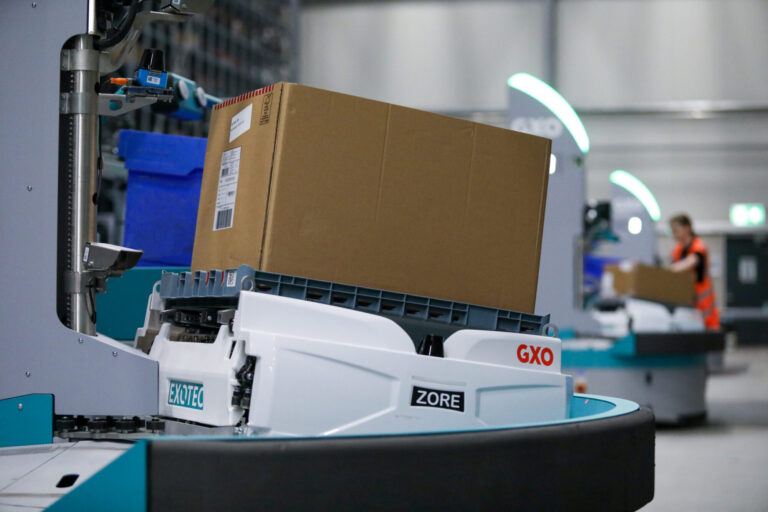
“Ocado IQ has that breadth to work on different form factors,” Daru explained, noting that the system orchestrates everything from case picks to each picks across diverse hardware, including their Chuck and Porter robots.
The “Smart Bypass” and Unified Orchestration
Beyond flexible picking, the new release introduces Smart Bypass, a feature designed to shave critical seconds off cycle times by enabling direct-to-pick routing. By eliminating traditional “meet-up” points and administrative “badge-in” delays, the system targets a level of responsiveness required for ultra-fast operations.
Key technical highlights of the update include:
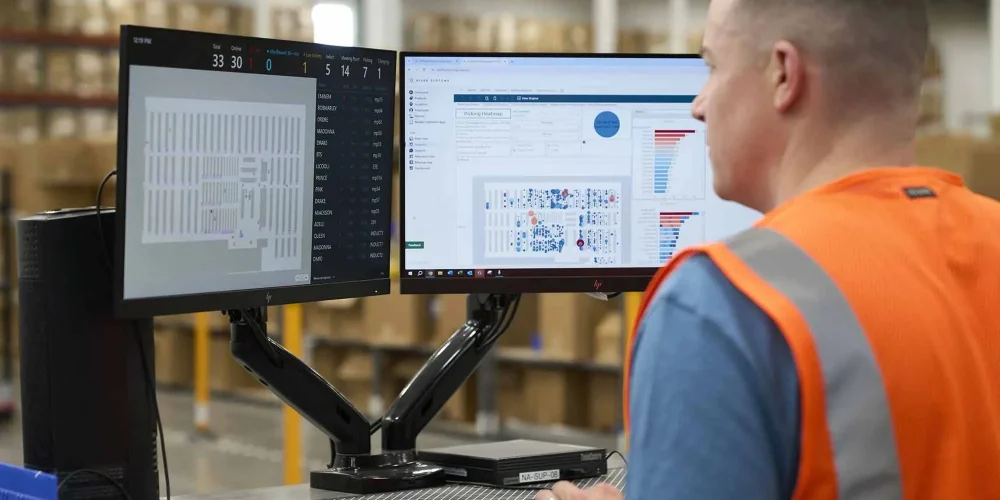
- Unified Interface: Every workflow—including picking, tasking, routing, and error resolution—is orchestrated through a single pane of glass.
- Intelligence at the Heart: The software leverages data from over 100 global sites to refine AI-driven efficiencies.
- Hardware Agnostic: The system is built to bring “magic” to various product lines and form factors as they are deployed.
ROI in Months, Not Years
The business case for this level of orchestration is aggressive. OIA claims that by moving to this adaptive model, operators can see a threefold improvement in picking productivity.
Perhaps most compelling for logistics leaders facing tightened margins is the speed of return. According to OIA, the efficiency gains from Ocado IQ can deliver a full ROI in as few as six months.
As Daru noted, the goal isn’t just about automation for its own sake, but about “improving the efficiency in the client centers” by delivering solutions that adapt to the specific, evolving needs of the warehouse floor.