
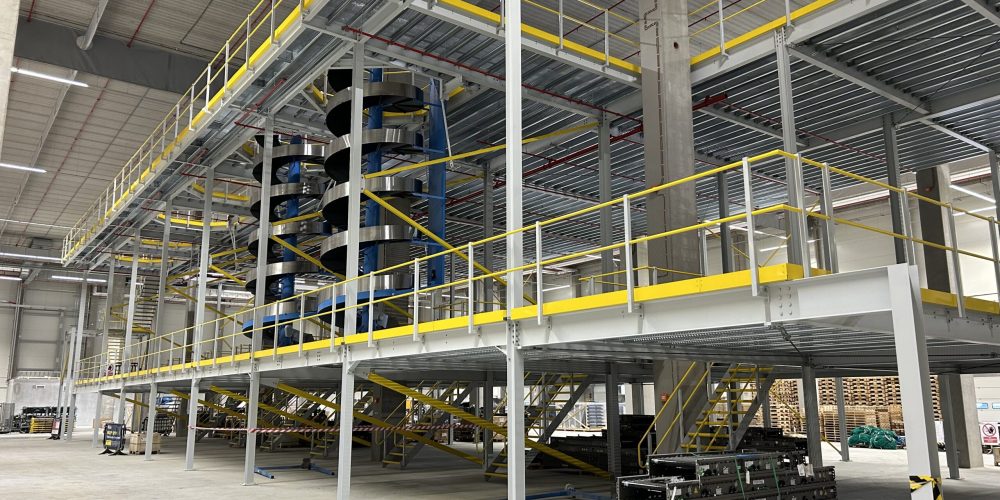
Warehouses have fixed dimensions and there is pressure to maximise the usable cubic storage space. Adding mezzanine levels can help achieve that. David Priestman speaks to a flooring expert.
“We follow the customers, who are mainly systems integrators,” Bart Pulles, Operations and Sales Manager for MiTek in Germany told me during LogiMAT Stuttgart. Celebrating ten years in the German market this year, MiTek supply steel mezzanines (both hybrid and cold-formed systems), steel platforms and support structures to optimise space, particularly important in the drive to automation in distribution centres.
Mezzanines are an intermediate level between the main floors of a building that are designed to create additional space. While often incorporated as part of the design of a new building, mezzanines can also be added to existing facilities as a cheaper, quicker and less disruptive means of creating more space than modifying the building itself or moving to larger premises.
Pulles tells me that the company is growing and possibly gaining market share, with recent projects in Czechia, Poland, France, Spain, Germany and in the UK, where the firm is headquartered. On average thirty site installations are completed each year, with a 3-4 month project time. Working with the materials handling integrators, such as Witron, Fortna and Viastore, the mezzanines installed always follow competitive tenders.
“Mezzanine floors are very useful for pallet conveyors, where we aim to reduce vibration, as well as for overhead hanging garment systems. Often, we install different mezzanines in different areas of the DC.” Pulles states. “We only do project installations now, with more engineering and added value.”
Cube Storage Base
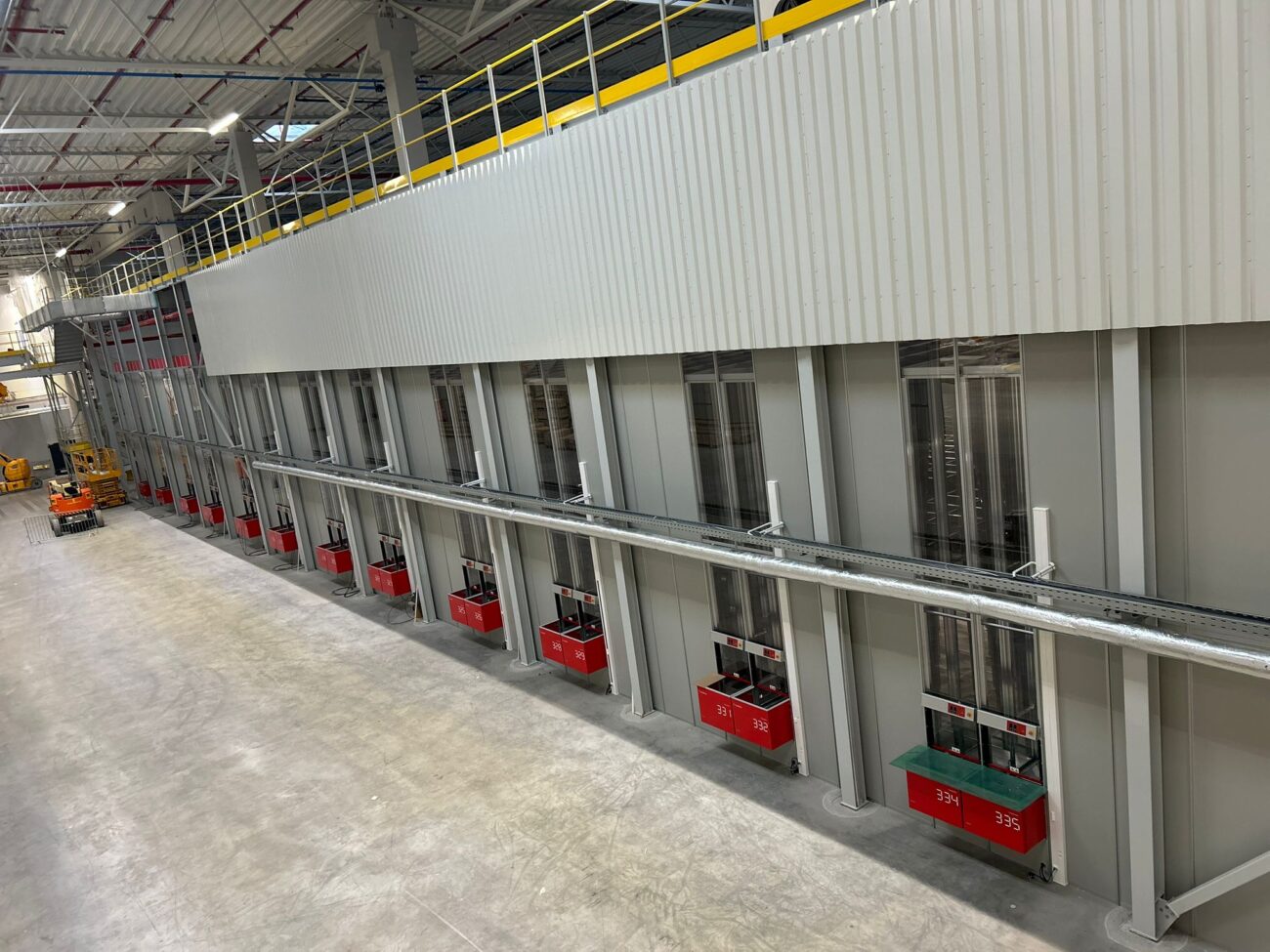
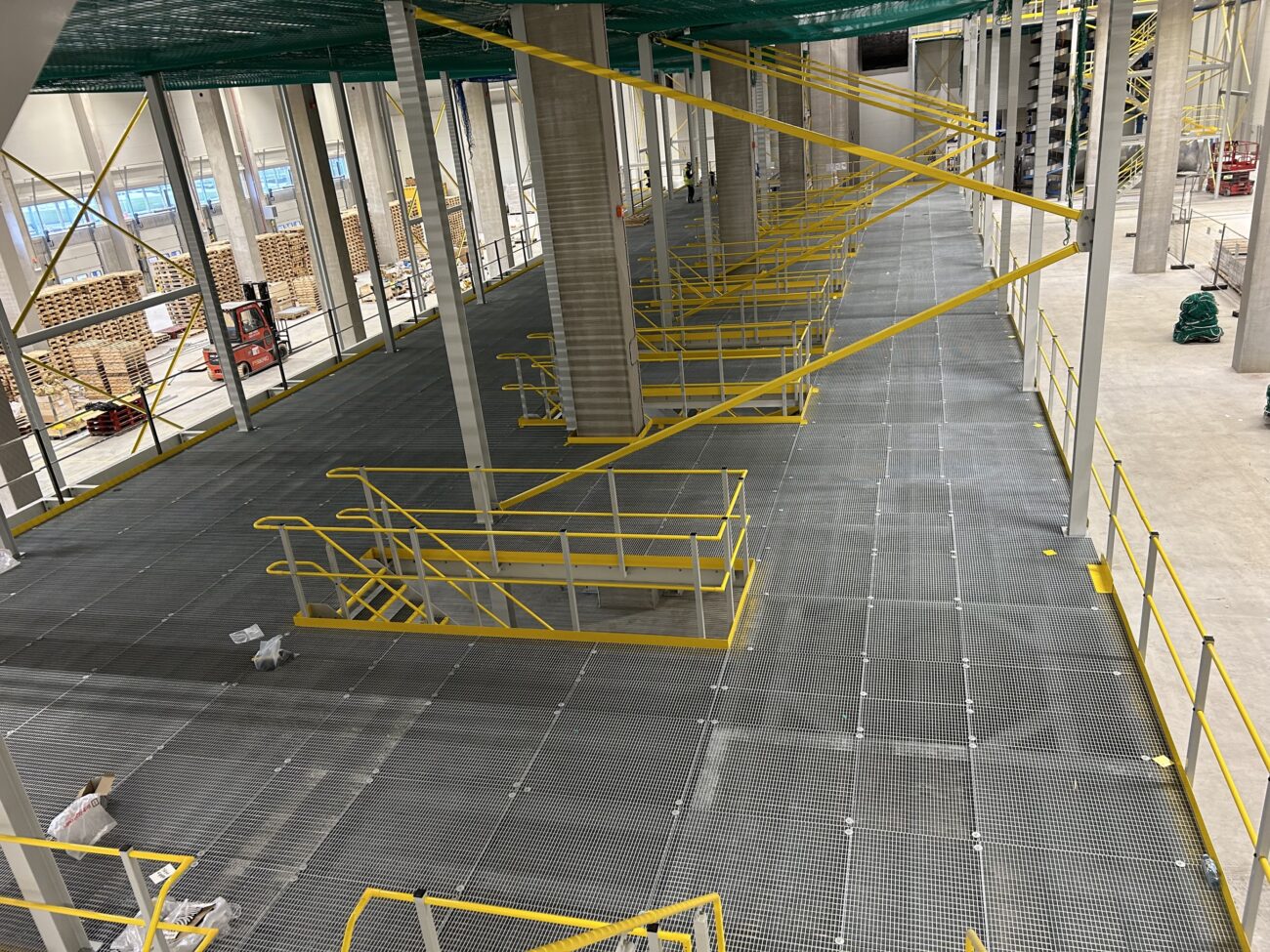
MiTek work directly with ASRS experts AutoStore, supplying mezzanines under the grid for the picking tunnel. “We know the requirements for an AutoStore installation so we can tell the integrator what is needed,” Pulles says, referring to over twenty such installations which can either feature a triple stack or positioning the ASRS on top of a mezzanine level, with a minimum 2m clearance height on the top of the grid. “We build fire escape routes on top, plus access for maintenance – all the extras and necessities.”
Component Supply Chain
MiTek, being British, has been partly impacted by post-Brexit export red tape, but the company no longer sources all its material from the UK and uses local European suppliers for steel and timber, as well as local project managers.
What about new build DCs with mezzanines compared to retrofitting existing sites to add new floors? “They’re about 50-50 for us,” Pulles (pictured, below) informs me. “In order to re-fit and add space we have to empty that area of the warehouse first. The mezzanines have a 20 year lifespan, but the need for new materials handling equipment usually comes before that time is up.” The company takes care to align levels with existing signs and exit infrastructure when re-fitting. “The steel is all free-standing so it’s possible to take it all down as there’s no concrete.”

On to the Next Level
Probably the largest MiTek mezzanine installation so far was for British retailer NEXT, a complex project totalling 100,000sq.m. and reaching 24m in height with five storeys. Working with integrators Knapp, the MiTek team facilitated the installation of spiral chutes into voids between the floors, engineering special supporting steelwork to help lift in and position the chutes. A key component was the a pallet transfer platform to support conveyors that move pallet loads from the automated store down to operations on the ground floor. This 1800sq.m platform alone featured 400t of steelwork, comprising 3000 beams, 6000 cold-rolled joists and 350 columns.