Peter MacLeod interviews an expert in LiDAR to learn more about its growing role in industrial automation.
LiDAR may be most closely associated with autonomous vehicles, but its roots in industrial automation run far deeper. As Glen DeVos, CEO of MicroVision, explains, the technology has been quietly enabling safe and efficient material handling for decades, but is now entering a new phase of rapid evolution.
“LiDAR has been used in industrial with AGVs and AMRs for many, many years,” says DeVos. What has changed, however, is the pace and complexity of automation within warehouses and logistics environments.
“There’s this increased level of automation that’s occurring in that space now,” he continues. “The warehouse environment is more complex than ever, especially as we try to drive efficiencies and the speed of operations.”
Growing Complexity
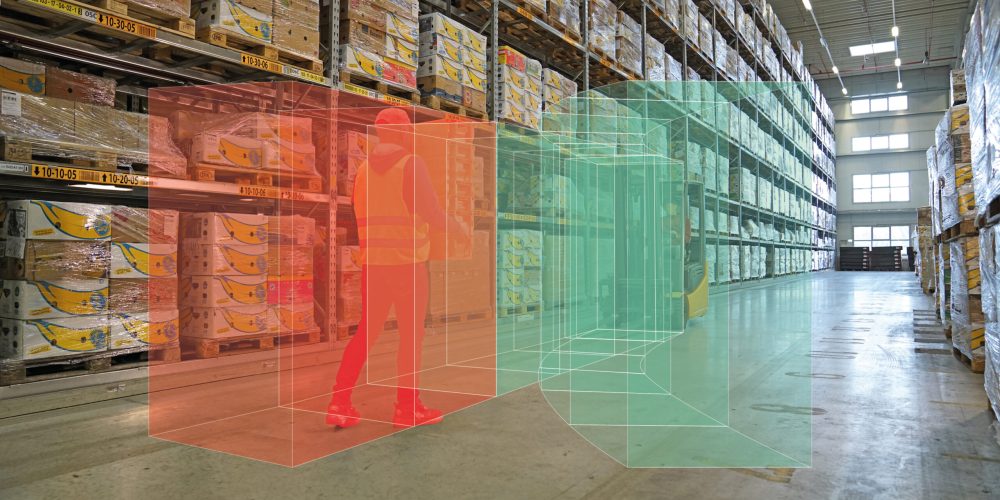
This growing complexity is not just about throughput, but also safety. Warehouses are dynamic and unpredictable environments where people and machines coexist. For DeVos, the priority is clear. “The primary challenge is detection of pedestrians,” he says. “A pedestrian accident can be very significant… so pedestrian detection, broadly speaking, is probably the most critical.”
Beyond that, the list of challenges is extensive – poor lighting, unexpected obstacles, overhanging loads and debris on the floor all contribute to an environment that demands highly capable perception systems. “It’s really all of the above,” DeVos notes, underlining the need for systems that can not only detect objects but also interpret them correctly.
3D LiDAR
This is where the transition from traditional 2D scanning to 3D LiDAR becomes transformative. “When you think now about going to a 3D scanning type of sensor, that gives you just a much, much richer perception model of the environment,” he explains. “You can suddenly see – it’s not just an ankle, there’s a person there.”
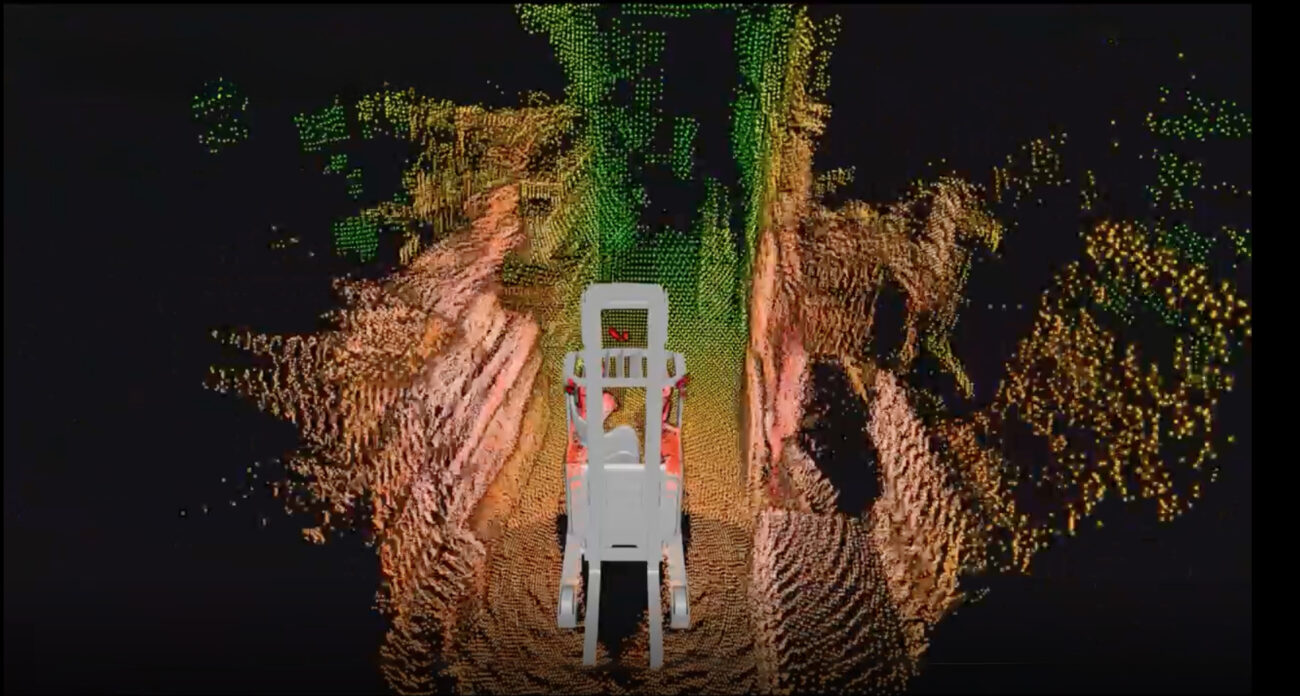
The implications are significant. A richer perception model enables more advanced automation tasks, from precise load handling to dynamic navigation in mixed environments. It also opens the door to greater operational efficiency, as systems can better understand and respond to their surroundings in real time.
MicroVision’s approach goes a step further by embedding perception software directly into the sensor. This on-board processing capability reduces integration complexity and allows faster decision-making at the edge. “It sees the point cloud; it’s interpreting what it’s seeing now,” says DeVos. “It can identify people, racks, objects, and then determine what action to take.”
For system integrators and OEMs, this flexibility is critical. Some require raw data for their own software stacks, while others prefer a more complete, ready-to-deploy solution. “We support both,” DeVos tells me, reflecting the diversity of the industrial automation market.
Another key enabler of wider adoption is the shift to solid-state LiDAR. By eliminating moving parts, these sensors become more compact, robust and cost-effective. “The move to solid state is really the critical piece,” he says. “We want the sensor to do more, but we want it to be at a much lower cost to the end users.”
Retrofit Possibility
Lower costs are particularly important when considering the vast installed base of manually operated forklifts. Unlike fully automated systems, this segment presents a significant opportunity. “You have millions of forklifts in the field that don’t have these systems,” DeVos (pictured, below) explains. “That opens up the possibility of retrofits for existing fleets.”
The benefits are immediate and tangible. “The first objective is just fewer accidents,” he says, pointing to statistics suggesting that 10–11% of forklifts are involved in an accident each year. “That’s a massive number.” Reduced downtime and improved safety culture follow as secondary gains.

Looking ahead, DeVos anticipates a steady increase in sensor deployment across both new and existing facilities. In highly automated, ‘lights out’ environments, the focus will be on maximising efficiency through dense sensing. In more traditional operations, the emphasis will remain on safety and incremental automation.
Ultimately, the direction of travel is clear. “The more you can perceive, the better you can orchestrate and you can control,” he says. As costs continue to fall and capabilities expand, LiDAR is set to become an increasingly ubiquitous presence across industrial environments – not just as a safety feature, but as a foundational technology for the next generation of logistics automation.
Want to hear more about this subject? Listen to our podcast with MicroVision here